

You'll have heard it by the pool or on a terrace: 'I tan easily, I don't need sunscreen.' At the time, it feels like luck. In practice, it doesn't last. The sun doesn't just trigger melanin, the pigment that darkens your skin: it leaves a cumulative mark in your cells. This is what people mean by sun capital—not a unit you can measure, more an image: the dose of UV your skin has received since childhood. Every sunburn uses up part of it. And that part doesn't recharge.
What we know and what we don't yet know
What we know: ultraviolet radiation is classified as a known human carcinogen by the International Agency for Research on Cancer (IARC). It also accelerates skin ageing, with the spots, wrinkles and loss of elasticity that come with it.
What we don't yet know: there is no threshold below which risk is zero. The link between a given exposure and an individual's risk is still hard to quantify, because it depends on your phototype, your age at the time of exposure and genetic factors.

Not all skin is equal under UV
Dermatologists classify skin into phototypes I to VI. Darker or olive skin is better protected by its melanin, but that does not exempt it from protection: skin cancers occur in darker skin too, and are often diagnosed later. In practice, remember this: knowing your phototype and adapting your protection is better than relying on a tan.

A mole that changes size, shape or colour, or that itches or bleeds, is a reason to see a GP or dermatologist. This is not a diagnosis; it is a prompt to get it checked.
The prevention habits that matter
The first reflex isn't cream; it's shade. In the UK, UV levels are highest between 11am and 3pm from March to October; the Met Office publishes the UV index daily, and NHS sun safety advice is built around it.
Next come clothes: long sleeves, a wide-brimmed hat, sunglasses with a CE or UKCA mark and a UV filter. There are certified UPF 50+ textiles, which are useful at sea or at altitude.
Sunscreen covers the rest: the exposed areas. Two points matter more than all the others:
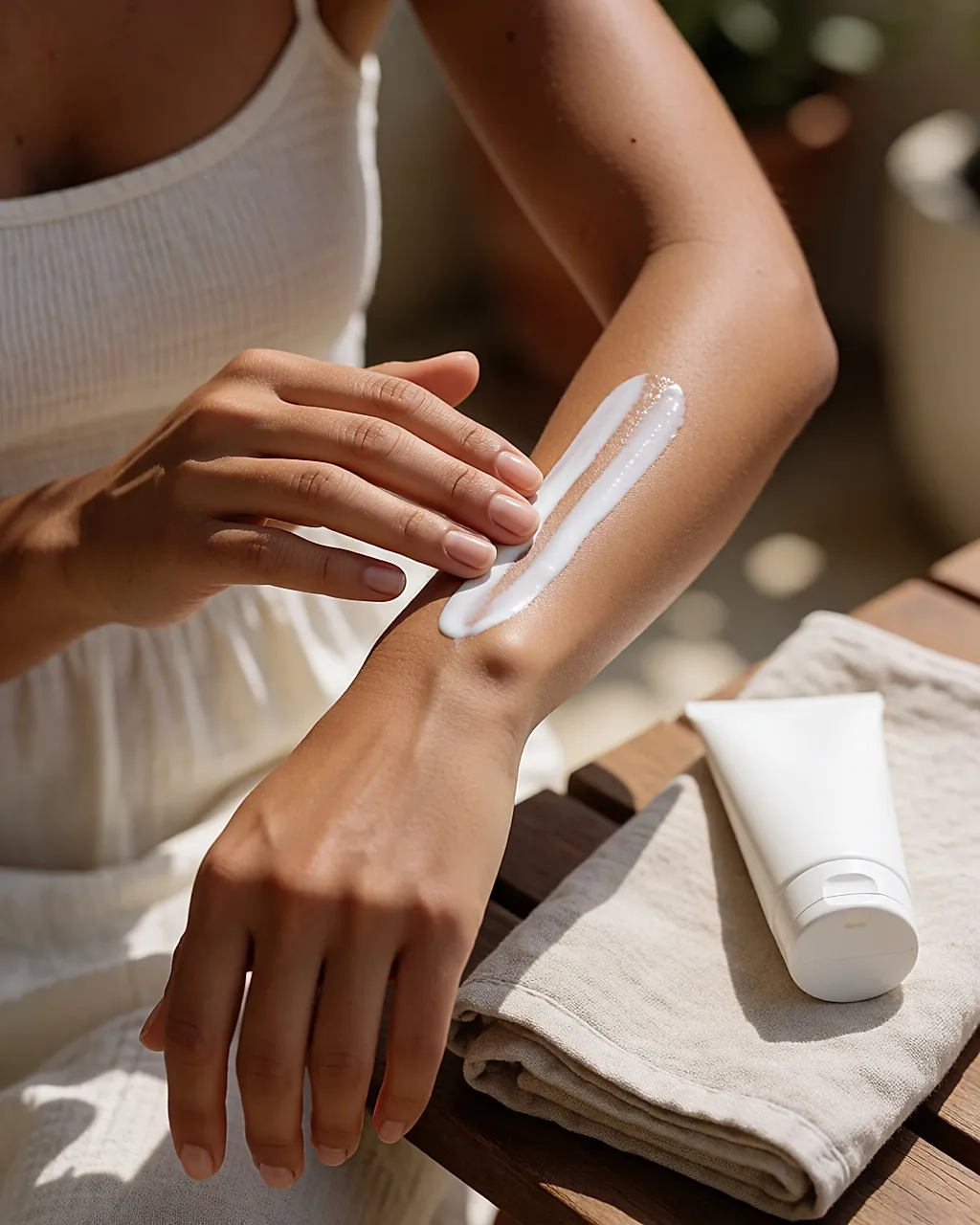
- quantity: SPFs are measured at 2 mg of product per cm², a dose rarely applied. For face and neck, use two finger lengths; the same for each arm and each leg;
- reapplication: every two hours, and after swimming or sweating, even with a water-resistant formula.
Check the circled UVA logo: under the European recommendation, it guarantees UVA protection of at least one third of the stated SPF. And remember that SPF 50 filters around 98% of UVB, never 100%.
What about 'sun' supplements?
The idea of a capsule that prepares skin for sun is widely shared. Current data suggest caution: the French food safety agency Anses and the European Food Safety Authority (EFSA) have warned about high beta-carotene intakes, linked to an increased risk of lung cancer in people who smoke or have been exposed to asbestos. No claim such as 'prepares skin for sun' is authorised in the UK or EU. If you are considering a supplement, speak to a healthcare professional, and never treat it as a substitute for protection.
If you get sunburnt
Get out of the sun: that's the measure that limits damage most. Stay in the shade, cover the red area, drink water regularly. A fragrance-free emollient, kept cool, soothes. Avoid ice placed directly on the skin, and topical corticosteroids without medical advice.

See a doctor if there are blisters, fever, headache, dizziness, or if the burn covers a large area. In a child, always seek medical advice.
After exposure: choosing products
For after-sun, a neutral emollient, without fragrance or denatured alcohol, does the job—especially on heated skin. On packaging, cardboard tubes or refillable formats reduce waste, and a Cosmos Organic label guarantees a minimum share of natural and organic ingredients: the label governs the formula, not the quality of protection.
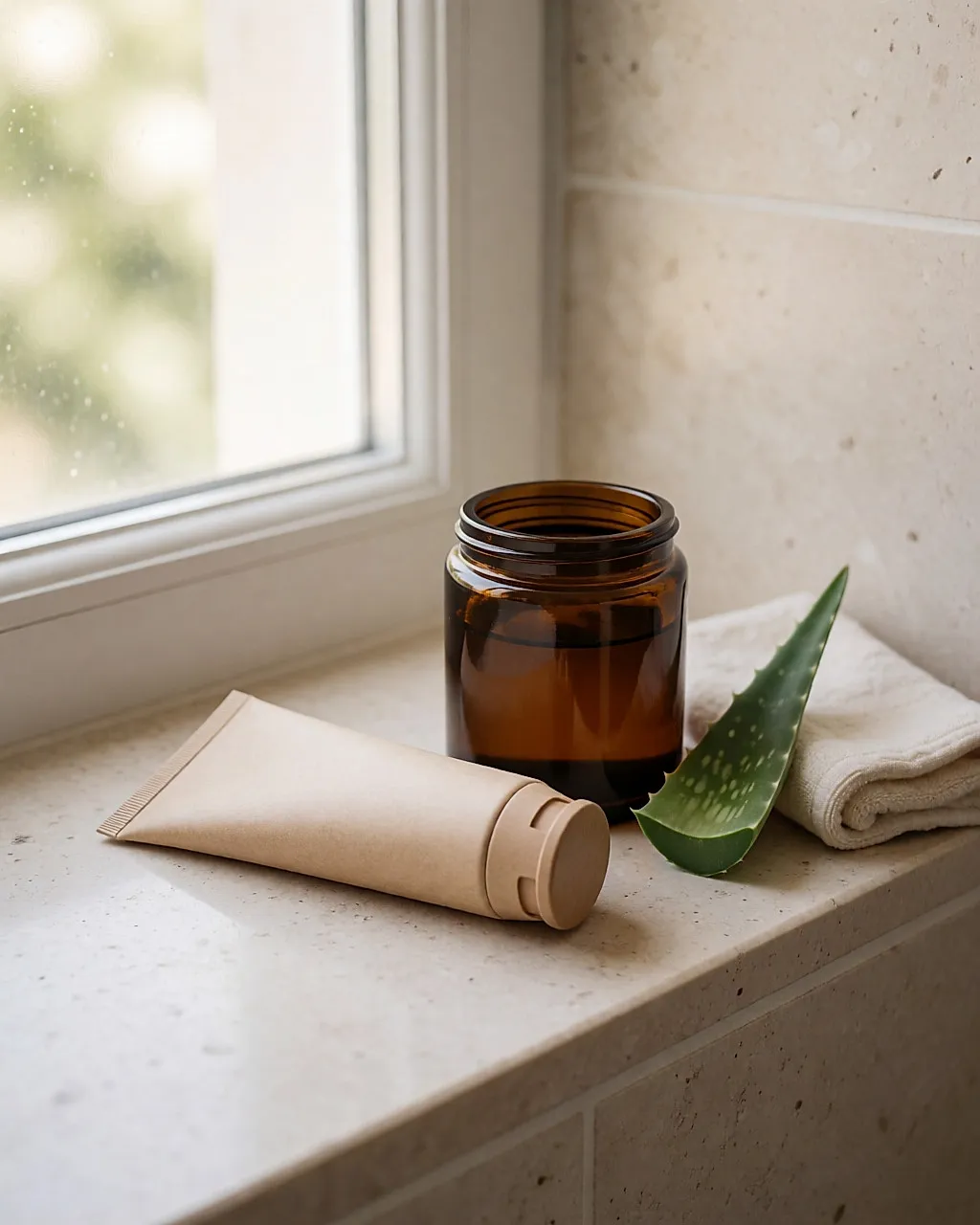
Above all, check the UVA logo and the period after opening: beyond the date shown on the bottle, the stated protection is no longer guaranteed. And remember the trade-off: an organic or mineral formula that is badly applied protects less than a conventional SPF 50 spread correctly.
Budget
Prices are a guide and vary.
- Face SPF 50 (50 ml): expect around £8 to £20 in supermarkets, high street pharmacies or beauty retailers, up to £30 for a certified organic formula.
- SPF 50 milk or spray (200 ml): £10 to £25.
- After-sun (200 ml): £6 to £18.
- So-called 'sun' supplements: £10 to £25 for a one-month course.
- UPF 50+ sun-protective clothing: £30 to £80.
- Sunglasses with UV filter: £15 to £100; the CE or UKCA marking matters more than the price.
- Private dermatology consultation: typically £150 to £300. NHS GP appointments and any onward referral are free at the point of use, but waiting times vary.
What affects the price? City and retailer (pharmacy, supermarket, beauty salon, online), range, size, and whether you choose a standard or certified formula. For UPF clothing, it all depends on the fabric and cut: a loose, covering piece often protects better than a tight, highly technical design.
Sources
- NHS, sun safety and skin cancer pages.
- Met Office and UKHSA, UV index and sun protection advice.
- Cancer Research UK, skin cancer information.
- IARC, monographs on ultraviolet radiation.
- EFSA, opinion on beta-carotene; Anses, opinion on beta-carotene in food supplements.
Food supplements do not replace a varied, balanced diet and a healthy lifestyle.



Comments
Your opinion matters: rate the article, react and reply to comments.
Comments are moderated; AI-assisted comments are flagged. Text emoticons (8-), :-), <3…) are automatically shown as images.