

A body balm and a body lotion do not do the same job, yet most of us apply them in the same way, from neck to ankles. The result: shins that feel tight under wool and a back that never asked for it. Putting the richest texture everywhere is like wearing a padded coat just to pop out for bread: it keeps you warm, but not in the right places.
Not every area needs the same layer
Skin isn't a uniform sheet. The hydrolipidic film — the mix of sebum and water that holds in moisture — varies from one part of the body to another. Shins and forearms are among the areas with the fewest sebaceous glands: hence that end-of-day tightness, once tights and wool have done their worst.
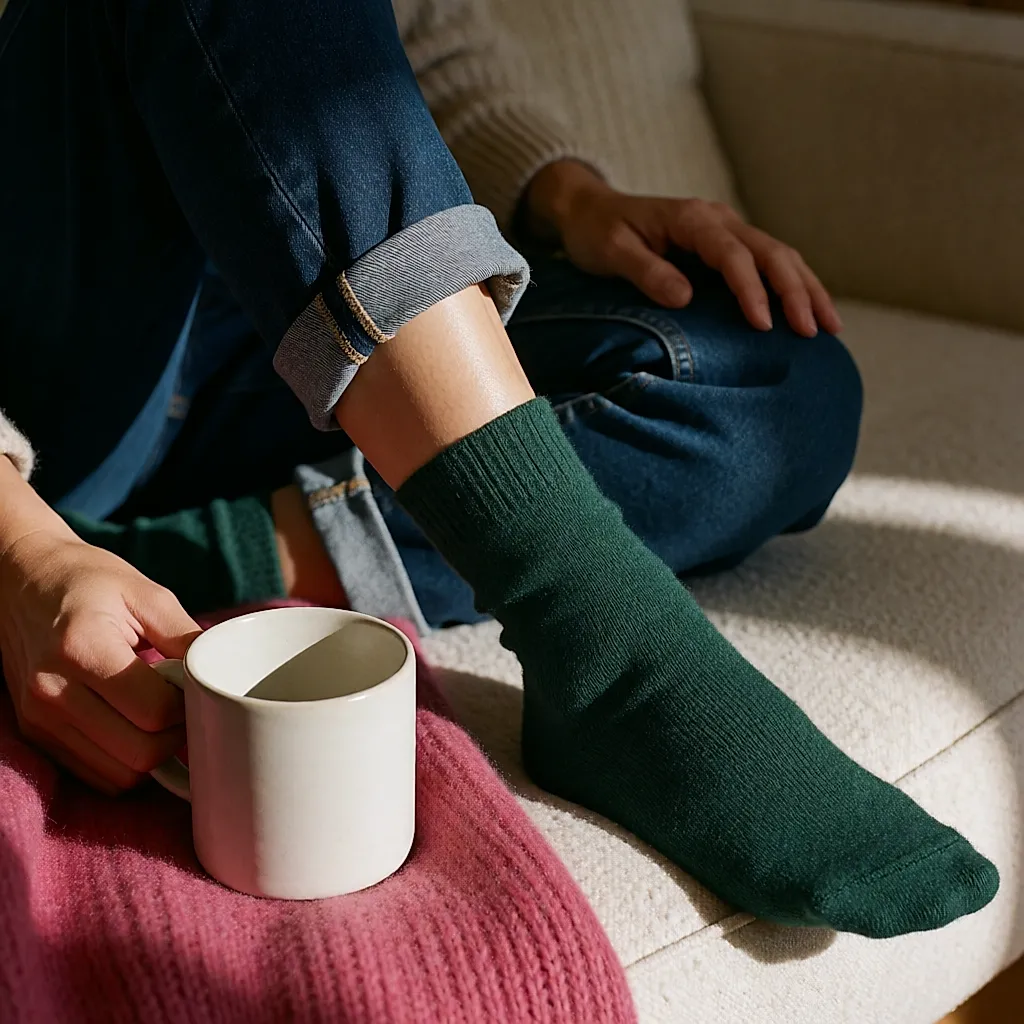
The back, chest and neck are better served and often covered, which limits water loss. So why do we slather it everywhere? Putting the richest texture there is like putting a duvet on a radiator that's already on. And I'll be honest: I don't have a precise figure for the density of sebaceous glands on your legs; it varies so much from one person to another. Your benchmark is your own: what you feel at the end of the day under jeans.
Balm is for shins and forearms
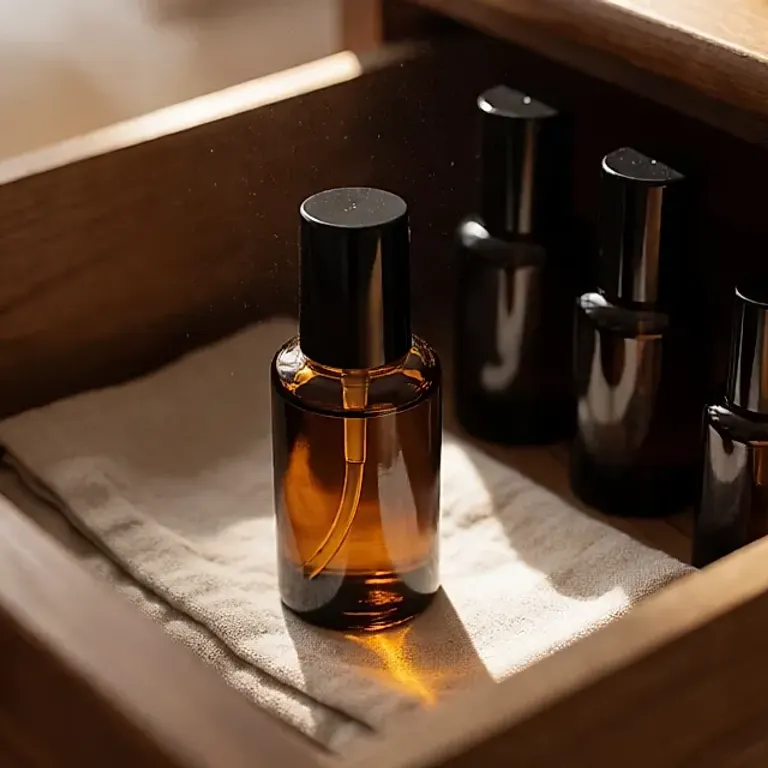
A balm is dense: shea butter, waxes, plant oils. It forms a film that slows water loss, exactly what you want on a leg that feels tight. The technique: on damp skin straight after the shower, warm a pea-sized amount between your palms, then work up from ankle to knee without rubbing. Two pea-sized amounts for both legs is plenty — no need to butter yourself like toast.
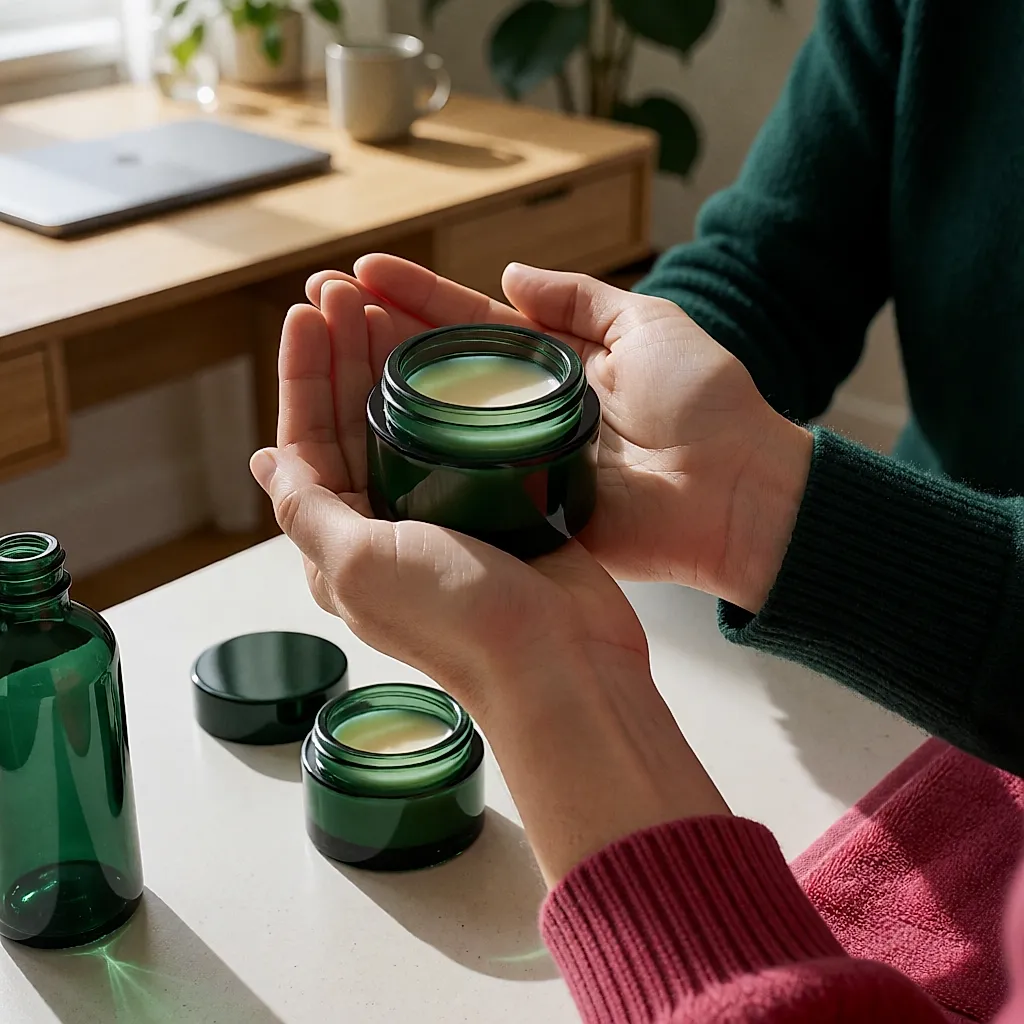
One honest caveat: balm is sticky. Apply it while you're getting dressed and it leaves a film on tights and scents your whole day. At night it's perfect; in the morning, a lotion on your legs will do a perfectly good job if you're in a rush. And heels, elbows and knees appreciate the same pot — that's where a balm earns its keep.
Back, chest and neck: lotion is enough
On these areas, a more fluid texture hydrates without suffocating the skin. Body lotion, or a gel-cream if you dislike a greasy feel, contains enough humectants — glycerin near the top — to keep skin comfortable. The neck and décolletage, exposed but rarely dried out, clearly prefer this lighter texture.
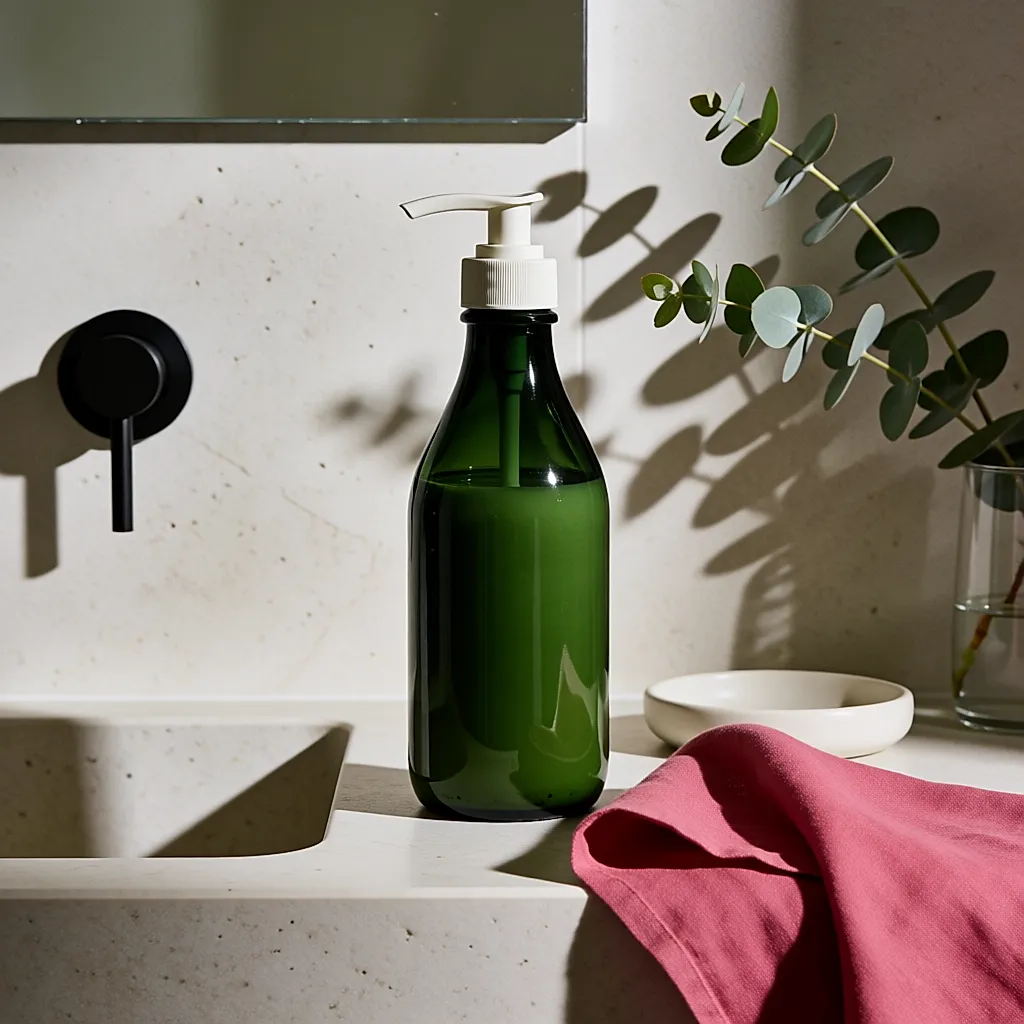
The back has another reason to be kept light: it's a covered area that rubs against bag straps, seams and chair backs. Does a covered back really need the richest texture? A dense formula sits on the surface, and pores soon make their feelings known. If your back genuinely reacts (patches, recurring spots), don't try to fix it yourself: a dermatologist is better placed to decide than we are. 'Shins are rarely where spots happen,' a pharmacist friend of mine once said; it's a bit reductive, but the idea stands.
The order that stops you smothering your back
Order matters more than you think. Start with balm on your legs and forearms, then wash your hands — properly — before moving on to lotion on the upper body. Otherwise you'll unwittingly spread the rich balm from your legs onto a back that didn't want it. And don't layer: balm then lotion on the same area is one layer too many.
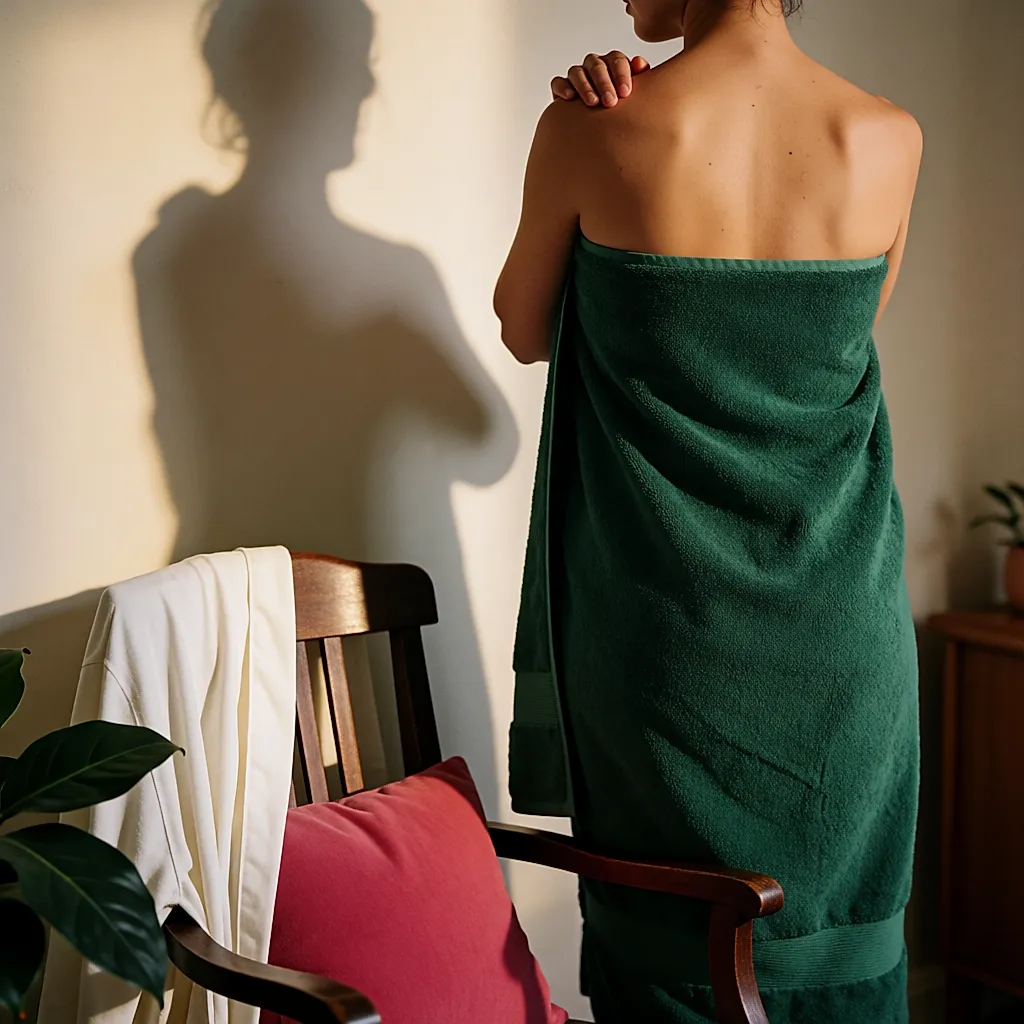
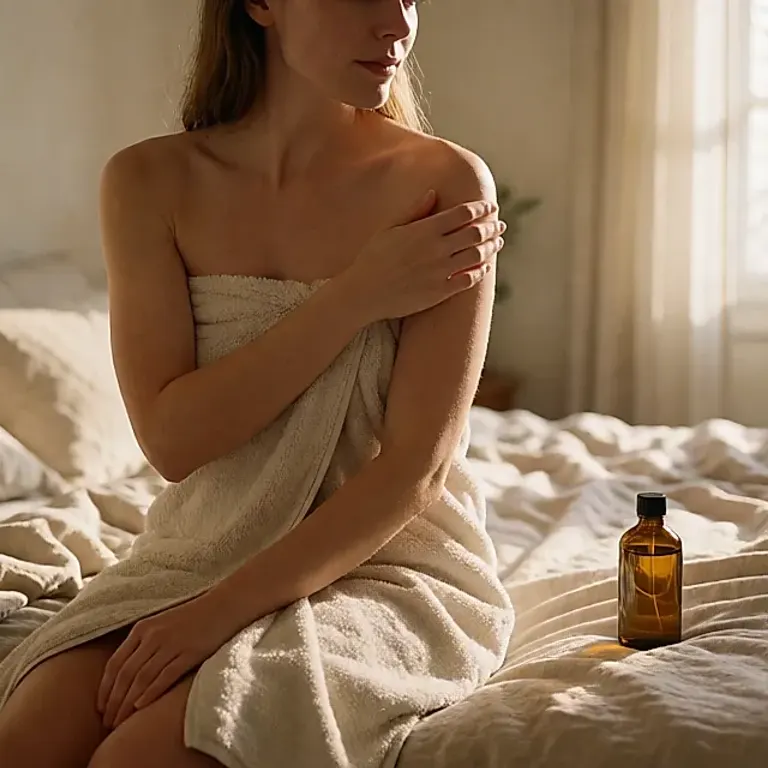
For your back, two options. Reach over your shoulder with a flat hand, moving downwards, without lingering between the shoulder blades — it's the area you can't see and always overload. Or pour lotion into the palm of your hand and sweep diagonally across the upper back. Then let it breathe while you brush your teeth before putting on a jumper: a freshly coated back under wool is a recipe for sweating.
What it costs
On price, a 200 ml body balm usually costs around £12–£30 in a pharmacy or organic beauty retailer, and roughly £6–£18 in a supermarket or refill shop. A 250–400 ml body lotion sits at about £6–£20. Prices shift depending on where you are, the size and the product line — there's no need to aim for the most expensive pot for your shins.
Do you really need two pots? A lotion for the whole body, plus a balm kept for legs, heels and elbows, is the most cost-effective approach. Go for refills where a brand offers them, glass or card packaging, and refill formats for lotion. COSMOS Organic and COSMOS Natural standards set requirements for a proportion of natural ingredients and a manufacturing charter; they do not, however, guarantee a high oil or butter content. The ingredient list is what tells you that: as a rule, if butyrospermum parkii appears near the end, it is present in a small proportion; other oils or butters can still give the texture. Under UK and EU cosmetics labelling rules, ingredients present at less than 1% can appear in any order, and that position alone isn't enough to judge a product's texture.
The tights test — Cross your legs under jeans at the end of the day. If your shins feel tight and your back is fine, you know which pot goes where. The richest texture goes on skin that feels tight, never on skin that's covered.
If you remember one thing: keep the balm for your legs. Lotion handles the rest of the body, and clean hands take care of your back. The richest pot on your shelf never needed to meet your shoulder blades.

Comments
Your opinion matters: rate the article, react and reply to comments.
Comments are moderated; AI-assisted comments are flagged. Text emoticons (8-), :-), <3…) are automatically shown as images.