

It's 7pm, you put your bag down after a day spent on your feet in shops or stuck at your desk, and your calves remind you they exist. That swollen, heavy feeling, tight just below the knee, is one you know by heart. It affects women more than men, and it comes back with a vengeance as soon as the thermometer climbs. Good news: a few habits slipped into your day really do change how your legs feel. These are the ones I keep.

Why your legs feel heavy
When it's hot, veins dilate. Blood travels back to the heart less easily, it pools, lymph does too, and fluid builds up in the tissues. Hence that padded-leg feeling, like invisible socks tight around your ankles. Two everyday habits add another layer: standing still for hours, or sitting with your legs crossed. Shifting on your feet in a shop and sitting for long stretches both slow venous return — it's mechanics, not willpower.

The move that changes everything: keep moving, a little, often
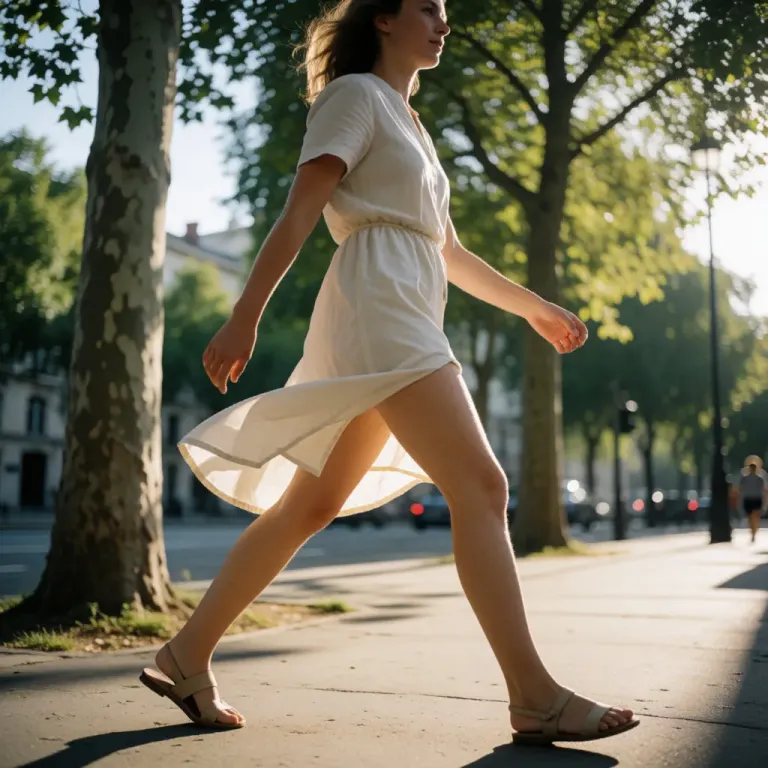
A short walk beats staying frozen in one position. A stroll to the corner shop, for example, is enough to get circulation going without wearing you out. If you can, slot a regular activity into your week, even when it's muggy: gentle cycling, swimming, brisk walking. And when it comes to what you wear, let your legs breathe. Light, fluid fabrics and roomy cuts; forget skinny jeans and tight boots. With heels, a moderate height is your best friend: high enough to feel good, low enough not to block your ankle.

The evening ritual: cool down and raise your legs
At the end of the day, give yourself a proper bit of care. A cool-to-lukewarm shower, never freezing, then, with the shower head, small circles moving up from your ankles to the tops of your thighs. Cold constricts blood vessels and brings immediate relief. At night, slightly raise the foot of your mattress: legs a little higher than your heart are more likely to ease swelling.
Forget a big cushion wedged under your calves: it kinks circulation at the knee. The idea is a gentle slope — two or three books slipped under the feet of the bed base are enough.
On your plate: aim for drainage
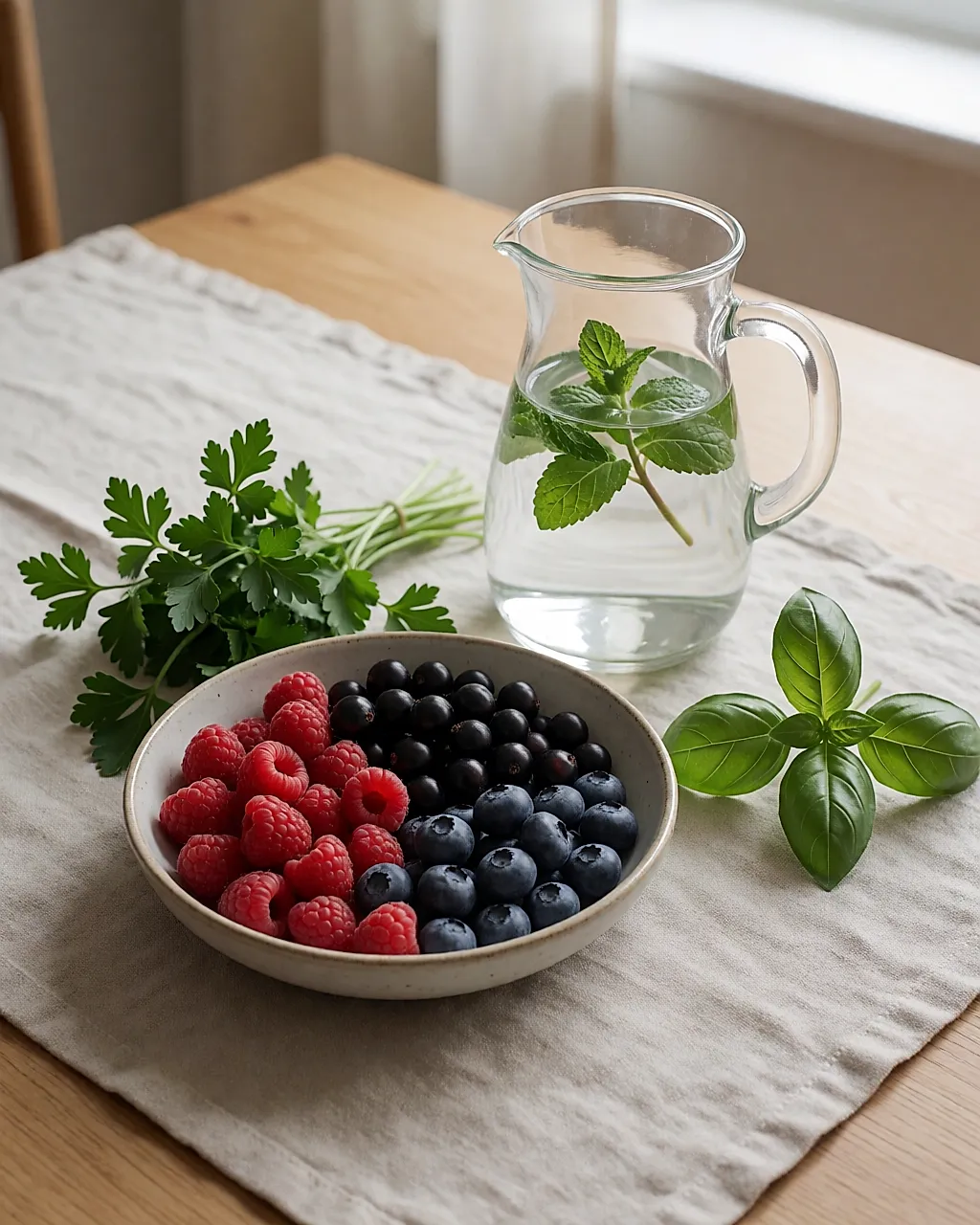
Berries — raspberries, blackcurrants, blueberries — provide antioxidants, often billed as friends of the circulation. Fresh vegetables and herbs do the rest. On the flip side, keep salt in check: cured meats, cheese and ready meals encourage water retention. And drink, especially when it's hot: water, herbal teas, green tea if you like it. Heat dehydrates you without you noticing.
Leg-care helpers
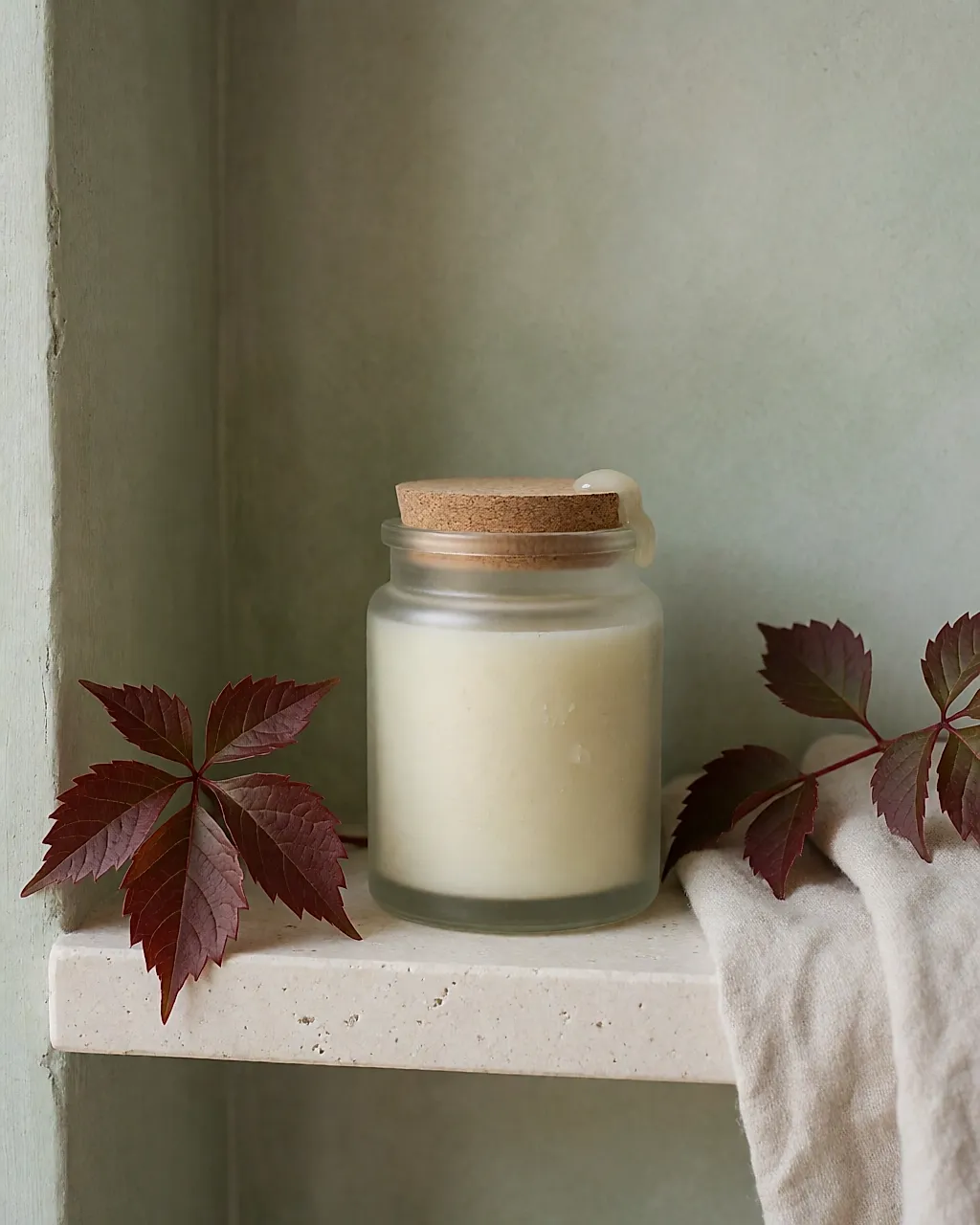
A heavy-legs product isn't magic, but a good texture changes how comfortable it feels straight away. Look for a gel or gel-cream with a fresh texture, with red vine (Vitis vinifera) or menthol extracts. The technique matters as much as the product: always massage upwards, from ankle to thigh, never the other way.
On the eco side, two things to check. First, packaging: glass, a refill or cardboard rather than a single-use plastic bottle. Second, certification: in the UK, look for COSMOS Organic or Soil Association; for French or European brands, Cosmébio and Ecocert set standards for the natural content and manufacturing processes. Remember, 'natural' printed on a bottle isn't a certification. If you can't find a credible organic option, a conventional pharmacy gel is an honest compromise: it does the job, without green claims. I haven't compared formulas one by one, let's be clear — but in practice, it's often the chill of the gel, rather than the active-ingredient list, that makes the difference at the time.
When to see a doctor
If the heaviness becomes painful, if your ankles are really swollen, if varicose veins appear, or if one leg feels hot and looks red, don't self-diagnose: speak to your GP. Heavy legs are often harmless, but they can signal venous insufficiency that needs monitoring.

Budget
- Gel or gel-cream for heavy legs from a pharmacy or beauty retailer: expect around £8–£25 for 100–200ml, depending on brand and size.
- Natural or organic version, from a health-food shop, pharmacy or online: more like £10–£30; certification and glass packaging push the price up.
- Lymphatic drainage or leg massage at a salon: £50–£90 per session, more in big cities.
- Compression stockings or socks: £12–£35 a pair, and they may be available on NHS prescription (prescription charges may apply, depending on where you live and whether you're exempt).
Prices vary by size, certification, where you buy and brand. Cheapest: supermarkets and online pharmacies or beauty retailers. Most convenient: your local pharmacy.
Sources
- NHS, 'Varicose veins' and 'Swollen ankles, feet and legs (oedema)', nhs.uk
- NICE, 'Varicose veins: diagnosis and management', nice.org.uk
- COSMOS, 'COSMOS Organic and Natural Cosmetics Standard', cosmos-standard.org
- Soil Association, 'Organic beauty and wellbeing certification', soilassociation.org
- Cosmébio, 'Organic cosmetics charter', cosmebio.org (French certification body)
- Ecocert, 'Ecological and organic cosmetics standard', ecocert.com


Comments
Your opinion matters: rate the article, react and reply to comments.
Comments are moderated; AI-assisted comments are flagged. Text emoticons (8-), :-), <3…) are automatically shown as images.