
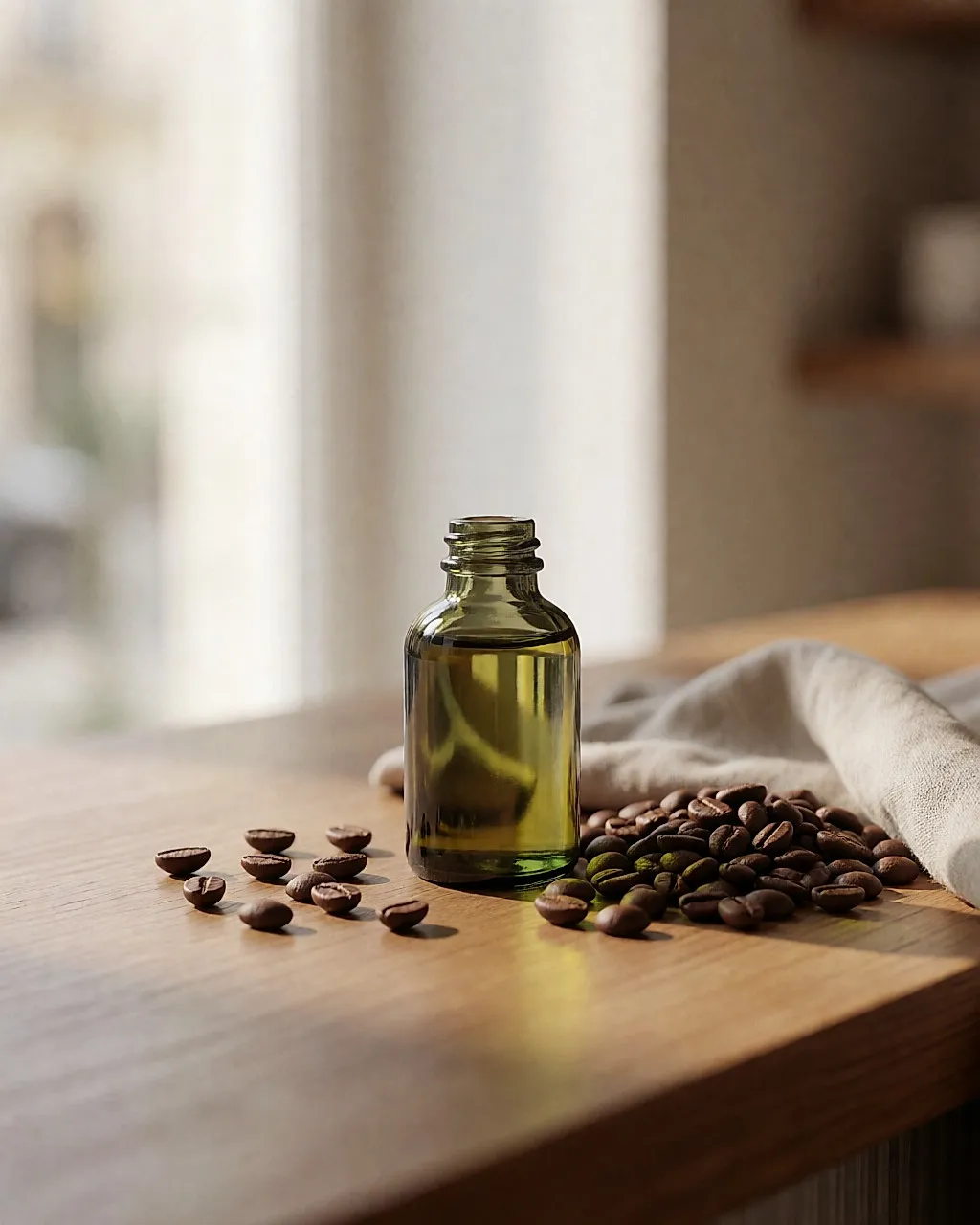
You know olive oil, walnut oil, sesame oil. Coffee oil, though, you may never have come across. Yet for a few years now it has been quietly making room for itself on the shelves of fine food shops, between fruit vinegars and regional olive oils. A pretty bottle, an intriguing promise, a price that climbs quickly: before you let yourself be tempted, it’s worth taking a closer look at what’s inside.
What exactly is it?
Coffee oil is extracted from the beans, usually after roasting, by pressing. Some versions are pure; others are a blend of extra virgin olive oil and coffee oil, a formula that makes the product more affordable and easier to use every day. In colour, it leans towards gold with green reflections. On the nose, the aroma of freshly ground coffee dominates, with notes of walnut, hazelnut and spice. On the palate, the texture is round and the finish long, slightly bitter, a little like a strong espresso.
What we know, what we don’t yet know
What we know: it is a fat, and like all fats, it provides around 9 kcal per gram. It also supplies unsaturated fatty acids and tocopherols, in other words vitamin E. It also contains diterpenes, including cafestol and kahweol.
That last point deserves a pause. Cafestol, found in the lipid fraction of coffee, is known to raise LDL cholesterol in some consumers. This is one reason why filtered coffee does not have the same effect on blood lipid levels as unfiltered coffee. And raised LDL is a cardiovascular risk factor: it is not a detail to be waved away. We cannot rule out a notable content of cafestol and kahweol, especially in a pure coffee oil; if you have high cholesterol or cardiovascular risk factors, speak to a healthcare professional before regular consumption, rather than relying on an article.
What we don’t yet know: studies on cafestol look at coffees, not the coffee oils sold in shops. Levels vary according to variety, roast and extraction method, and precise product analyses are rarely available. Current data therefore suggest occasional use, in small quantities, rather than daily consumption at high doses.

In practice, use it as a finishing oil
Start with a drizzle, added off the heat, so as not to damage the aromas. A few simple pairings that work well: sea bream or salmon en papillote, a chicory salad with walnuts, avocado with yoghurt and a little salt, a potato salad, apple compote, a cake or a chocolate cream.

French dietary guidelines recommend limiting added fats and varying your sources. So this oil has its place as a finishing touch, not as a cooking base: it is neither made for searing nor for replacing your everyday oil.
Usage guidelines — A tablespoon weighs around 10–15 g: factor it into your meal. Keep the bottle away from light and heat, preferably in tinted glass, and use it within months of opening. An oil rich in aromas oxidises on contact with air, and the coffee scent fades well before the bottle is empty.
Budget
In fine food shops, expect to pay in the region of £10–£25 for 250 ml of pure oil, and more like £9–£17 for a blend with olive oil. The range depends on several things: the origin of the beans, the extraction method, whether it is organic, and the amount of coffee needed — it takes a lot of beans to produce a little oil, which partly explains the prices.
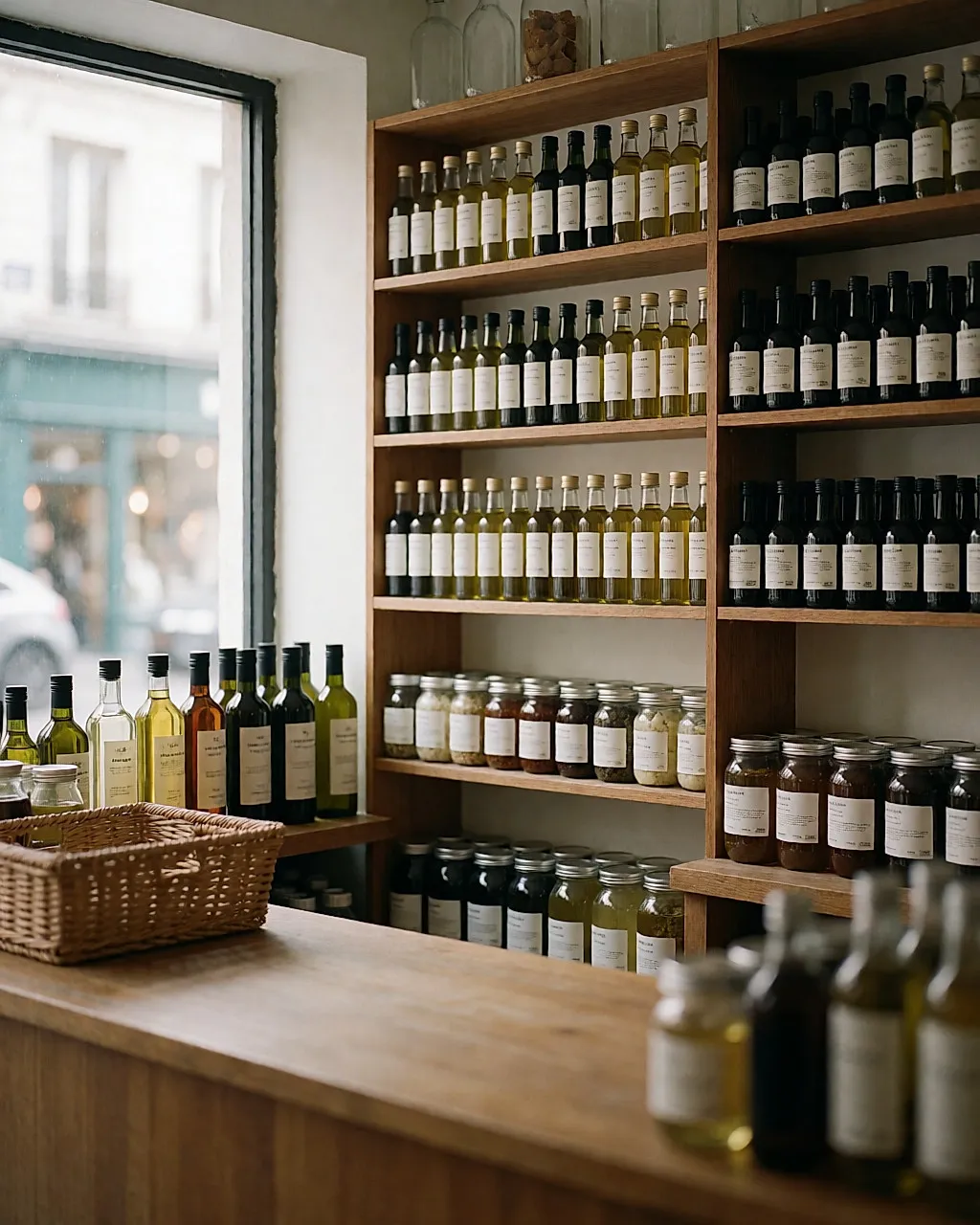
Where to find it? At coffee roasters, in fine food shops, health food shops and on producers’ websites; less often in supermarkets, where the range is still very limited. If you only find a conventional version, check at least two simple criteria: the origin of the beans and the glass container, which is recyclable and protective. An opaque or tinted bottle is a good sign for preservation, even if it says nothing about the quality of the coffee used.
One common-sense point remains: at that price, it is better to buy a small bottle and finish it than to let a large one sleep at the back of the cupboard.
Sources
- Anses, Updating the French PNNS dietary guidelines for adults, opinion and collective expert report, 2016-2017.
- Urgert R. and Katan M. B., “The cholesterol-raising factor from coffee beans”, Annual Review of Nutrition, 1997.
- Santé publique France, National Nutrition and Health Programme — mangerbouger.fr.

Comments
Your opinion matters: rate the article, react and reply to comments.
Comments are moderated; AI-assisted comments are flagged. Text emoticons (8-), :-), <3…) are automatically shown as images.