
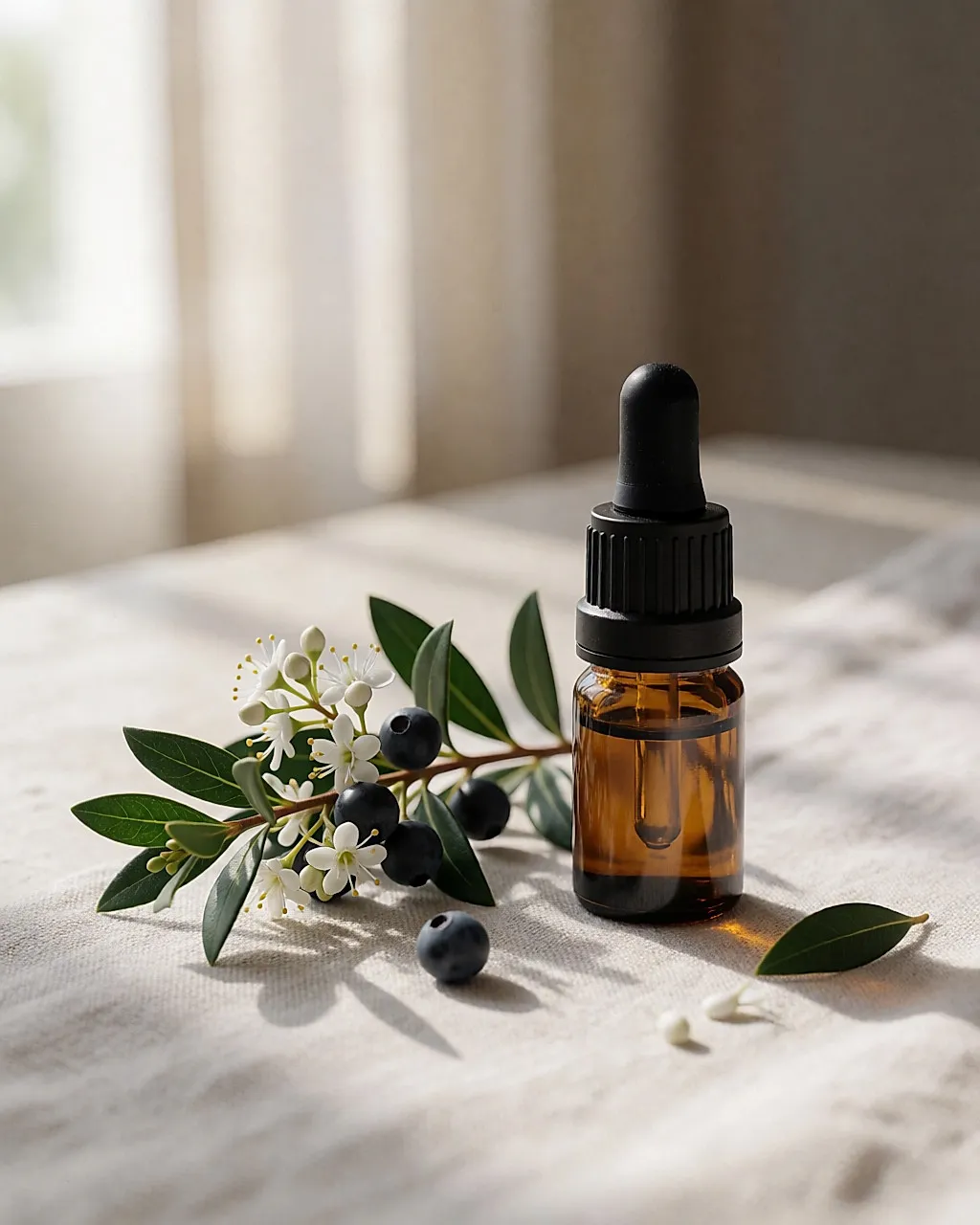
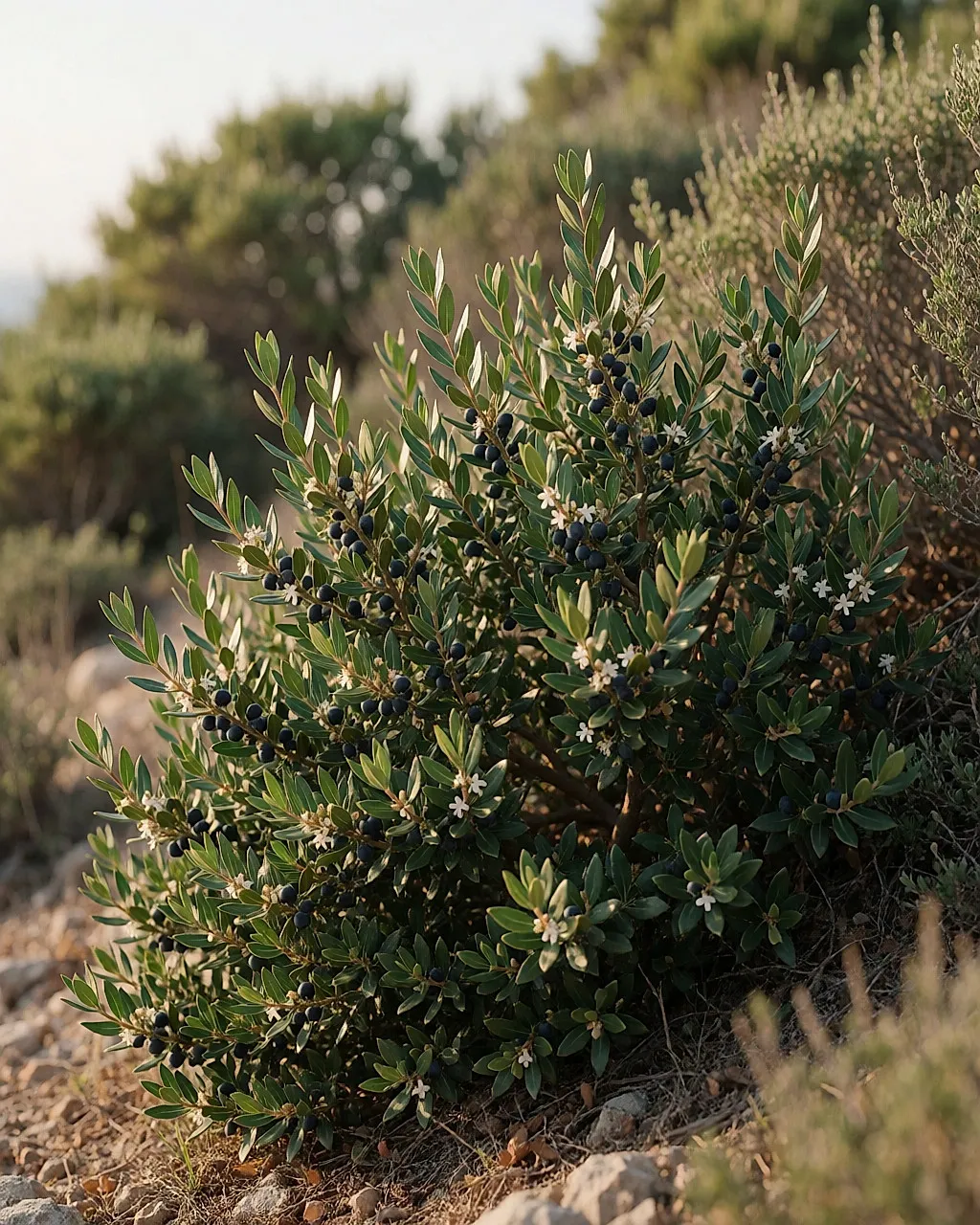
Myrtle is that intensely aromatic shrub that grows all around the Mediterranean. Its white flowers and blue-black berries earned it a charming reputation: as early as the 16th century, its leaves were distilled to make a water credited with helping skin complaints. Today, the essential oil distilled from it is traditionally described as antiseptic and purifying.
What we know, and what we don't
Current evidence suggests it can play a supporting, comfort-led role: air that feels fresher, a feeling of freshness. What the data do not support is any precise therapeutic effect. It makes no diagnosis and is no substitute for an ongoing treatment. Speak to a healthcare professional, especially if you take other medicines or are already under medical supervision.
In practice
In a diffuser, a few drops will scent the air in a room. Used externally, dilute it in a carrier oil and massage it into the chest, upper back or lower back, depending on the area that bothers you. On the skin, always diluted, applied to a small area and only briefly. It is never swallowed, and never applied neat to mucous membranes.
Pregnancy, breastfeeding and young children: use is not advised. If you are unsure, ask your pharmacist or GP — it is the best precaution you can take.
Budget
Expect to pay somewhere in the region of £8 to £20 for a 10 ml bottle. The price varies with the variety or chemotype (green myrtle, red myrtle), the origin and the certification. An organic certification — such as the French AB label or a private scheme like Ecocert — covers cultivation and traceability; it does not guarantee greater efficacy. Choose an amber glass bottle, which is more stable, and check the botanical name Myrtus communis. You will find it in pharmacies, health food shops or natural beauty retailers.
Sources
- Anses — French agency for food, environmental and occupational health & safety: opinions and guidance on essential oils
- ANSM — French medicines regulator: good practice with essential oils
- European Medicines Agency (EMA) — community monographs on herbal medicines

Comments
Your opinion matters: rate the article, react and reply to comments.
Comments are moderated; AI-assisted comments are flagged. Text emoticons (8-), :-), <3…) are automatically shown as images.