
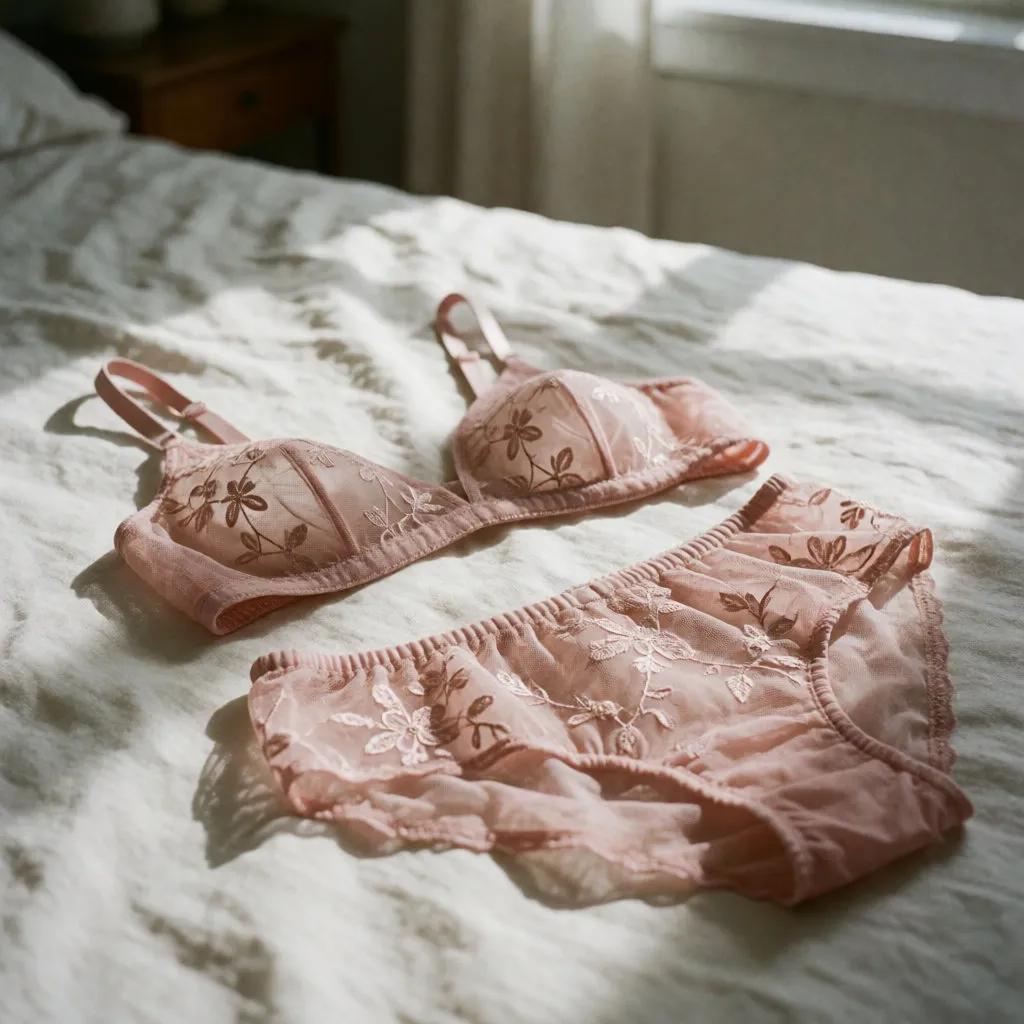
If you've just stumbled across a holiday photo and found yourself digging through your summer lingerie drawer, I get it. Between the pieces you adore and those you've never really worn, summer lingerie is particular: it's chosen close to the body, which means close to comfort. Yet we still treat it as a mere detail, when it can make or break an entire day's outfit.
Good news: the 2026 season hasn't reinvented everything, but it has confirmed a few ideas that hold up remarkably well, and shaken up a habit or two. Let's take stock, without the mythology.
Lace, tulle and powdery shades: the trio that never dies
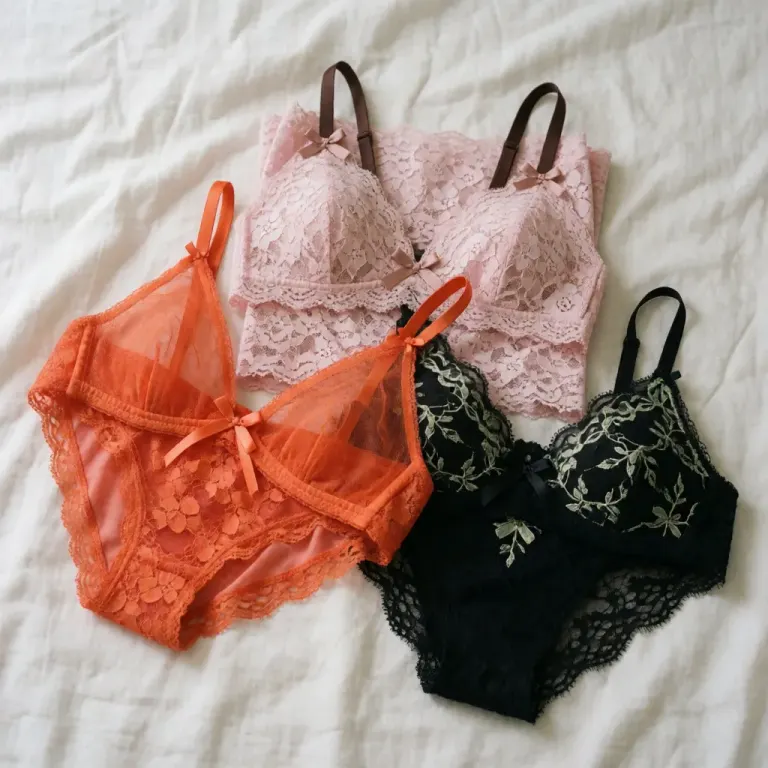
Every summer, the same story: we think summer lingerie is going to reinvent itself completely, and we end up back with the same ingredients. Fine lace, airy tulle, soft shades — ivory, powder pink, nude — still make up the core of summer collections. Honestly, we're not complaining!
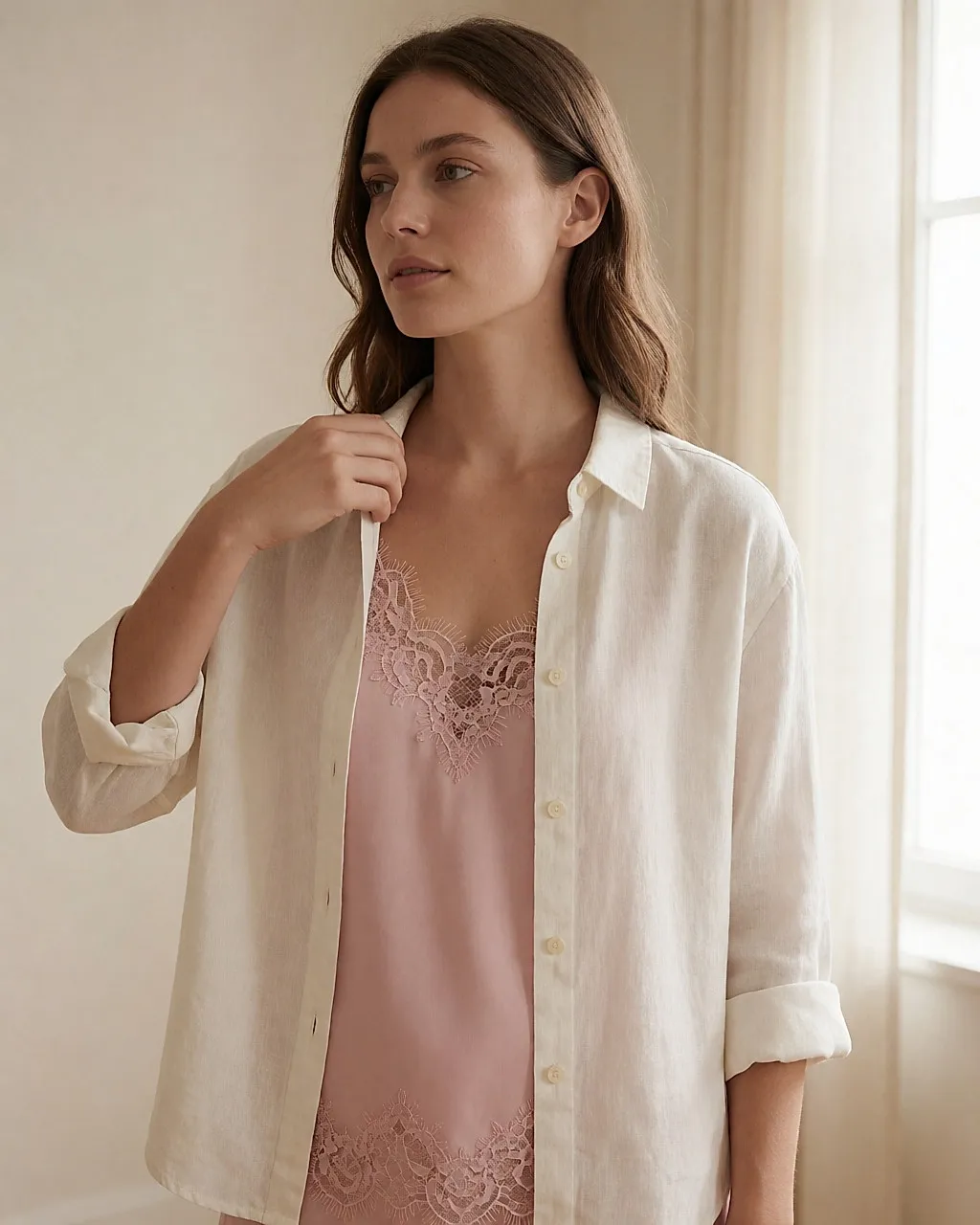
What has changed, though, is the feel and the drape. Tulles have become lighter, laces softer, size ranges broader without style suffering. This isn't a lab test: I haven't tried on every style of the season! But comparing what's out there, the continuity is obvious.
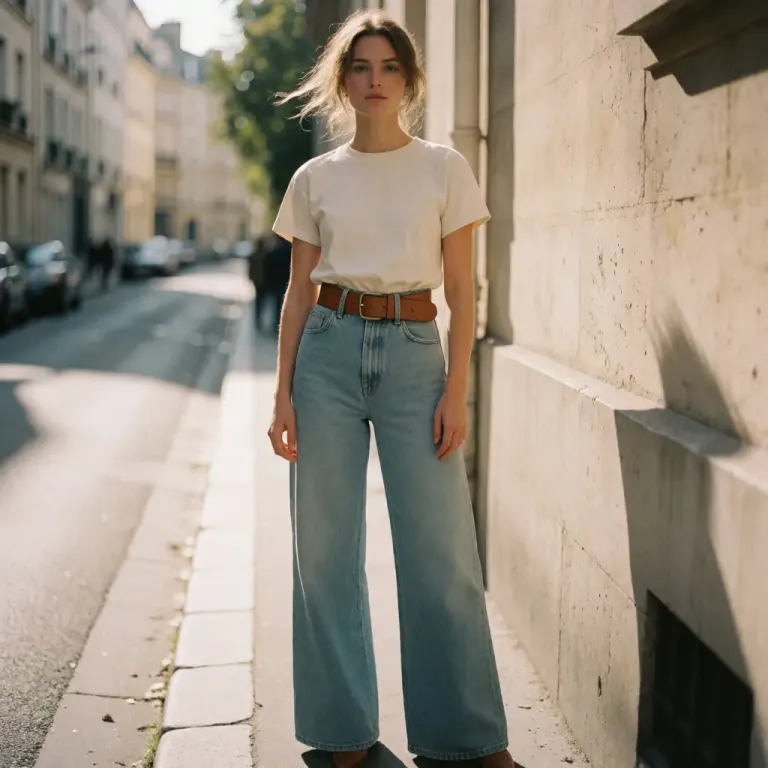
And then there's a way of wearing lingerie that has really changed: it's now worn as a piece in its own right, not as something to hide. A lace camisole slipped under an open jacket, a bralette peeking out from a scooped top, a tulle bodysuit worn as a total look with wide-leg trousers: that's layering that works without tipping into festival territory.
What the 2026 season really changed
The word 'inclusivity' wasn't yet a selling point a few seasons ago. Today it's hard to ignore: shoppers are demanding real size diversity, and brands are following — sometimes seriously, sometimes only on the surface.
Another shift, more concrete: materials. Recycled polyamide, certified laces and knickers cut from production offcuts have made themselves at home on the rails. Does it really change anything against the skin? It all depends on the weave and the lining. A note of caution, though: a recycled yarn isn't automatically more breathable than a conventional one. But some fibres do feel more pleasant when the temperature climbs!
On labels, it's worth knowing what they really guarantee. OEKO-TEX Standard 100 certifies compliance with limit values for certain harmful substances in the finished fabric, not the organic origin of the fibre. GOTS covers organic cultivation and social criteria. The Global Recycled Standard certifies a proportion of recycled material. Three different promises, often confused!
Then there's end of life, rarely highlighted: a piece that's too worn can go into textile recycling, and one that's barely worn can simply change hands. On this front, some brands sew locally or in Portugal — information worth seeking out.
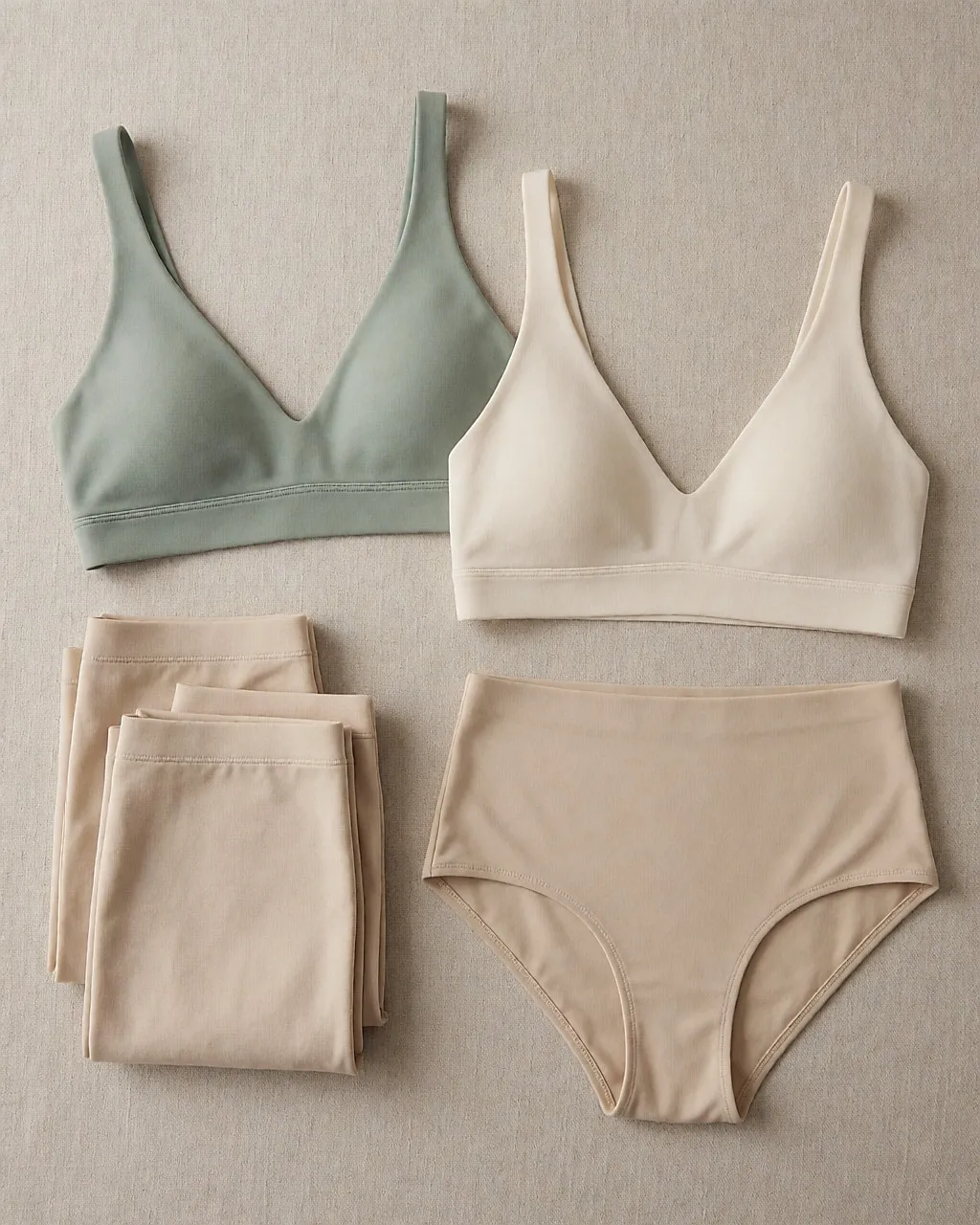
And then there are the cuts. Heavily padded push-ups and low-rise thongs have given way to softer shapes. Triangle bras, bralettes, high-waisted briefs: under a linen dress, they're often far more comfortable!
How to choose your summer lingerie, practically
The move that changes everything comes down to one sentence: test the fabric before the shape. A beautiful style that itches will end up at the back of the drawer as soon as the first warm day arrives. A soft tulle and supple lace, you'll wear from morning to night without thinking about them.
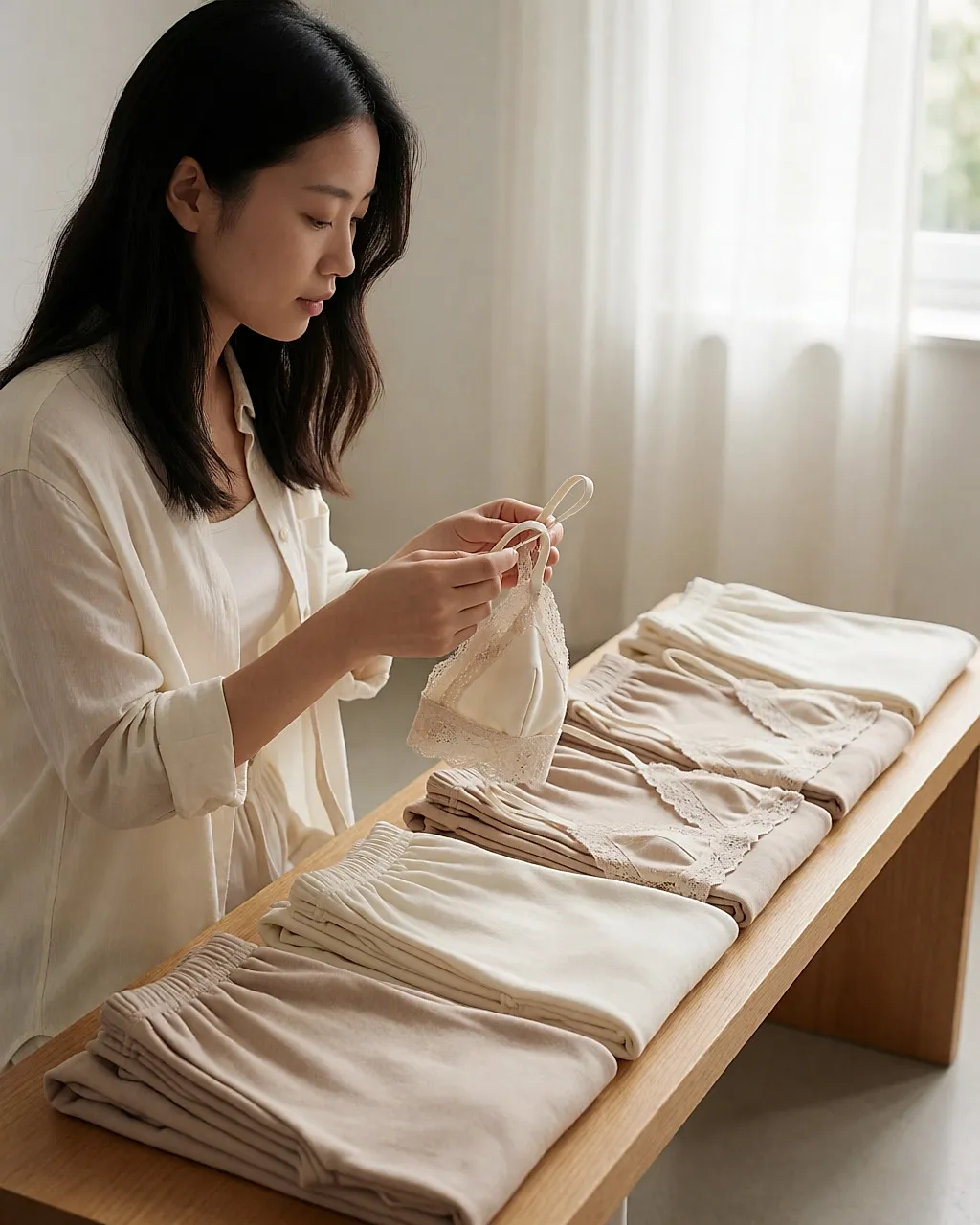
A few pointers when buying:
- Look for flat seams and wire-free bras for long days.
- In high heat, choose fabrics that let skin breathe: cotton, modal, linen.
- With lace, look at the fineness of the thread — the finer it is, the lighter it feels.
- Under light-coloured clothes, nude disappears better than white.
- For exercise, a conventional technical style is often still the most effective: the eco compromise is real, and it's OK to say so.
Tester's confession: I spent summers falling for beautiful lace that didn't last three hours! Since then, I've reversed the order — fabric first, colour second, style last. The result: I actually wear what I buy. Léna's verdict: yes to a crush, as long as it passes the first heatwave test.
Sensuality, yes, but chosen
The real lesson remains: summer lingerie doesn't have to choose between comfort and seduction! A light nightdress, a lace set that follows the lines without squeezing: that's what lasts through summers without showing its age. Sensuality is a look you choose, not a straitjacket you endure.
Budget
Budget-wise, prices vary enormously depending on where you shop and the piece.
- Supermarkets and entry-level brands: expect around £7 to £22 for knickers, £13 to £35 for a bra.
- Specialist lingerie brands: more like £26 to £68 per piece, and £68 to £155 for a full set.
- Recycled or certified fibres: often £30 to £80 per piece, depending on certification and where it was made.
- Second-hand and outlet: £4 to £45 depending on condition, brand and how rare the size is.
What makes the price vary? The city — London versus the rest of the UK —, the range, the fineness of the lace and the type of fibre. A recycled tulle piece often costs a little more, and its care weighs in the balance too: hand-washing or a mesh bag, drying flat.
Where to find it all? Supermarkets and high-street chains for breathable basics, specialist boutiques and department-store beauty halls for statement pieces, and especially online for emerging labels and less common sizes. And don't forget second-hand: for lingerie that has never been worn, tags intact, it's one of the best ways to access quality without blowing the budget.
What really lasts through the summers
So yes, summer lingerie can be alluring! Season after season, it remains so — as long as you wear it, not just admire it in a shop window. Breathable fabric, a cut that follows the silhouette without compressing it, a little chosen sensuality: that's your summer capsule wardrobe. Over to you!
Sources
- OEKO-TEX — oeko-tex.com
- GOTS (Global Organic Textile Standard) — global-standard.org
- Textile Exchange (Global Recycled Standard) — textileexchange.org
- ADEME — ademe.fr
Comments
Your opinion matters: rate the article, react and reply to comments.
Comments are moderated; AI-assisted comments are flagged. Text emoticons (8-), :-), <3…) are automatically shown as images.