
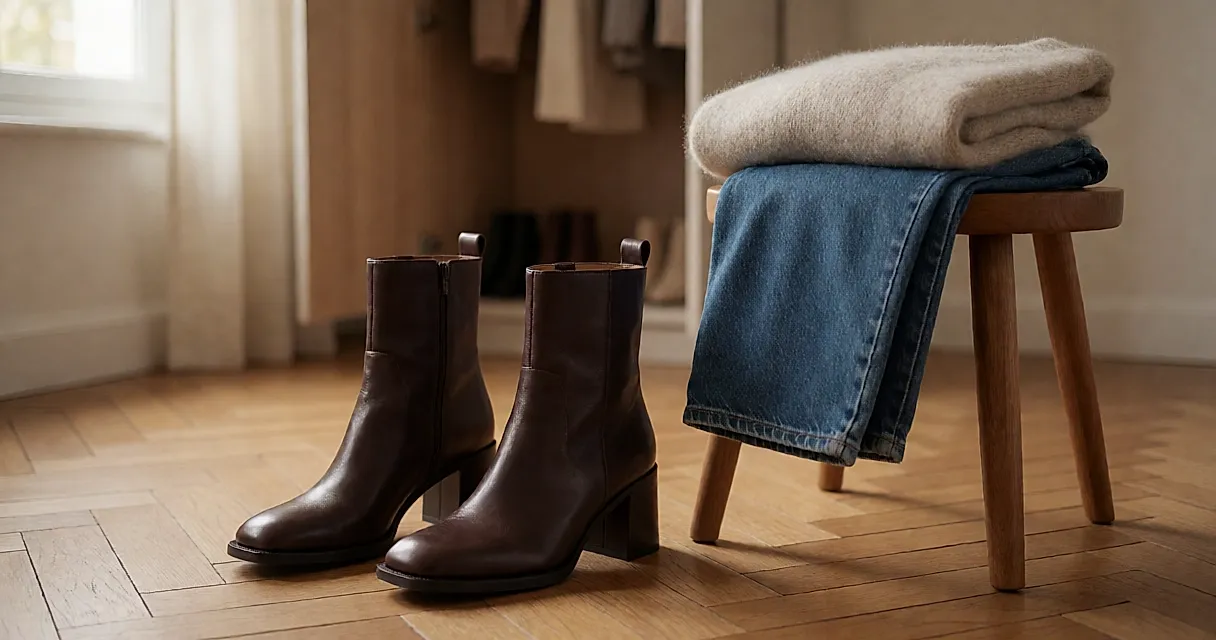
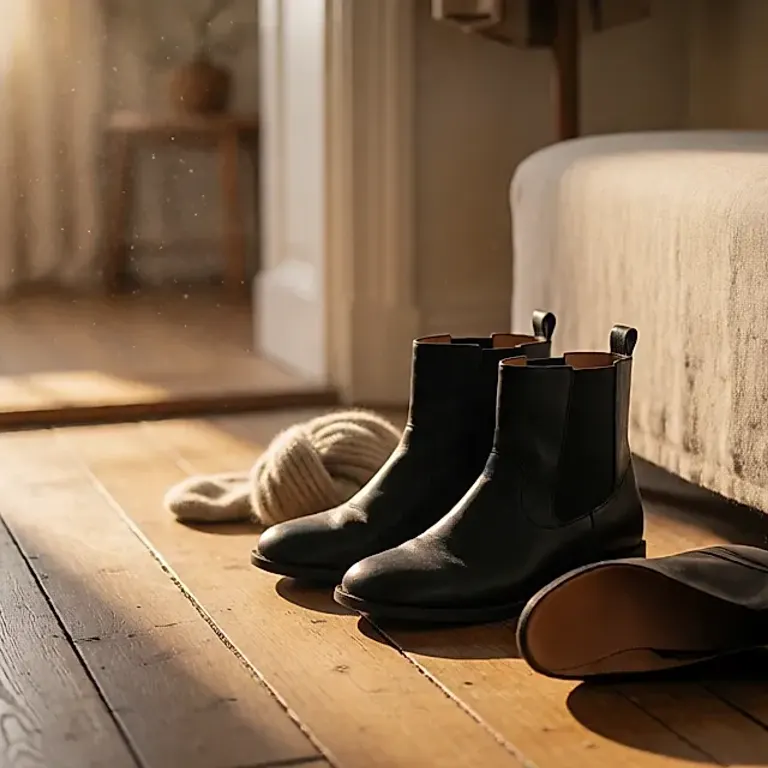
Tuesday morning in November, standing in front of the wardrobe: the jeans fit, the jumper works, and somehow nothing holds together. The missing piece isn't visible in the mirror — it's the shoes. This season, start there: a square-heeled ankle boot on the floor, and the outfit builds itself around it.
The shoe first, the outfit after
The reflex dates from the years when accessories meant the bag, the earrings, the scarf — shoes came last, often by default. In plenty of wardrobes the order has flipped: you begin with a square-heeled ankle boot and work upwards. Straight jeans cropped clean above the ankle, a slightly loose jumper, a coat. Nothing dramatic, and yet the whole thing reads differently, because the shoe sets the line. The heel fixes the visual height of the hem, the shape of the toe decides how long your leg looks, the sole sets the rhythm of your walk.
It also explains why jeans that "worked" with trainers can look odd with a smarter pair: the hem sits differently, the ankle is covered or exposed, and the silhouette recalculates in a second. Nothing disastrous, but the order in which you try things on matters more than you'd think. Once the pair is right, the jeans, jumper and coat fall back into place without a fuss.
More choice, more shapes
Collections point the same way: the footwear offer looks broader, with more styles per season, colour variations on a single shape, and less uniform heel shapes — square, curved, slightly flared, sometimes wider at the base. Houses such as Repetto and Roger Vivier built their reputations on shoes, and shoemakers still offer repairs and resoling. It isn't a break with the past so much as a rebalancing.
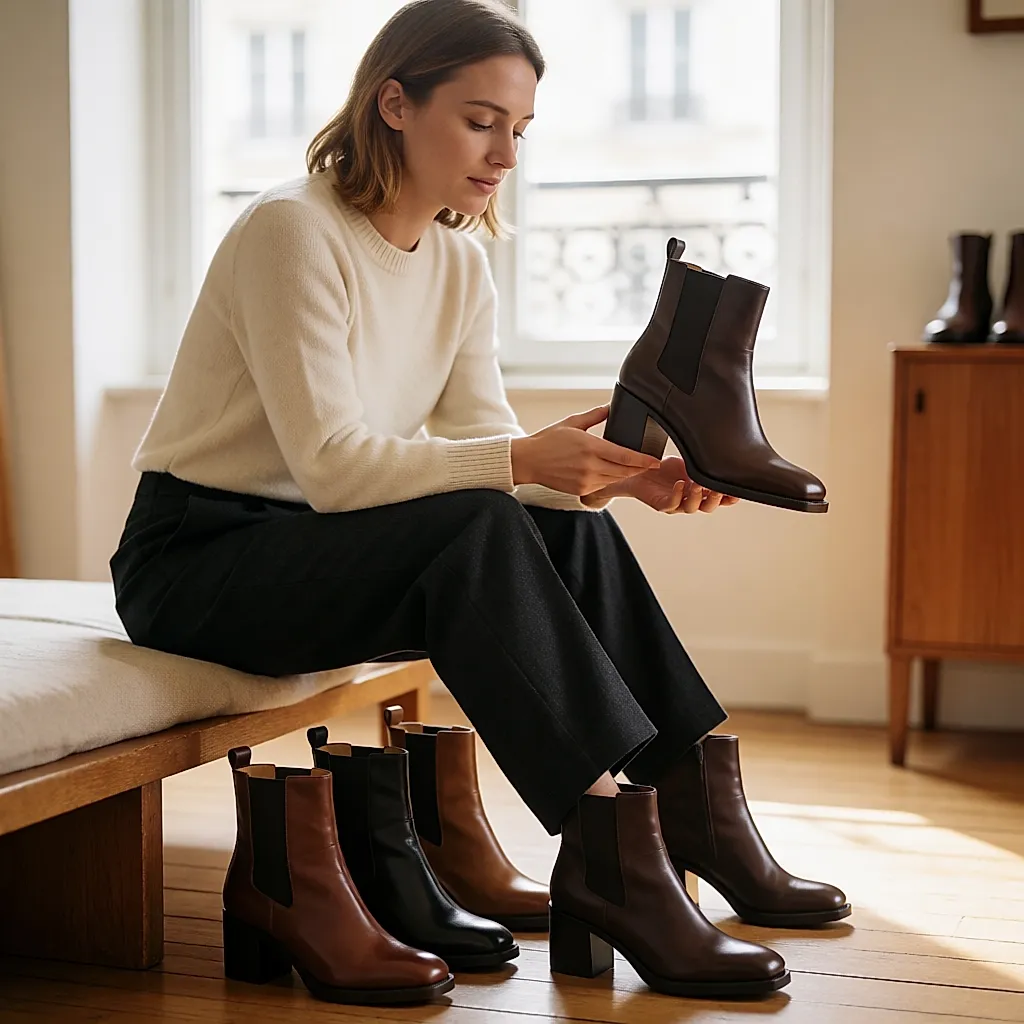
On materials, leather is back in force, including at mid-market retailers. Depending on the quality of the upper and how it is put together, leather can hold its shape differently over time. The sensible check is the lining, the fibre content inside and the way the sole is attached — if it is stitched, it can be replaced. Does any of this actually make a difference? Yes, in wear: a pair you keep for five years can work out cheaper in the long run, even at £200.
Five minutes on your feet to judge a heel
A heel that has to last longer than one evening is judged in the shop, not in your living room. First, stand up for a few minutes without leaning on anything: if you can feel your toes pushing towards the front, the size is too small, even if you are told it will stretch. Then walk ten metres or so, heel down first, then foot flat: to get through a Monday morning as well as a dinner, many people find a moderate square heel is the practical choice. Look at the surface area under the ball of your foot — the narrower it is, the shorter the evening will be.
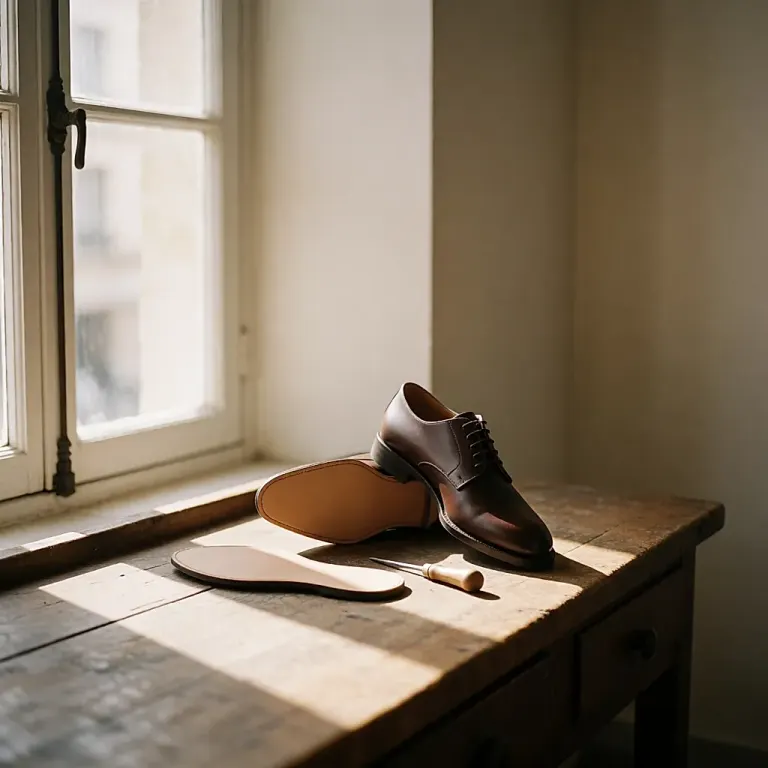
The heel counter, the stiff piece at the back, should hold your heel without biting into it: a firm counter can limit slipping. Finally, turn the shoe over: the sole should be replaceable by a cobbler.
Let's be honest: nothing suits everyone. A fine 8 cm heel worn through a whole day is still an evening choice for many of us, and a very pointed shape lengthens the foot but is less forgiving of wider toes. If you have strong calves or fragile ankles, a wide-heeled ankle boot will be steadier than a minimal court shoe. It isn't a question of taste, it's a question of support.
What to spend on a pair
The budget trade-off is simple: move part of the accessories allowance from bags to shoes. Expect broadly £90 to £170 for a well-made leather pair at a fashion retailer, £170 to £320 at a specialist shoe shop, and upwards of £350 for premium footwear built to be repaired. Can the bag wait? Often, yes — it has never moved an outfit forward a single step.
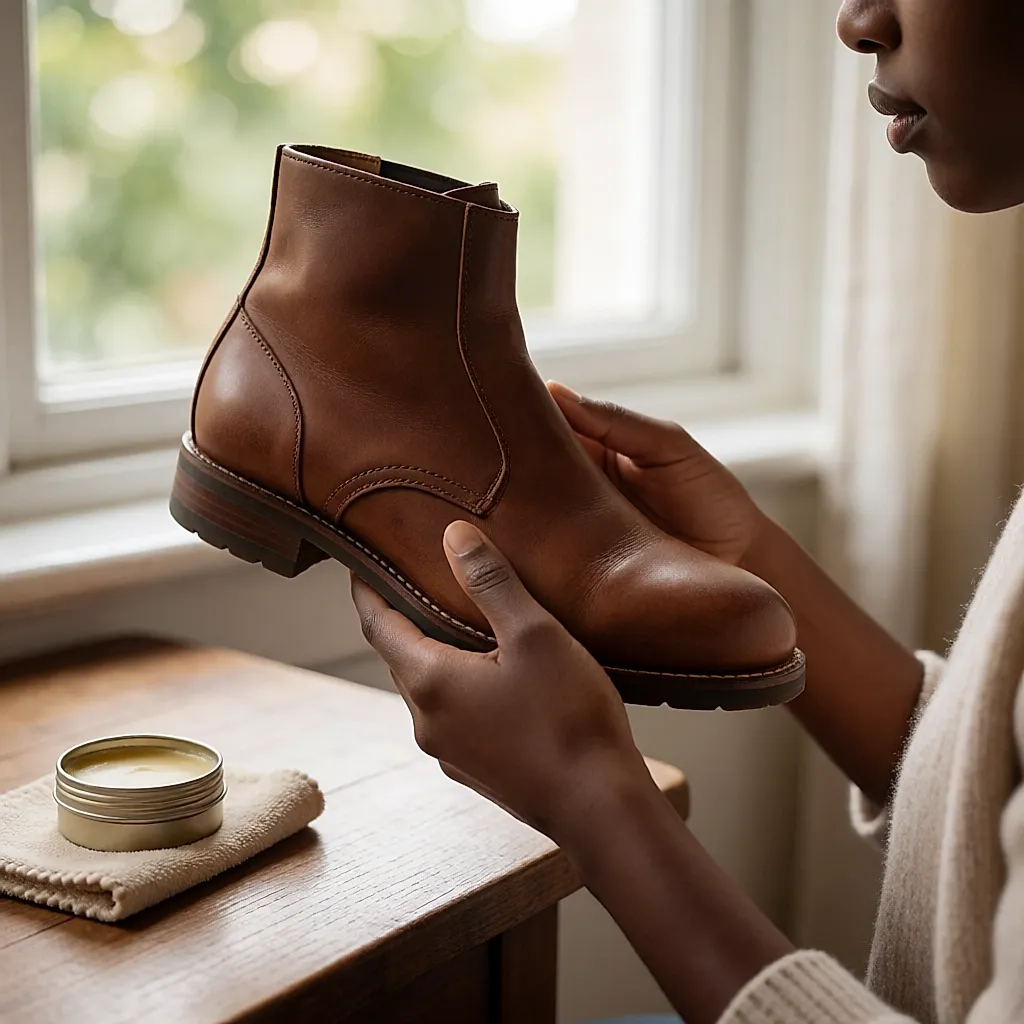
A full resole with new heels usually comes in at around £35 to £80 depending on the city and the type of sole; toe taps and heel plates fitted at the point of purchase usually cost £12 to £25. Pre-owned is a good route when the sole is intact: check the wear under the ball of the foot and the state of the heel counter before you commit. Online, trust the profile shots — that is where you see the true heel height, not in the three-quarter view.
In the shop, three quick checks: walk twenty steps in a row, press the heel counter with your thumb (it should resist), and bend the shoe under the ball of the foot — if it folds anywhere, the sole is unlikely to last the season. And take the socks or tights you will actually wear.
The right purchase is the pair that works with Tuesday's jeans, Saturday's skirt and Thursday's trousers: it sets the tone, and the rest of the wardrobe follows.
Comments
Your opinion matters: rate the article, react and reply to comments.
Comments are moderated; AI-assisted comments are flagged. Text emoticons (8-), :-), <3…) are automatically shown as images.