
Ray-Ban: the sunglasses and the myth that endures
There's bound to be a pair rattling around in a drawer somewhere, or a model catching your eye behind a shop window. Ray-Ban is the brand we think we know inside out — and whose history most of us only half know. So why on earth do these frames keep sailing through the decades without a single wrinkle? Let's rewind.

A story born in an optician's workshop
Before the sunglasses came the workshop. In 1853, in Rochester, New York State, the German optician John Jacob Bausch went into partnership with Henry Lomb. The two men founded Bausch & Lomb, a house that made frames, optical equipment and lenses. The sun, at this stage, was not yet the subject.

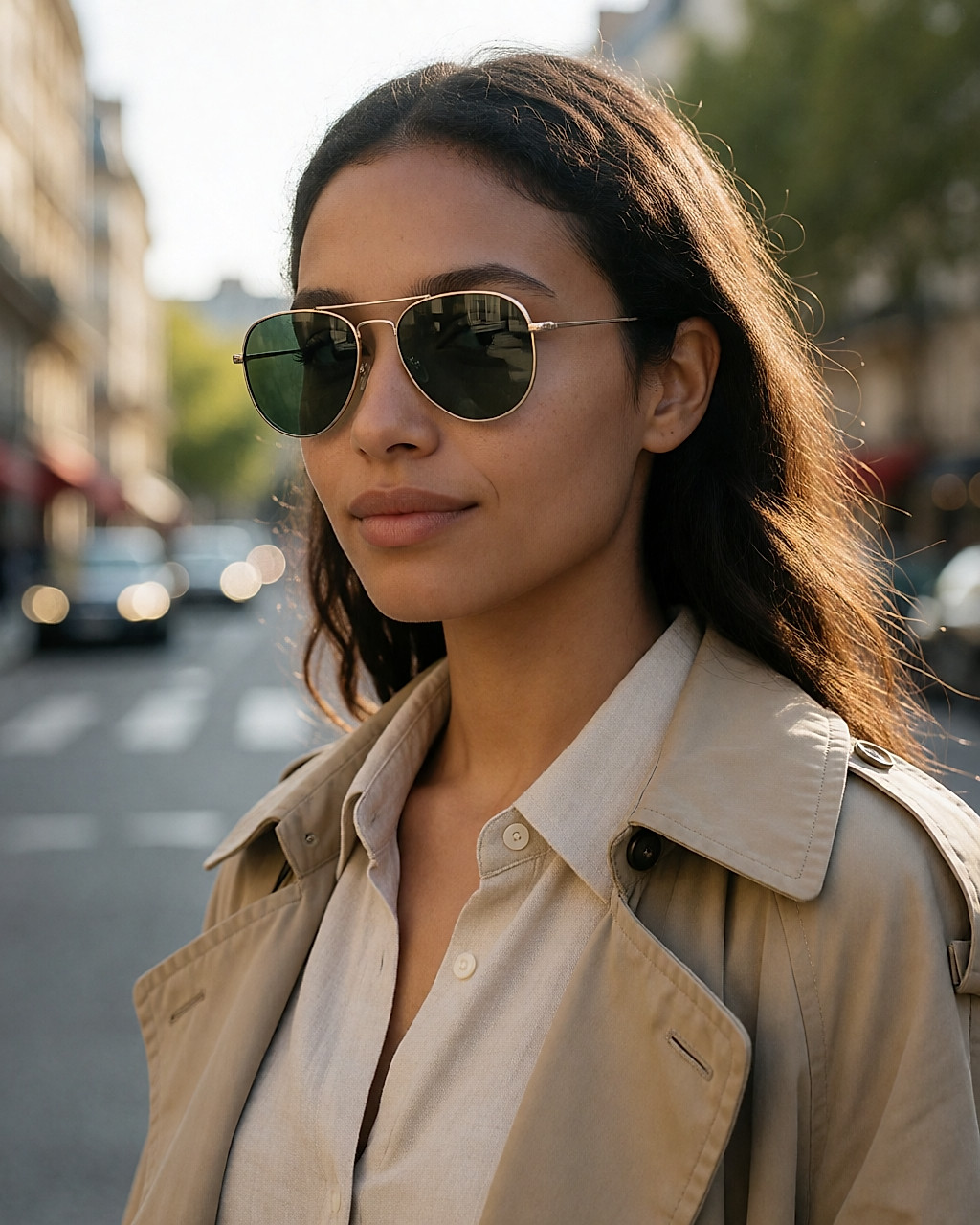
It wasn't until the 1930s that light became a problem to solve. Pilots of the US Army Air Corps were coming back from flights with headaches, caused by glare at altitude. Bausch & Lomb drew up a slim metal frame for them, curved temples that stayed put under a helmet, and above all a green lens that blocked part of the ultraviolet and infrared light. This was the Aviator. The Ray-Ban trademark was registered in 1937, a contraction of the phrase "banning the sun's rays". A masterclass from the very start, wouldn't you say?
From cockpit to red carpet
After the war, the Aviator left the military bases and landed on screen. The Wayfarer arrived in 1952, with its trapezoidal acetate silhouette — chunkier, more graphic: a statement piece that shapes the face and pulls a whole look together in a second. It turned up on Hollywood faces, then in the music videos of the 80s. Dark lenses, thick frame, self-assured attitude: the recipe hasn't changed since.

On the ownership side, the brand changed hands in 1999, bought by the Italian group Luxottica, now part of EssilorLuxottica. Manufacturing remains largely Italian. And the myth keeps on running: Aviator, Wayfarer, Clubmaster, Round Metal — each decade restates the same promise, a frame recognisable among a thousand, one that can be accessorised with almost any wardrobe, from jeans to a blazer.
What you're really paying for
Let's be clear: part of the price is the name. But not only.
The quality of a sunglass lens comes down to three things: the filter category (0 to 4), the percentage of UV blocked and the surface treatment. On this brand's pairs, the lenses are tinted in the mass, in mineral or polycarbonate, CE (or UKCA) marked and compliant with EN ISO 12312-1. In plain English: they filter UV up to 400 nanometres, which covers the bulk of the harmful spectrum.
What you can't see, on the other hand, is a very dark lens with no UV protection — riskier than wearing none at all, because the pupil dilates and lets in even more rays. That's the number one trap with counterfeits, and it applies to every brand, not just this one.
If you're ordering online or from a market stall, check two things: the CE marking on the arm, and the category stated. Category 3 = everyday wear. Category 4 = mountains and open sea, not allowed while driving. An optician will tell you in a second.
How to choose them
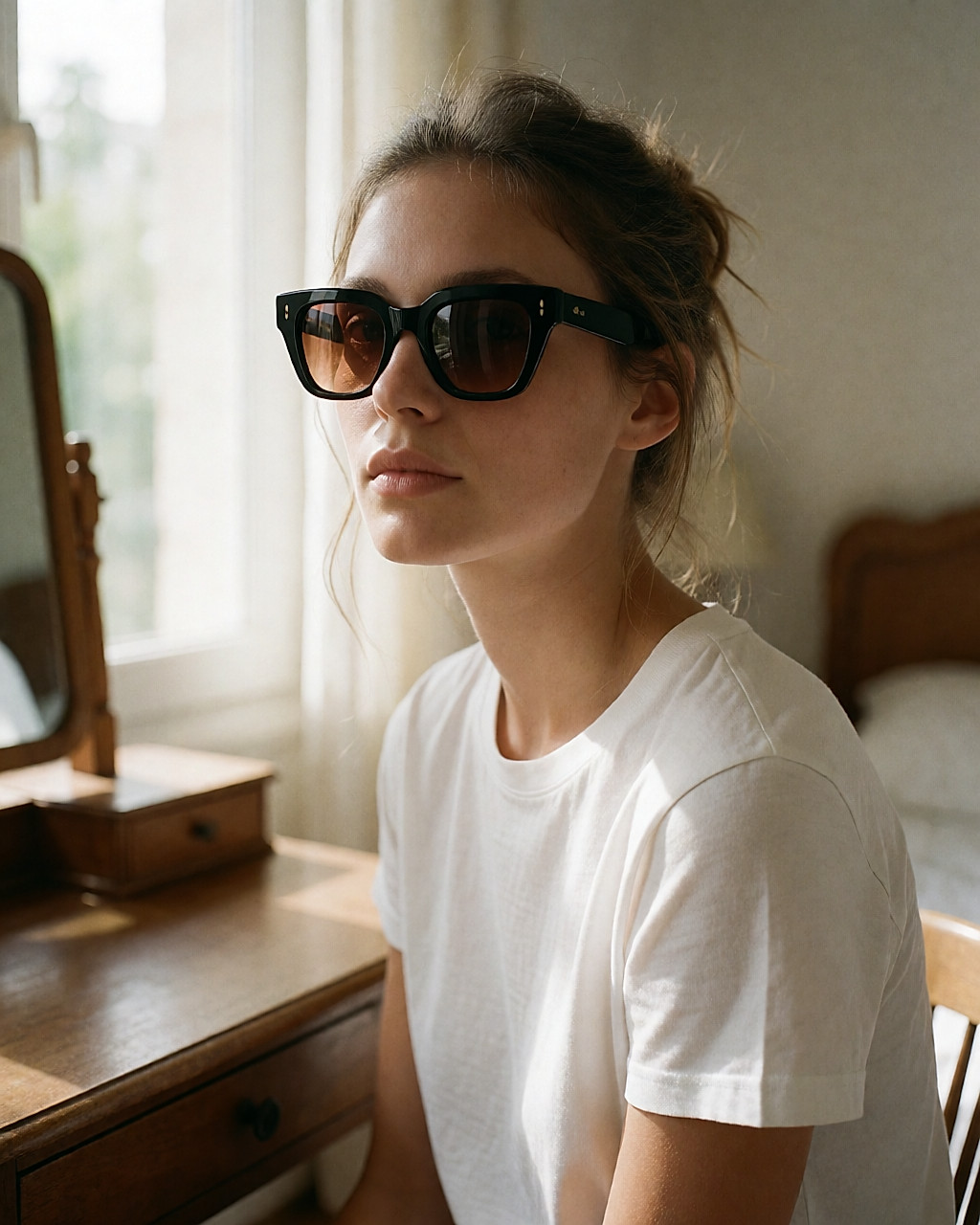
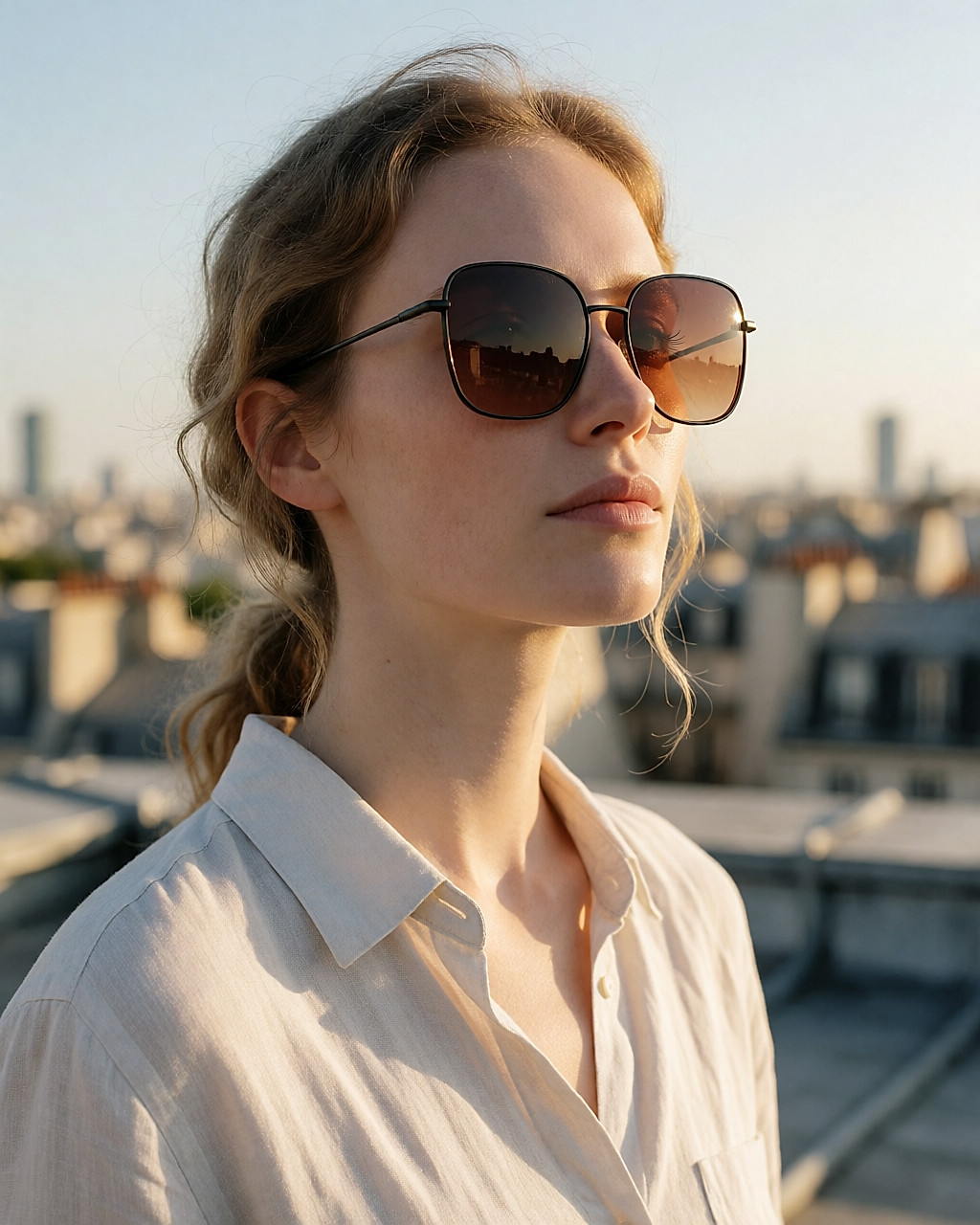
A frame is a bit like a haircut: what suits one person won't suit everyone. A round face does well to look for an angular shape — Wayfarer, Clubmaster — to give the silhouette some structure; a square face is softened by round or oval shapes; and on an oval face, anything goes, so it's over to you and the colour.
On materials, acetate develops a patina over time and takes on a lovely depth, while slim metal stays light but picks up marks faster. In its eco-conscious line, the brand offers collections described as using recycled or bio-sourced materials — worth checking pair by pair, since not every frame is included, and the word "recycled" says nothing about how much is actually used. A bit of honesty we'd like to see more often.
Budget
In the UK, expect to pay around £130 to £190 for a classic Ray-Ban pair (Aviator, Wayfarer, Clubmaster in non-polarised lenses), at an optician or on the brand's own website. Add £30 to £60 for polarised lenses, and more again for prescription lenses, depending on the correction and the options. The price shifts with the city, the range, the finish you choose and the upkeep you plan for — a spare set of lenses, for instance.
The £20 to £30 "Aviator-style" pairs sold at markets or online aren't Ray-Bans, and the protection is almost never guaranteed. A good rule of thumb: a second pair at the end of a collection from an optician will often cost you less than a well-copied fake — with a guarantee and a fitting thrown in.
Sources
- Ray-Ban — brand history and official collections, accessed 4 October 2026.
- EssilorLuxottica — group, brands and manufacturing sites, accessed 4 October 2026.
- ISO — EN ISO 12312-1, eye protection and sunglare filters, accessed 4 October 2026.


Comments
Your opinion matters: rate the article, react and reply to comments.
Comments are moderated; AI-assisted comments are flagged. Text emoticons (8-), :-), <3…) are automatically shown as images.