
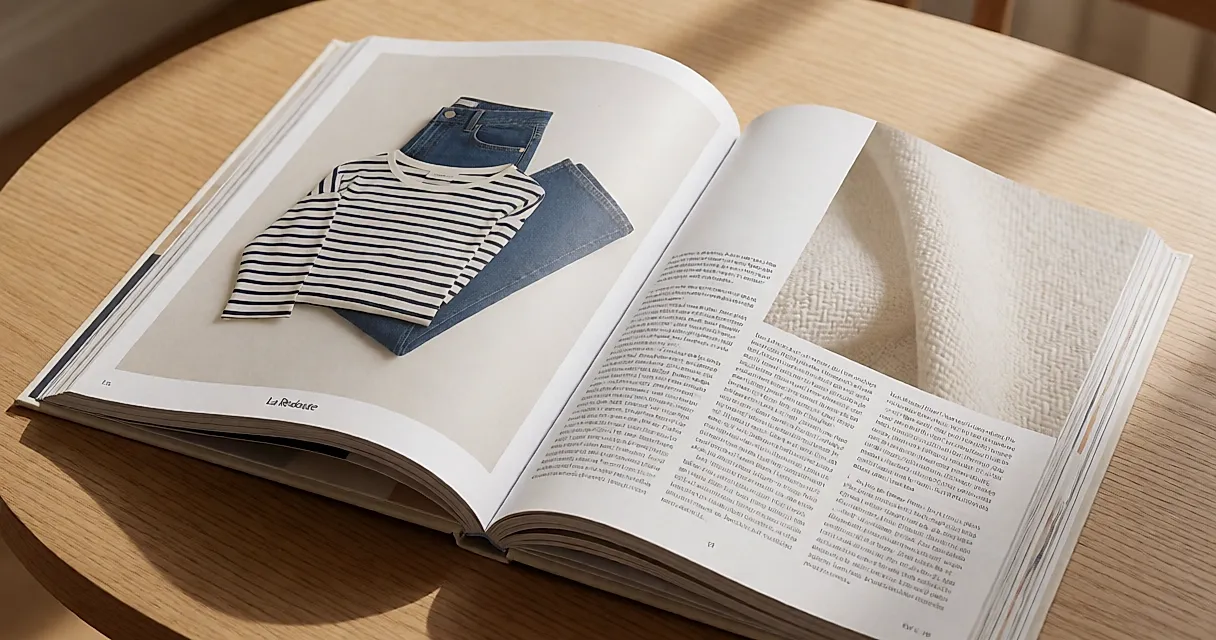
It arrived wedged between the T-shirt and the tissue paper: an object thicker than a Christmas catalogue, with a printed spine and a title in large letters. You put the garment on the bed, peeled off the tape and read the magazine before trying the piece on. Admit it. Since when did a parcel give us something to read?
Paper is back, and it arrives with your order
The classic catalogue had a simple reign: one photo, one price, a page number to order from. The new arrival looks like a magazine you'd have bought at a newsagent's: thick paper, a full-page portrait of an anonymous back, an interview with a stylist, a report from a mill. It talks about clothes without selling them page after page. Uniqlo, for instance, has its paper magazine, LifeWear.
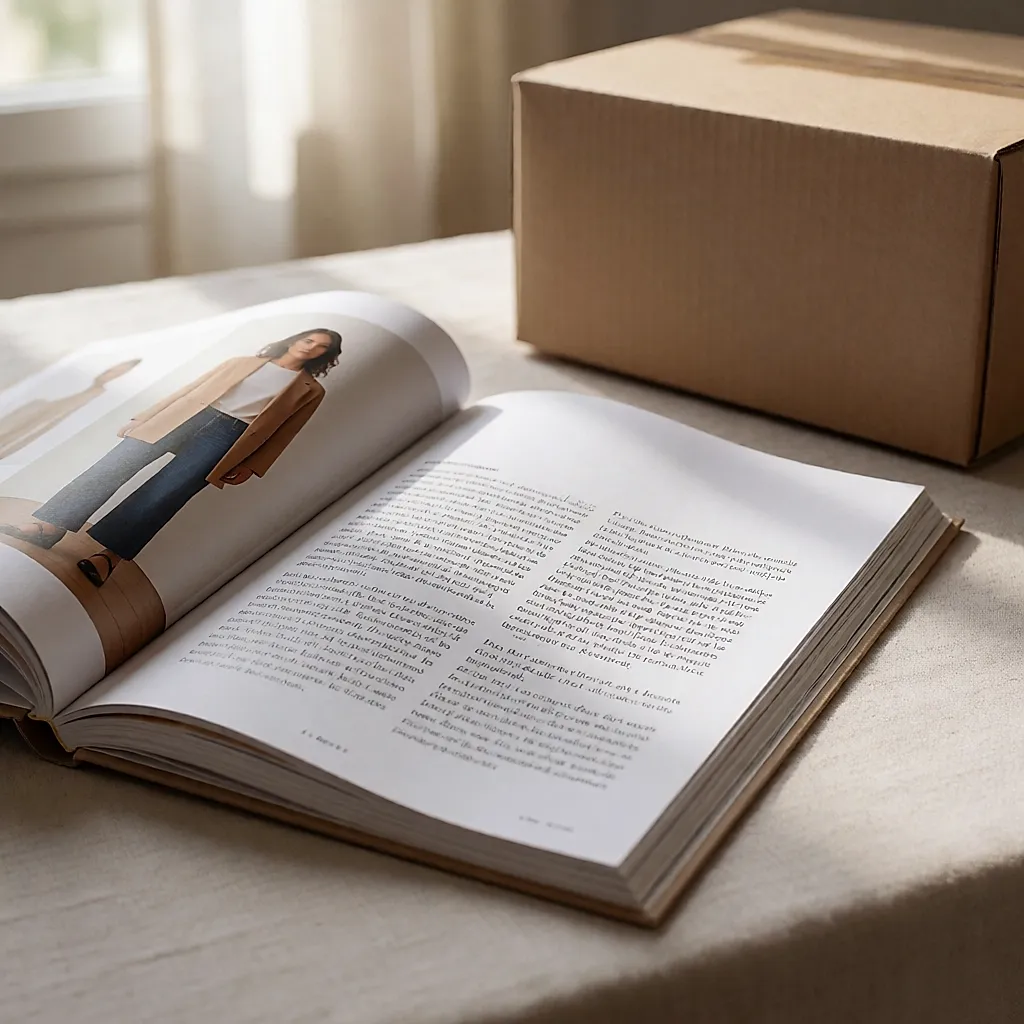
The approach isn't limited to basics brands, either: among the luxury houses, Hermès has its own in-house magazine, Le Monde d'Hermès. The real novelty is that basics brands are getting in on it. The ones whose T-shirt you buy in a pack of three, the jeans that replace the jeans. Their line is no longer 'look at this product' but 'let us tell you where it comes from'. A change of tone, a change of focus: the garment is no longer the star, its story is.
What a product photo couldn't tell you
A T-shirt photographed flat says nothing about its density, its drape, or the way its shoulder seam will hold up through another summer. On screen, a £15 basic and a £60 basic often look much the same. That's where the magazine comes in: it talks about the yarn, the knit, the wash, the hand of whoever cuts. Have you ever bought a piece from a lovely photo, only to find at home that it draped like a tent? The answer is yes, which is exactly why these pages speak to us.
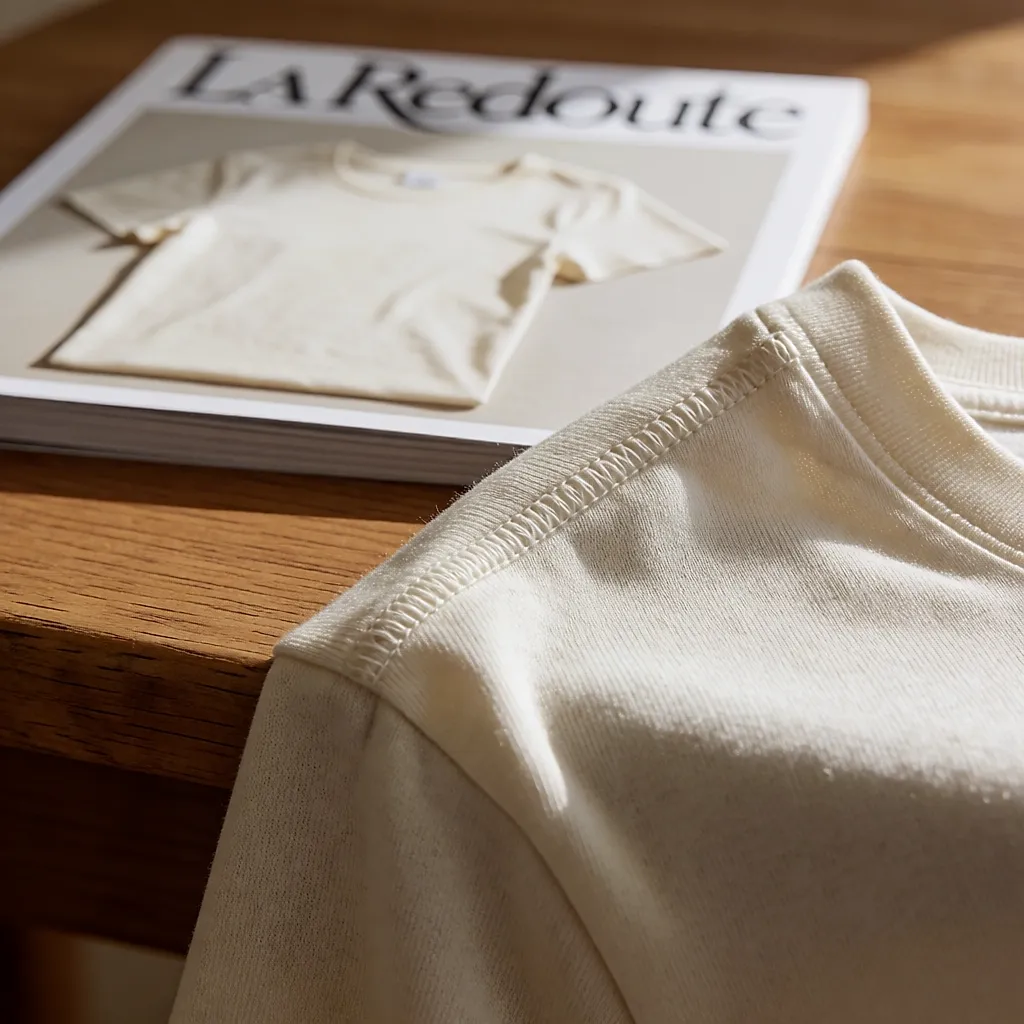
Let's not kid ourselves, though: this magazine is still a branding tool, with commercial intent behind every portrait. It doesn't replace the care label, the fitting, or the question of price. It simply makes value desirable, and that's the whole point. A brand that dares to charge more for a basic has to explain why; the magazine becomes the place for that explanation, somewhere between a statement of intent and a case for the defence.
What the magazine doesn't always tell you
Because beneath the beautiful pages there are silences. The magazine covers the mill, the cutting, the stylist's portrait, but it doesn't always give the price, the precise care instructions, or the full manufacturing conditions. Those stay on the label, on the website or in the shop. Paper tells the intention; the label tells the truth. And that's fine: no one is asking a magazine to replace a fitting.

At heart, this shift says something very simple: we no longer just want to buy a basic, we want to understand what we're paying for. The paper magazine answers that desire with good stories and, sometimes, very concrete information about a yarn or a cut. So next time a printed object falls out of your parcel, keep it for an evening. Then turn the piece over, read the label, try it on. The real test of this magazine isn't page 12: it's what it makes you want to go and check on the label.

Comments
Your opinion matters: rate the article, react and reply to comments.
Comments are moderated; AI-assisted comments are flagged. Text emoticons (8-), :-), <3…) are automatically shown as images.