
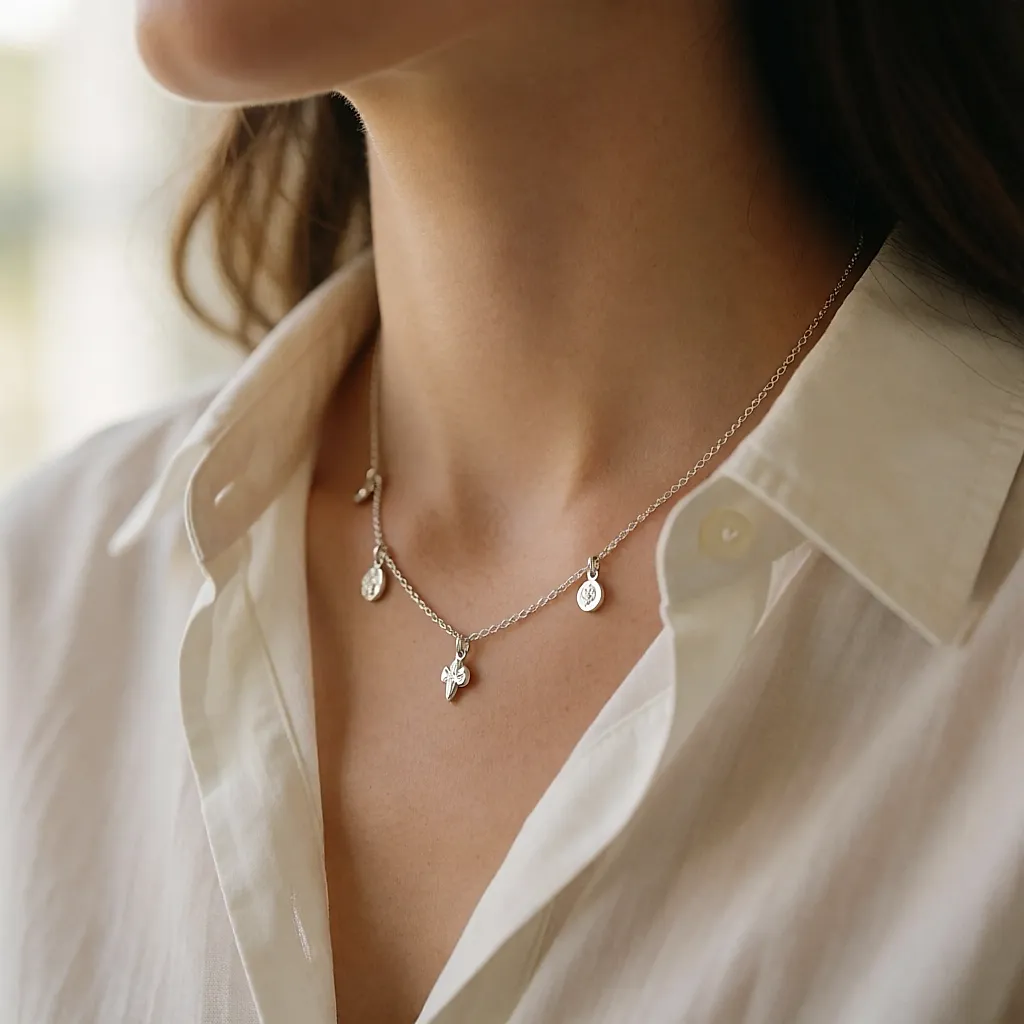
A gentle clink when you lean towards your glass, and the table turns. Not to look at you: at the little medal that has just hit the rim. That is the signature of a charm necklace. It makes a noise, and that noise says something. The trick is keeping the story on a chain without your neckline turning into a Christmas tree.
A charm beats a passing crush
There are two ways to buy jewellery. The first: you fall for a big, highly visible piece in a shop window, wear it for three weeks, then it goes back in the box. The second: you add a charm on the day your sister gets married, another after that holiday when it rained six days out of seven, a third because your grandmother's bracelet had broken and the pendants needed saving. The charm necklace belongs to the second camp, and that is what makes it last.
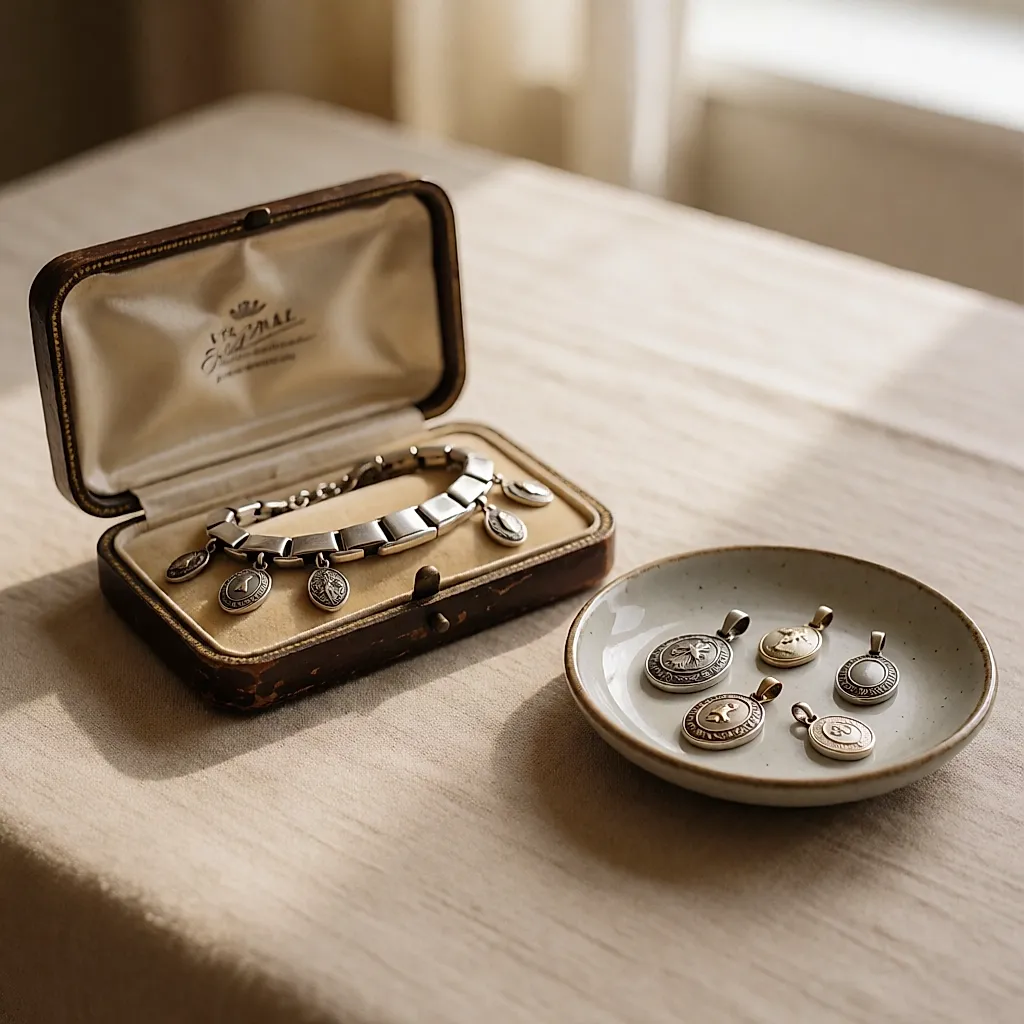
The idea is old: charm bracelets have been passed down through families for generations, each little object marking a milestone. What has changed is how they are worn: on a fine chain, on its own, with a basic that does not compete, such as a white shirt, a black roll-neck or a Breton top. A piece that does all the accessorising by itself, and gives earrings the day off.
Three charms are enough
The rule that saves most necklaces? Odd numbers. 3 or 5 charms, not ten: past that point, the eye cannot read anything and the chain pulls at your neck. Pick a theme: one dominant metal, silver or gold vermeil, then allow yourself one oddball. That is what gives it charm; without it, the mix looks like a catalogue.

Length matters as much as content. A 40 to 45 cm chain places the charms on the collarbone: ideal with a crew neck or V-neck, provided they stay light. If the charms are heavy, a 50 to 55 cm chain lets them fall flat against the sternum without tipping forward, a detail that really matters on a fuller bust. With a chunky knit, forget it: the texture swallows the jewellery. On silk or fine cotton, the drape stays clean and the look breathes.
What ages well, what does not
Two reliable materials: solid 925 silver and gold vermeil, which is silver covered with gold; vermeil usually means a gold layer of around five microns. Silver develops a grey patina that you clean when it starts to annoy you; vermeil keeps its colour but scratches like gold. For stones, stick to natural options: mother-of-pearl, semi-precious stone, polished glass. Costume alloys often last a season before turning black, which is acceptable for a £10 keepsake charm but far less so for the centrepiece.
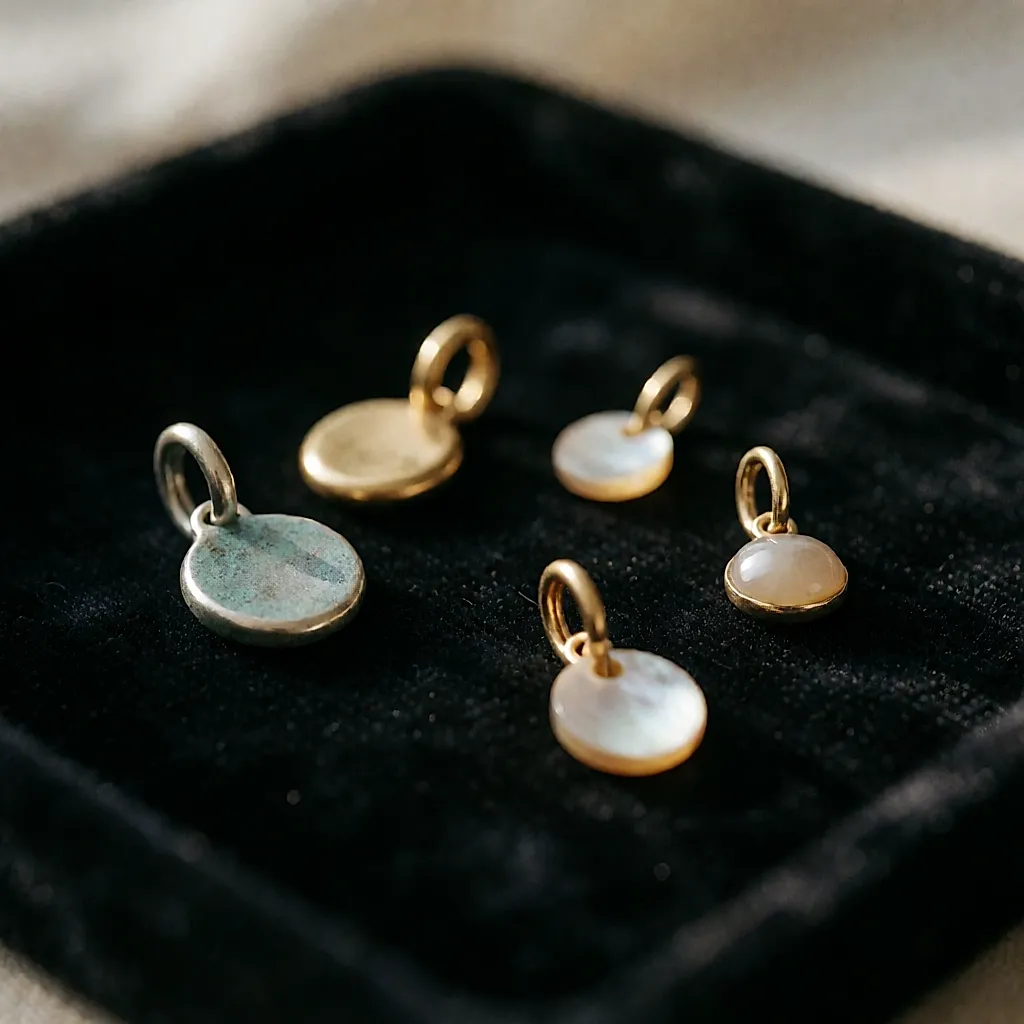
Looking after it is not complicated: a soft cloth after every wear, never spray perfume directly on the jewellery, and take the necklace off before swimming, as chlorine and silver do not mix. One last tip, thrifty and very current: hunt before you buy. An orphan charm at the back of a drawer, a broken bracelet, an inherited piece that does not speak to you: all can be reassembled, often for a few pounds at a jeweller.
Budget
As a rough guide, expect to pay around £20 to £60 for a fine 925 silver chain, and £60 to £150 for gold vermeil. With charms, anything goes: roughly £8 to £25 for a simple silver charm, £30 to £90 with a stone or a detailed motif. Getting a date or initials engraved often costs £15 to £40 at a workshop, and the bill rises quickly if you are aiming for 18-carat gold.
Where to find them? A local jeweller remains unbeatable for assembly and small repairs; specialist brands offer chains and charms to add to year after year; second-hand shops and car boot sales are full of older pieces for a few pounds. One piece of advice: start with the chain and a single charm. The rest will be written by your diary.
The mirror test: lean forward as if you were picking something up. If the charms all slide to one side or clink against your chin, remove one or shorten the chain. If you smile, the combination is right.
A charm necklace is a bit like a diary you wear around your neck: it does not date, it grows. So the next time something worth remembering happens, keep it in mind. A charm often costs less than a meal out and lasts far longer. And if nothing this year feels worth celebrating, treat yourself to one anyway: no one will ask you to justify it!
Comments
Your opinion matters: rate the article, react and reply to comments.
Comments are moderated; AI-assisted comments are flagged. Text emoticons (8-), :-), <3…) are automatically shown as images.