
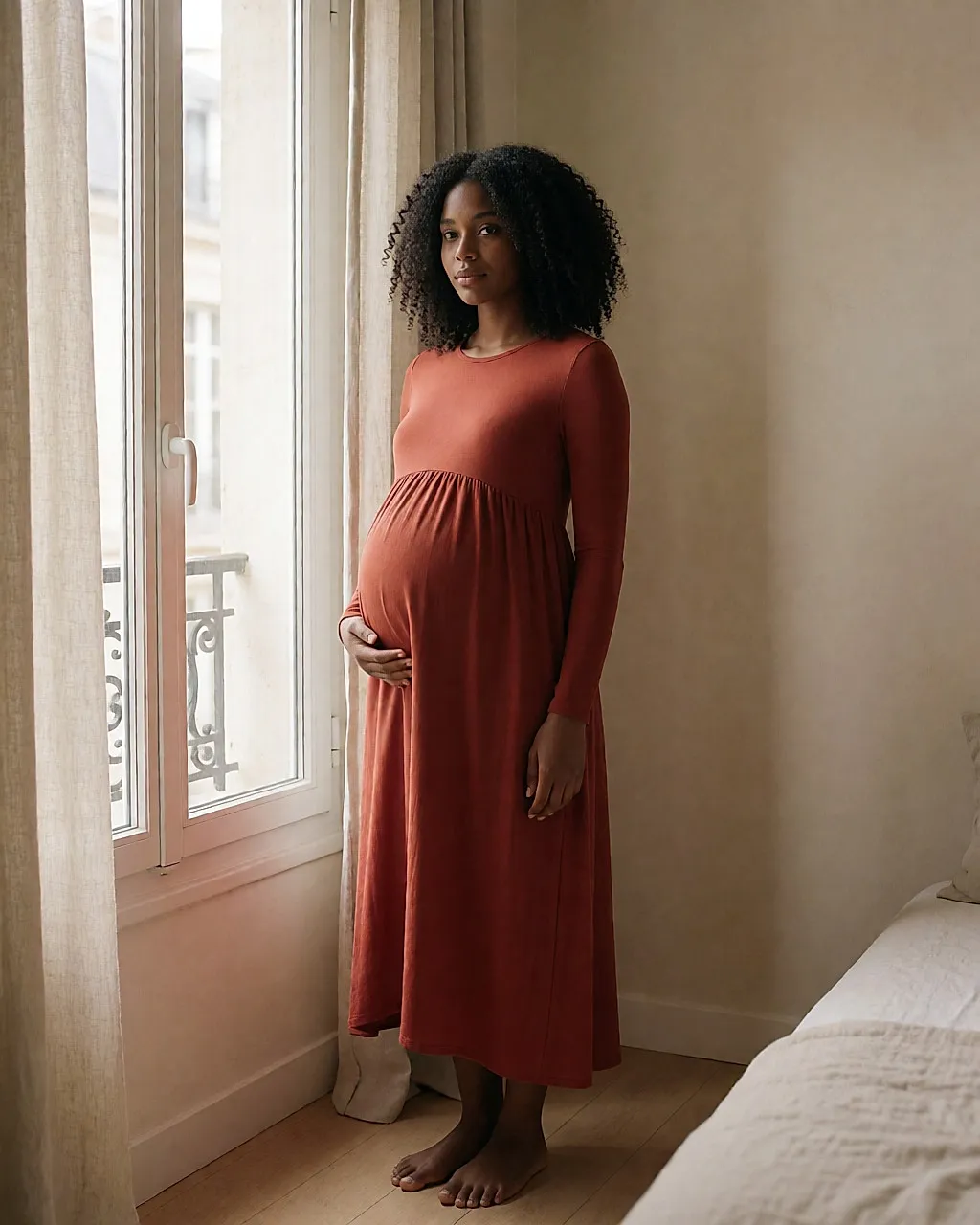
When I was expecting my second, I spent three weeks stuck in two dresses — one of which made me look like a sleeping bag. That’s when I realised something: being pregnant doesn’t mean giving up on style. But you do need a wardrobe that works with your bump, not one that hides it.
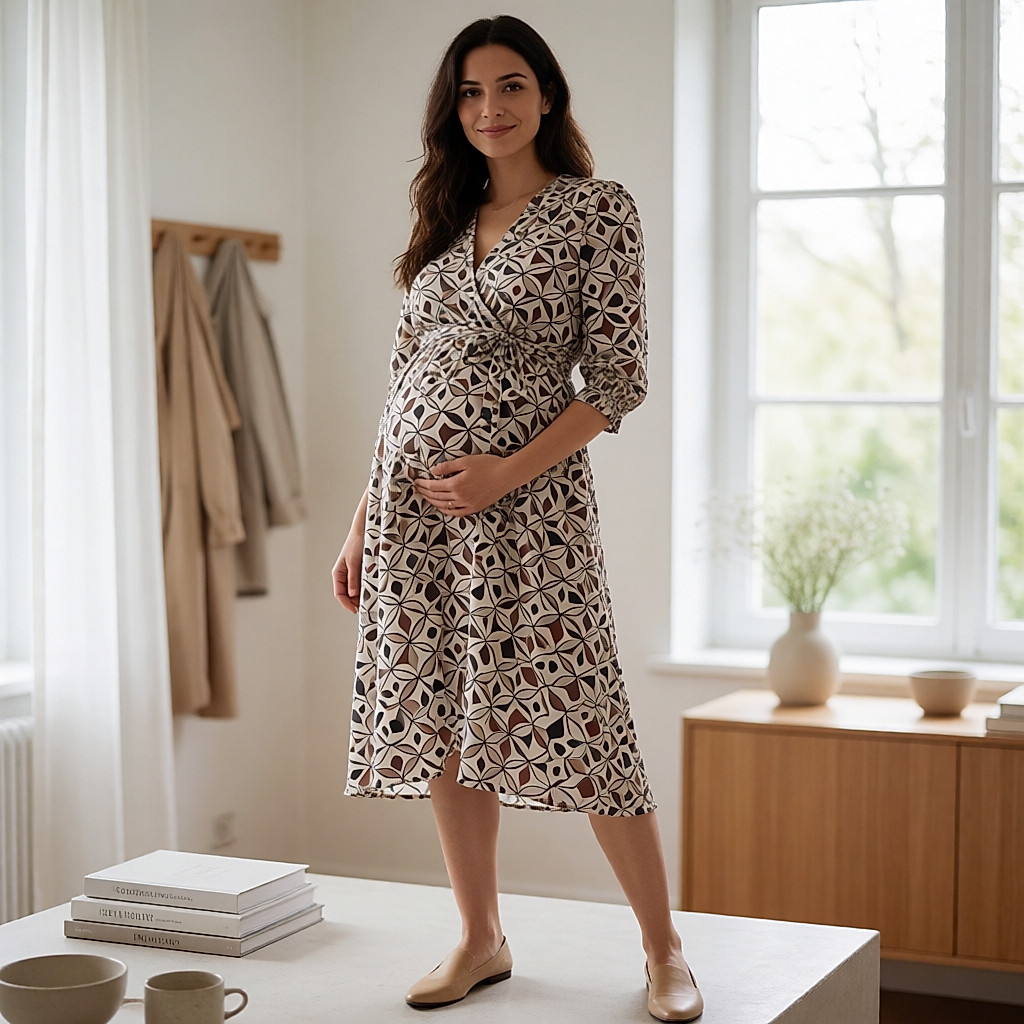
That’s the whole point of maternity fashion today. The sad little rail at the back of the shop is over: we’re talking cut, drape, fabric. And that really changes things.
The cut matters more than the size
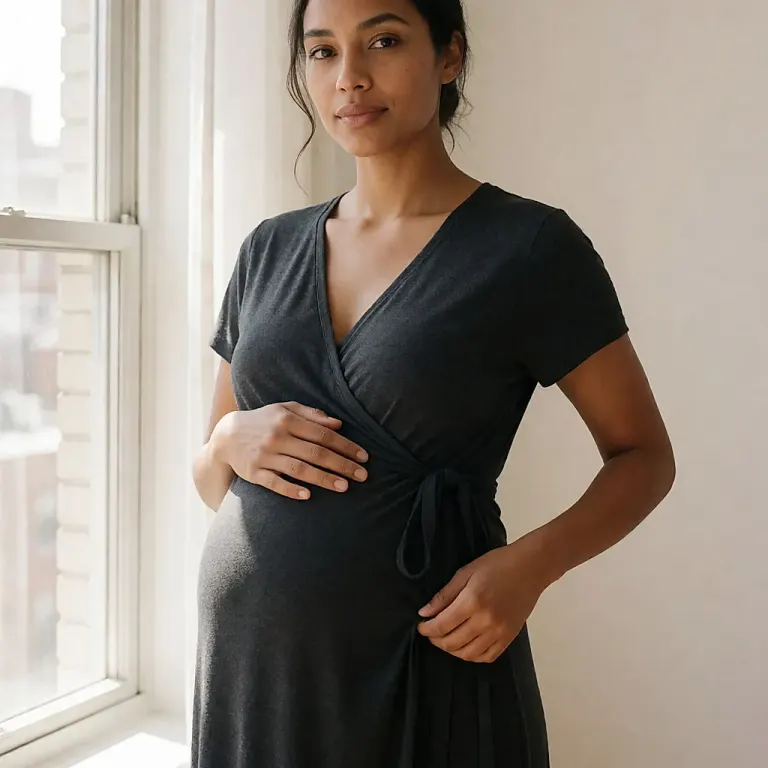
First instinct to forget: sizing up and hoping for the best. A well-cut maternity piece follows your bump without squeezing it, with seams actually designed for it. Look for an empire line or a high waist that sits under the bust — it draws the eye upwards and lengthens the silhouette — plus fabrics that hold their shape (cotton jersey, viscose, modal) and roomy armholes so you can breathe in the third trimester.
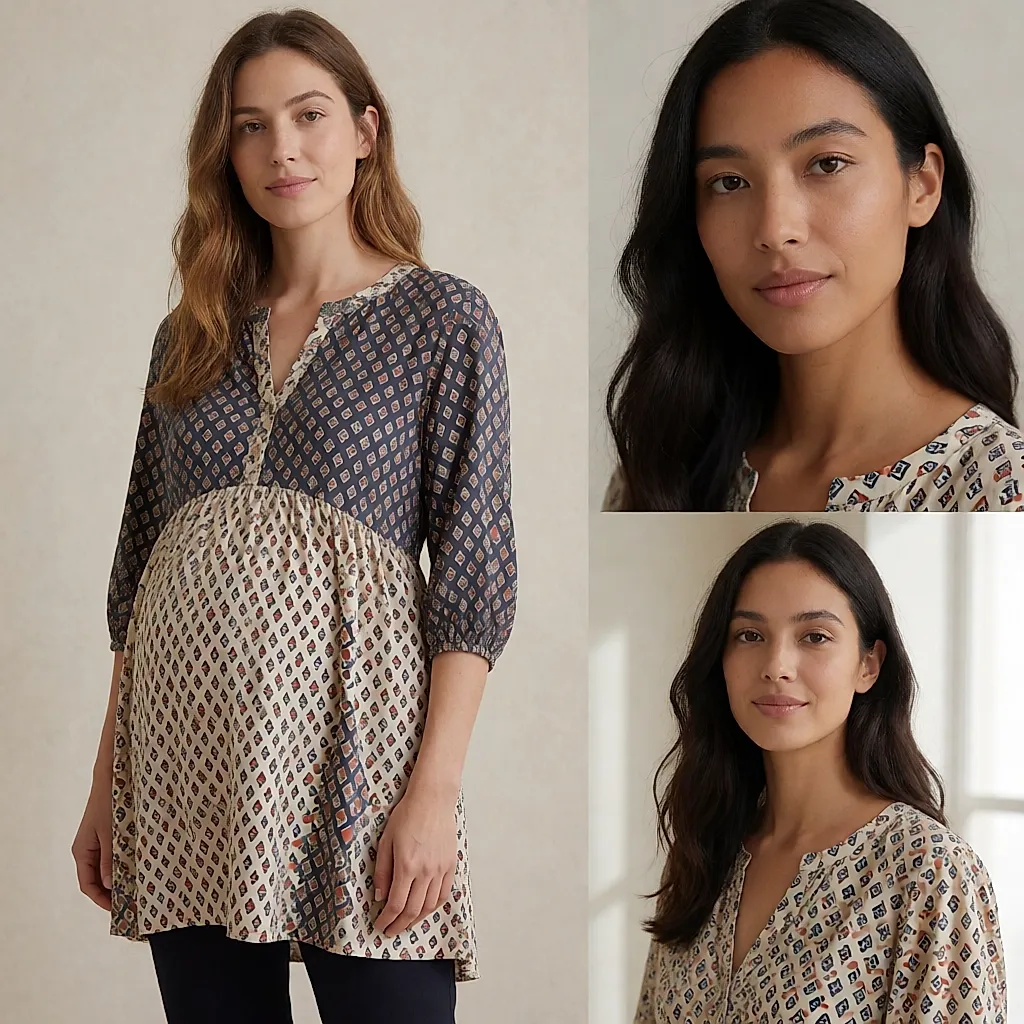
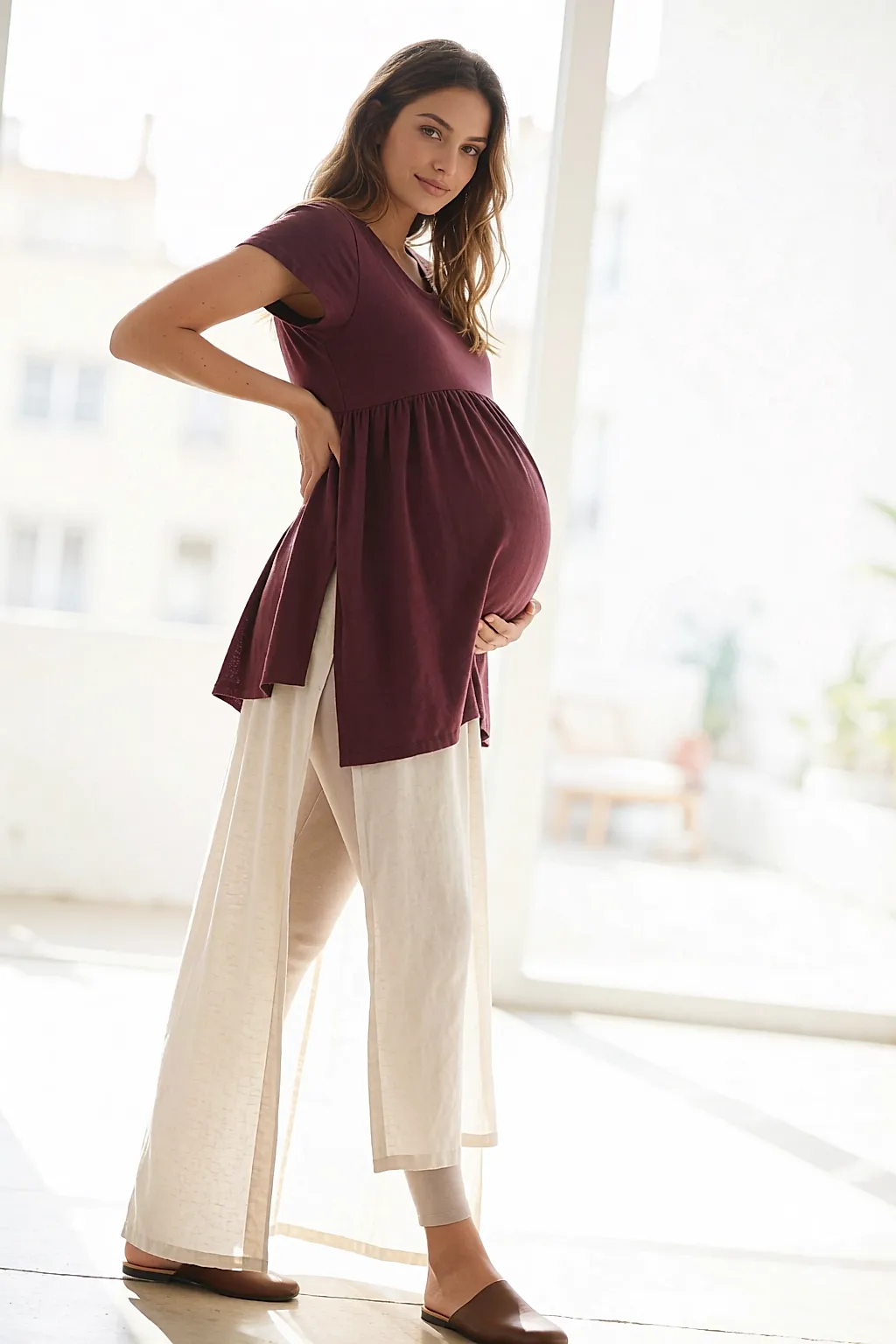
A clean drape is easy to spot: the fabric falls straight without twisting. The fitting-room test: raise your arms, sit down. If nothing rides up, it’s a yes.
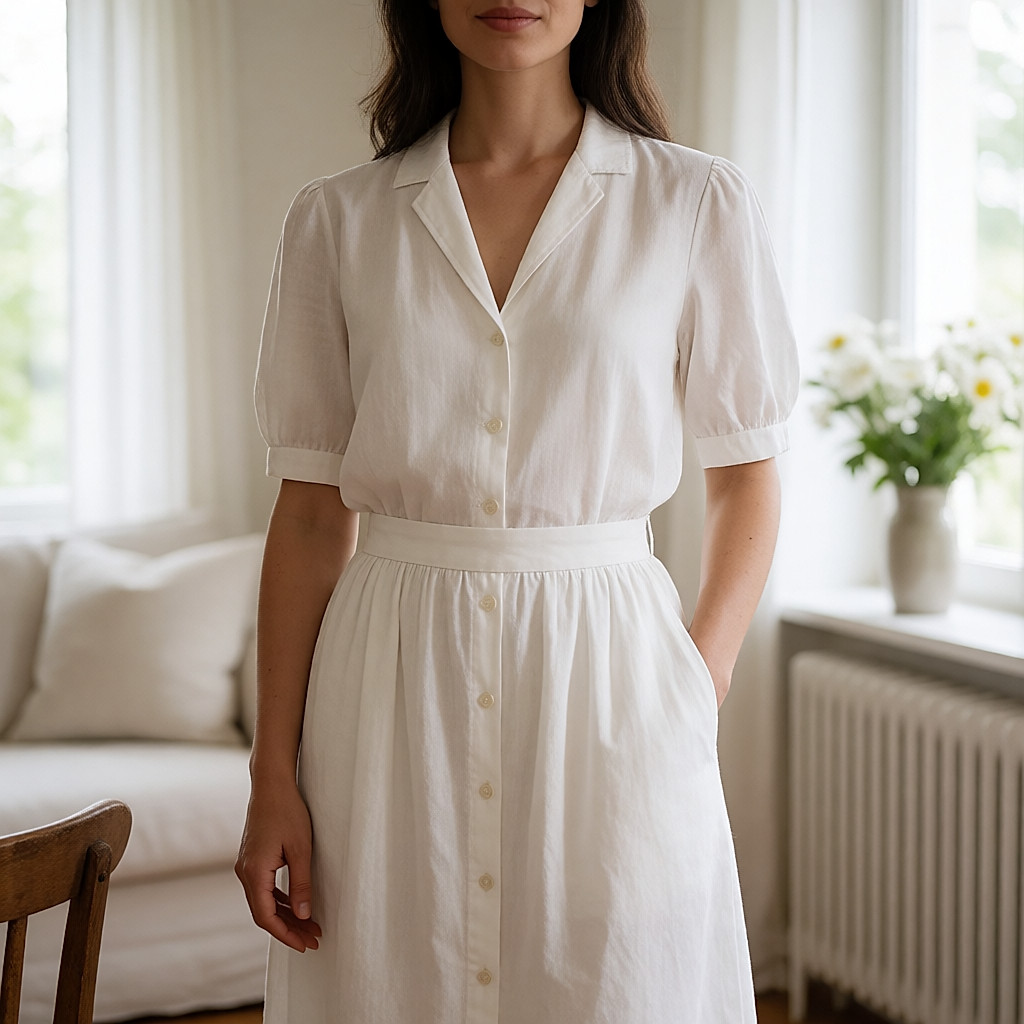
Layering is your best friend
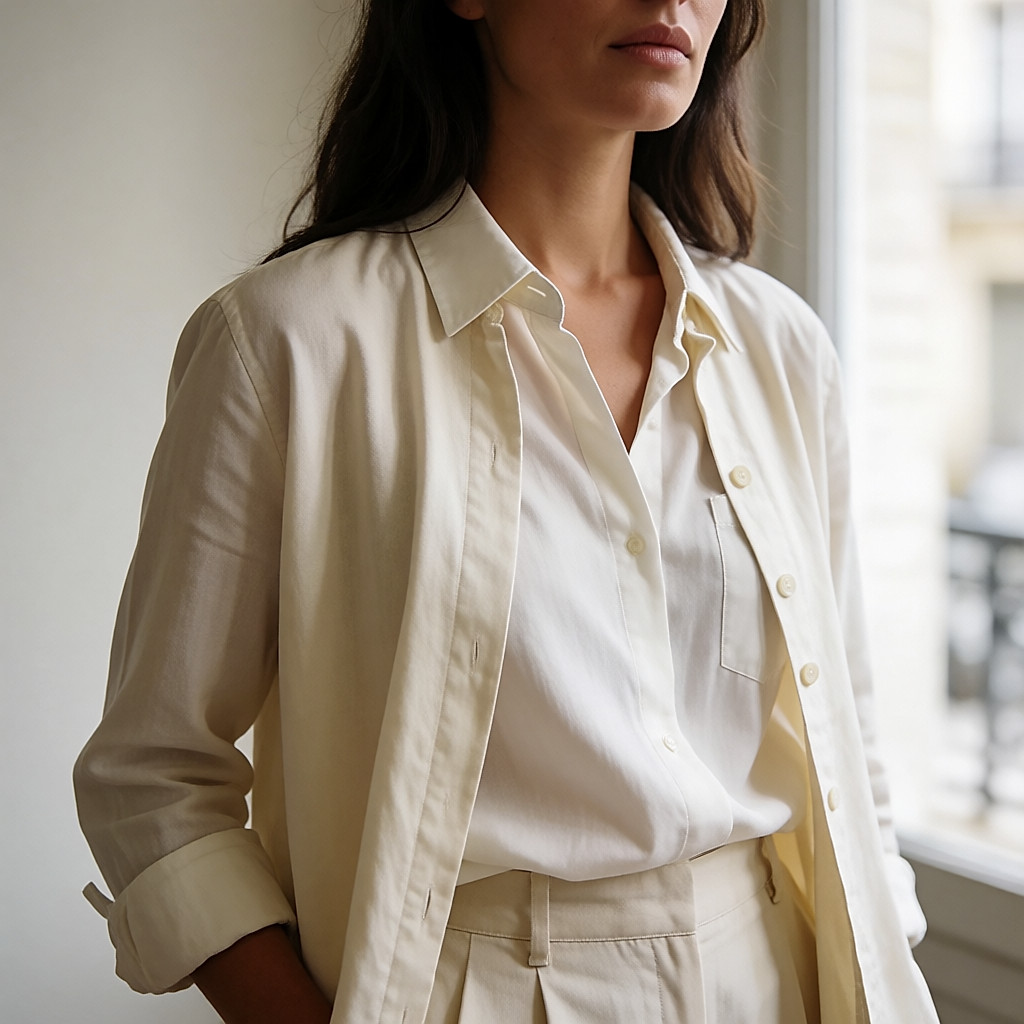
A simple dress worn alone in summer, layered over jeans in winter: that’s the basis of a capsule wardrobe. Add an open shirt or a long cardigan to create volume without drowning you. A monochrome look works well — it lengthens the silhouette instead of cutting it in half.
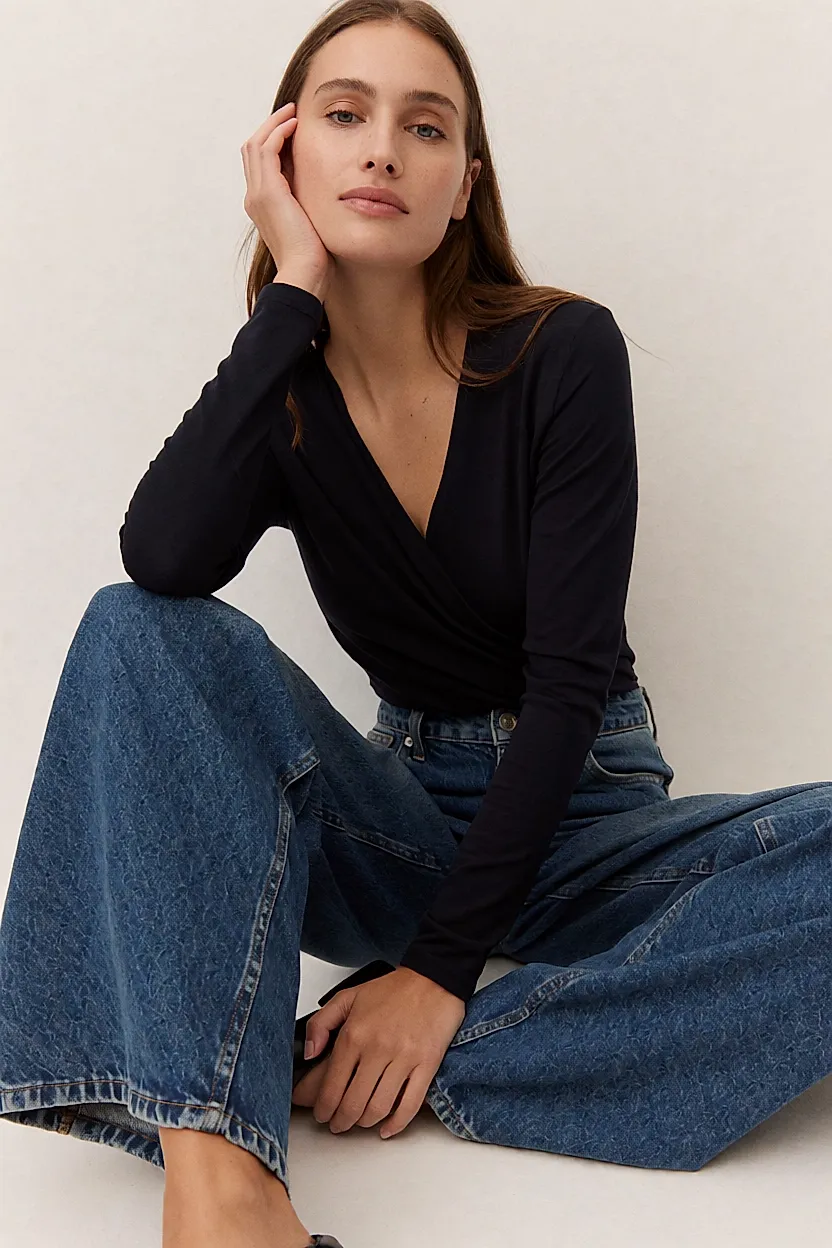
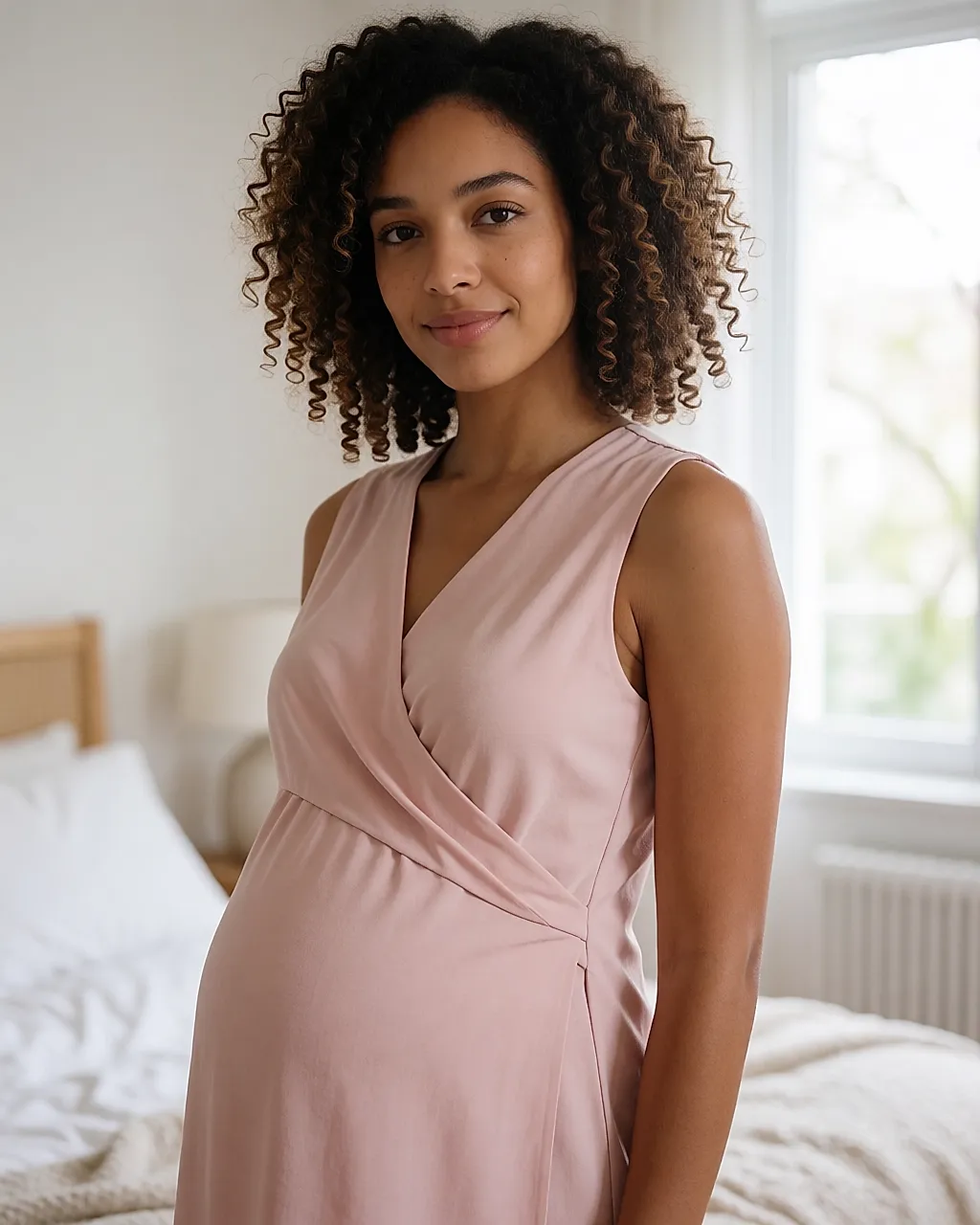
When it comes to nursing, cross-over panel tops no longer look like medical wear. You can find styles that work for the office and for a wedding, and that you’ll wear again after birth. It’s a keeper.
You don’t need an expensive statement piece: a well-cut wrap dress makes more impact than a loud print. Use accessories — a skinny belt under the bust, earrings, a scarf — rather than piling on patterns. Texture first, print second.
Check the label before the price tag
GOTS certified organic cotton guarantees non-GM farming and environmental and social criteria throughout the supply chain. The Oeko-Tex Standard 100 label checks compliance with limit values for a list of harmful substances tested for in the finished textile. These are concrete markers, not slogans.
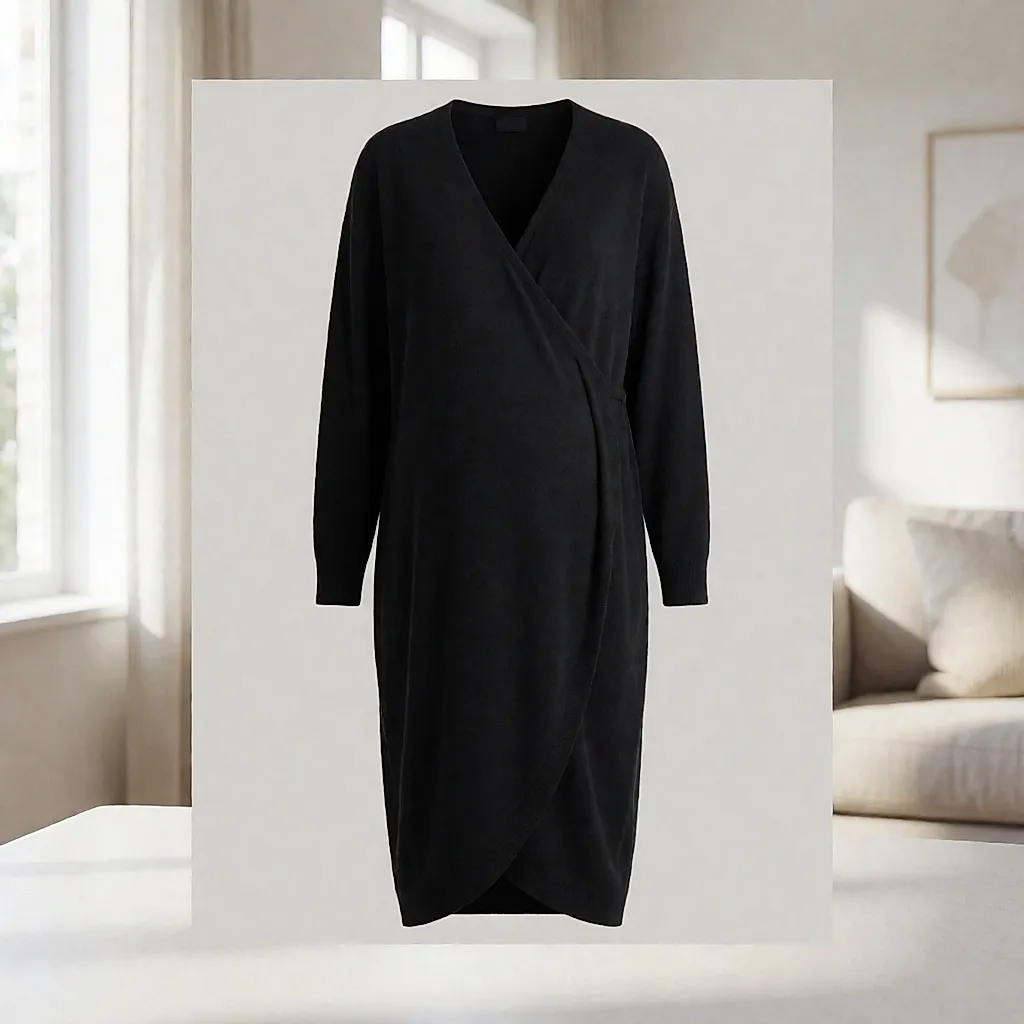
When it comes to longevity, prioritise pieces that can be passed on: a good-quality nursing top will get worn again, resold or given away. One well-chosen basic lasts longer than three novelty pieces — and that’s true of your whole wardrobe, not just during pregnancy.
Budget
- Maternity or nursing top: expect to pay around £18–45 on the high street and in ready-to-wear, up to £70 from a specialist brand.
- Dress: £30–80 depending on fabric and finish; organic cotton often sits at the top of the range.
- Jeans or trousers with an adjustable waist: £35–70.
- Maternity lingerie: £18–35 for a bra, £13–25 for knickers.
What affects the price: fabric (organic cotton costs more than classic jersey), where you buy (high street, boutique or online), and the season. Second-hand and maternity clothes swaps still offer the best value for money — worth considering before buying new.
Sources
- Global Organic Textile Standard (GOTS) — global-standard.org
- Oeko-Tex Standard 100 — oeko-tex.com
- ADEME (French environment agency), textile guide — ademe.fr

Comments
Your opinion matters: rate the article, react and reply to comments.
Comments are moderated; AI-assisted comments are flagged. Text emoticons (8-), :-), <3…) are automatically shown as images.