
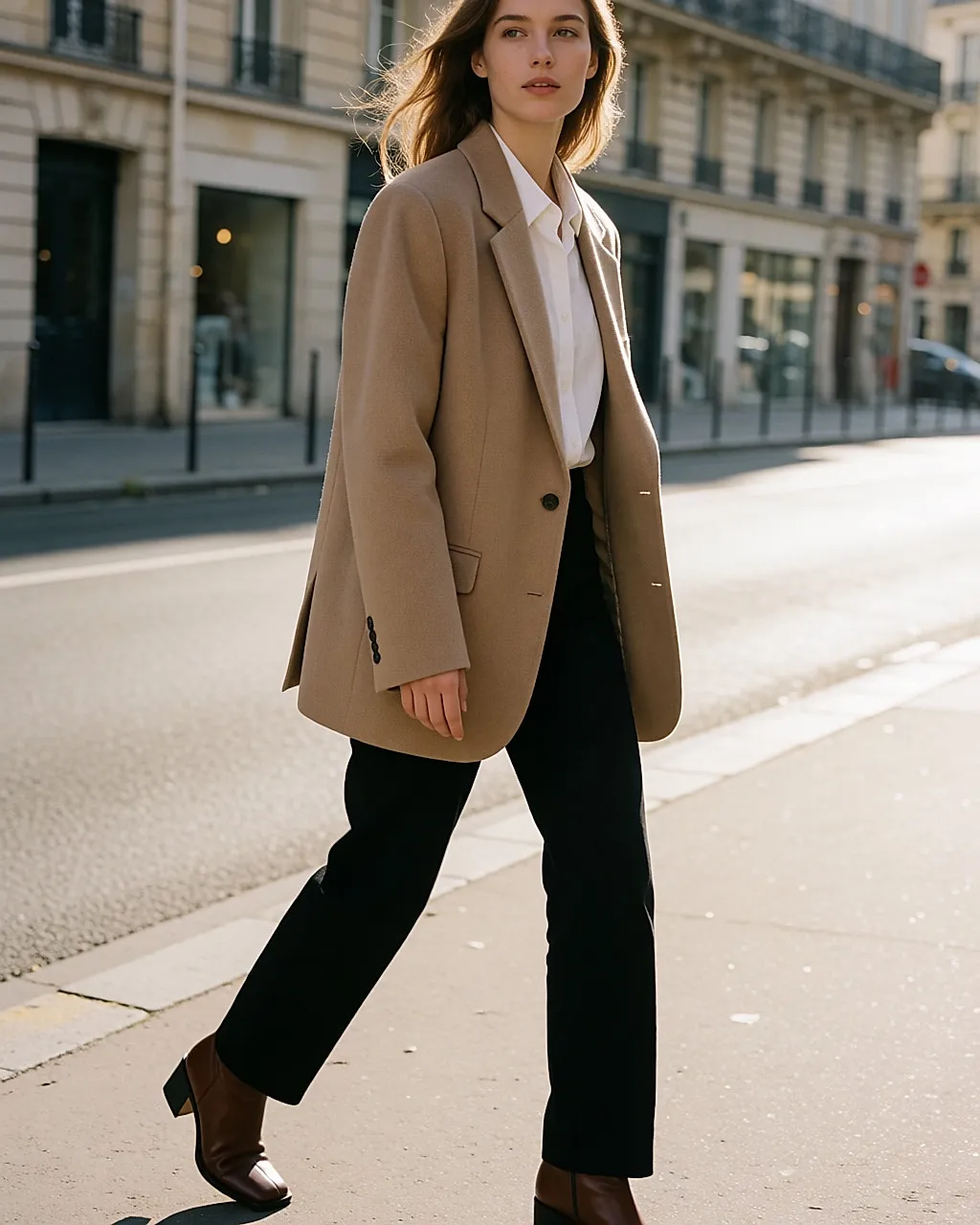
Last Tuesday, at the school gate, a friend thrust her phone under my nose. "Could I actually wear this?" On the screen: an oversize blazer and block-heeled boots, snapped on a red carpet.
Her question wasn't "where do I find the jacket". She wanted to know whether the outfit would survive a full day — the Tube, the supermarket, two impatient children. You can guess my answer: yes, provided you tweak two or three details.
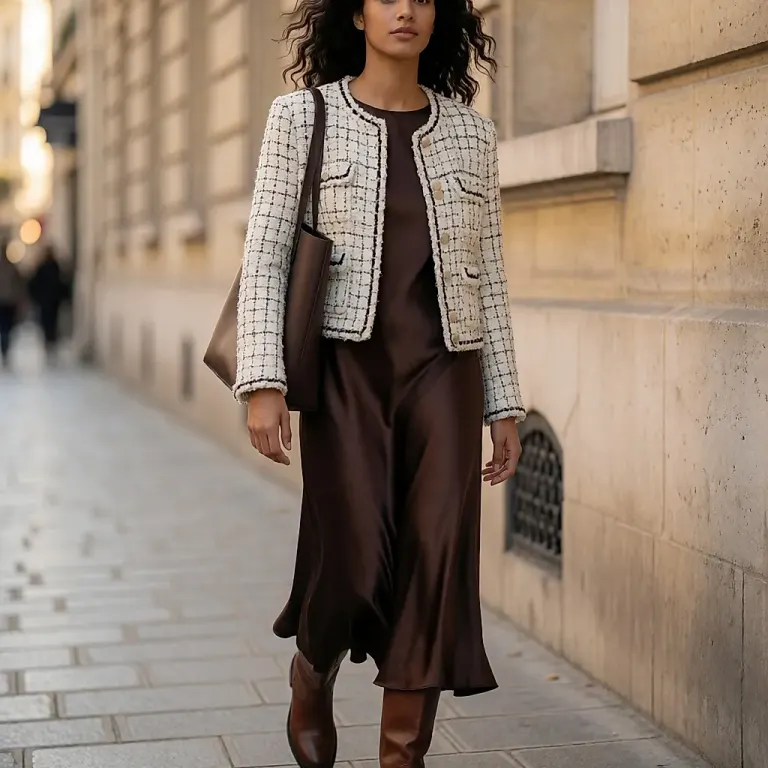
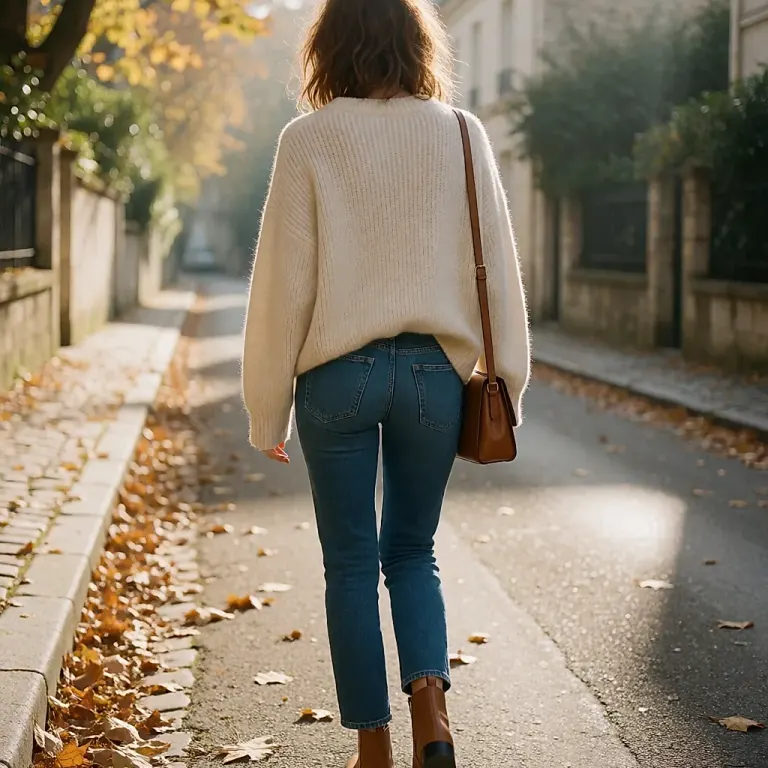
A look spotted in a photograph almost never hinges on one specific piece. It rests on a proportion, a colour, a way of carrying yourself. The rest is flattering lighting and a stylist paid to get it right. What interests us here is the recipe.
Relaxed chic: the white shirt you never button to the top
The principle hasn't shifted an inch: one fitted piece, one fluid piece over the top.
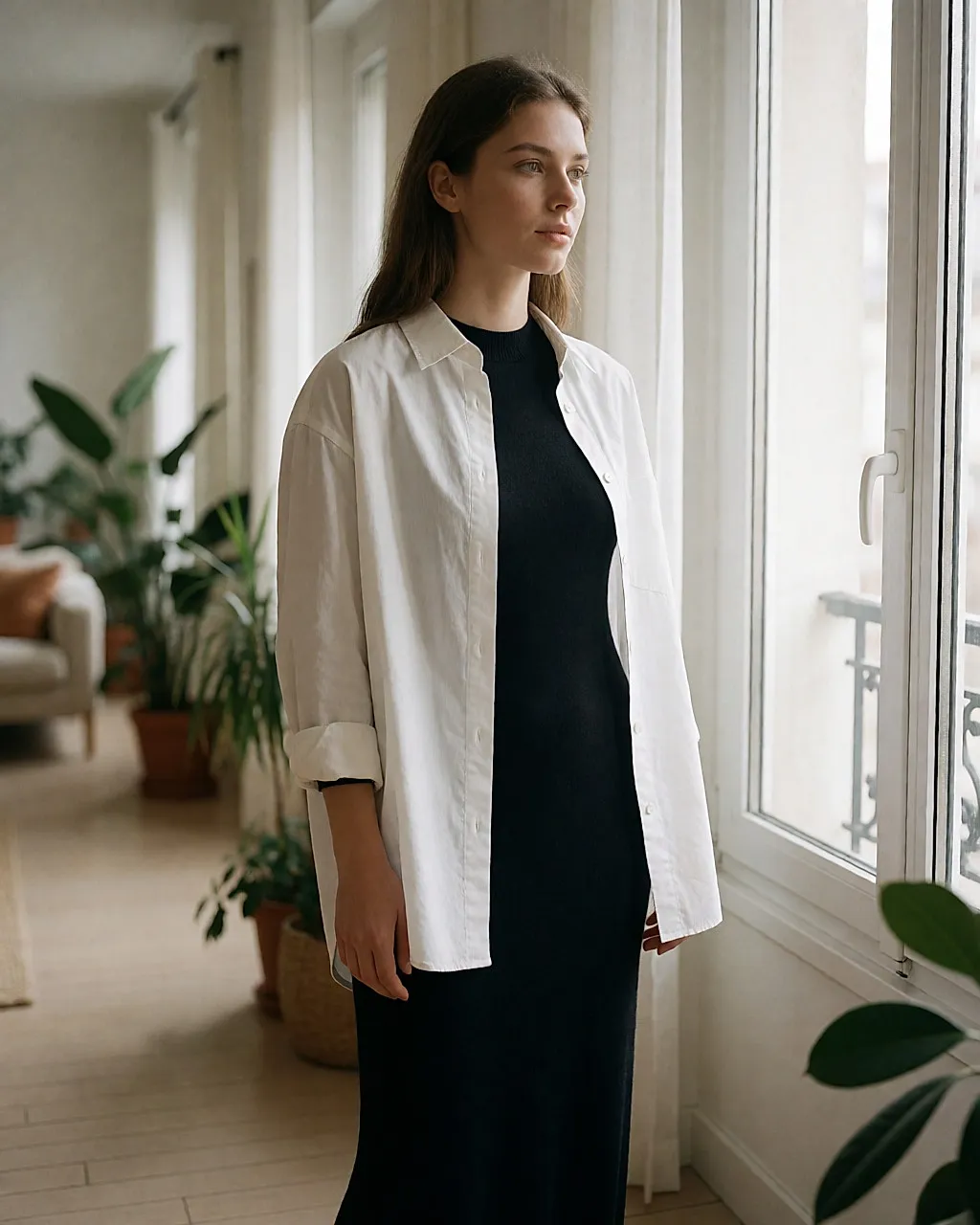
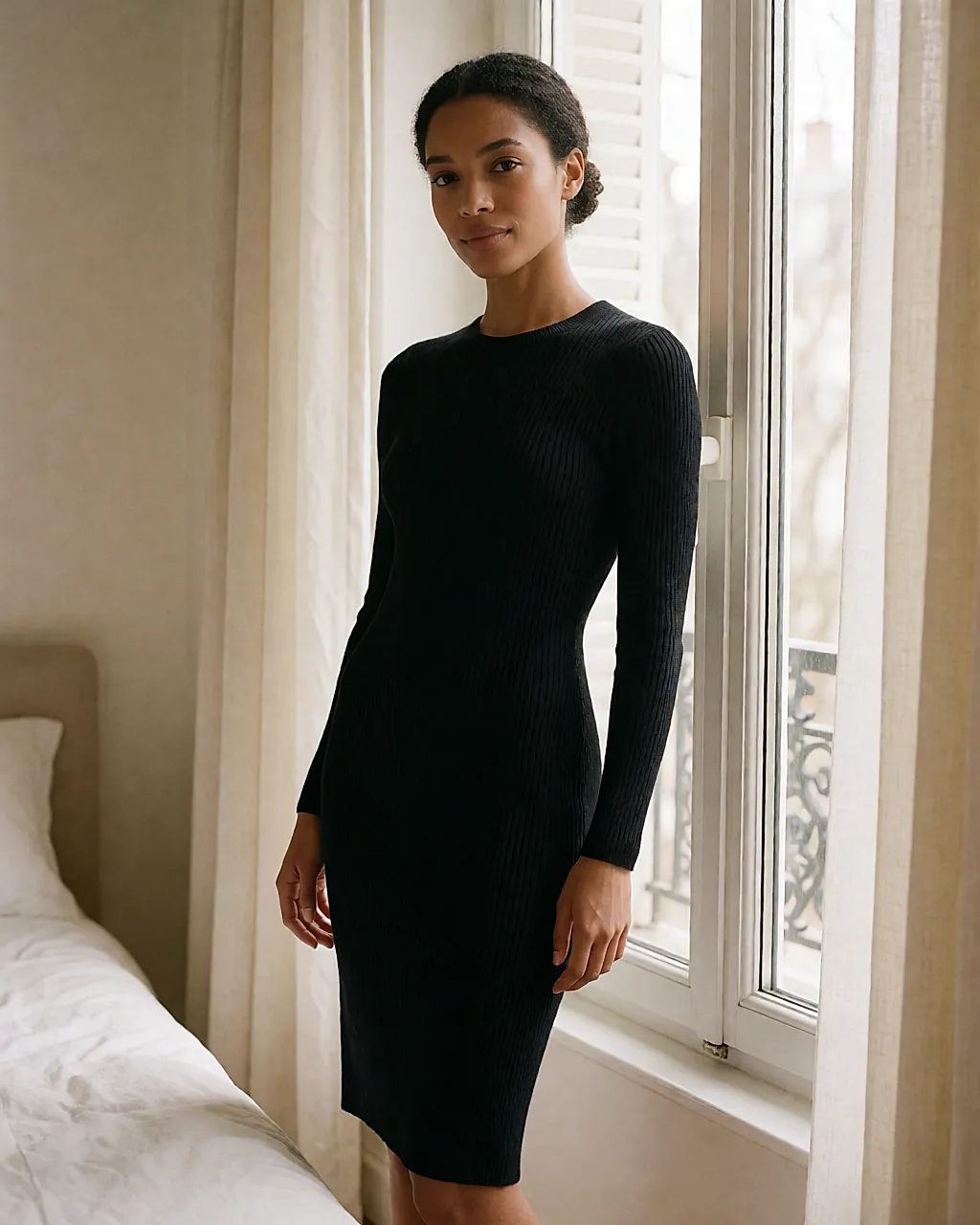
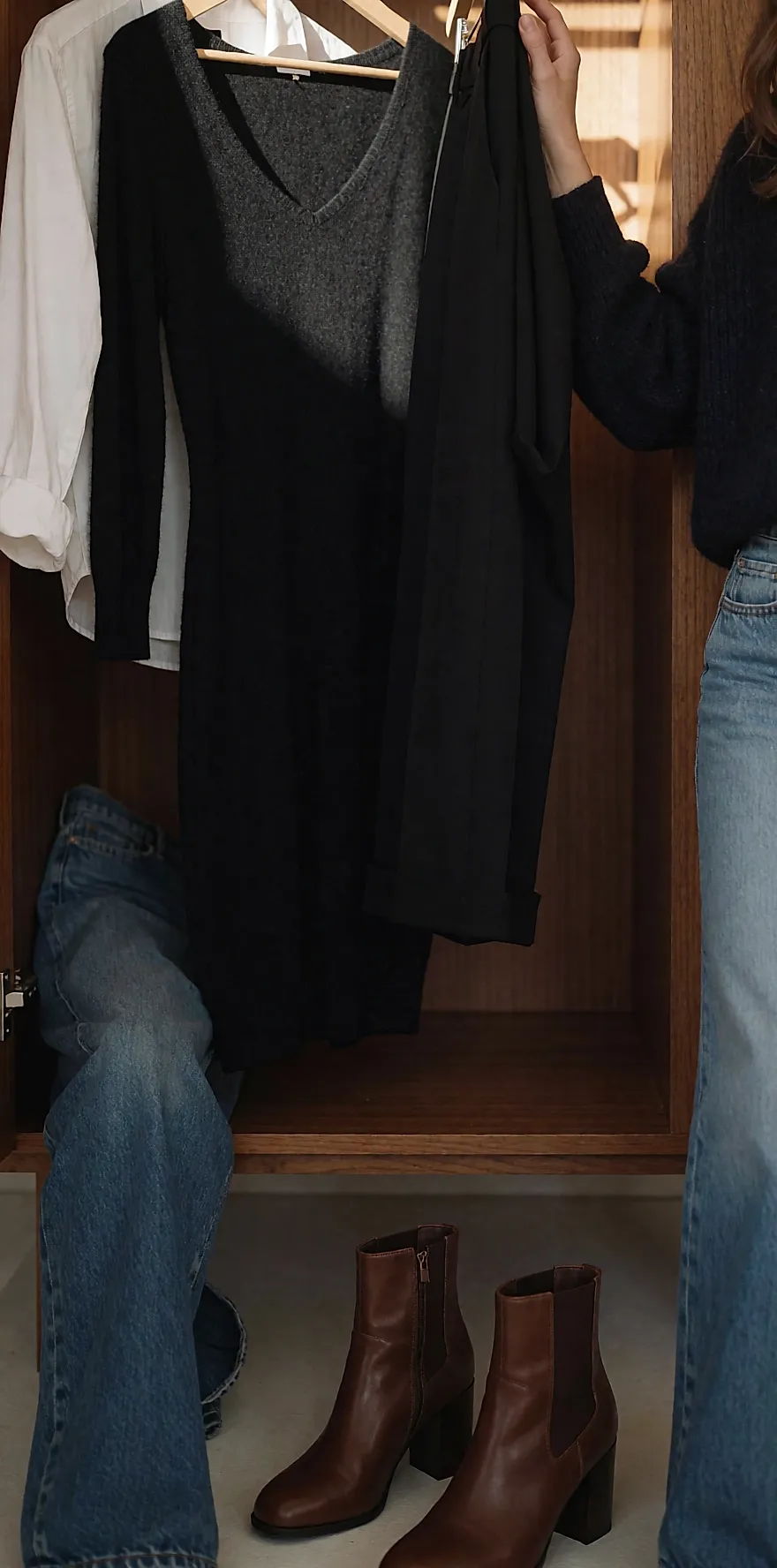
The formula was long the signature of relaxed chic — fitted dress, opaque tights, white shirt worn open at the front, light leather boots. Today the same recipe works with a merino wool knit dress and a pair of block-heeled boots.
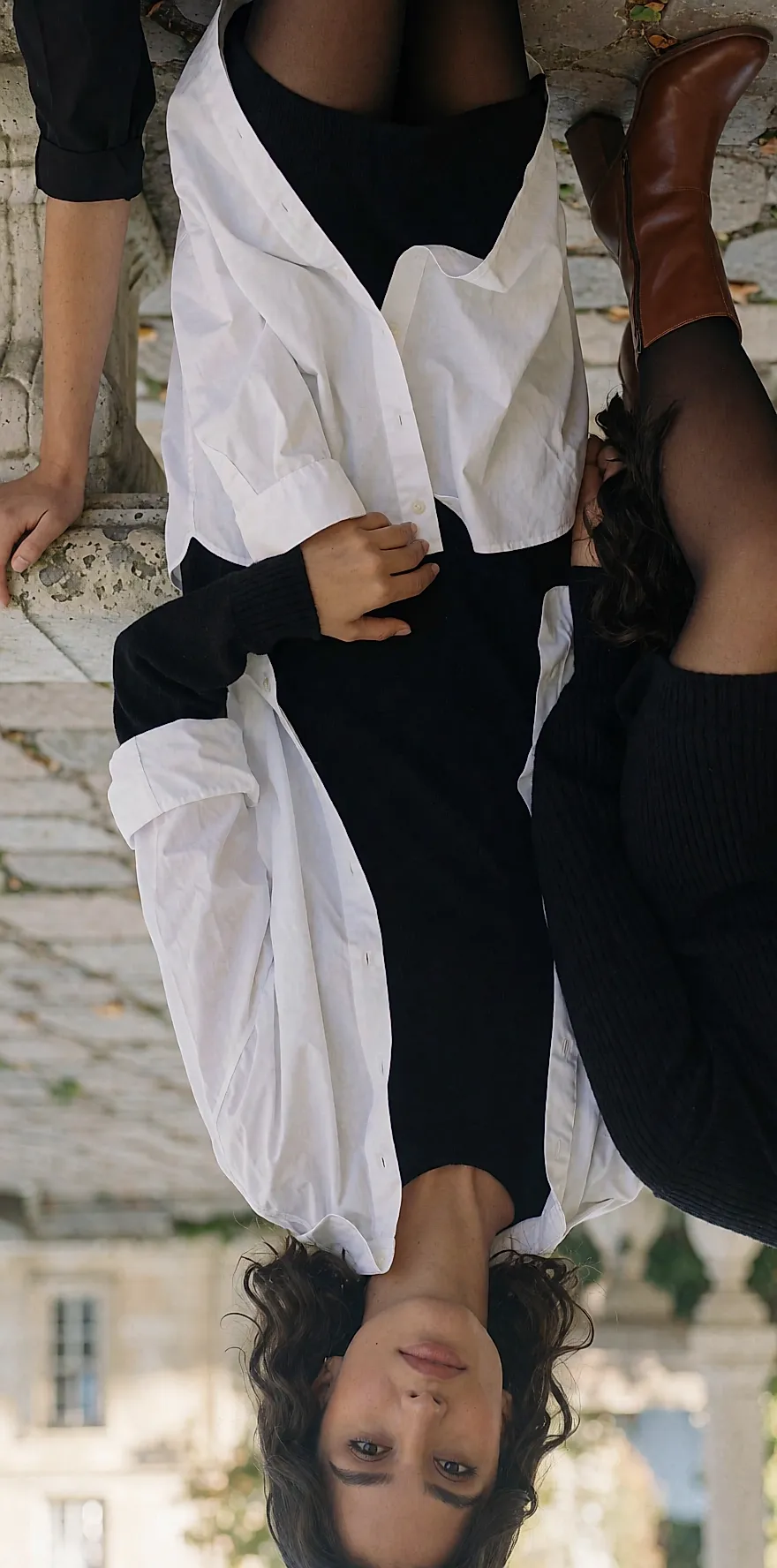
Why does it work? The eye reads two lines instead of one. The open shirt draws a vertical frame, the dress follows the body. Layering here isn't layering for the sake of it: it structures. It's very simple, and yet so few people do it.
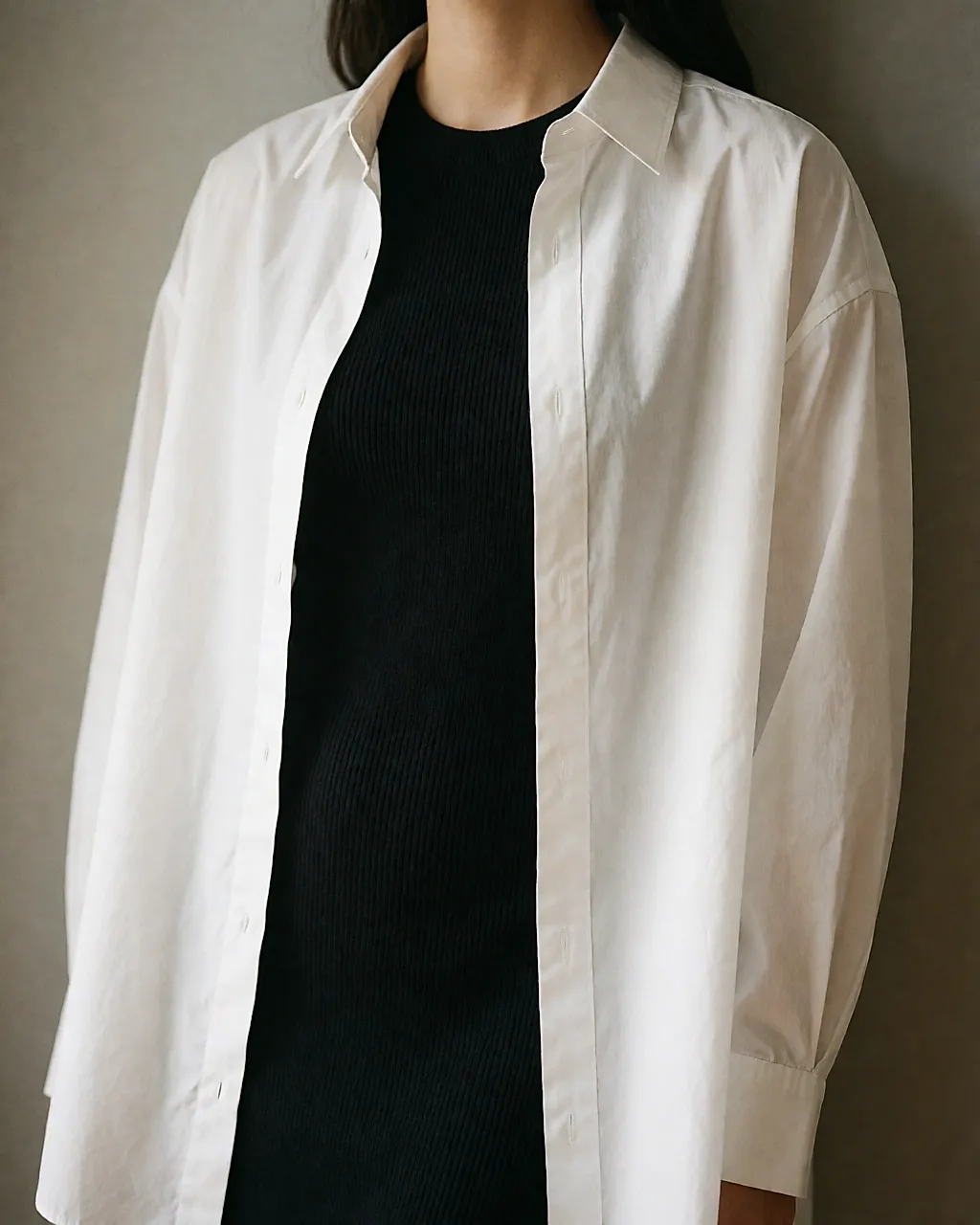
On a petite frame, it's very flattering. On a tall one, it breaks the vertical and lightens the whole look. Different proportions? Keep the idea, change the length, not the structure.
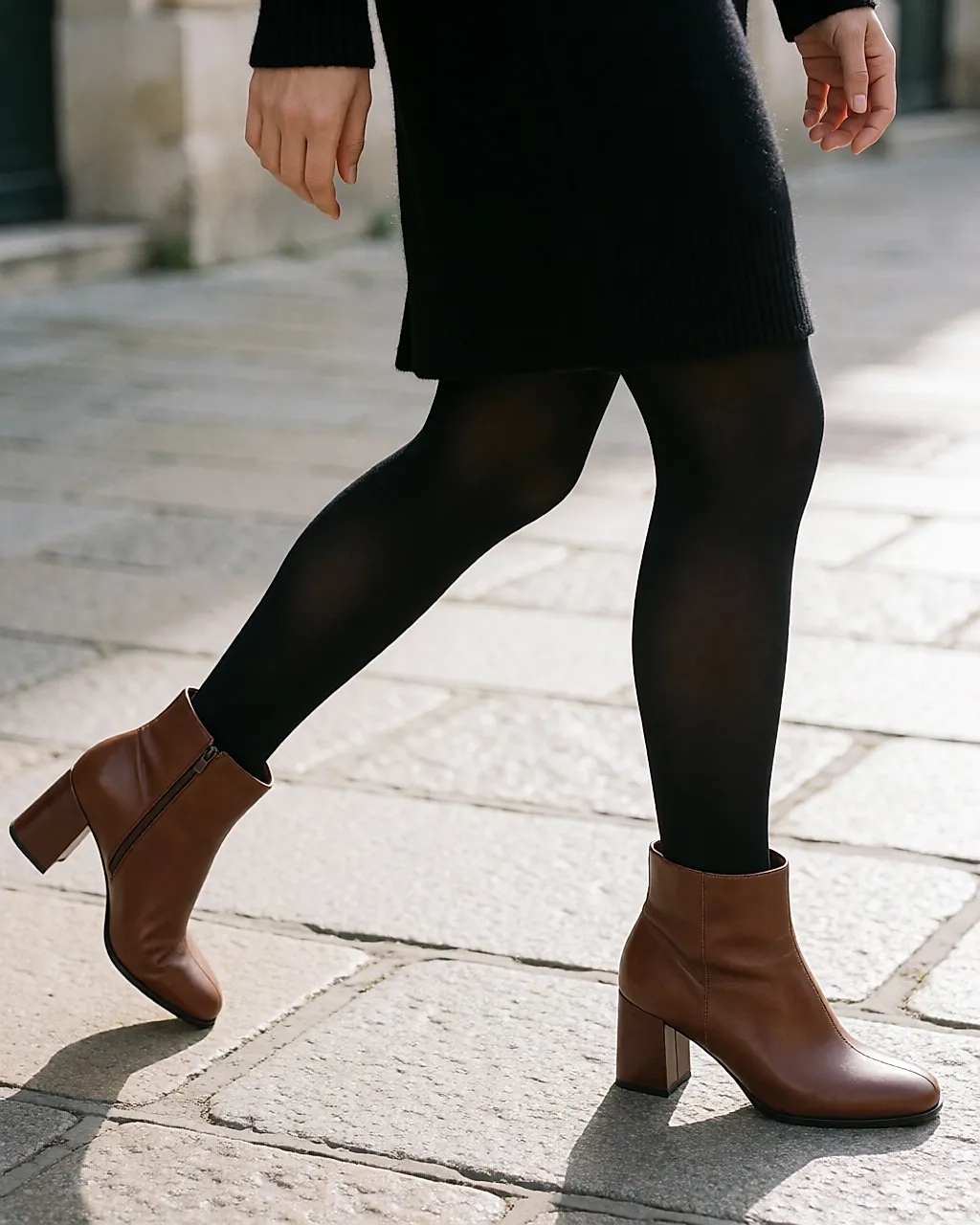
The black and white that rescues rushed mornings
Well-cut black trousers, a fitted white shirt, and a single eccentric touch: the formula has proved itself on countless red carpets. For a ceremony, that touch took the form of a pair of leopard heels.
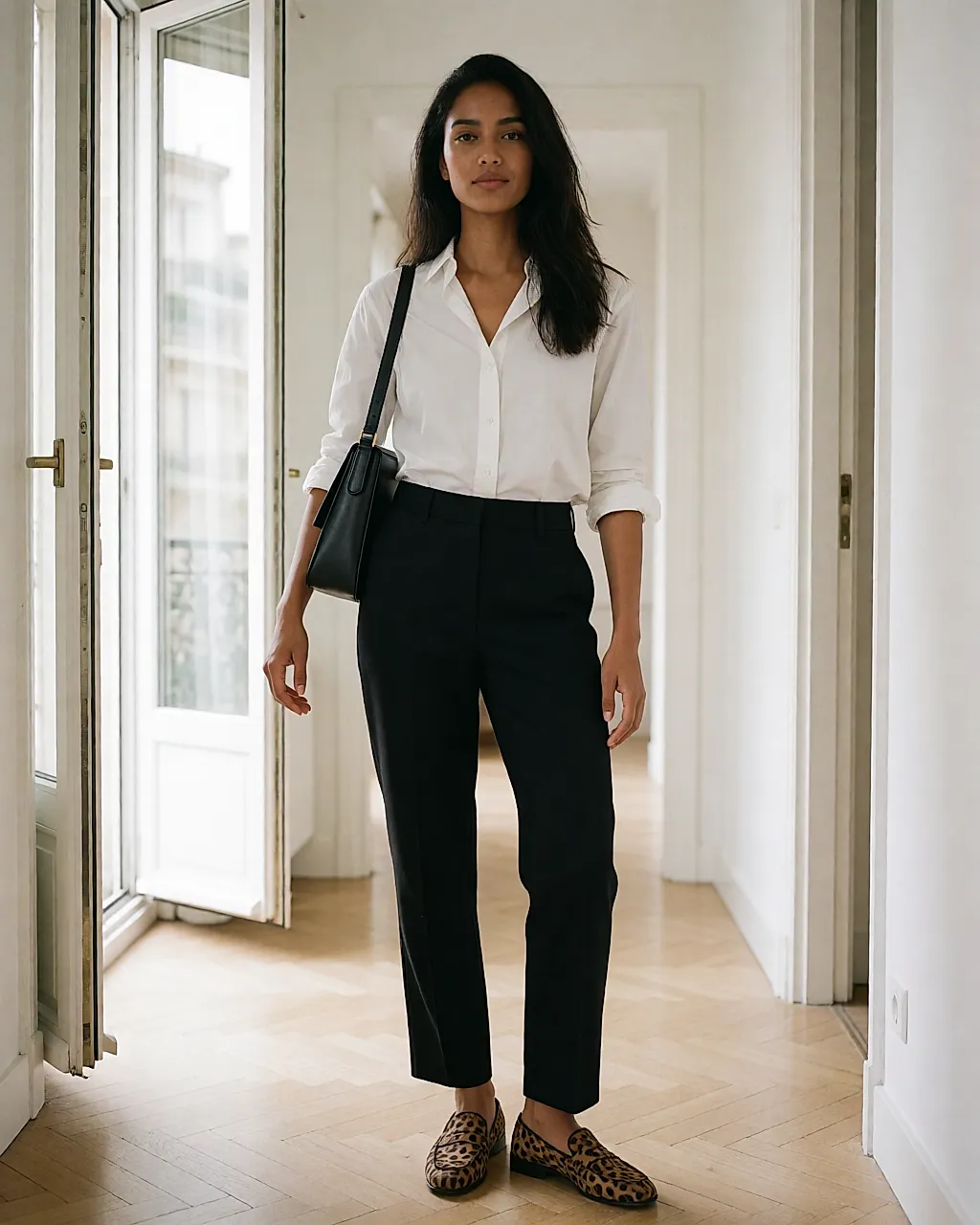
In 2026, animal print is still here, but in a smaller format: a loafer, a bag, a belt. Why the restraint? Because large-scale leopard ages an outfit on sight. In a tiny dose, it wakes up a very sensible combination without turning it into fancy dress. And what's missing from a wardrobe isn't the white shirt, it's the ironing. One well-cut basic beats three approximate ones.
Casual rock: the printed tee and the jacket
The casual rock mix long played the teenager: band tee, sequin jacket, faded slim jeans, lace-up boots. The formula has survived, but above all it has changed proportions.
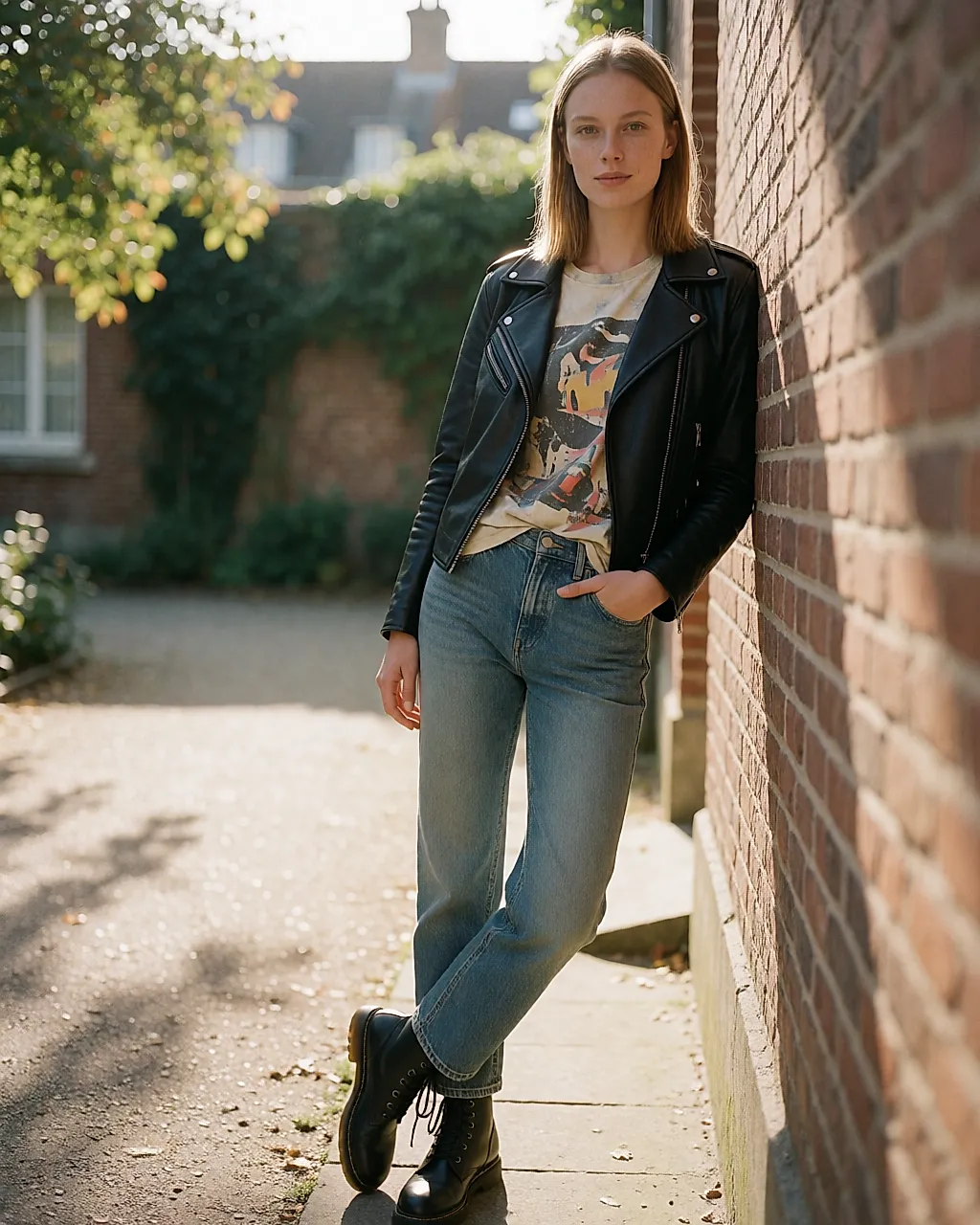
Today you spot it everywhere in festival mode: printed tee, leather jacket or structured-shoulder blazer, slightly faded straight jeans, lace-up boots. The slim has given way to a straighter cut, more comfortable and more current — and the way the denim falls makes all the difference.
The move that changes everything: tuck the tee in at the front, not at the sides. It marks the waist and lengthens the leg without a belt.
Travelling: comfort, with one touch that stands out
When travelling, outfits are soft, but nothing is left to chance. A long tunic, opaque bottoms, and one piece that catches the light. Keep the idea, not the shoes: 10cm platforms in an airport, not for me. Have you ever sprinted for a connection in heels?
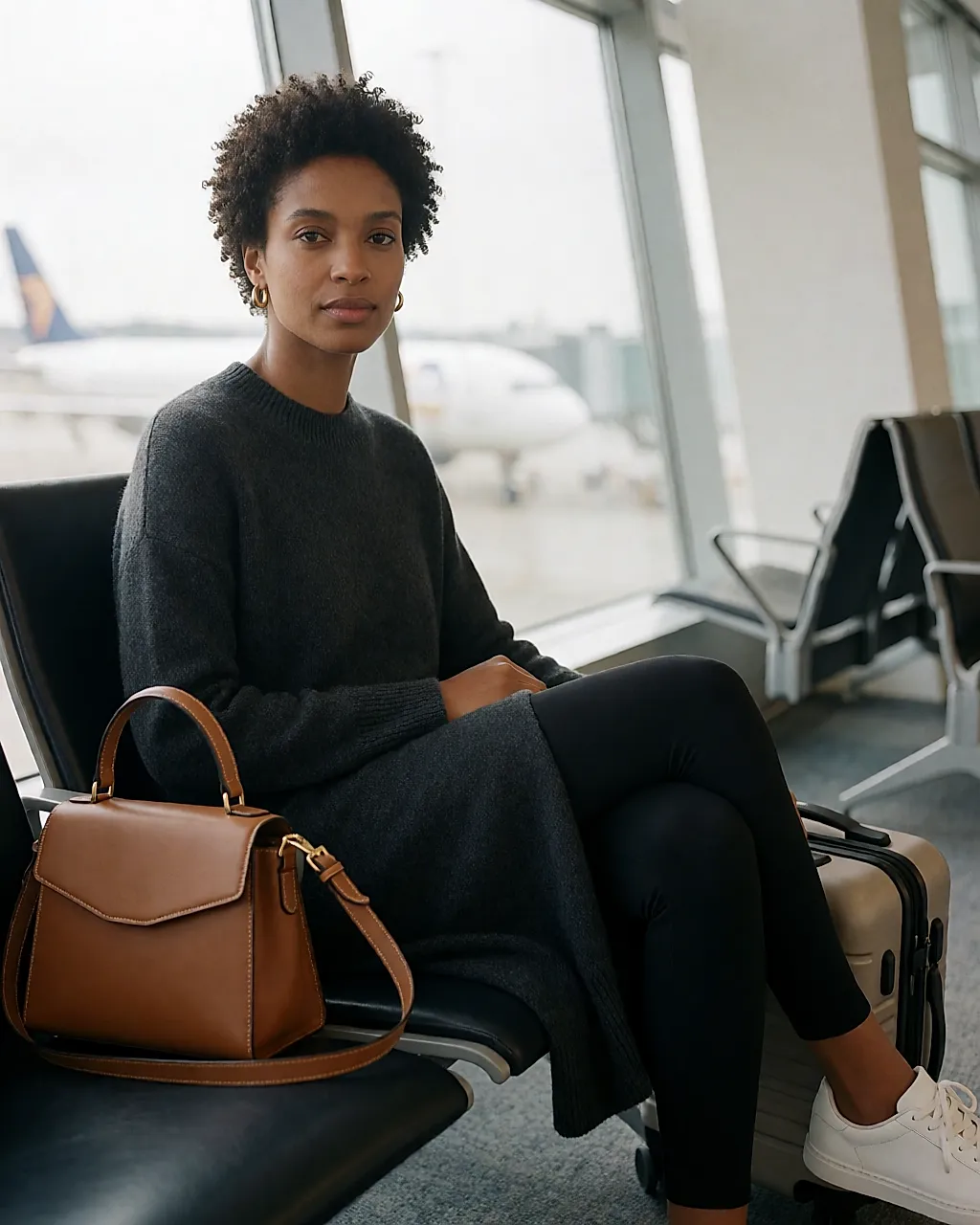
The wearable version: a thick-knit tunic or long dress, matte high-waist leggings, clean white trainers or loafers. And one deliberately overdressed touch — a structured bag, gold earrings. It's that gap that reads as polished rather than Sunday afternoon.
Budget
When it comes to budget, expect to pay around £30 to £70 for a decent cotton shirt from a supermarket or online, and £50 to £130 for a thicker version whose fabric will hold up over several seasons. A well-cut straight black trouser: £45 to £105. A merino wool knit dress: £50 to £120 depending on length and the fineness of the knit. Block-heeled leather boots: £80 to £220 — this is the piece where the price gap shows most over time, between leather that patinas and synthetic that cracks.
These ranges vary by city, fabric, range and care. Where to look, in practice? Supermarkets and high-street ready-to-wear for the shirt, charity shops and resale platforms for the leather jacket, capsule wardrobe brands and local workshops for a basic that lasts. And for the boots, bear in mind that a pair you can have resoled at a cobbler often costs less over three winters than a cheap pair you replace every year.
On materials, two simple rules: favour certified organic cotton and wool with a traceable origin. It won't make a piece eternal, but it avoids paying for the word "responsible" with nothing behind it. Second-hand remains a useful lever: no new production, no packaging, and a price that often leaves room for alterations.
I tested the open-shirt-over-knit-dress formula five days in a row, Monday to Friday. The verdict: yes, but on one condition. The shirt needs to be a little loose at the shoulders, otherwise it bunches under the dress and everything collapses at the waist.
On the other hand, I only documented the ceremony looks. I'm not going to recommend an evening dress I've never worn. The difference matters: evening wear is judged in a photograph, everyday wear is judged after eight hours.
Three pieces are enough
A slightly oversize white shirt, well-cut black trousers, block-heeled boots. With those, you cover the office, the school gate and an improvised dinner. Everything else is a bonus, not an obligation.
Where to start
Don't try to reproduce an entire look: it's the surest way to end up looking like someone else. Choose the piece you'll wear three times this week, buy it well, and leave the rest alone. A successful outfit is often one good piece and two you forget about.
Comments
Your opinion matters: rate the article, react and reply to comments.
Comments are moderated; AI-assisted comments are flagged. Text emoticons (8-), :-), <3…) are automatically shown as images.