

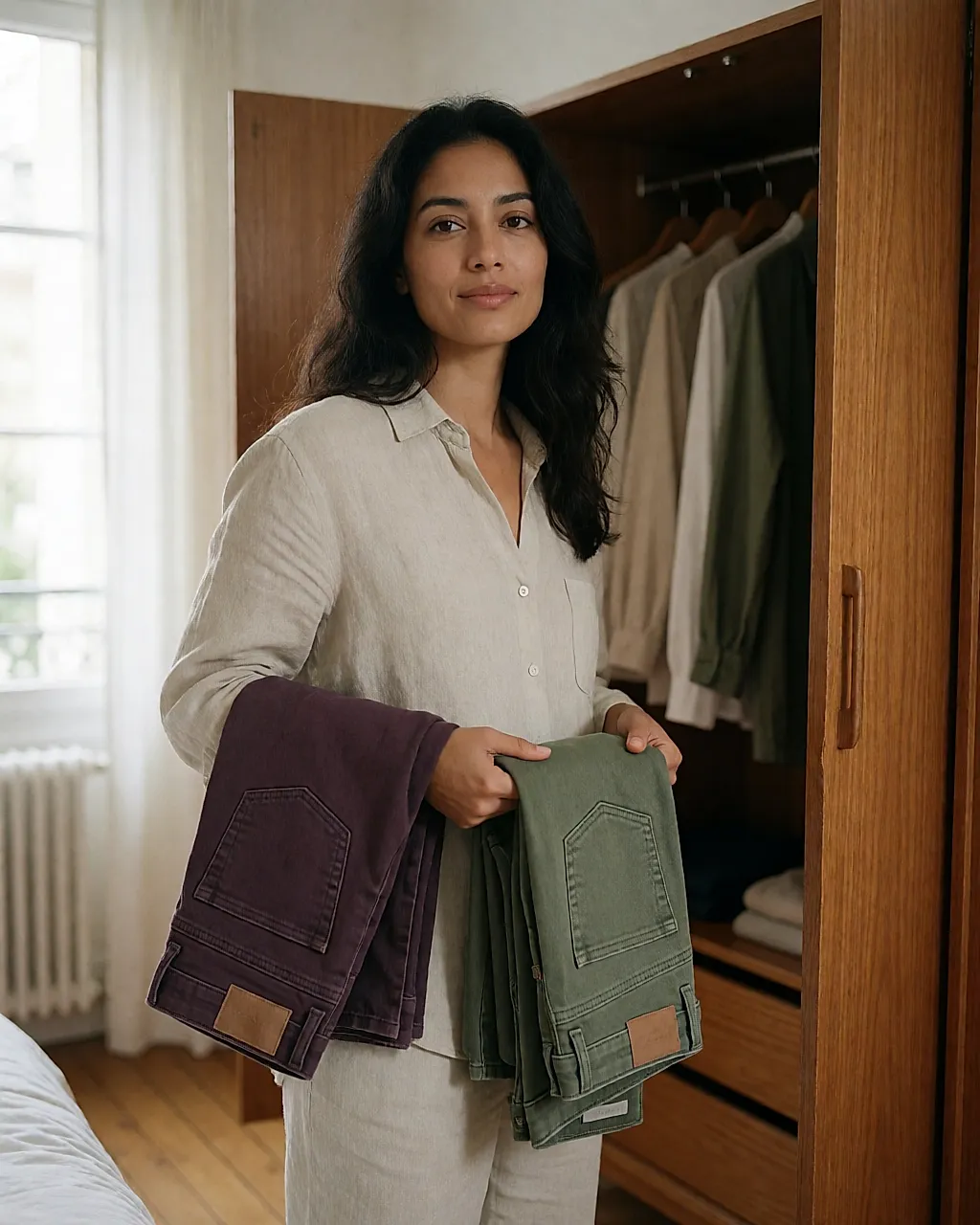
A reader wrote to me last week asking what to do with two pairs of coloured skinny jeans she bought fifteen years ago: wear them again or donate them? The question deserves better than a flat yes or no. In truth, coloured skinny jeans still have something to offer — they have just changed role in the wardrobe.
Skinny jeans are no longer the default
For a decade, skinny was the reflex cut: you pulled on almost any thin denim and it worked. Those days are over. In recent seasons, shop rails have been dominated by straight, barrel and loose fits. The result: wearing skinny jeans in 2026 is a personal choice, not a collective habit.

And that is no bad thing, because skinny jeans keep an advantage that looser cuts do not: they slide effortlessly into a boot, under a long jumper or beneath a straight-cut coat. Their silhouette streamlines the leg and gives a clean line, while leaving room for volume on top. A layering piece, then, rather than a statement piece.

Colour, yes — but which one?
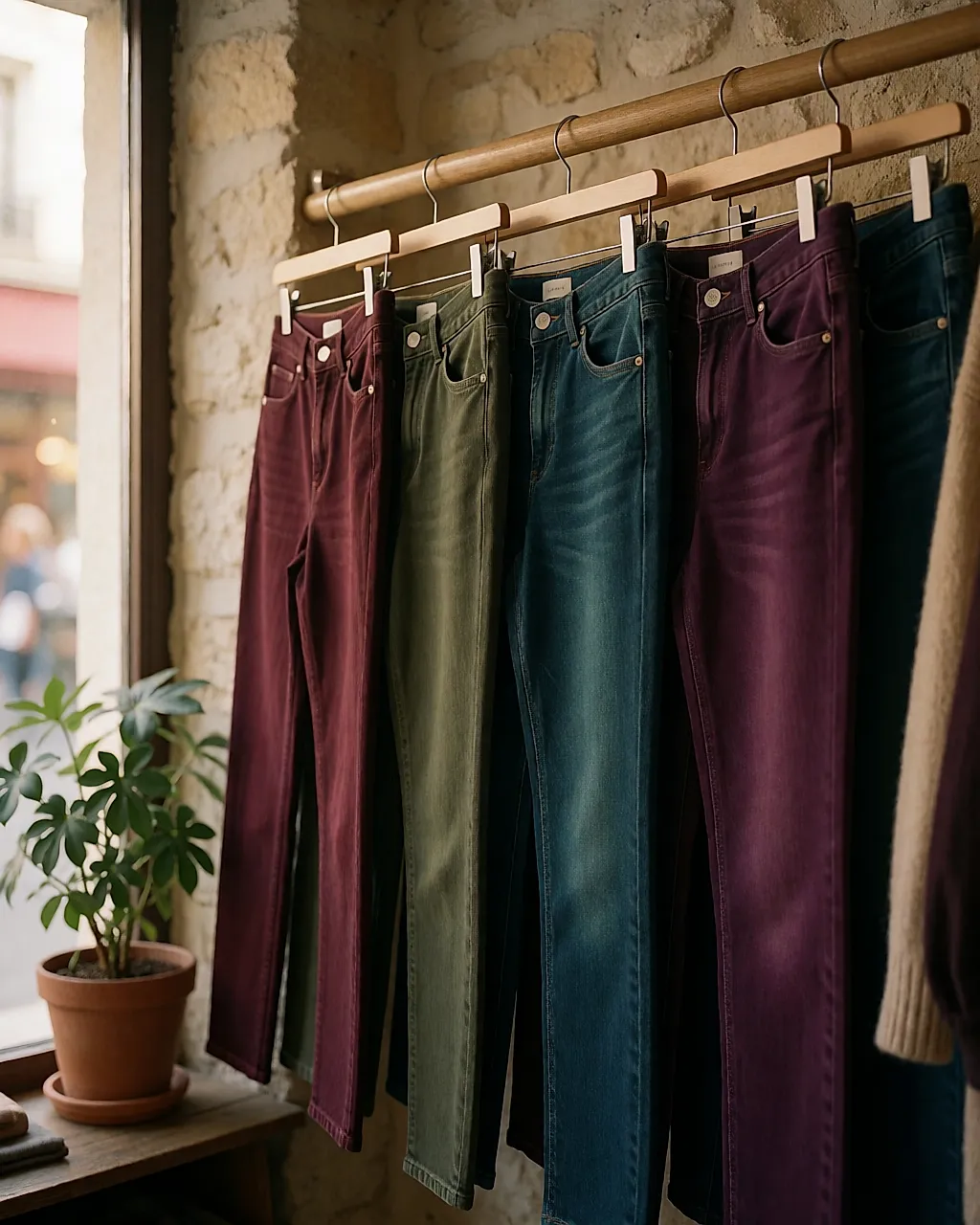
Not all shades age the same way. Piece-dyed denim can bleed in the first few washes, especially in light and saturated tones. The colours that hold best are deep ones: burgundy, aubergine, olive green, rust, petrol blue.
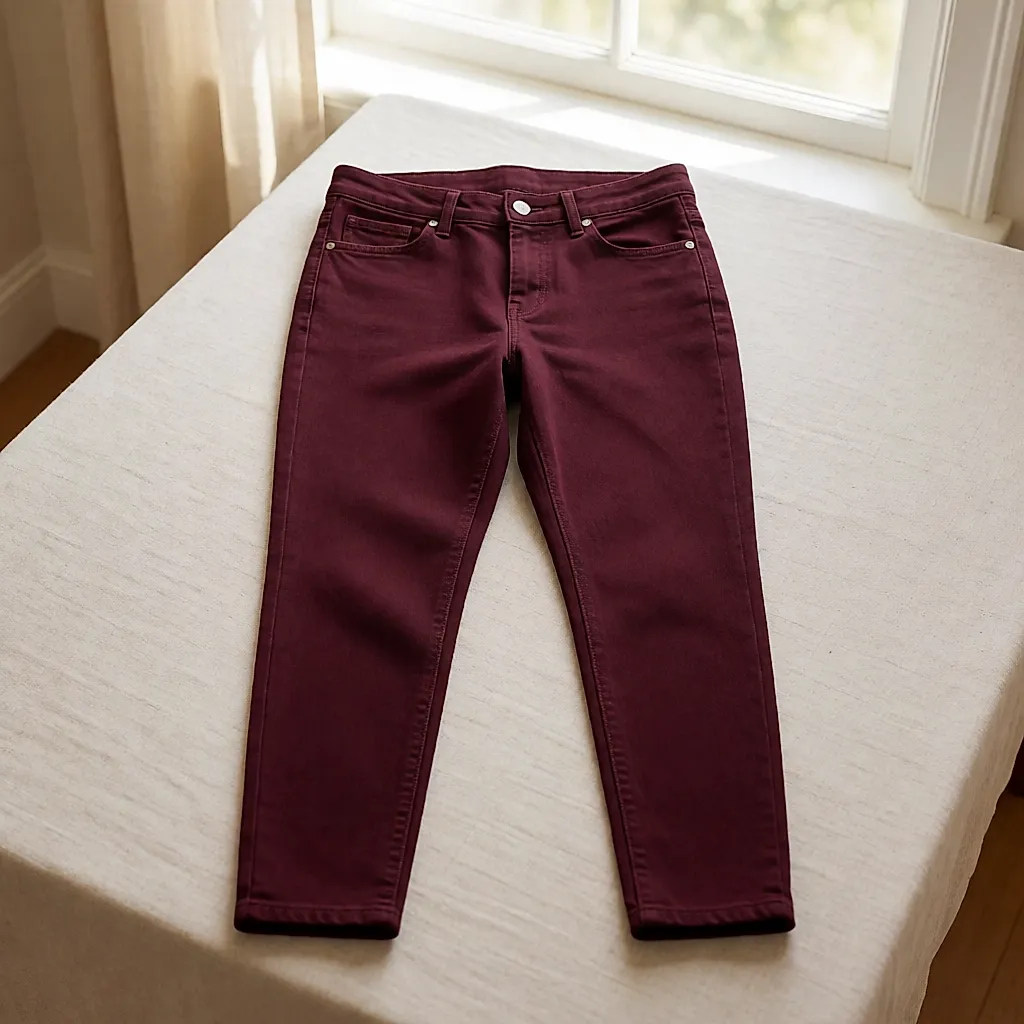
For an autumn that feels energised rather than fancy-dress, the rule is simple: one strong colour, everything else neutral. Rust skinny jeans with a cream jumper and camel boots work. The same jeans with an apple-green top and a pink bag work far less well.

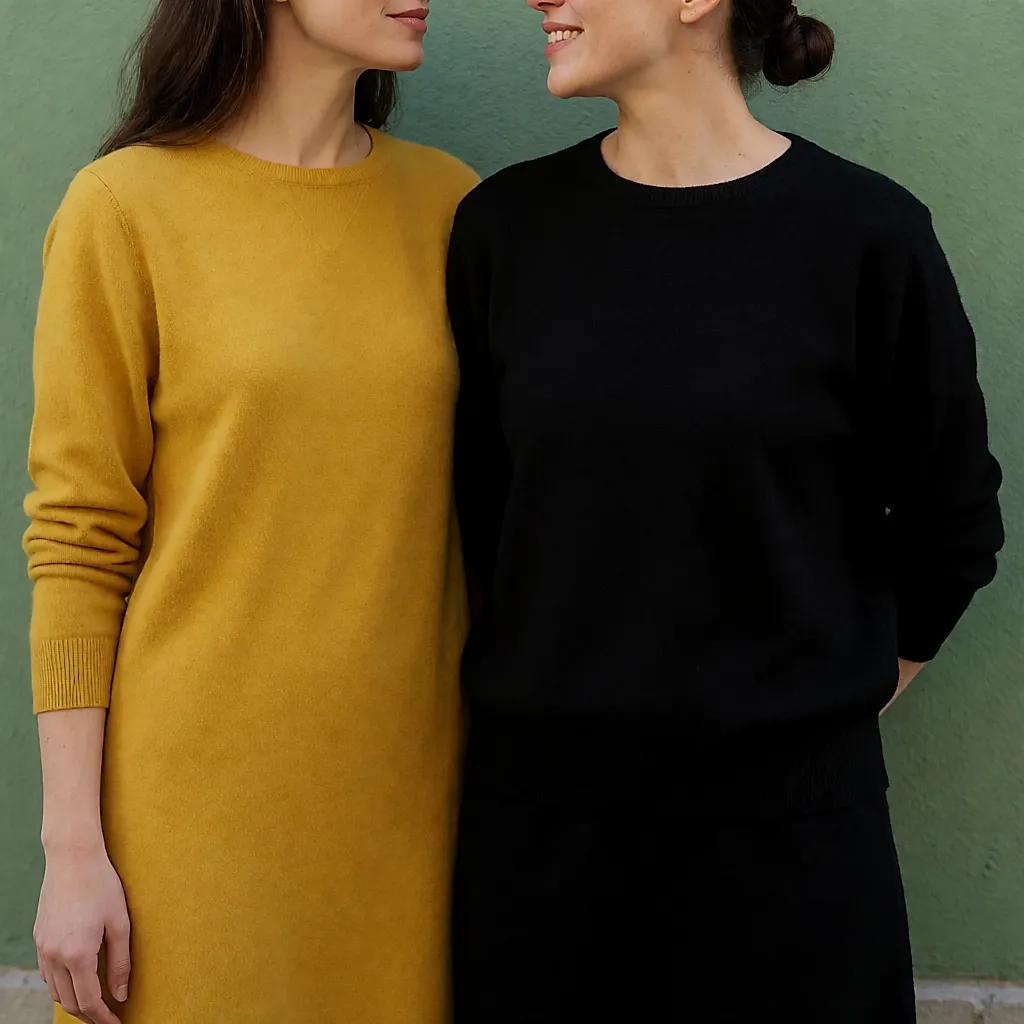
Mustard yellow and electric blue remain the riskiest. If you try them anyway, keep the top and shoes black or sand, and let the jeans do the work.

Why fabric and drape matter
A skinny jean stands or falls by its fabric. Rigid denim without elastane marks the leg and forms ugly creases at the knee. At the other extreme, too much stretch turns the cut into leggings and loses its drape within a few months.

The sweet spot is a dense cotton with a touch of elastane. You can check by pinching the fabric: if it slowly returns to shape, the cut will last. If it stretches like a pair of sports leggings, walk away.
When it comes to composition, look for GOTS-certified cotton, which guarantees the organic supply chain from field to finishing, or denim carrying OEKO-TEX Standard 100, which certifies that the textile has been tested and meets limit values for certain undesirable substances. These labels say nothing about the end of a garment's life, but they do set parameters for the material — which is something at least.
How to style it
It is also unbeatable in a head-to-toe monochrome look, provided you mix textures — matte knit, leather, wool — to avoid flatness.
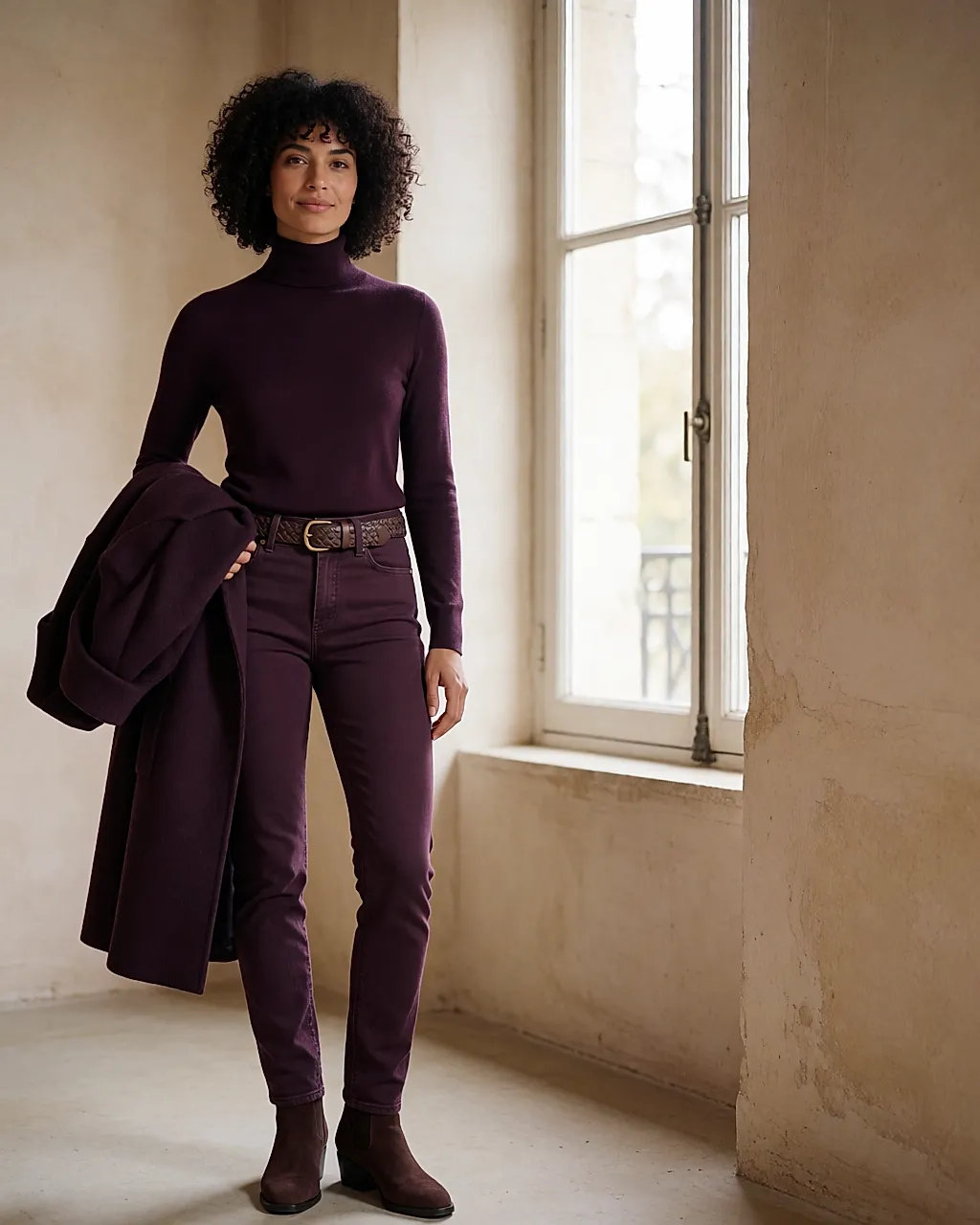
The hem matters just as much. Cut just above the ankle, it lengthens the leg. Cut too long, it breaks the line and bunches over the shoe.
Coloured denim should be washed sparingly, at 30°C maximum, inside out, and never in the tumble dryer: heat sets creases and exhausts the dye. France's ADEME recommends washing less often and at lower temperatures, which goes double for colour. Between wears, just air the jeans overnight.

Budget
Prices vary widely according to fabric and where the jeans are made, not according to colour. In the UK, expect roughly:
- High street and fast fashion: £20–£45. Conventional cotton, often less stable dye.
- Mid-range, organic cotton: £70–£120. This is where most GOTS or OEKO-TEX pieces sit.
- Made in France or Europe: £130–£220, with traceability stated.
- Second-hand: £10–£50 on resale platforms and in second-hand shops — often the best option, including for quality denim.
- Hemming: £10–£20 at a tailor or dry cleaner.
What pushes the price up: certified cotton, piece dyeing, European manufacturing, and having a repair policy. Conversely, a well-cut second-hand pair adjusted to your size often gives a better result than a badly cut new pair.
The most useful test is simple and free: sit down in them. If the waist gapes or the fabric pulls, no colour will rescue the cut.
Sources
- ADEME — France's agency for ecological transition, recommendations for garment care (wash less often, at lower temperatures).
- GOTS — Global Organic Textile Standard, the certification standard for organic cotton and its processing.
- OEKO-TEX Standard 100 — certification for finished textiles confirming compliance with limit values for certain undesirable substances.

Comments
Your opinion matters: rate the article, react and reply to comments.
Comments are moderated; AI-assisted comments are flagged. Text emoticons (8-), :-), <3…) are automatically shown as images.