
We love autumn for this: jumpers come back out, fabrics feel more enveloping, and lingerie becomes that small pleasure you slip under wool. But there’s a gap between the comfort you demand on a weekday and the pretty piece you’d like to wear in the evening—and budget doesn’t help. So what should you actually choose?
This article has been fully reworked. It is a retrospective on the autumn 2009 season. The pieces and trends mentioned are documented, not tested: we looked at them closely but never wore them. We walk through the big trends of that autumn, what actually gets worn, and how to navigate it all without spending a month’s wages.
Embroidered romance is a safe bet
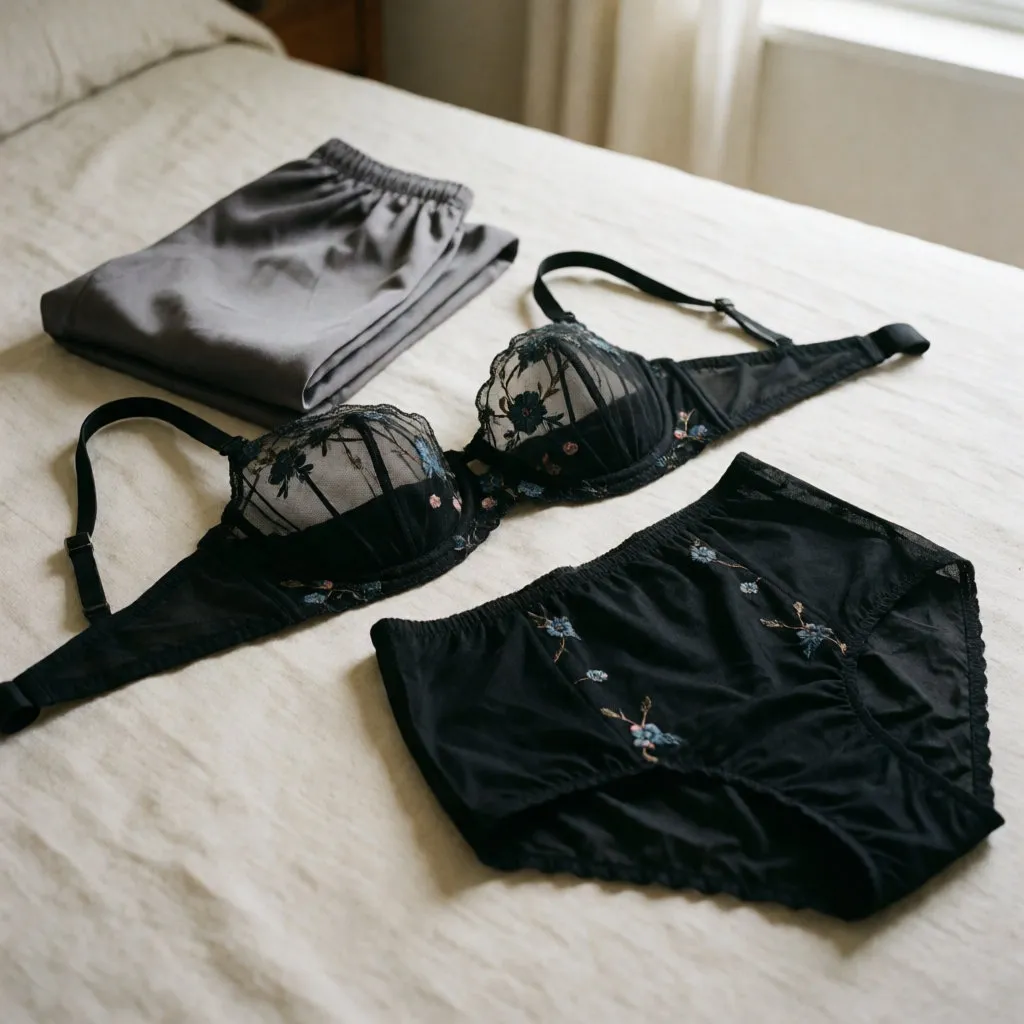
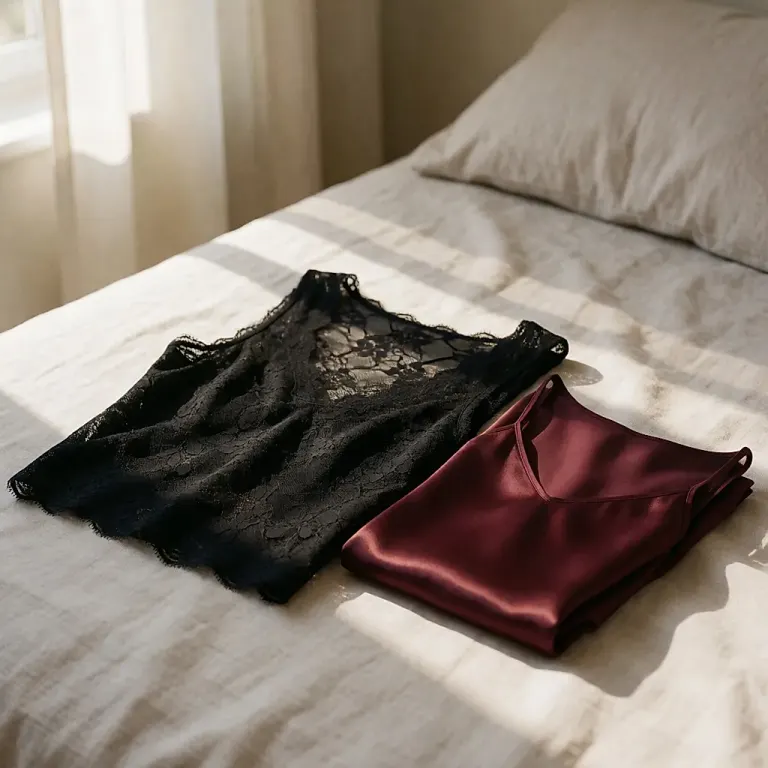
Floral embroidery on tulle hasn’t lost any of its power. That season it came on black or nude bases, sometimes openwork, sometimes more opaque, with flowers in bright shades appearing where you least expect them. The result? A bucolic romance, a little cheeky, evoking an English garden—a real treat for the eyes.
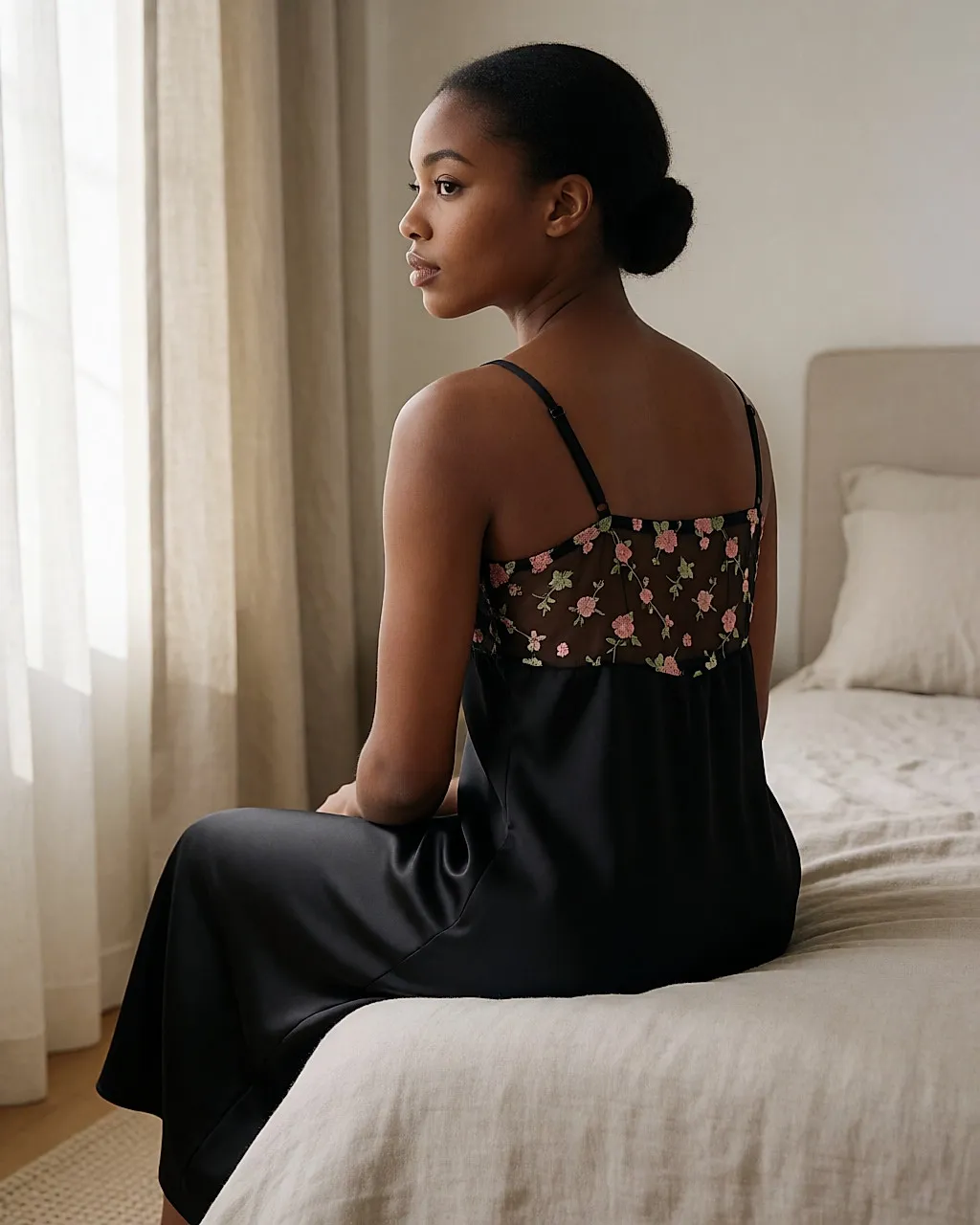
The pieces to remember are the ones that go all in: silk pyjama bottoms, a wrap top with a small high neck, a long nightdress with delicate straps. The drape of the silk and the attention to detail make all the difference to the silhouette.
Animal print, in small doses
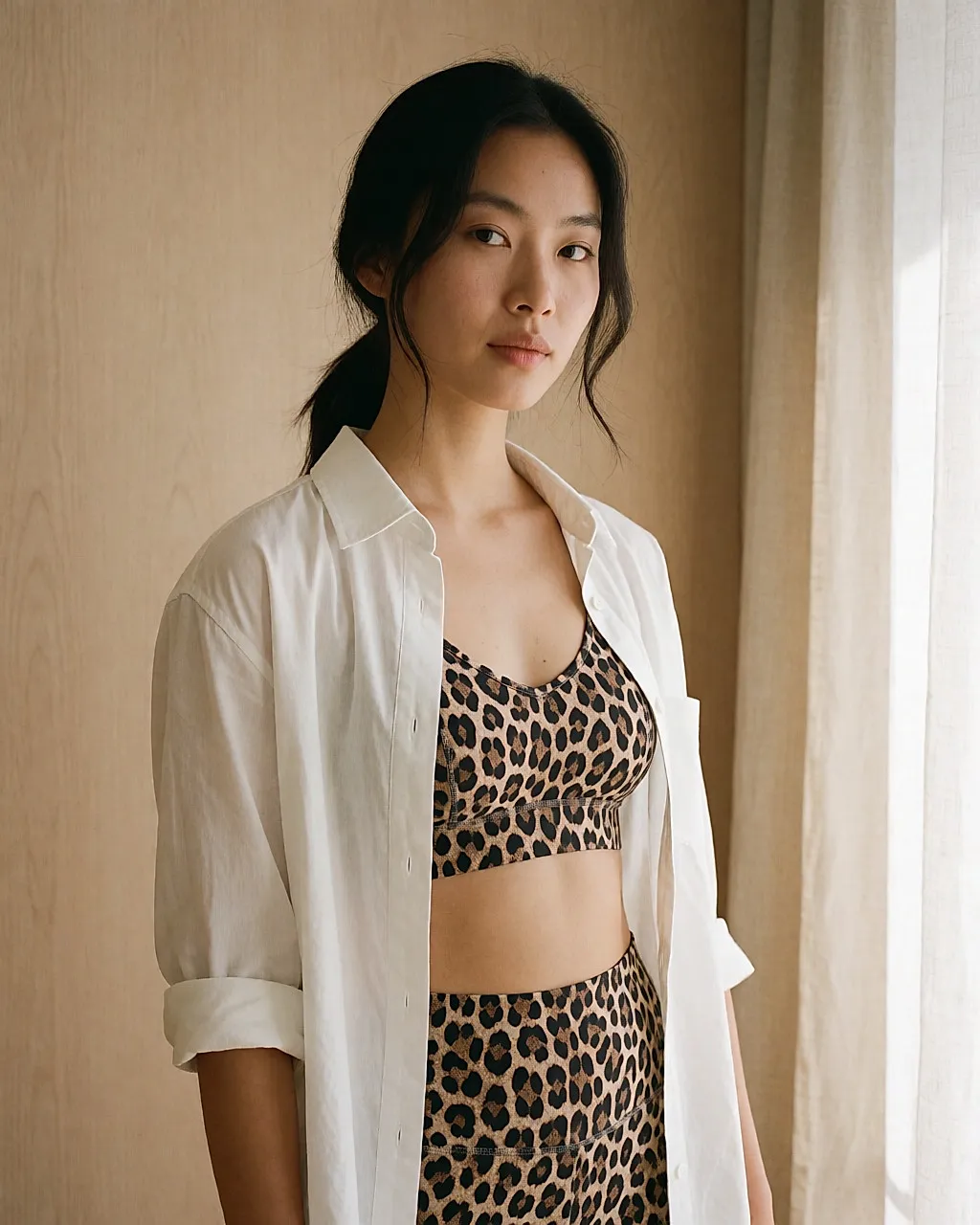
Animal print slips under your clothes: leopard, python, in tulle or microfibre. Once a bold bet, it has become a lingerie-department classic, and it ages well as long as you keep it in proportion. A zebra-print bra under a white shirt, leopard briefs under a cashmere jumper, and that’s it. In reality, texture is what works best with autumn layering.
Every shade of blue
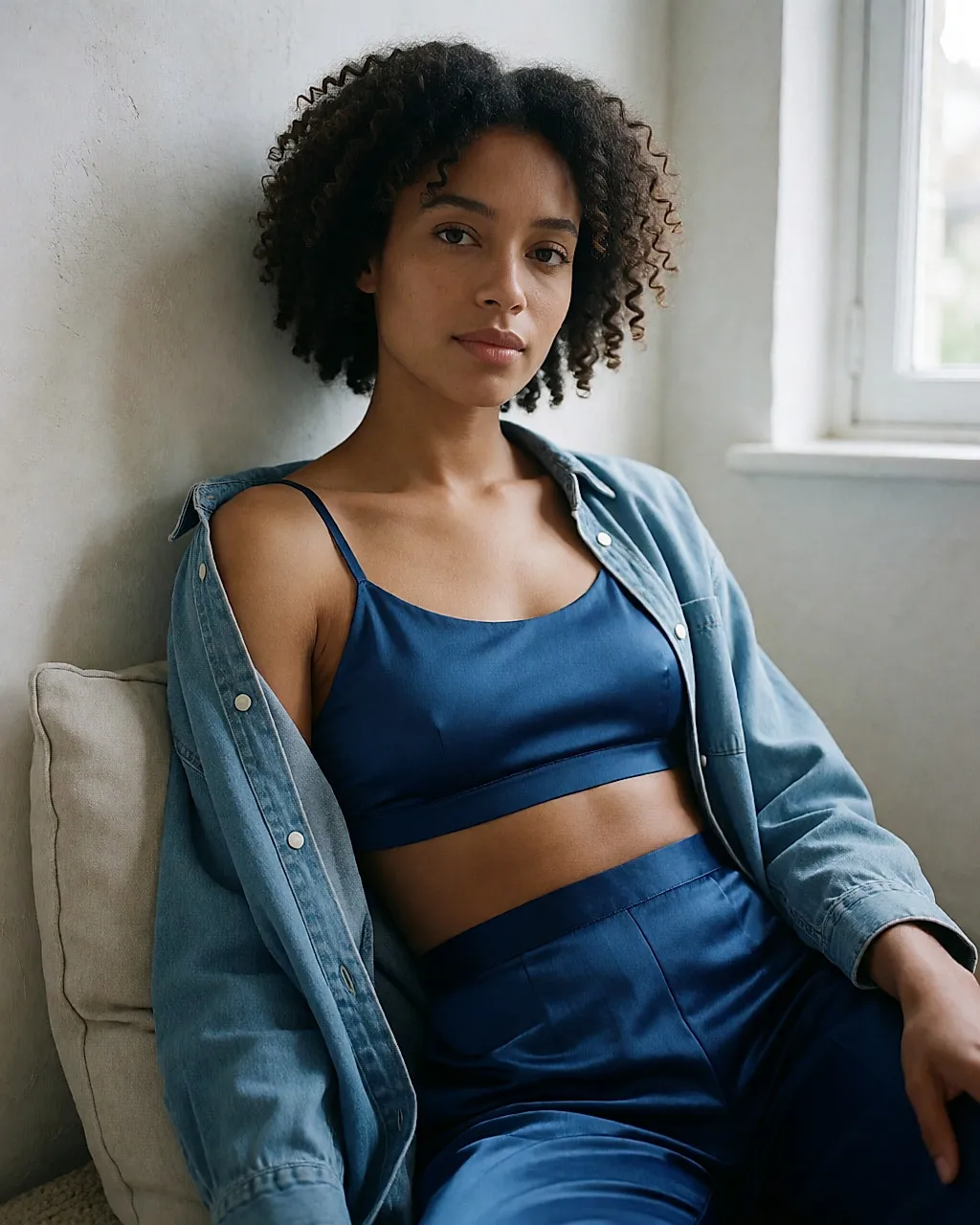
From indigo to South Sea blue, the palette runs across satin, scalloped tulle and sapphire lace. What stands out? Clean-lined sets with high-waisted knickers, blue-mauve printed satin, and sheer stretch lace that softens a simple cut.
And for anyone who prefers to stay understated: black bandeau and knickers edged with a fine openwork trim, or a knot-detail triangle bra in ochre, taupe and red on a grey base. The good news is that these basics are available at every price point—enough to build a capsule lingerie drawer without blowing your budget.
Retro, lace and a touch of false wisdom
Cut-out lace and rounded lines still do the job; sheer cups are lifted with powder-violet floral embroidery. We love opposites: electric violet polka dots on tulle, openwork purple lace, virginal white, or black half-lace, half-satin. Satin mint green pairs with black lace, while black returns with frills and embroidery.
And that season, a deeper trend: lingerie meant to be seen. A lace bustier worn under a blazer, a satin camisole peeking out from a jumper, a sheer body for layering. The line between underwear and outerwear blurs, and that’s rather cheering. Go for the full look, and accessorise sparingly: one statement piece is enough to give you presence.
What has lasted?
Quite a lot, actually. High-waisted knickers, long a retro marker, have become a wardrobe basic. The triangle bra with removable pads is now an all-year style. Floral embroidery and tulle have never left the collections. Good news: those codes are still here.
What has really changed is the offer: sizes have widened, unlined cups and seamless knits have become mainstream, and part of the market has shifted to direct-to-consumer brands. In other words, the codes survived; the brands moved on.
A useful rule of thumb: to read a trend, separate the cut from the decoration. A bustier, a full-cup bra, a triangle bra, high-waisted knickers: these are cuts that come back in waves and should be chosen according to your body shape. An animal print or violet polka dots is decoration: it lasts two seasons, not ten. Buy the cut, have fun with the decoration, and you won’t go wrong.
Budget
When it comes to budget, costs vary widely by where you shop. At supermarkets and value high-street retailers, expect around £10–25 for knickers and £20–40 for a bra—a set comes in at roughly £35–70. At mid-market labels, think £25–60 for knickers, £45–85 for a bra, and £80–160 for a set. Finally, premium pieces in French lace or silk often top £130, and sometimes £220 for a complete set.
Three factors push the price up: fabric (woven lace, silk, technical knit), size (larger cup sizes and plus sizes often cost more), and where you buy (brand boutiques, multi-brand retailers, online). Where to find it all? Supermarkets and value retailers for budget basics; specialist chains for fit and fabric; and online, especially direct-to-consumer brands, which often cut prices by skipping the middleman—they’re also where you’ll find the widest range of sizes and fits.
When it comes to materials, if you want to shop more responsibly, look for natural fibres (organic cotton, silk) and regenerated cellulosic fibres such as Tencel (lyocell). Be clear about what labels cover: GOTS for organic status, OEKO-TEX Standard 100 for testing of harmful substances. Bear in mind, though, that much lingerie is still made from polyamide and elastane, which hold their shape and lace better; it’s a genuine trade-off.
Sources
- GOTS (Global Organic Textile Standard) — global-standard.org
- OEKO-TEX Standard 100 — oeko-tex.com

Comments
Your opinion matters: rate the article, react and reply to comments.
Comments are moderated; AI-assisted comments are flagged. Text emoticons (8-), :-), <3…) are automatically shown as images.