

The cold always gets you from the ankles down. Ten degrees forecast, a skirt that seemed perfectly sensible when you got dressed, and two Tube stops later, your lower legs are demanding answers. This is where wool tights come in — not to replace trousers in some heroic gesture, but to make the skirt wearable again until January. The question is which pair to pull on, when, and how to avoid wrecking them in three days.
Wool, yes — but which kind?
First move: read the fibre label, usually listed from the largest share to the smallest, especially for the main fibres. Merino wool is the fibre most often mentioned for tights, and the reason is simple: its fibres are fine, so they feel soft against the skin and are far less prickly than the wool you remember with a wince. It keeps you warm without turning your leg into a radiator, which is exactly what you want under a skirt, where overheating can hit by the end of the day.
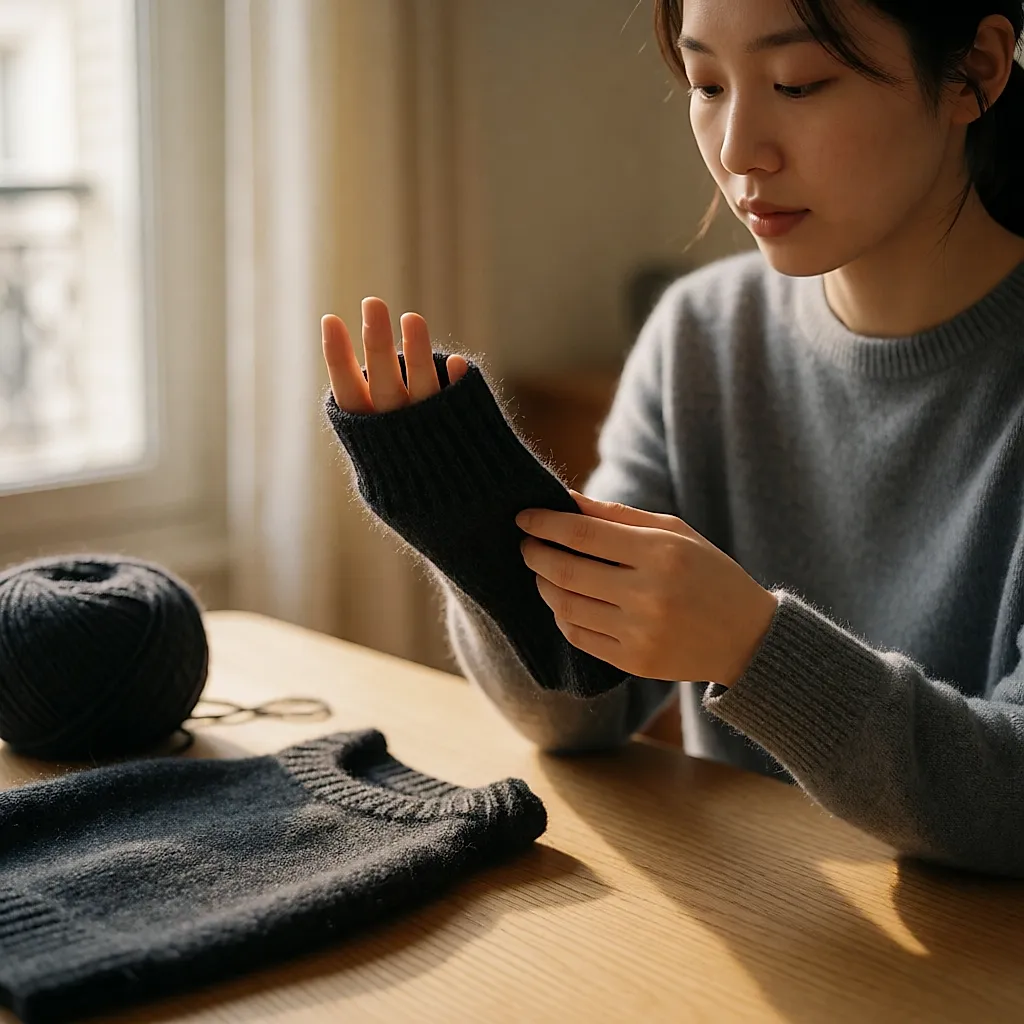
Around it, recycled wool — often reworked mill scraps, much of it from Italy — offers a more understated option, with a handle that can feel a little more rustic depending on the spinner. A good find if you want thickness without the merino price tag. One caveat: there will almost always be some elastane or polyamide in the knit, otherwise the pair would drift on the leg. Check the exact percentage — and, in practice, it's often considered that below about a third wool, the pair comes closer to a classic opaque.
Denier: the number everyone misreads
Denier measures the fineness of the yarn: the higher the number, the thicker the yarn. Easy enough to remember, yet this first benchmark is also the most misleading — a 50-denier wool pair has nothing in common with a shiny 50-denier pair. The material changes everything; the number only describes the yarn.
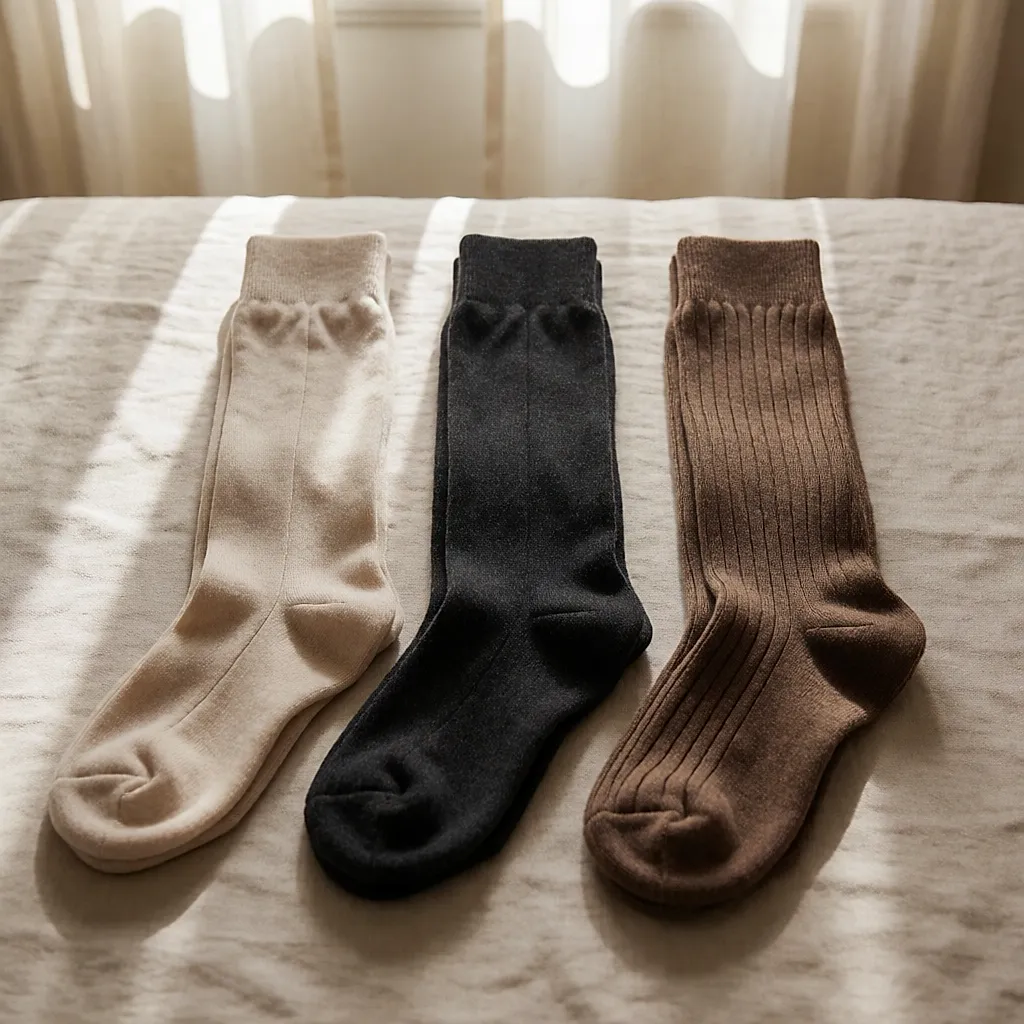
Some field notes, to adjust according to how much you feel the cold and how windy your city is. Under 60 denier, a mid-season pair: perfect in October, a little thin once the thermometer digs its heels in. Between 80 and 100, the real autumn/winter tight, the kind that carries a pleated skirt from Monday to Friday without asking for leggings underneath. Above 150, the deep-winter category, for bus stops that drag on and December outdoor tables.
Under a skirt, it’s all in the details
The waistband first. Flat and wide enough, it holds the pair in place without leaving a mark or rolling down over your stomach when you sit. It sounds like a small thing, but it isn’t: tights that slide down mean an entire meeting spent discreetly hitching them up.
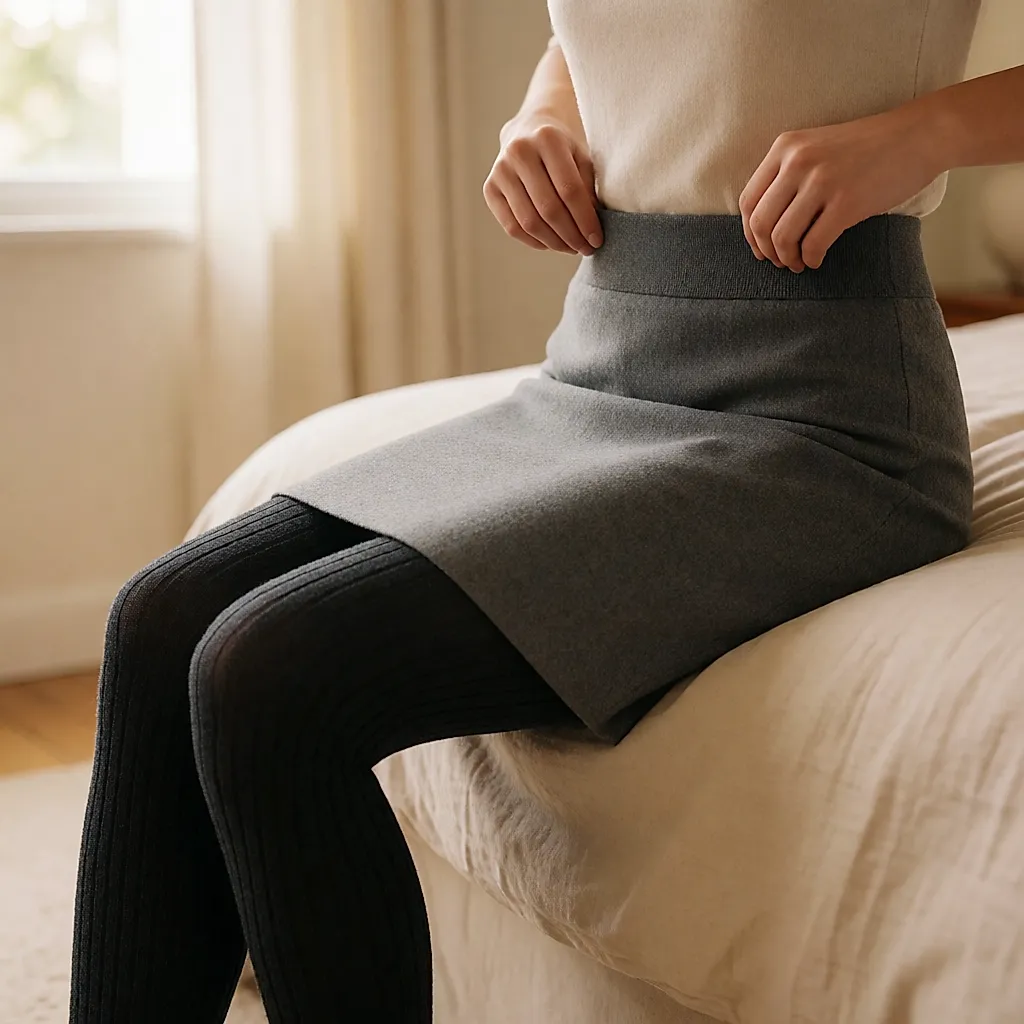
Then the drape. The ankle is what separates an elegant leg from an accordion: the pair should stop at the hollow of the ankle, without excessive wrinkling or riding up. Under shorts, thickness redraws the calf line, and matte beats satin — that shiny finish catches the light. Under a pencil skirt, however, thickness shows less than you might fear; it’s the grain of the knit that does the charm.
Putting them on without wrecking them
A wool tight isn’t put on like a sports sock. Roll it down to the toe, then unroll it gradually upwards, one leg at a time, and never pull on one area alone: that’s the quickest way to stretch the knit and end up with a pair that looks tired at the knees after three weeks. Nails and rings are enemy number one — a tiny snag won’t show immediately, but it will run at the first wash.
If a stitch goes, resist the urge to pull at it. Take the thread back to the inside, secure it with a discreet stitch, and the pair can last another season.
Before you buy, test three things: the waistband, which should stay flat when you fold it; the opacity, by stretching the pair over your hand — if your skin shows through, it will still show under a pale skirt; and the length, bearing in mind that wool relaxes slightly with wear. A pair that is already a tight fit to begin with is rarely a good buy.
Washing: by hand or in a mesh bag
Wool dislikes temperature shocks, tumble dryers and fabric softener, which clogs the fibre. By hand: a bowl of lukewarm water, a gentle soap, press without rubbing, rinse at the same temperature, roll in a towel to absorb the water, then dry flat, away from the radiator.
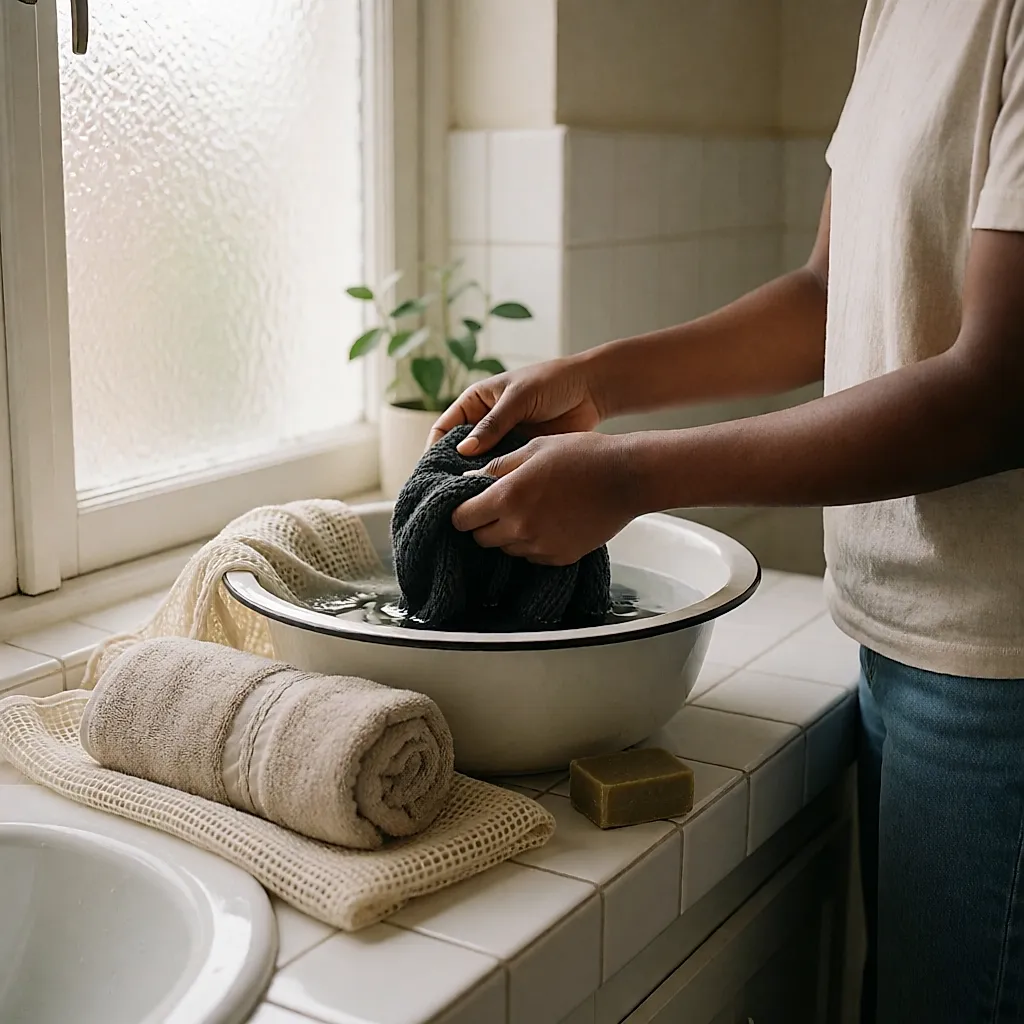
Machine version: a mesh laundry bag is essential, wool or delicate cycle on cold, minimal spin. It isn’t superstition, just a knit that prefers to be treated like a scarf.
Budget
Prices depend on wool content and thickness. On the high street, in a supermarket aisle or on a hosiery website, expect roughly £10–25 for a blend, often sold as a two-pack. In knitwear departments and from hosiery specialists, a merino wool pair is usually around £25–60, and can climb above £70 for the most intricate styles.
Second-hand remains the quiet bargain: £5–20 in charity shops or on resale platforms, provided you check the condition of the waistband and feet. A £15 pair that lasts two winters is better than an £8 pair that has you spending again in January. And if you remember only one thing: two well-chosen pairs — one mid-season, one deep-winter — are enough to cover winter, provided you wash them properly and don’t pull at the knit. Your skirts will thank you.

Comments
Your opinion matters: rate the article, react and reply to comments.
Comments are moderated; AI-assisted comments are flagged. Text emoticons (8-), :-), <3…) are automatically shown as images.