
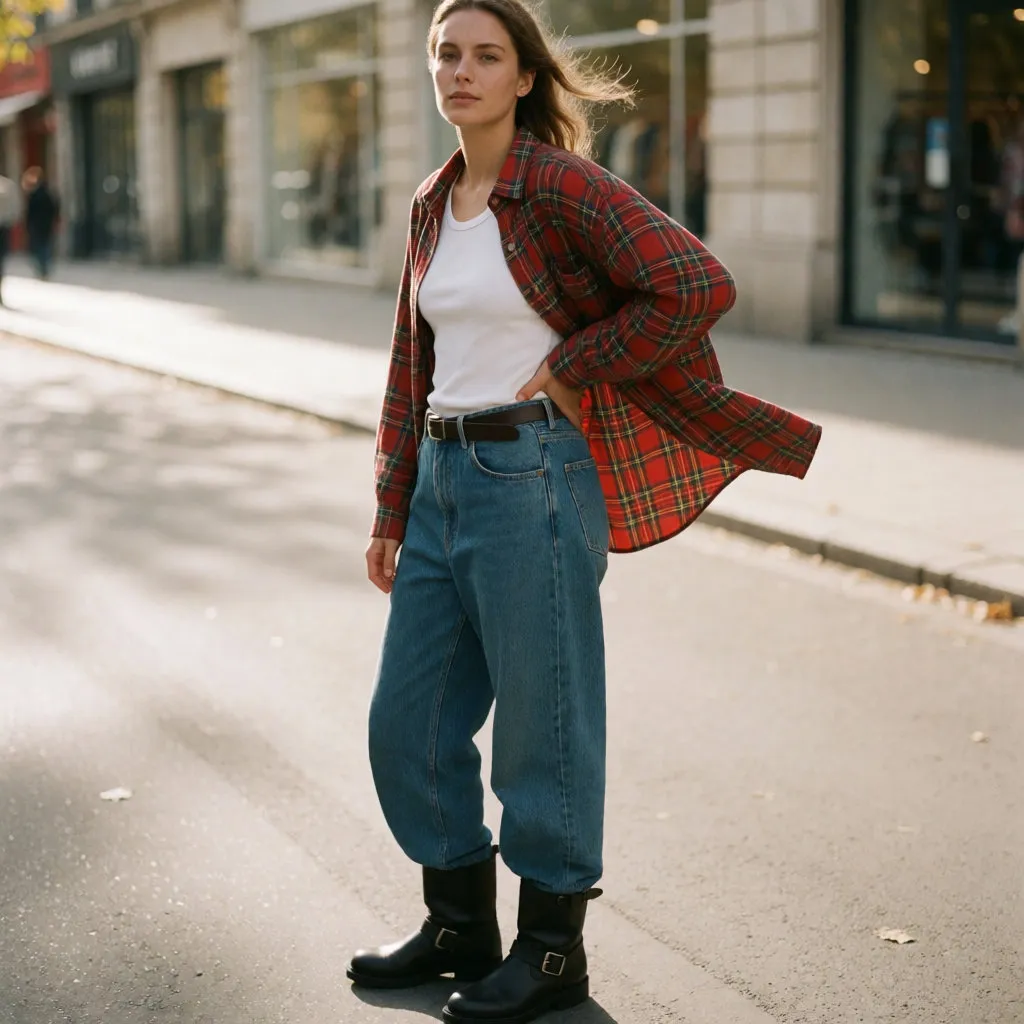
They turn up first in a snatched photo — on a café terrace, or coming out of a show. Three weeks later they're in the shop window, then all over your feed. Every season, the street and social media put together their own wardrobe, often miles from whatever walked the catwalk. So what's really dominating the looks we're spotting around us right now? And, more to the point, how do you make those pieces your own without looking like you've hired a costume?
One honest note before we go any further: these pieces have been spotted on the street, in shop windows and on social media — they haven't been tested one by one on a panel of volunteers. Pick whatever works for your shape and your life.
Checks: the dependable one
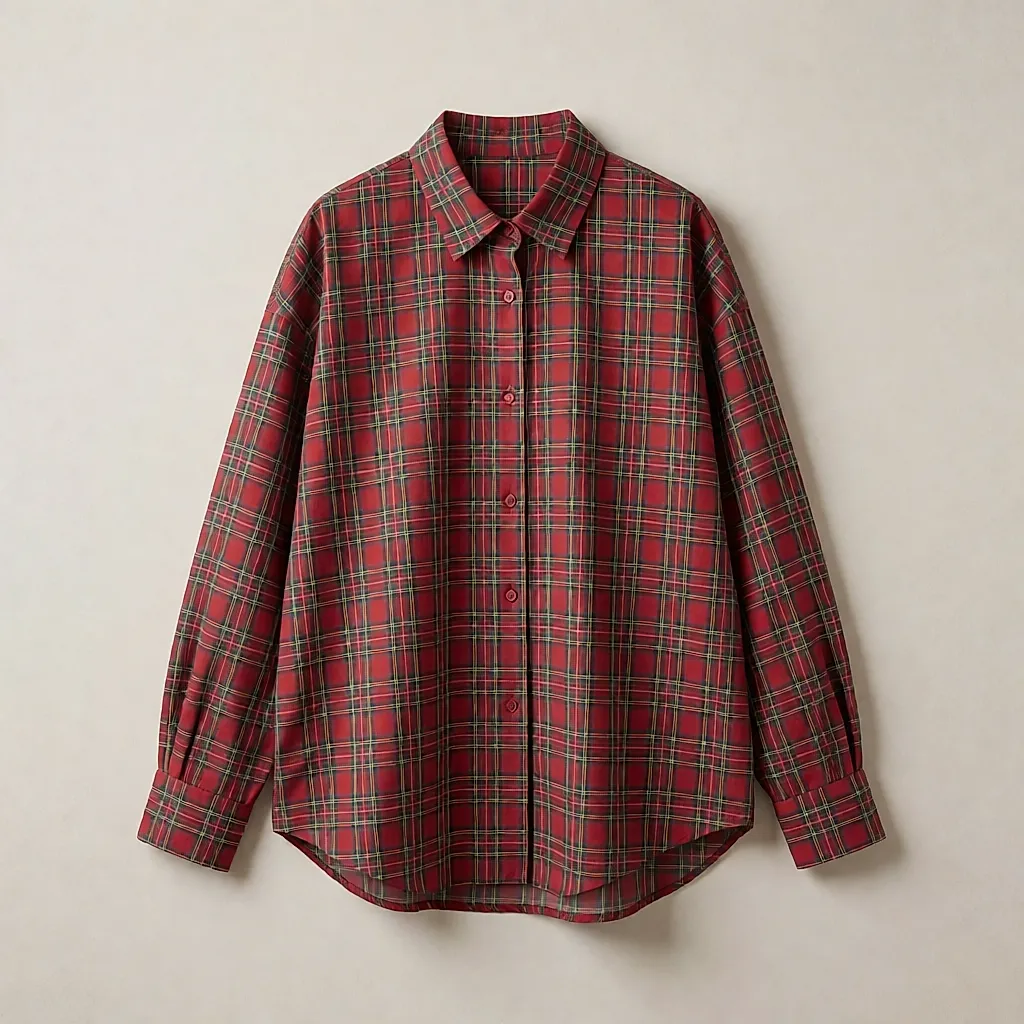
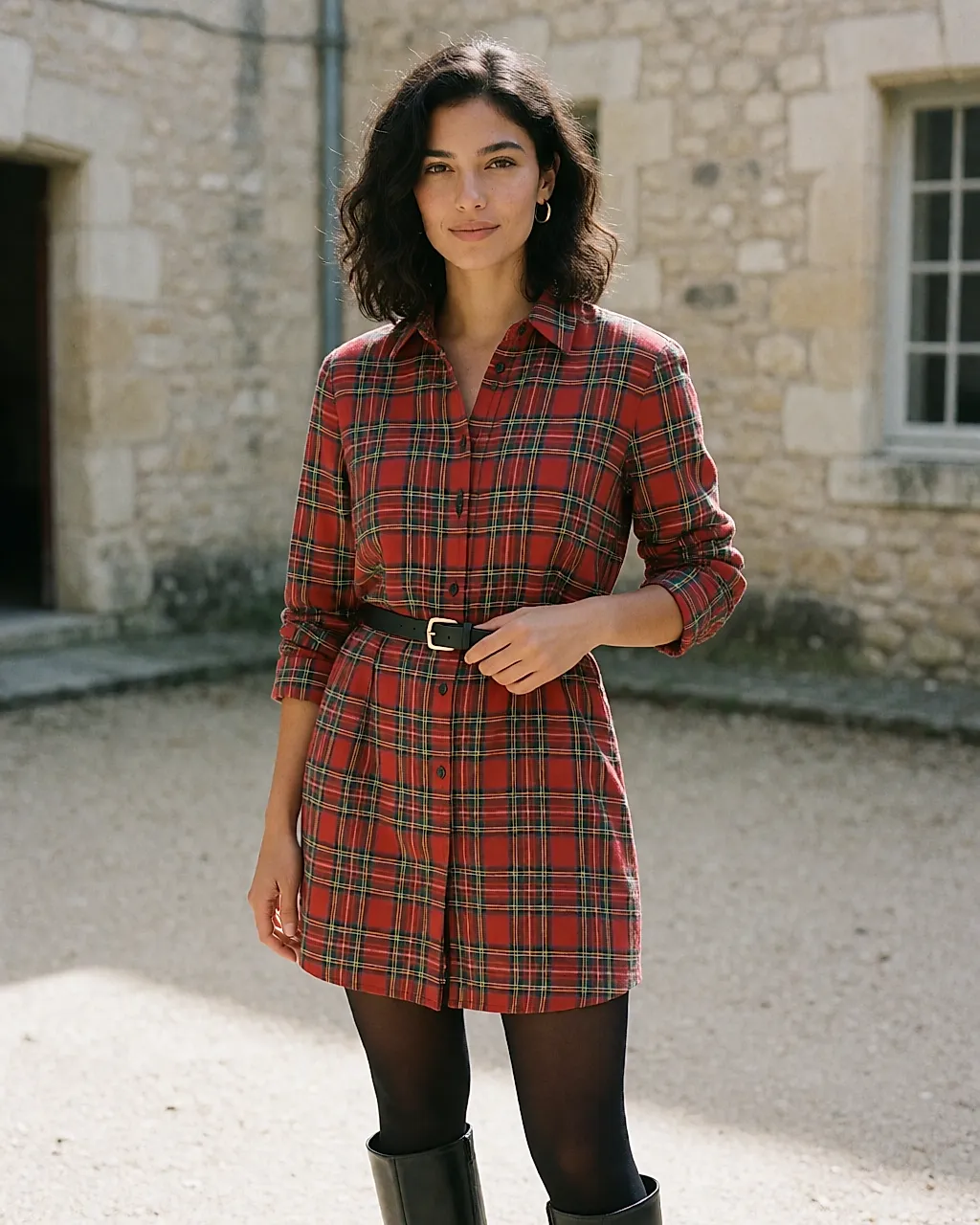
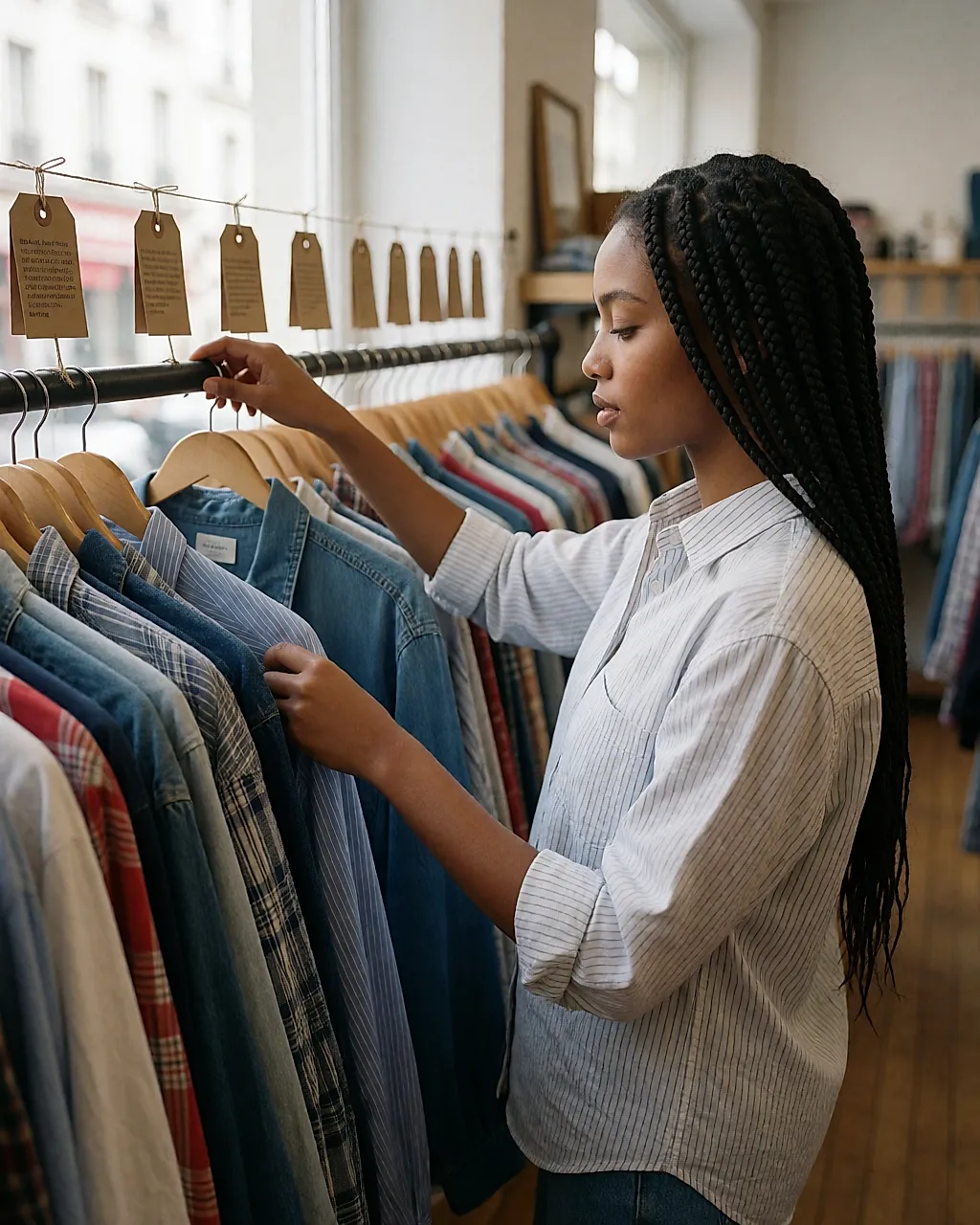
Checks have never really left, but this season they've taken a prime spot. The version that's dominating? The oversized shirt, borrowed from menswear, worn open over a vest top and raw denim jeans — a loose cut where the drape does almost all the work. If you like contrast, go fitted and tuck it into high-waisted trousers, with a midi skirt and loafers. Another route: the shirt dress, belted at the waist over opaque tights and knee-high boots, which sorts out the whole silhouette in a single piece. On the print front, red and green tartans with a properly Scottish feel sit alongside far more understated blue checks. And denim remains their best ally, worn head to toe or as a single piece.
Hats: back on every head
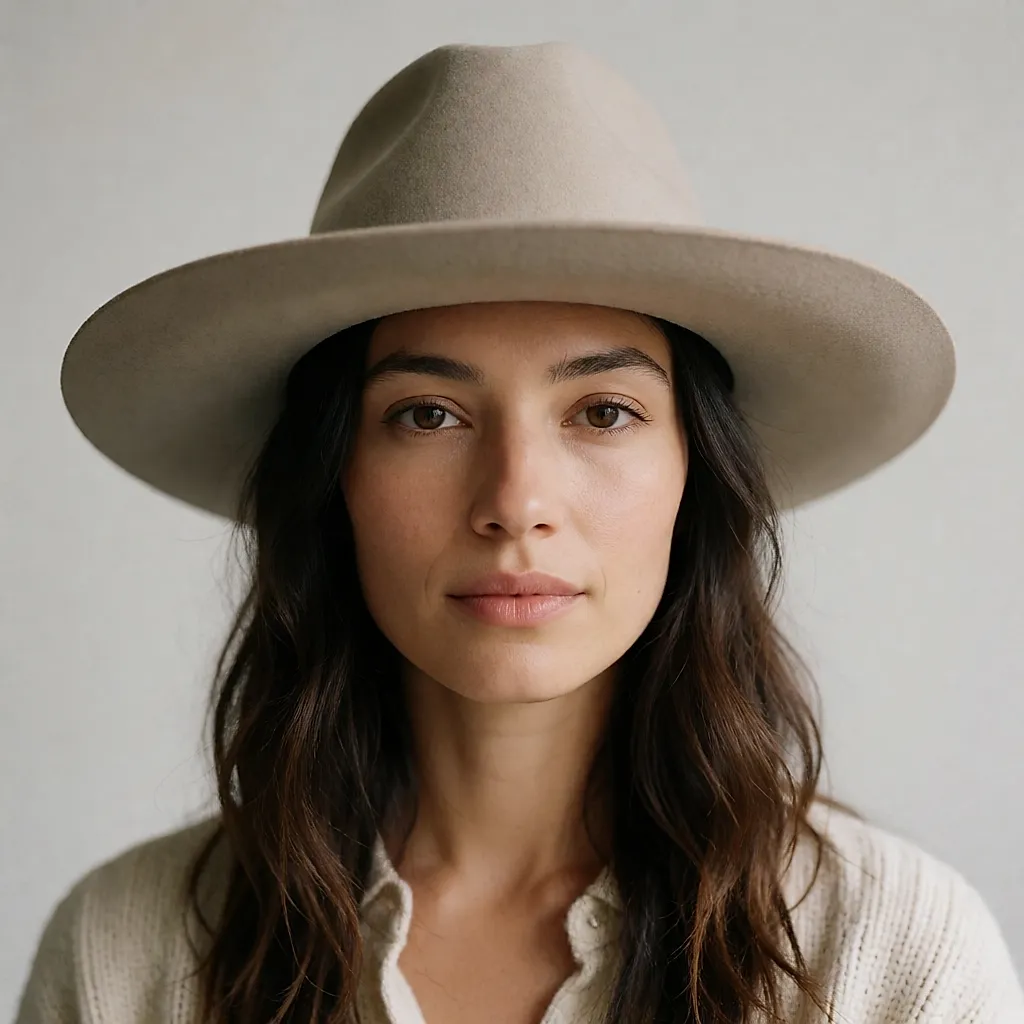
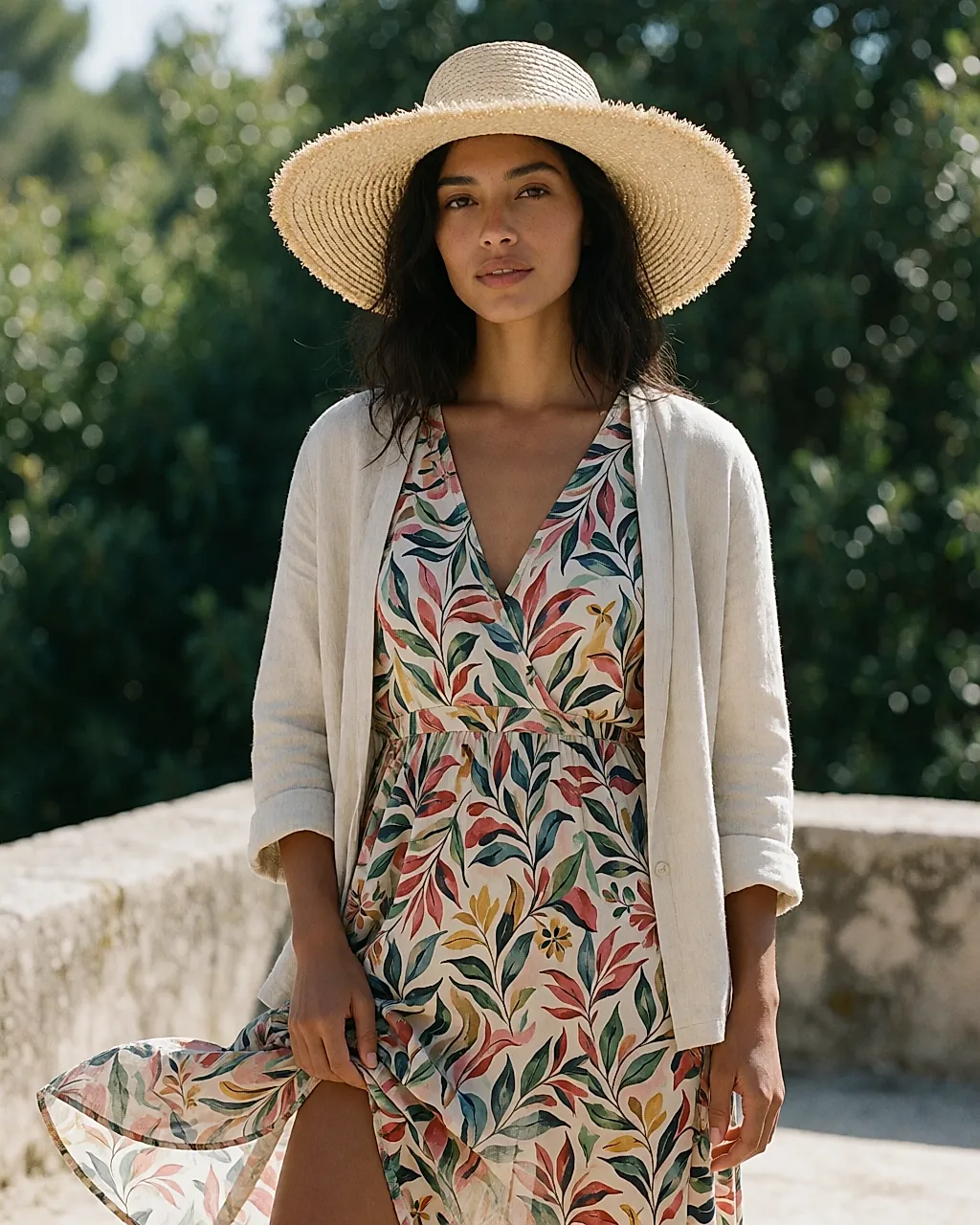
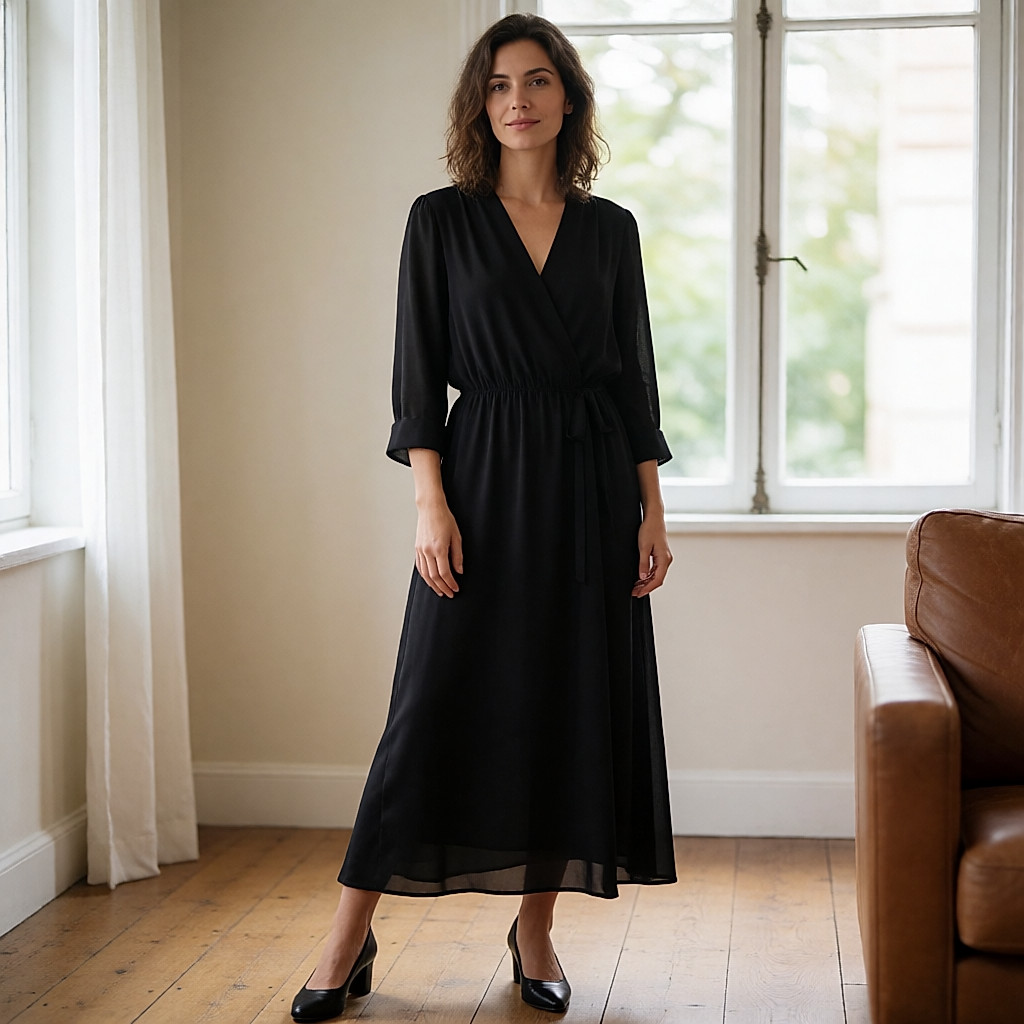
Long confined to the riding wardrobe, the felt hat with an upturned brim has settled into everyday life. The fuss around country pop and western aesthetics has brought the western hat back round, now in finer, lighter versions — enough to wear one without feeling like you're off to a rodeo. Shapes vary: a wide brim for drama, a smaller, cleaner style for something more discreet. The unwritten rule hasn't changed in years: the more masculine the hat, the more feminine the rest of the outfit can be. A fluid dress, a pleated skirt or a long cashmere coat and the look flips instantly. In summer, straw takes over from felt.
Fringing: off the costume rail, onto the pavement
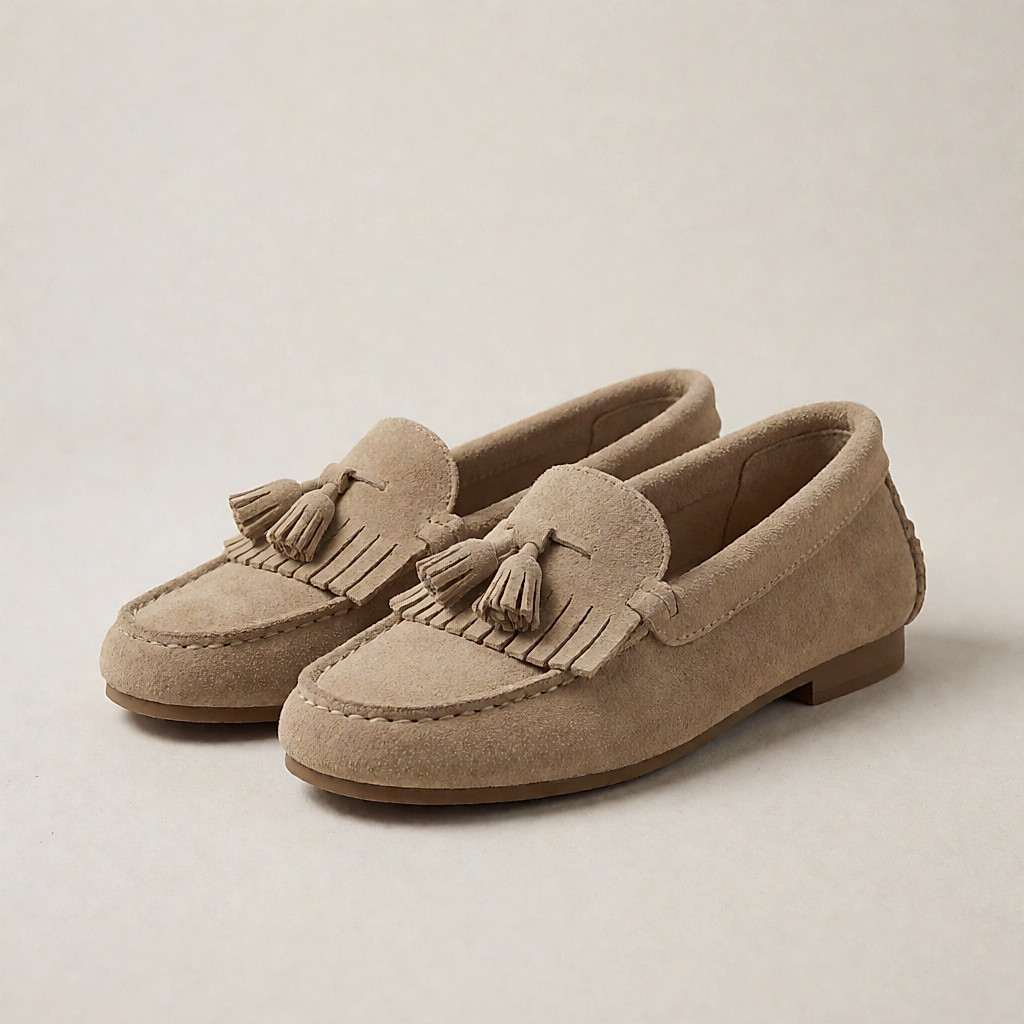
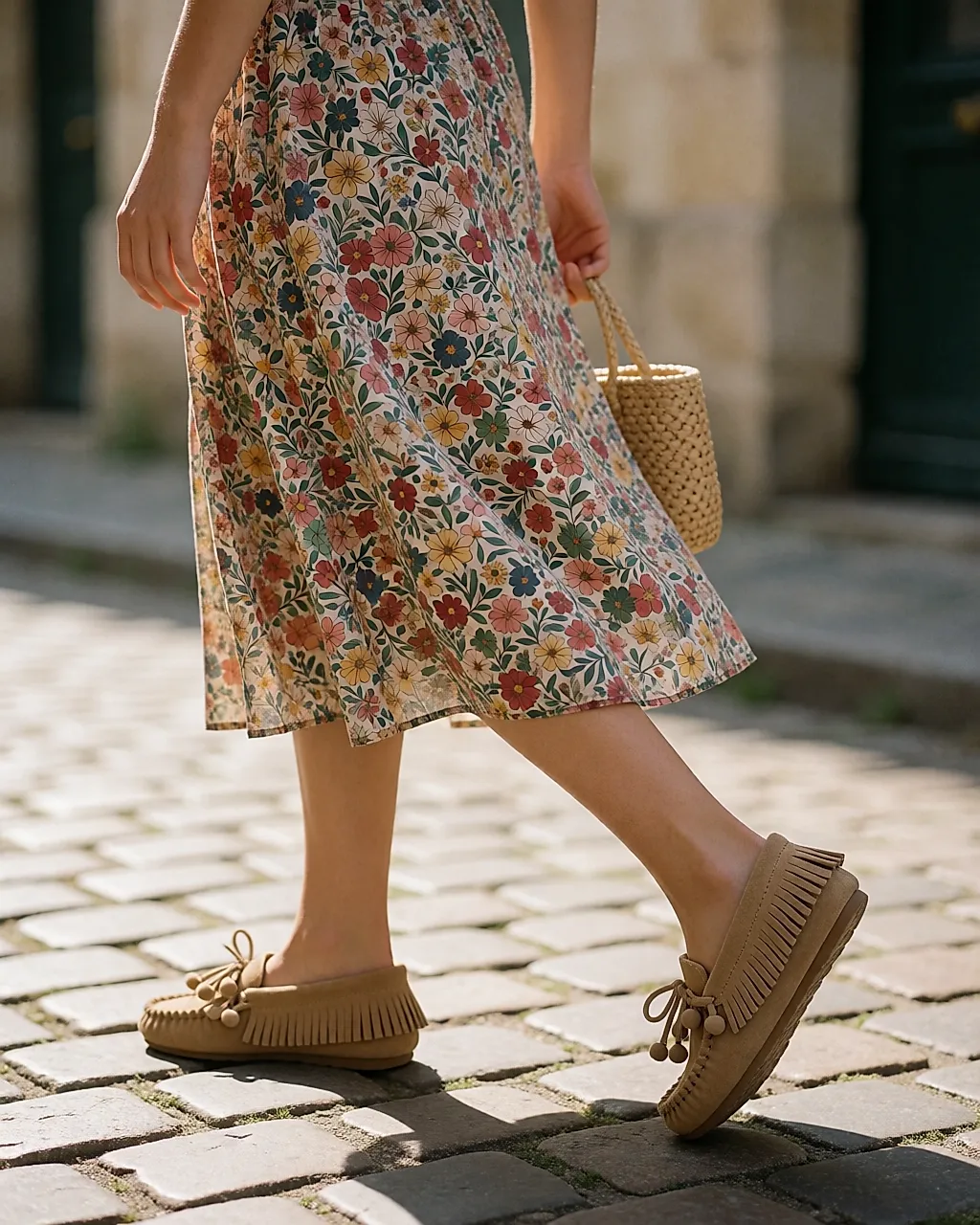
Fringing has shaken off its fancy-dress associations and come back on the catwalks — on ankle boots, western boots and loafers with tassel details. Comfort is probably part of the appeal: these are flat shoes, easy to live in, that work as well with jeans as with a skirt. Suede or soft leather in cognac or sand tones are the easiest to slot into a capsule wardrobe — the matte texture is forgiving. Wear them with black slim jeans and a long tee for a pared-back look, or with a printed skirt for something more considered.
Baggy jeans: volume that owns it
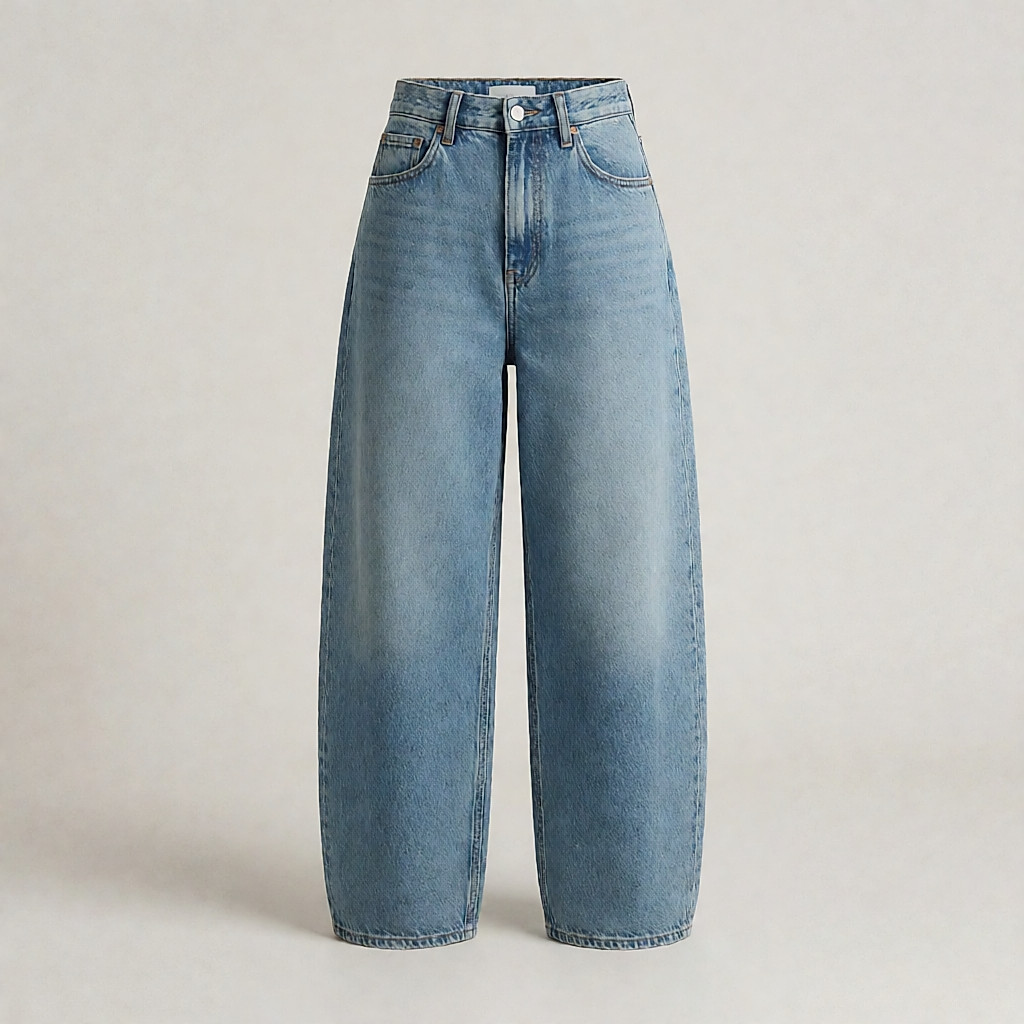
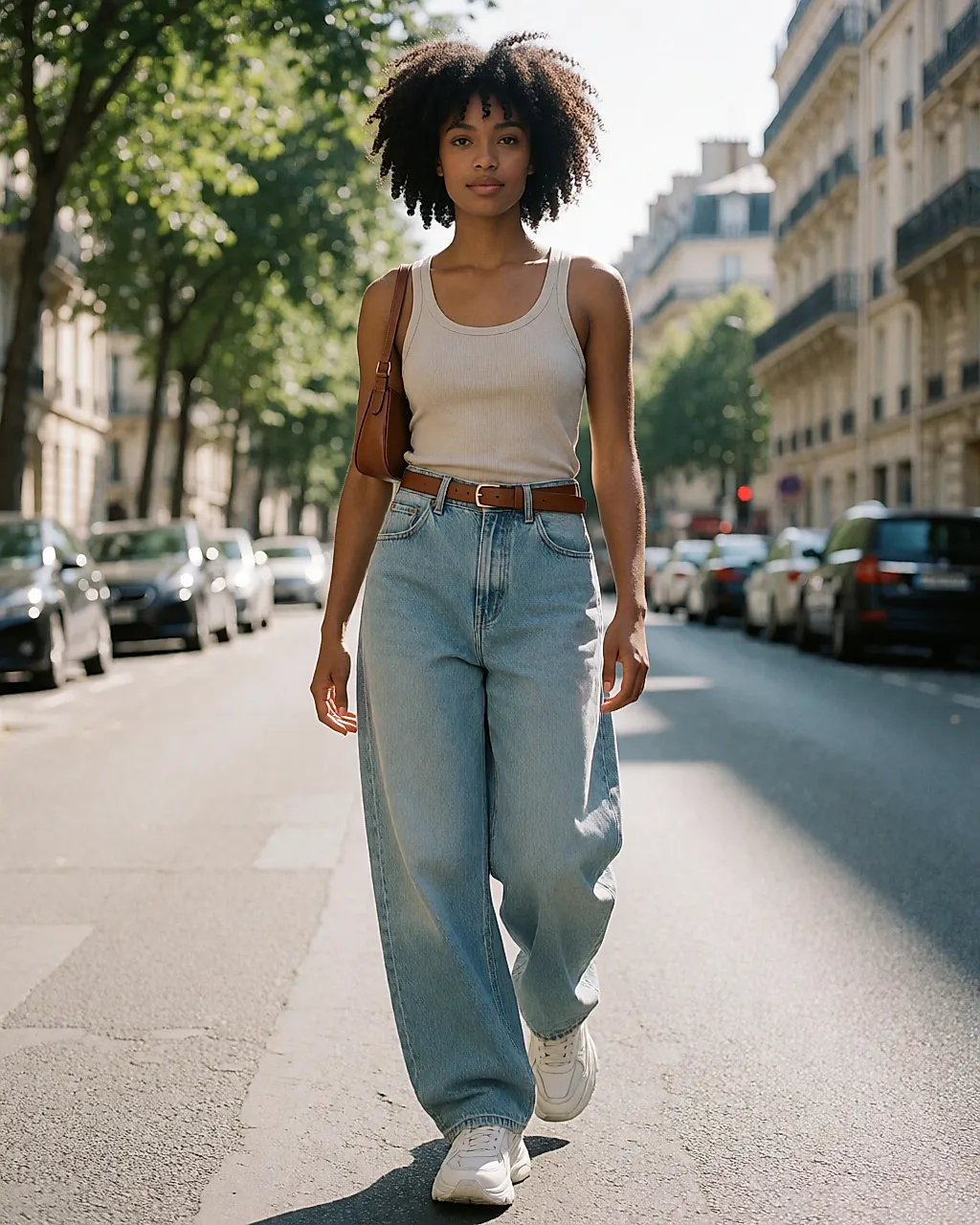
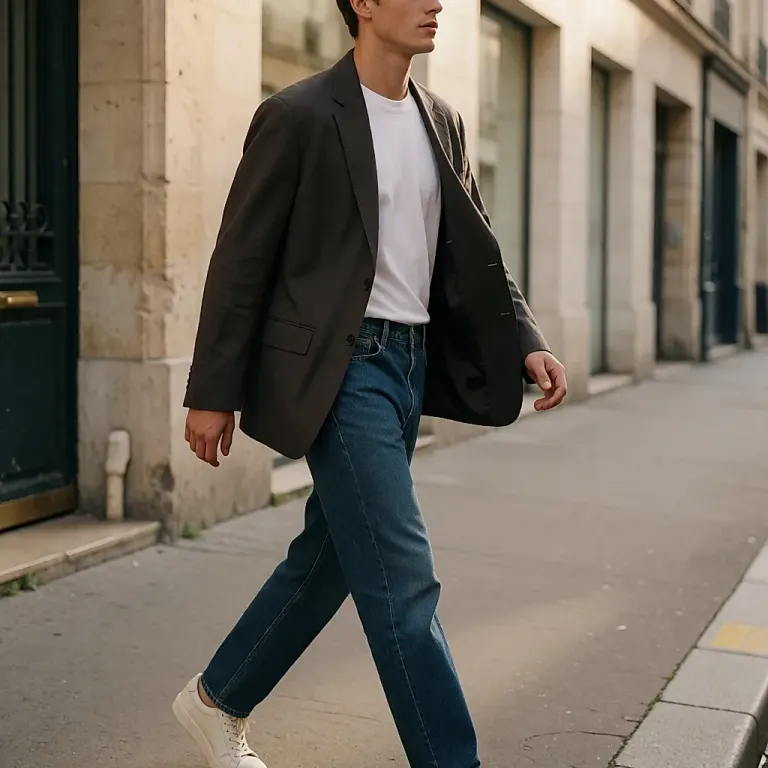
Hard to miss: volume is gaining ground, right down to everyday outfits. The wide-leg jean, inherited from the 2000s and brought back by the Y2K wave and then the catwalks, has taken over both the street and our social feeds. Some think it's not especially elegant, others have adopted it without a second thought — and it's that split that makes it a phenomenon. The simplest formula: go two sizes up, hold them in place with a belt, then decide — turn up the hem or not, trainers or heels. Contrast usually works better than piling on volume: a fitted top or a corset top rebalances the silhouette.
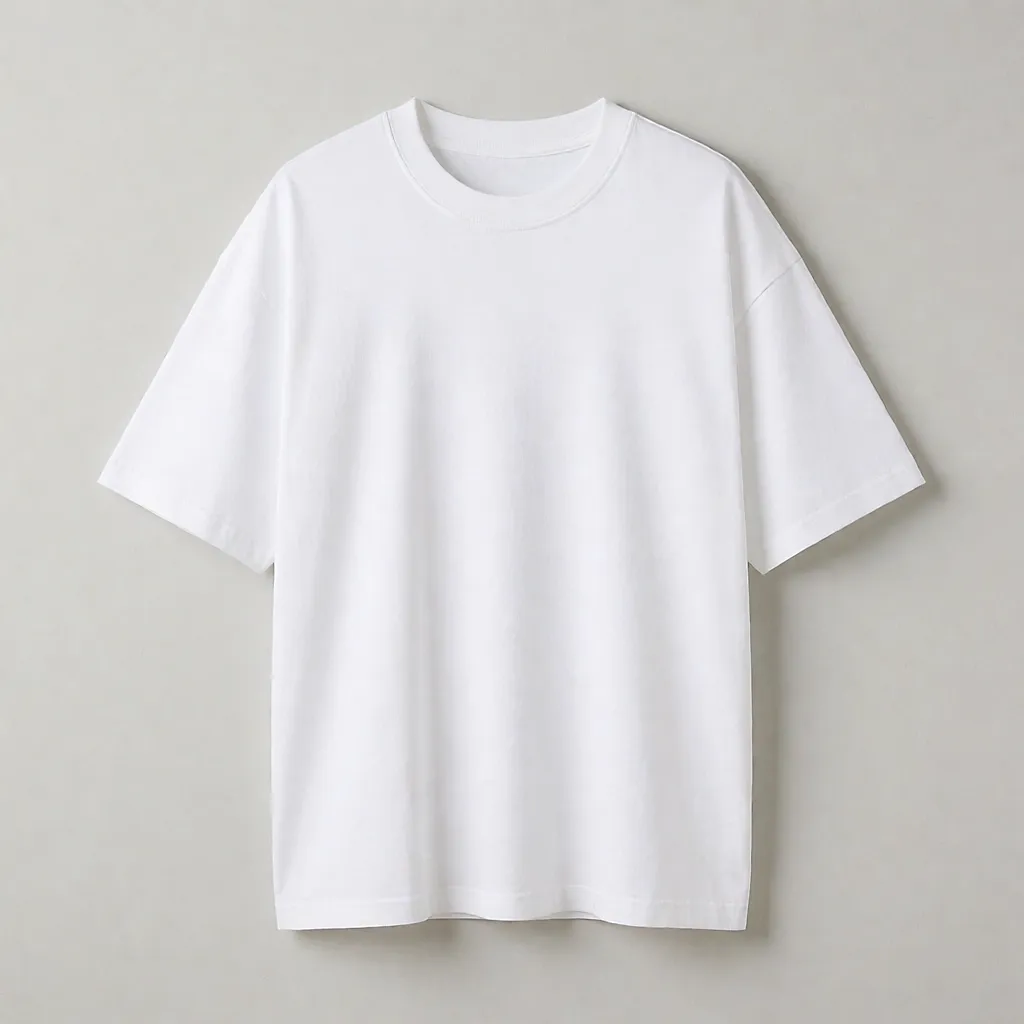
The oversized T-shirt: the basic that rescues you
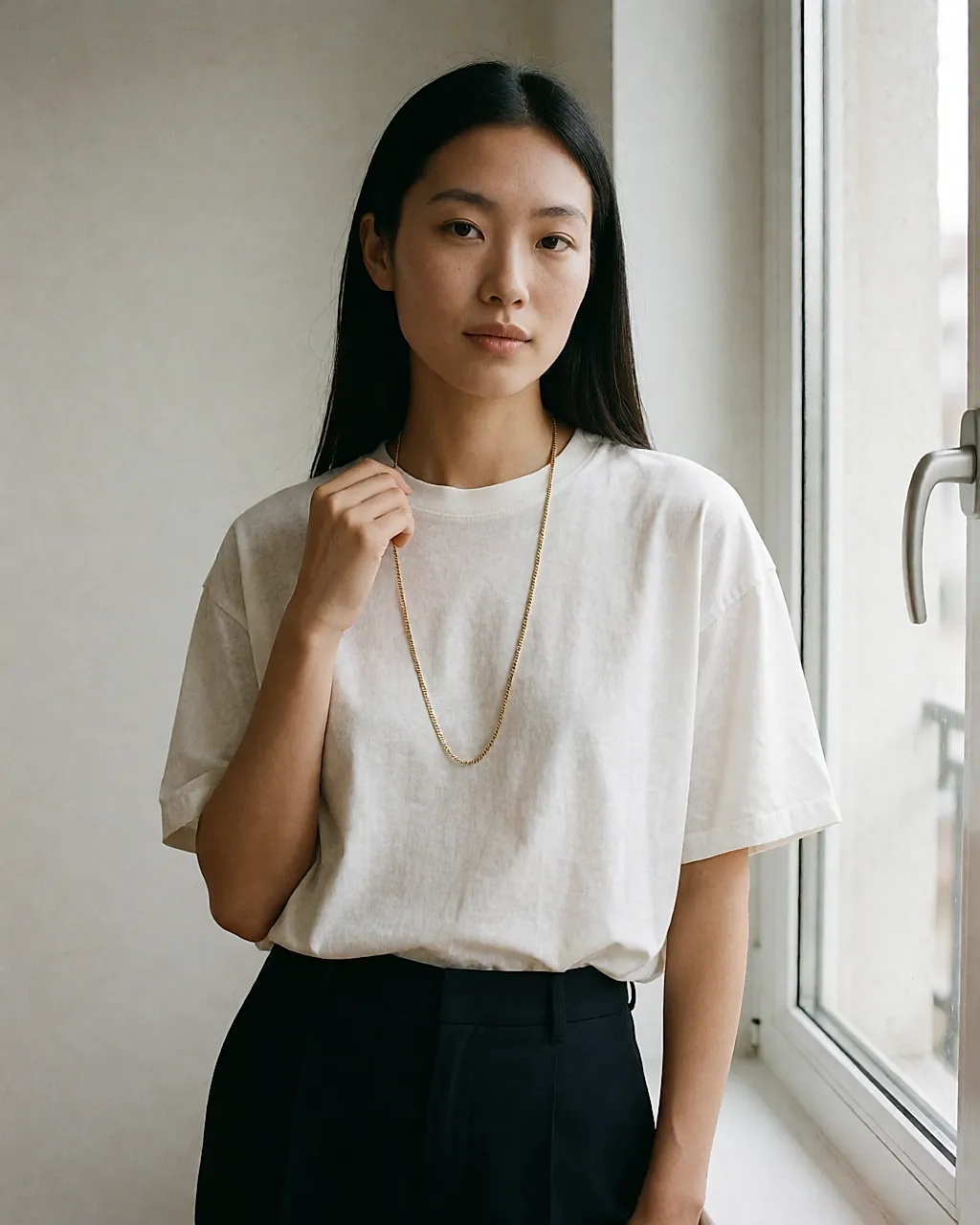
Easy to find, easy to pair: it's still one of the most versatile pieces in the wardrobe. Plain, white or slightly faded, worn loose, half-tucked into trousers to mark the waist, or left fully out for a more relaxed look. To accessorise it without trying too hard, a long fine chain, a sleeveless blazer or a tailored jacket is enough to change the register. And a graphic print or a well-chosen slogan turns the basic into a statement piece, with nothing else added.
Biker boots: built to last
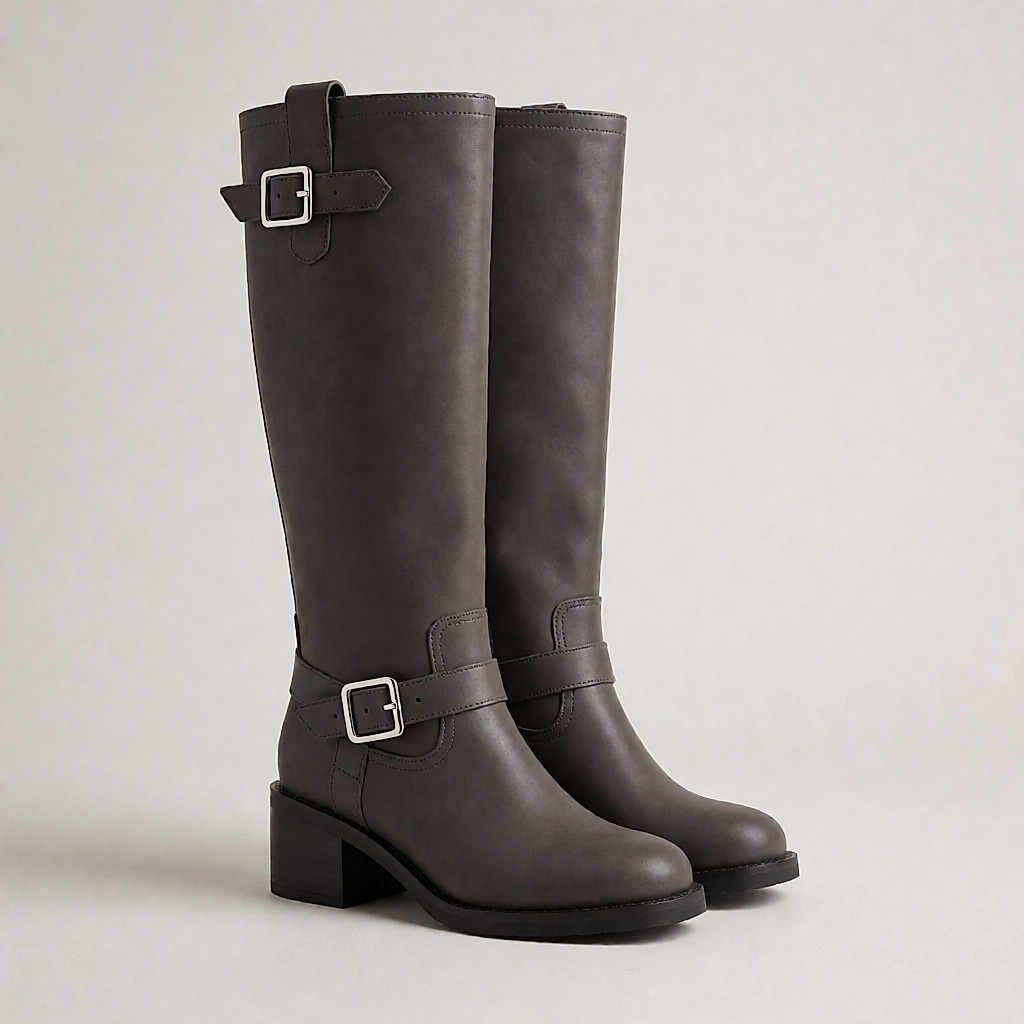
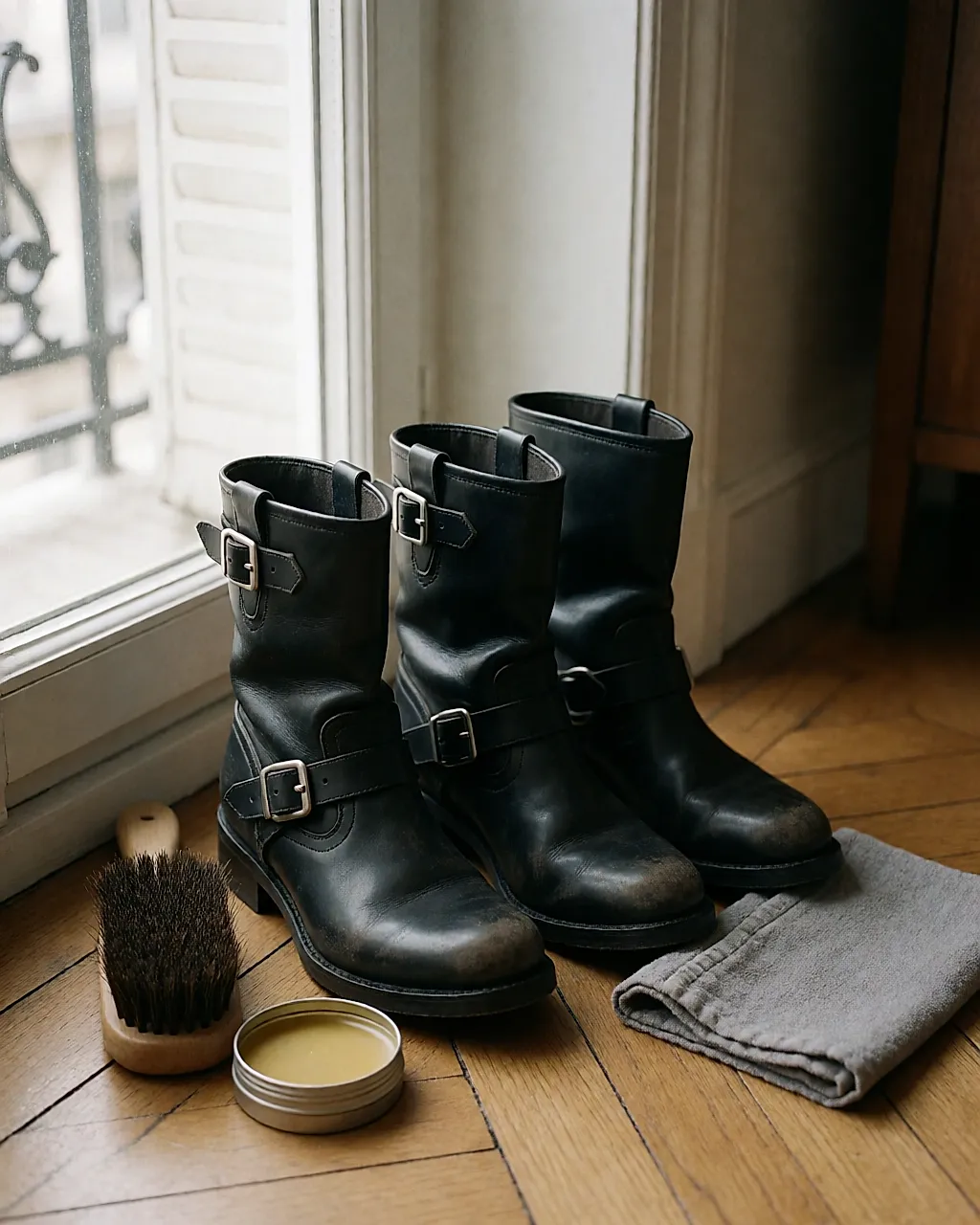
They've been flooding online shops and pavements for several seasons now, and nothing suggests that's about to stop. Buckles, round toe, black or dark brown leather: they're not aiming for delicacy, and that's exactly the point. There are two camps — the shorter, mid-calf version, more understated, and the taller, more assertive one. Their favourite territory is contrast: a long fluid dress, a silk skirt or a tailored suit makes them instantly less abrasive.
The golden rule with all of these trends is balance of volume. A loose piece calls for a fitted one: baggy jeans with a close-fitting top, an oversized T-shirt with straight-leg trousers, chunky boots with a fluid skirt. If you're combining several strong pieces — checks, hat, fringing — stick to two and keep the rest neutral. And before you spend, look closely at the fabric: full-grain leather or a heavy cotton will age far better than something bought on impulse.
Season to season, these pieces circulate, disappear and come back in another form. What changes isn't so much the garment as the way you wear it: freer, more personal, less bound by the rules laid down on the catwalk. That's where the trend really sits — not in the piece, but in what you do with it.
Budget
On price, in the UK expect to pay somewhere between £20 and £70 for a decent checked shirt — considerably less in a charity shop; between £12 and £45 for an oversized T-shirt; and between £35 and £90 for baggy jeans. Footwear weighs more heavily: roughly £70 to £215 for western boots or fringed ankle boots, and more like £80 to £215 for leather biker boots. A felt hat generally lands between £35 and £130.
What shifts the price: the city and the retailer, the range, the material — full-grain leather costs more than synthetic, but it holds up far better over time — plus the upkeep to budget for. In practice, you'll find most of the basics on the high street or online, the statement pieces in charity shops and resale, and somewhere to try things on at leisure in a specialist shop.
Comments
Your opinion matters: rate the article, react and reply to comments.
Comments are moderated; AI-assisted comments are flagged. Text emoticons (8-), :-), <3…) are automatically shown as images.