
Sunday evening, 10.47pm, and the bed looks like a jumble sale: three tops, two skirts, a pair of checked trousers. None of them is speaking to the others. And what if the problem is not your stash but the idea that every piece has to go with everything else?
The piece that contradicts, rather than completes
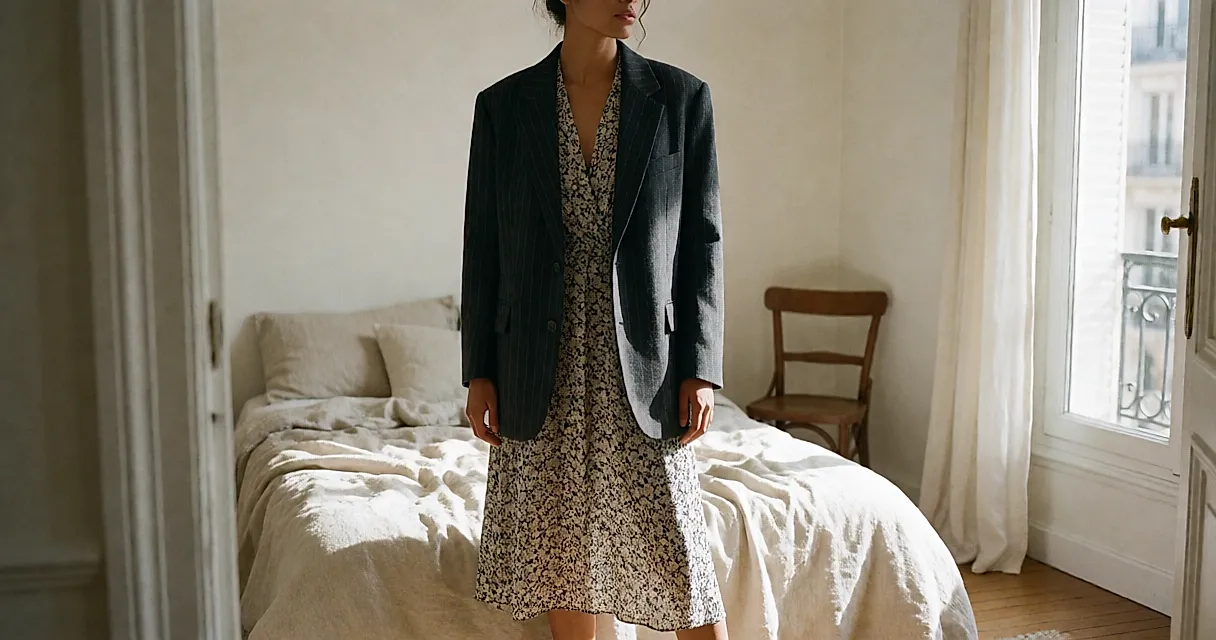
For years, we bought to fill gaps: the basic that goes with everything, the colour that works with the rest of the drawer. The wardrobe worked like an equation, with every new purchase expected to slot quietly into a head-to-toe look. That reflex is now working against us. We no longer choose a skirt because it matches, but because it contradicts what is already there: a floral print under a striped blazer, a worn sweatshirt with a silk skirt, a length that stops where you least expect it.
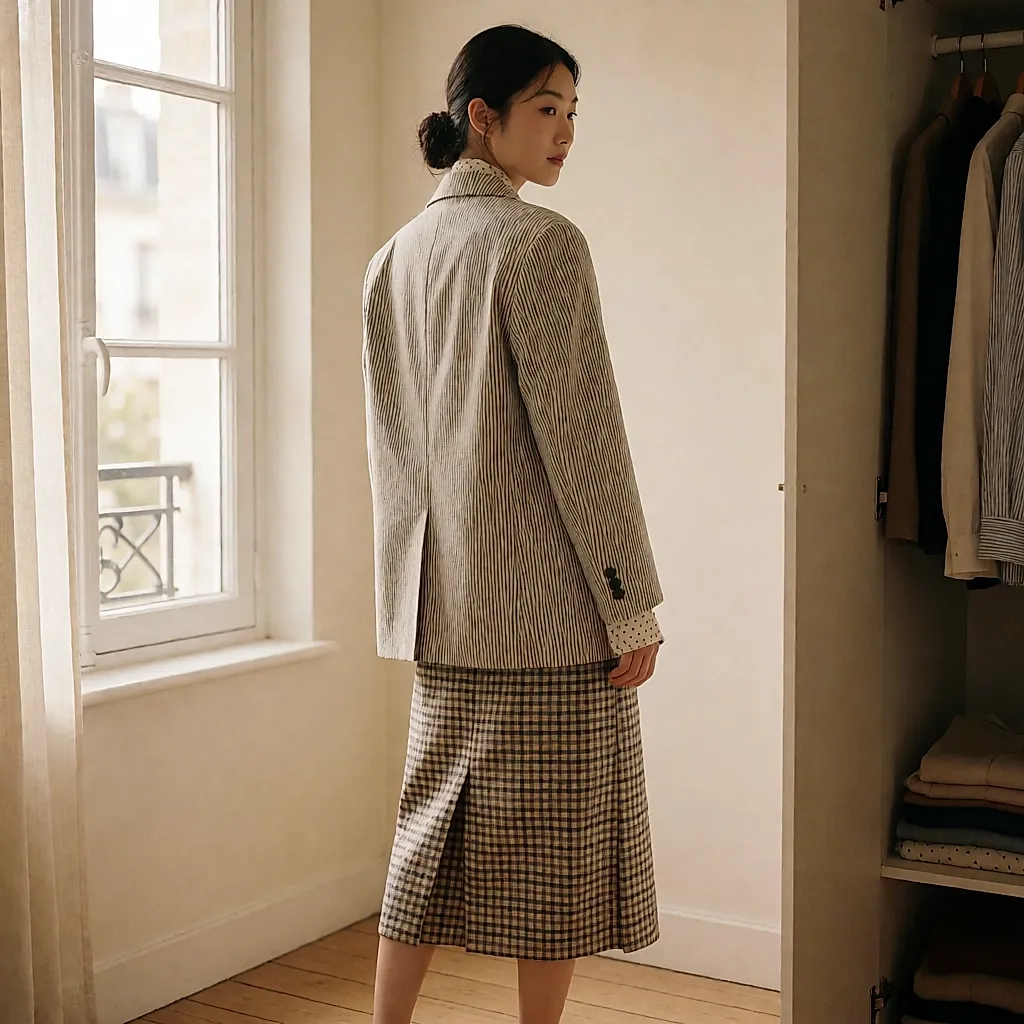
The result is not a mess: it is a silhouette with a point of friction. A sleeve that runs too long, a hem that lands at mid-calf, shoulders that spill over — those famous wonky cuts are what give the look its edge. From a distance it can look like an accident; up close, it is a choice. The fabric still has to play along: cotton with some body, wool that hangs straight, silk that creases without making you look crumpled.
Two markets, one diagnosis
In the US, the focus is often on clash: mixed prints, shifted proportions, cuts deliberately off-kilter. In France, the approach tends to stay closer to the wardrobe: pieces to mix, pastels to soften the effect, skirts grabbed and put together differently. Two approaches that do not mirror each other — and yet they describe the same shift.
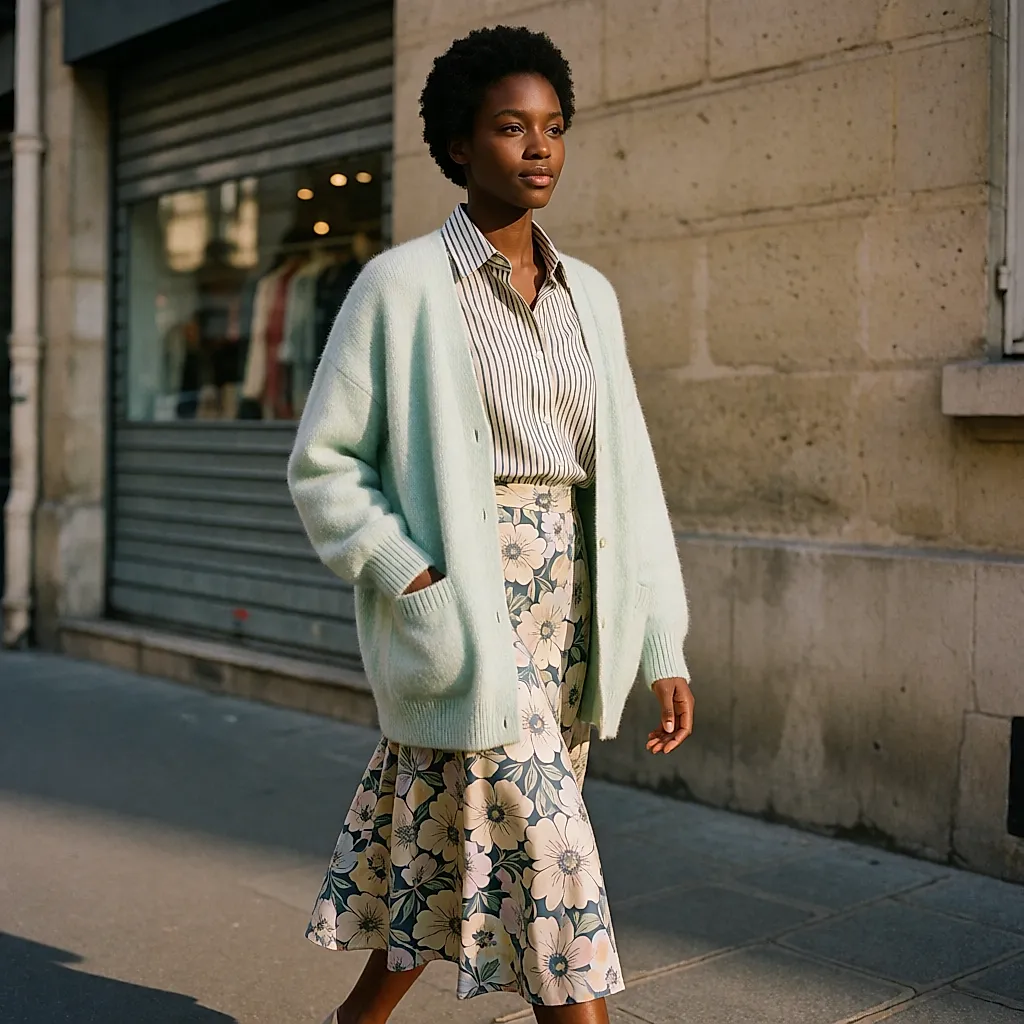
The difference is one of vocabulary, not substance. One describes the effect; the other describes the act of buying. And a soft, warm pastel can act as the cement between two pieces that were never made to meet: it can stop a print mix turning into a noisy jumble. This is not fashion that shouts, but fashion that dares to be one notch out of step.
How to wear it
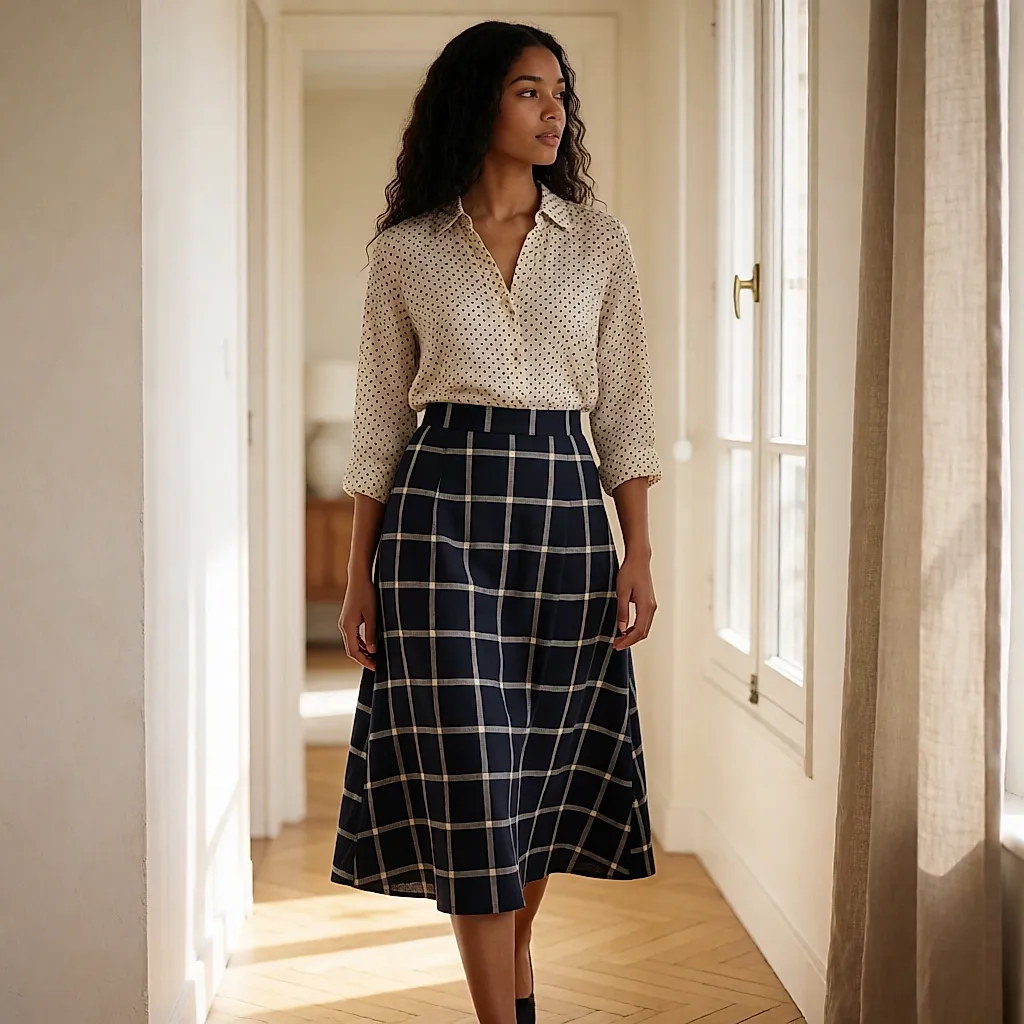
The basic rule can be summed up in one line: one piece makes the noise, the other answers in a different register. Small polka dots against a large floral, fine stripes against broad checks — same family of pattern, clearly different scales. For colour, stick to two tones at most: any more and the eye loses the plot and the outfit turns into a negotiation.
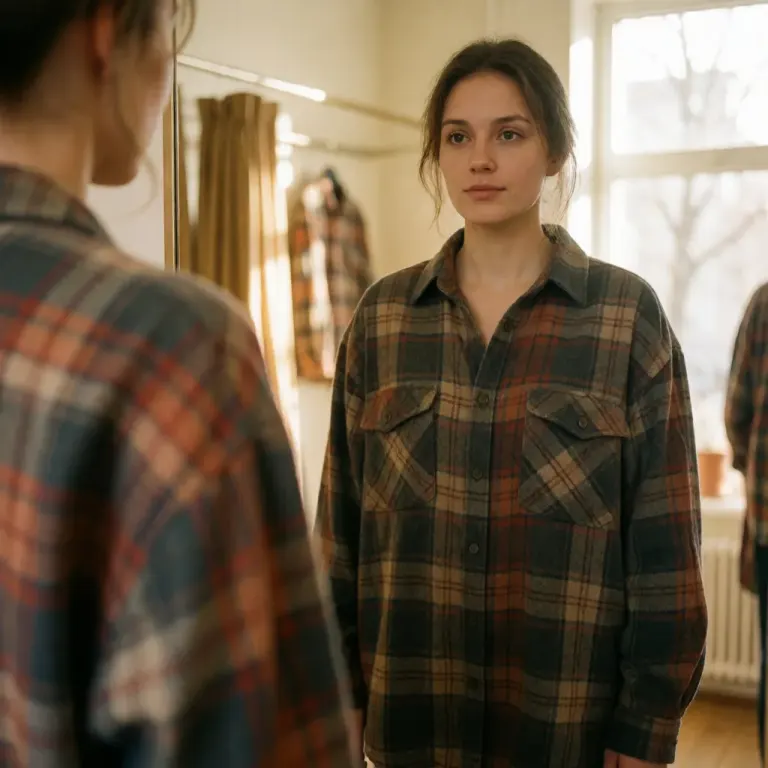
Then there is the test that does not lie: take three steps back from the mirror. If you see one coherent block, you are good. If you see five things arguing, take one away — the opposite of the pile you put on by reflex. If volume is what weighs on you, play only with print and keep the cuts clean: the contrast of pattern is more than enough to create the gap. In a very formal office, however, save the mix for Friday or the weekend and allow yourself just one deliberate exception, such as the skirt.
Budget
Allow around £18 to £55 for a printed cotton or decent-quality viscose top, and £35 to £100 for a skirt depending on the fabric and seam finish — prices can climb quickly with city and brand, and can drop in supermarkets and online. Second-hand changes the game: in charity shops or on resale platforms, a patterned skirt often turns up for £4 to £25, with the advantage of a print that already looks a little dated, which can make it ideal for mixing.
Do not overlook alterations: £12 to £30 at a tailor or alterations service for a hem or a shortened sleeve, and a plain piece becomes a perfectly judged off-kilter cut. The smartest budget is not always the one you expect.
The good-find reflex: before you buy the third piece that will make the mix work, go back to your wardrobe. A shy print plus a plain piece with an off-kilter cut, and you already have the recipe — for £0.
You do not need a new wardrobe, just a little organised disorder. Zero-pound version: bring out the print you only dared wear with black, pair it with the skirt that is already hanging around, and step back three paces. Small-budget version: a second-hand patterned skirt and a trip to the alterations service for the hem. And if the experiment is short-lived, no drama — the piece simply goes back to its role as a basic. That is what a wardrobe that breathes looks like, too.
Comments
Your opinion matters: rate the article, react and reply to comments.
Comments are moderated; AI-assisted comments are flagged. Text emoticons (8-), :-), <3…) are automatically shown as images.