

A yarn that has already had a life
It all starts with textile recycling, luxury edition. Used cashmere jumpers are collected — donations, in-store take-back schemes, unsold stock — then sorted, shredded to recover the fibre, and spun again. The recycled yarn itself is made from recovered fibre, and when colour sorting allows, dyeing stays minimal too.
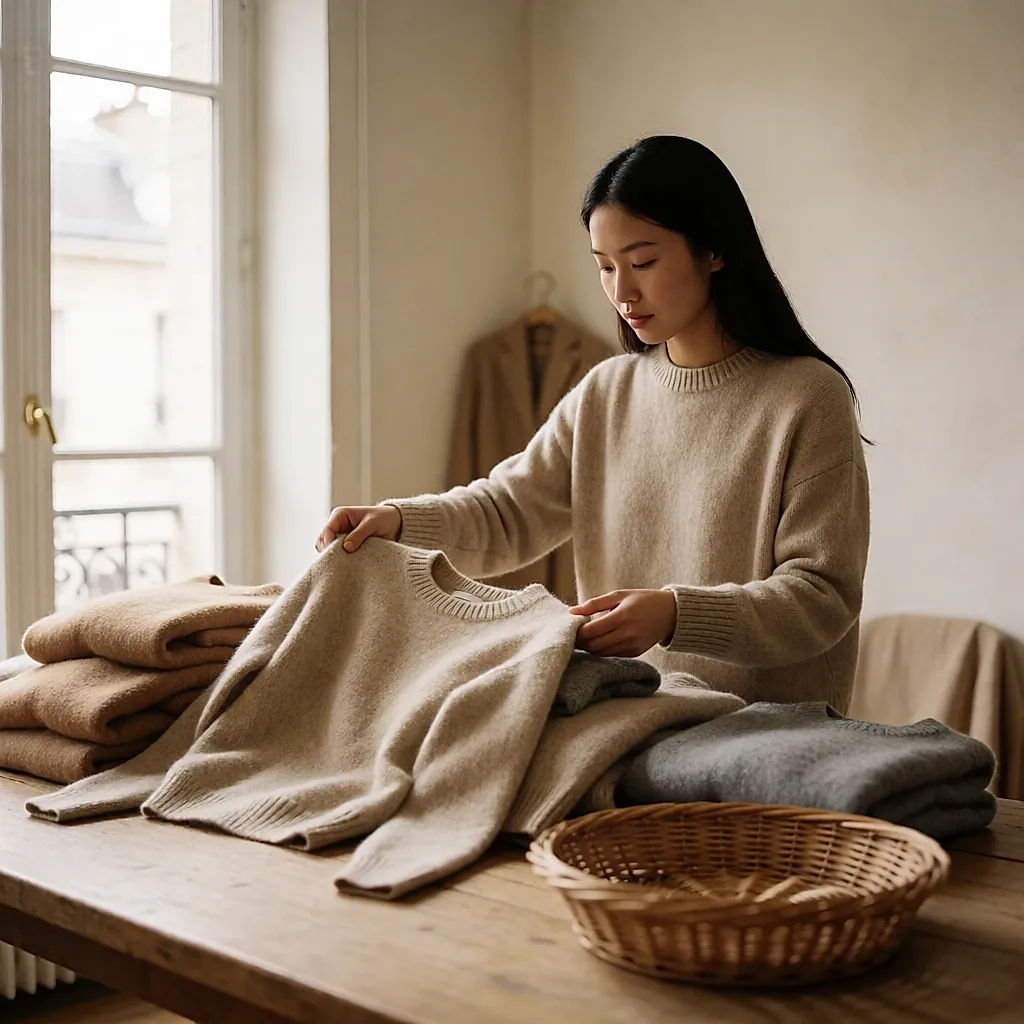
This yarn isn't virgin cashmere in disguise: it's a material in its own right, and its quality varies widely from mill to mill. That's why two pieces of information matter: the proportion of recycled fibre and the fibre length. They don't always appear on the composition label — recycled content may be backed up by a GRS label or the brand's own claims, while fibre length is rarely stated.
What makes the difference in the yarn
First criterion: the recycled content. A jumper labelled 'recycled cashmere' might contain only a portion of recovered fibre, with new material — virgin cashmere or wool — making up the rest for structure and durability. That's not a con; it's simply a different piece of clothing. To make sense of it, look for GRS (Global Recycled Standard) certification: it sets rules around recycled content and traceability through the supply chain.

Second criterion: fibre length, and it's probably the most important. In spinning, the longer the fibre, the stronger the yarn and the less it pills. Shredding mechanically shortens the fibre, which is why many blenders add virgin cashmere or a touch of wool. A 100% recycled yarn isn't automatically better than a partially recycled one — it all depends on what has gone into the mix.
A useful in-store test: a dense knit that doesn't let light show through usually ages better than a very open one. Squeeze the jumper in your hand and see whether it springs back into shape.
The cashmere comb: a delicate knit's best friend
Cashmere, recycled or not, should be washed by hand in cold water with very little detergent. Dry it flat, never on a hanger: heavy with water, it pulls at the shoulders and comes back two sizes bigger. Between wears, let it breathe for 24 hours — that's our rule of thumb, and it's a good habit.
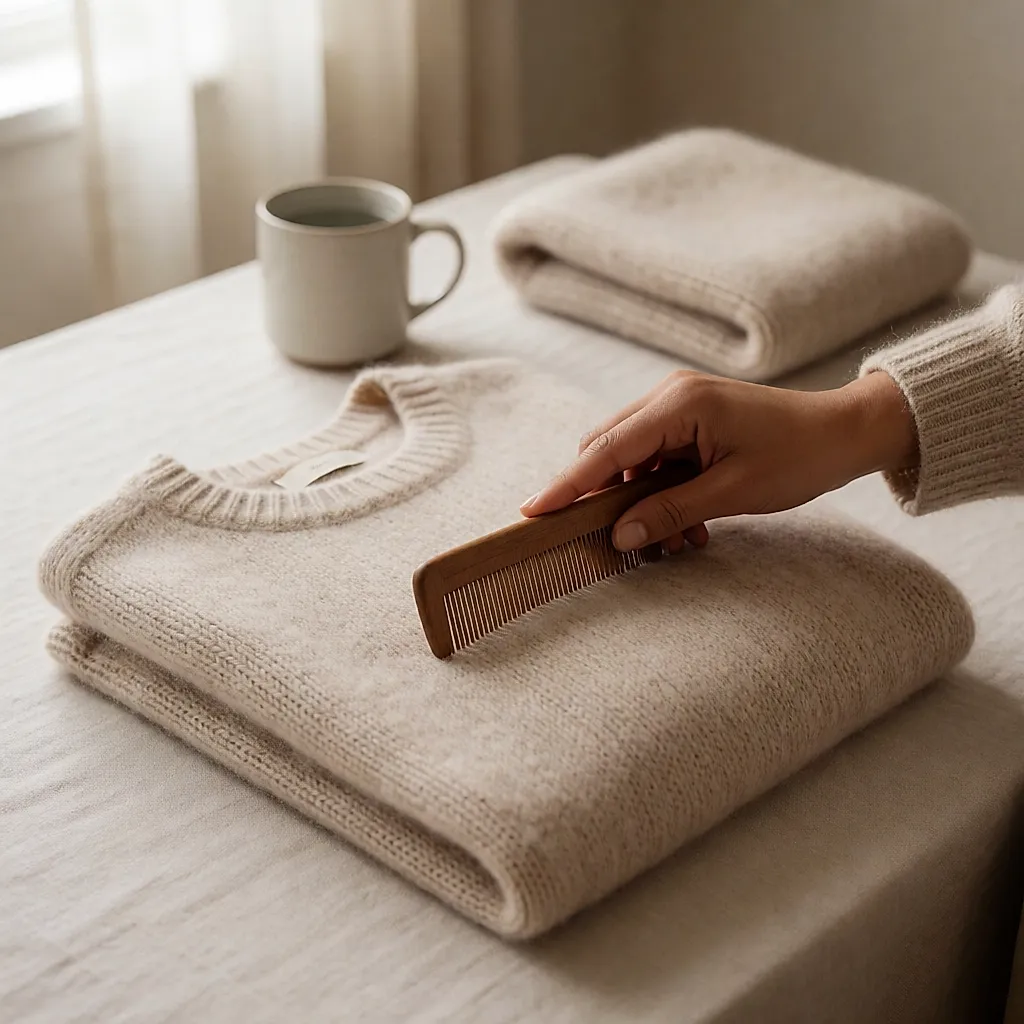
Then there's the trusty cashmere comb, or a small de-pilling tool. Used flat across the knit, it lifts the bobbles without tugging the yarn: two minutes, and a piece that was starting to look tired is neat again. Many care labels allow a wool cycle in the machine; if you're determined — about the jumper, not the machine — cold water remains the safest bet.
Where to buy it, and where to hunt it down
On the brand front, recycled cashmere has found a home with knitwear specialists: Everlane, Patagonia and Naadam have developed dedicated ranges, often in fine jumpers and cardigans. The golden rule: read the composition before you fall for the colour, since the same brand may offer both recycled and virgin versions.
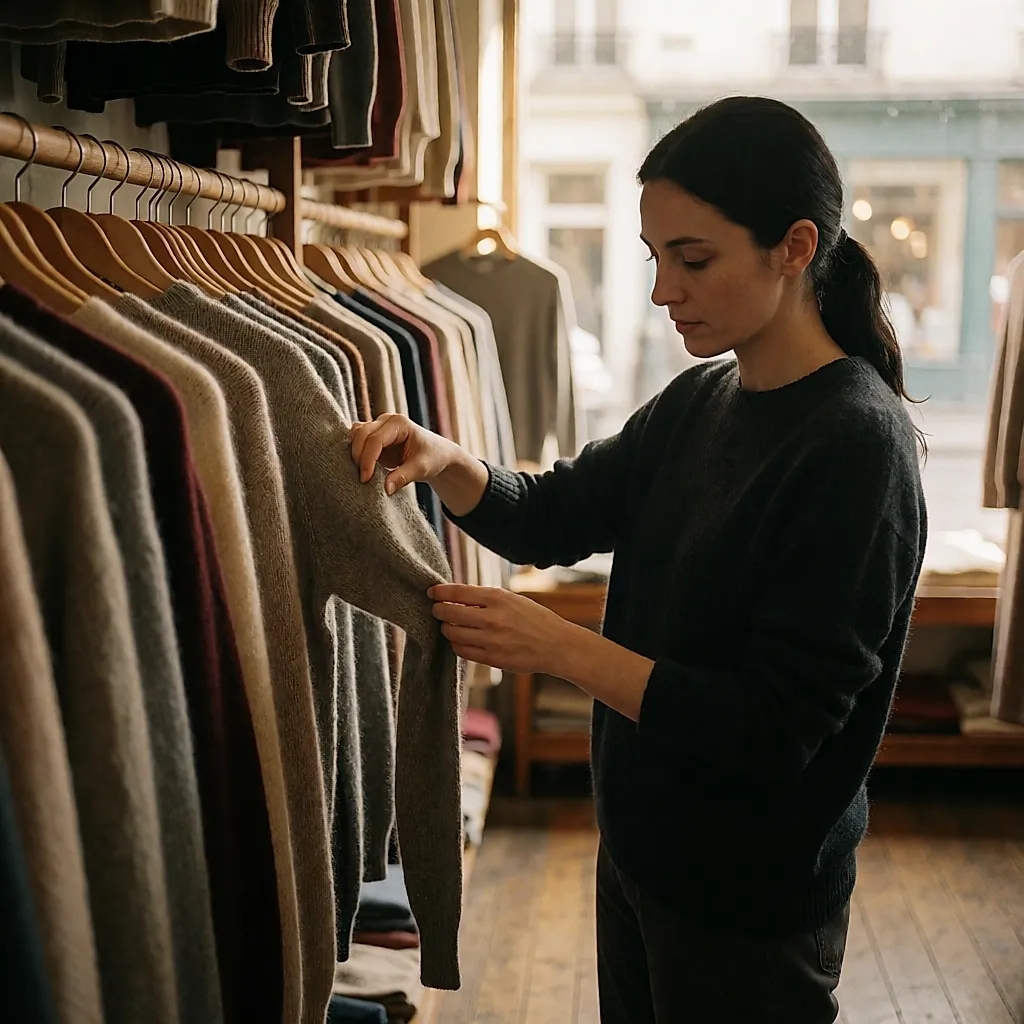
Secondhand is just as interesting — and sometimes better. A well-made virgin cashmere piece found pre-loved did require farming in the first place, but buying it secondhand helps avoid creating demand for new cashmere. Check the elbows, underarms and hems, and test the knit's resilience between two fingers: a piece that already pills heavily won't improve. A thicker, denser knit, on the other hand, can last for years.
Budget
In practice, a recycled cashmere jumper from a specialist brand often costs around £80–£160; a cardigan more like £100–£200. Recycled content, fibre length and knit density all move the price, as does European manufacturing, which tends to cost more.
On the secondhand market, expect to pay £15–£60 for good-quality virgin cashmere, sometimes less if it's seen some life. It's a gentle route for your wallet — and, let's be honest, for the planet.
Three questions before you pay. What proportion of the yarn is recycled — a stated percentage or a GRS label? What makes up the rest? And if you're buying secondhand, does the knit bounce back when you let it go?
Recycled or virgin, a knit is judged by what it looks like after three winters. Recovered yarn and secondhand cashmere have at least one advantage: they help avoid creating new demand for virgin material. The rest comes down to a few small habits — a patient wash, flat drying, and a comb that lives in the drawer.
Sources
- Textile Exchange — Global Recycled Standard, accessed 11 October 2026.
- Everlane — recycled cashmere, accessed 11 October 2026.
- Patagonia — recycled cashmere knits, accessed 11 October 2026.
- Naadam — recycled cashmere, accessed 11 October 2026.
- Vinted — secondhand, accessed 11 October 2026.


Comments
Your opinion matters: rate the article, react and reply to comments.
Comments are moderated; AI-assisted comments are flagged. Text emoticons (8-), :-), <3…) are automatically shown as images.