
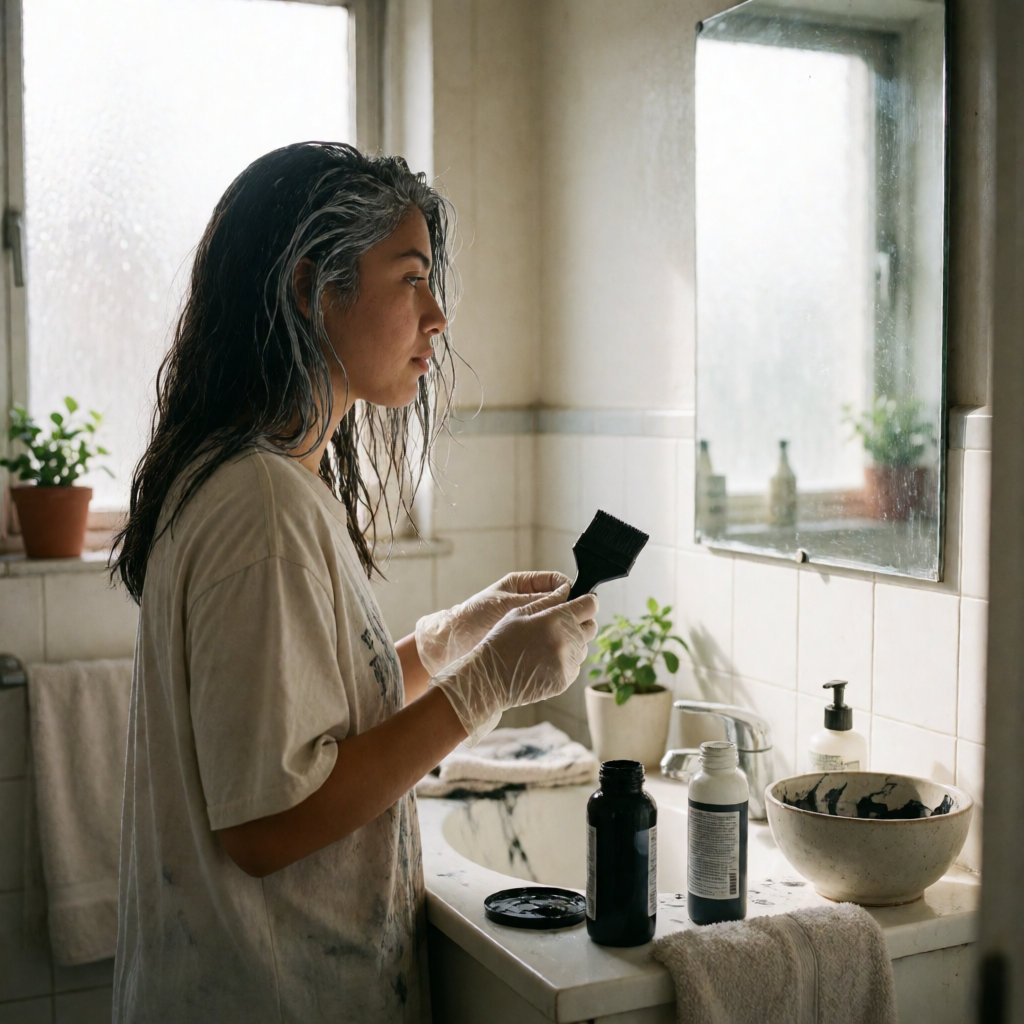
The last time I coloured my hair in my bathroom, I had an orange parting for a fortnight and a stained towel until my next holiday. Since then, I've looked into it properly, and I've realised one thing: when it goes wrong, it's rarely the product—it's almost always the preparation. Here's everything I wish someone had told me before I opened my first tube.
Colouring at home: when to try it, when to leave it to a pro
Dreaming of going from black to icy blonde? Then put that plan away right now: it's not a bathroom job. A permanent colour can't lighten already coloured hair; it adds pigment, it doesn't remove it. To lighten, you need to bleach—which means measuring, watching for breakage, and correcting brassy tones. In reality, a hairdresser often makes the transition over two or three appointments, not in one afternoon.

The rest, yes, you can try at home: refreshing your shade, covering your first greys, adding a few tones, or testing a colour for an occasion.
Permanent, semi-permanent, temporary: three very different approaches
Permanent colour contains a developer, often paired with ammonia or a substitute. It opens the hair fibre, lightens some of the natural pigment and deposits colour. It's the only type that truly covers greys and lightens. It doesn't wash out: it grows out with the hair.
Semi-permanent colour, also called demi-permanent or tone-on-tone, deposits colour without ammonia. It can't lighten. It blends greys without covering them perfectly—usually up to a third of the hair, when the instructions say so. It fades over several shampoos, often quoted at around twenty washes, which varies a lot from person to person.
Temporary colours—tinted masks, sprays, mousses—contain neither ammonia nor developer. They coat the fibre and wash out in a few shampoos. Perfect for trying something without commitment. One small trap: on very light hair, some pink or blue pigments leave a stubborn trace.
The rule to remember: no developer, no lightening. A kit labelled 'blonde' used on dark brown hair will give you warm brown, never blonde.
And what about highlight kits (cap or brush)? Use them as directed, or you'll end up with patchy colour.
The step that changes everything: the patch test
The 48-hour test before every colour is not a marketing gimmick. Health warnings are required on hair dyes in the UK. One of the main causes of allergic reactions is paraphenylenediamine, and sensitisation can develop after years of trouble-free use. Apply a small amount of the colour, without the developer, behind your ear or in the crook of your elbow. If you get itching, redness or swelling, don't colour—and seek medical advice.
Follow the instructions to the letter
Never extend the processing time hoping for a brighter result. The product doesn't work better; it causes more damage. Gloves, a ventilated room, and a thick barrier cream on your forehead, temples, ears and nape: that's the detail that prevents a coloured ring around your hairline.
On regrowth, start at the roots, then pull the colour through the lengths for the last ten minutes. On virgin hair, reverse it: lengths first, then roots.
Rinse until the water runs clear, then use a gentle shampoo and mask. After-colour care doesn't just protect the shade: it also helps limit breakage.
Choosing the right shade without getting it wrong
Ignore the model photo on the box: it's been lightened, then retouched. Look at the shade chart, and above all your reflection in daylight—bathroom light lies. To cover greys, stay within your natural tone or half a shade above, otherwise the roots will look lighter than the rest.
What if you don't like the result?
You wait. Really. With a semi-permanent or temporary colour, every shampoo takes you a little closer. With a permanent colour, book in with a professional rather than reaching for a second box at the supermarket: layering permanent colours stresses the hair fibre and darkens the colour. The recommended gap between colour services exists for a reason.


One last habit: note the shade reference and batch number on your phone. If you like the result, you'll know what to buy again. If you don't, you'll know what to avoid.
On products: when natural is credible
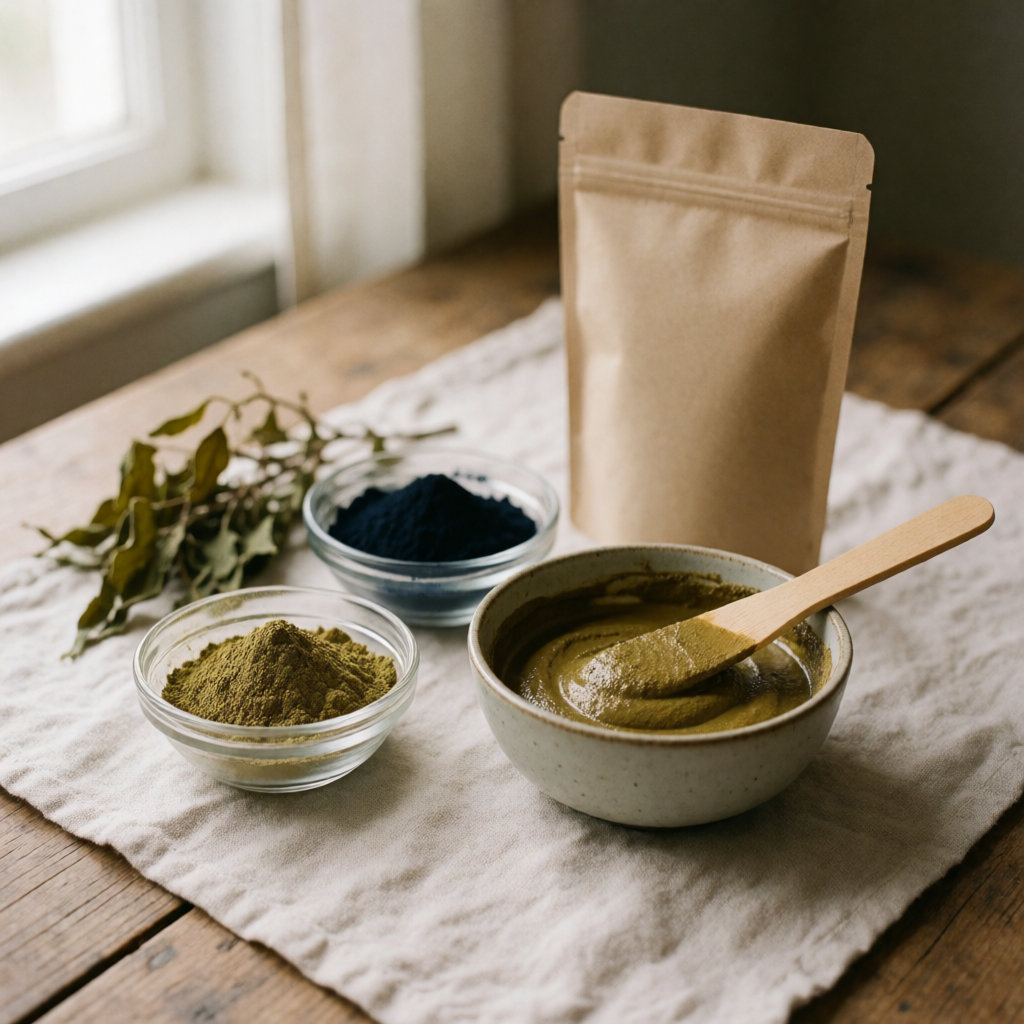
If you want to limit exposure to the most irritating molecules, be aware that there is no 100% plant-based permanent colour that lightens. Henna coats the fibre and adds tone, but it doesn't cover greys like an oxidative colour and can interfere with a conventional colour. On that front, here's the truth: to lighten or cover greys long-term, an oxidant remains essential. The honest compromise is to choose a kit with a gentler formula, avoid layering applications, and look after the fibre and scalp in between. With after-colour care, though, you can treat yourself: shampoo bars, refillable or glass-jar masks, more concentrated waterless formulas—remember to check the certifications rather than the slogans on the bottle.
Budget
In budget terms, expect roughly:
- £5 to £15 for a home colour kit in supermarkets, £10 to £25 in beauty shops—the difference comes mainly from the included aftercare and the accuracy of the shade chart.
- £15 to £35 for a plant-based colour or a gentler formula (health food shops, specialist retailers, online).
- £12 to £30 for a good-quality after-colour shampoo and mask.
- £40 to £90 in a salon for a root colour, £60 to £140 for a full colour, depending on length and city.
- £80 to £200 for a balayage or hand-painted highlights, again depending on length, density and the technique required.
Salon prices climb quickly for long or thick hair, in city centres, and for a service by a senior colourist. A home kit, by contrast, remains economical, but it offers neither the diagnosis nor the correction if something goes wrong.
Sources
- Office for Product Safety and Standards (OPSS) — safety information and recalls relating to hair dyes and paraphenylenediamine (PPD).
- The Cosmetic Products Enforcement Regulations 2013, legislation.gov.uk.
- Regulation (EC) No 1223/2009 on cosmetic products, Annex III (restrictions on hair colorants), as retained in UK law, legislation.gov.uk.



Comments
Your opinion matters: rate the article, react and reply to comments.
Comments are moderated; AI-assisted comments are flagged. Text emoticons (8-), :-), <3…) are automatically shown as images.