
Tattoos? Yes — but safely. They've been huge for years now. These days it's rare to meet someone who isn't hiding a little design on their lower back, ankle or somewhere else entirely.
Tattooing has been practised for millennia: tattooed mummies and traces of tattoos on human remains thousands of years old have been found all over the world — proof that body art has been around for a very long time.
Now more than ever, tattoos are a social phenomenon, fairly mainstream because they are so widespread. Even so, there are precautions to take before and after getting tattooed.
A tattoo involves injecting a specific ink under the skin with a needle designed for the purpose, creating a design that will remain permanent. Because the needle penetrates the skin and comes into contact with tissue and blood, a tattoo that isn't done under the necessary hygiene rules can be dangerous, as it can carry disease.
This is not a trivial procedure: the machine breaches the skin barrier, the needle passes through the epidermis and deposits pigment directly into the dermis. Every tattoo is therefore a skin breach, with its risks of infection and allergy.
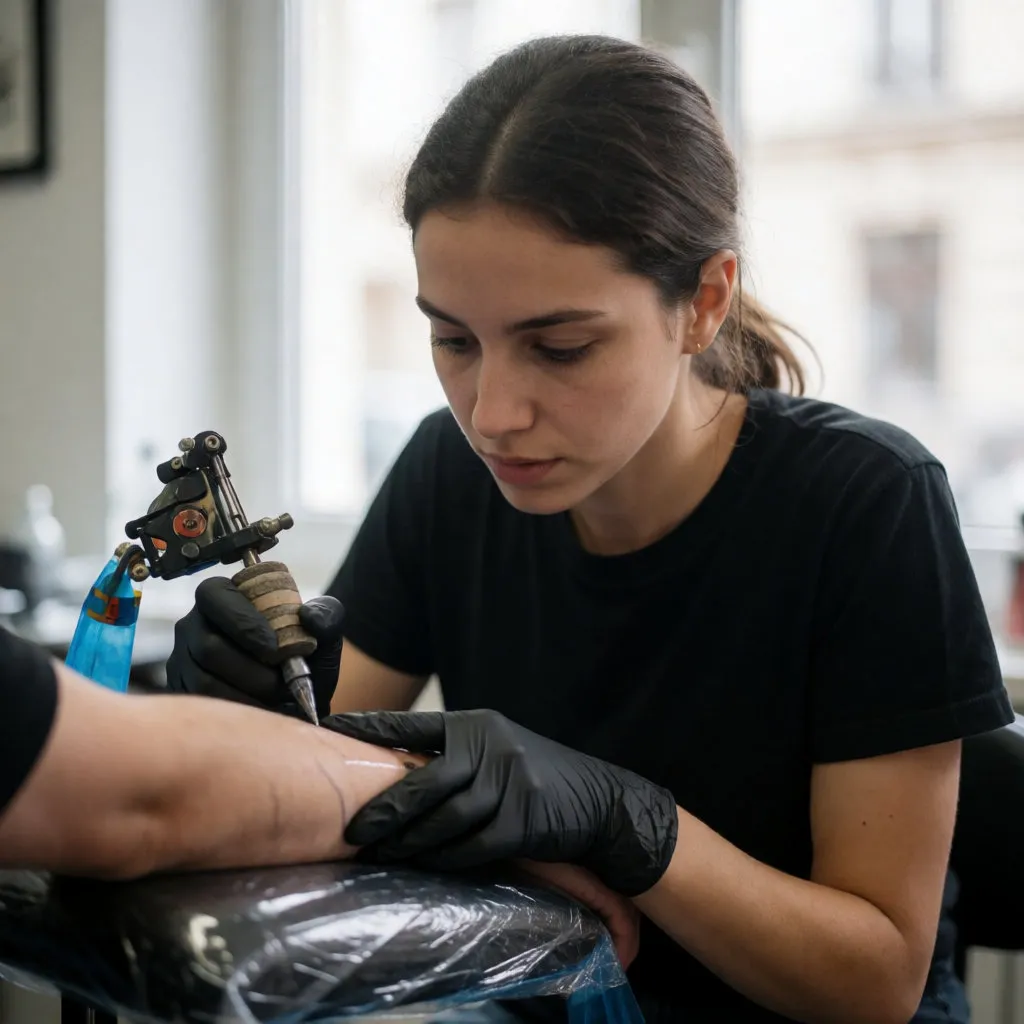
So here are the hygiene conditions that must absolutely be met for any tattoo; it can't be said often enough: don't hesitate to question your tattoo artist to make sure they are actually being followed:
The instruments used for tattooing, as well as the premises, the client's skin and the tattoo artist's skin, must be free of any bacterial or viral germs that could cause infection. To achieve this:
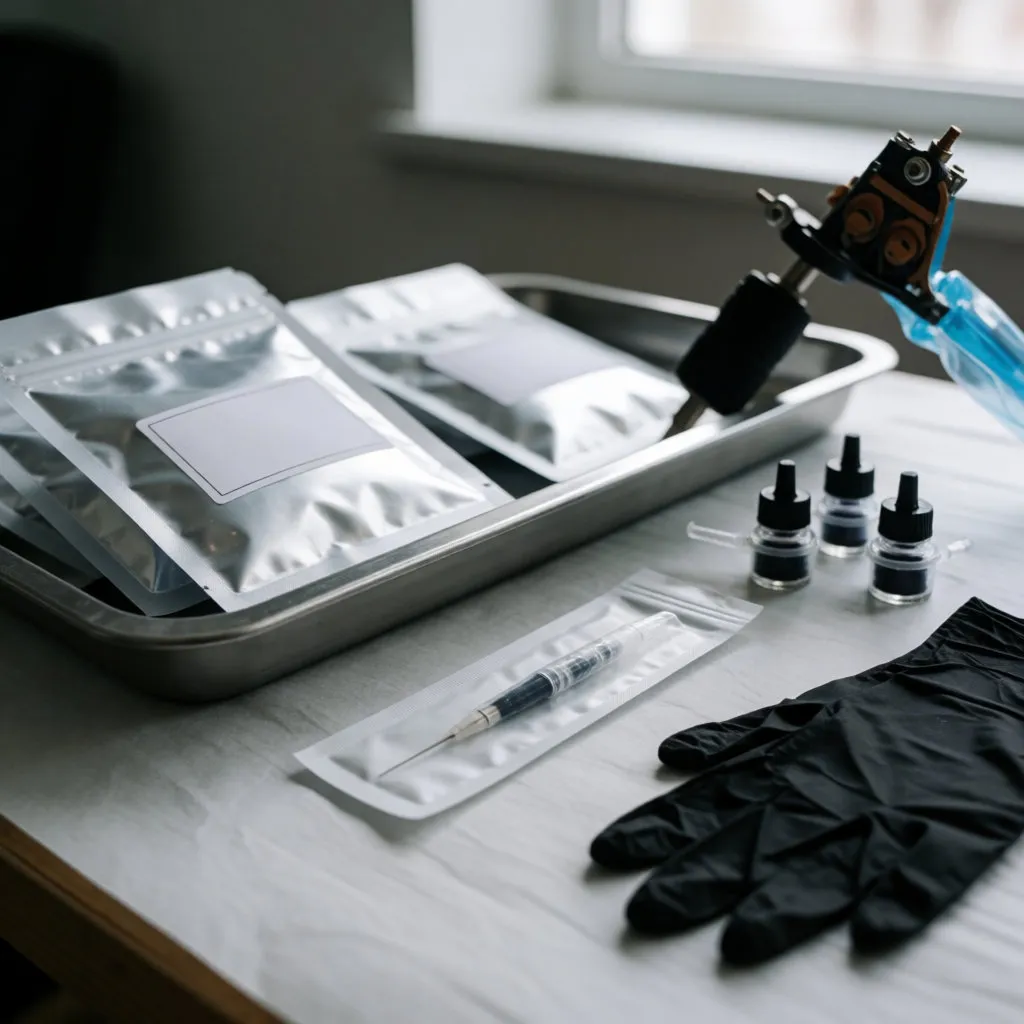
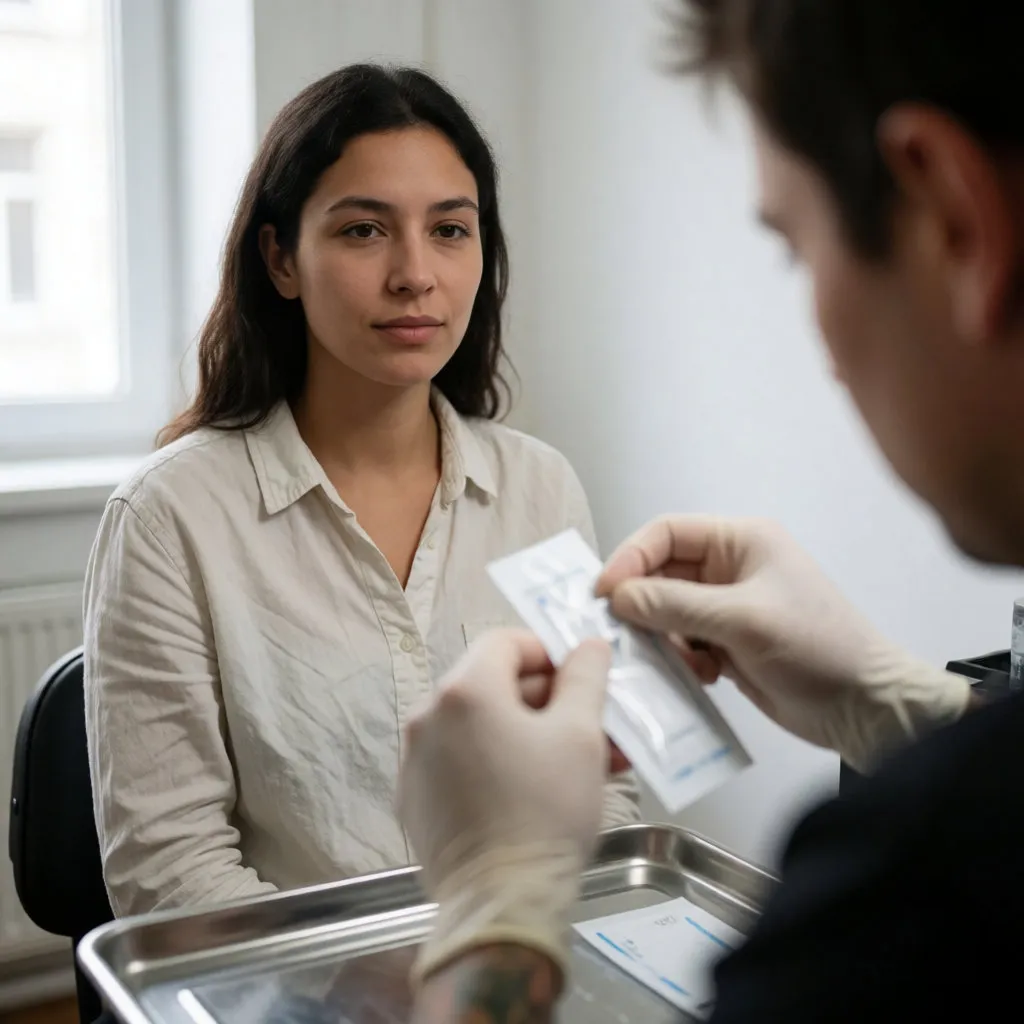
Tattoo equipment that can be single-use (needle, gloves, protection) must be single-use, and the needle must be sterile, so in its packaging: you are perfectly entitled to ask to see the tattoo artist take the needle out of its sterile packaging — don't hold back!
The tattoo artist's premises must be clean, and they must wash their hands and forearms before starting, then put on surgical gloves.
Objects that come into contact with blood and skin must be single-use. As for the tattoo machine, it is protected by single-use covers, then cleaned and disinfected; only metal parts and clamps that come into contact with blood go through cleaning, disinfection and then autoclave sterilisation. The pouches are sealed, dated and accompanied by sterilisation indicators.
Obviously, it is strongly advised to avoid getting tattooed in places unsuitable for such a procedure: markets, outdoor stalls, etc.
If an MRI is planned, tell the radiologist about your tattoo. If you are pregnant, it is better to postpone. In the UK, it is illegal to tattoo anyone under 18; parental consent rules apply to piercings, not tattoos.
Once done, a tattoo is essentially a wound on the skin: you'll need to make sure it heals properly, so take great care of it in the first few days to avoid infection or other complications.
To do this, it is recommended to:
Wear a sterile dressing over your tattoo for the first day, to prevent it coming into contact with your clothes or the outside environment.
Wash the tattoo with a mild, fragrance-free soap, following your tattoo artist's or a healthcare professional's instructions, rinse it, dry it, then apply a healing ointment recommended by your tattoo artist. A sufficiently rich balm does the job well: some brands offer natural formulas in glass jars or cardboard tubes, others go conventional; either way, it's the technique that counts: apply a thin layer of balm according to your tattoo artist's instructions, until it has fully healed.
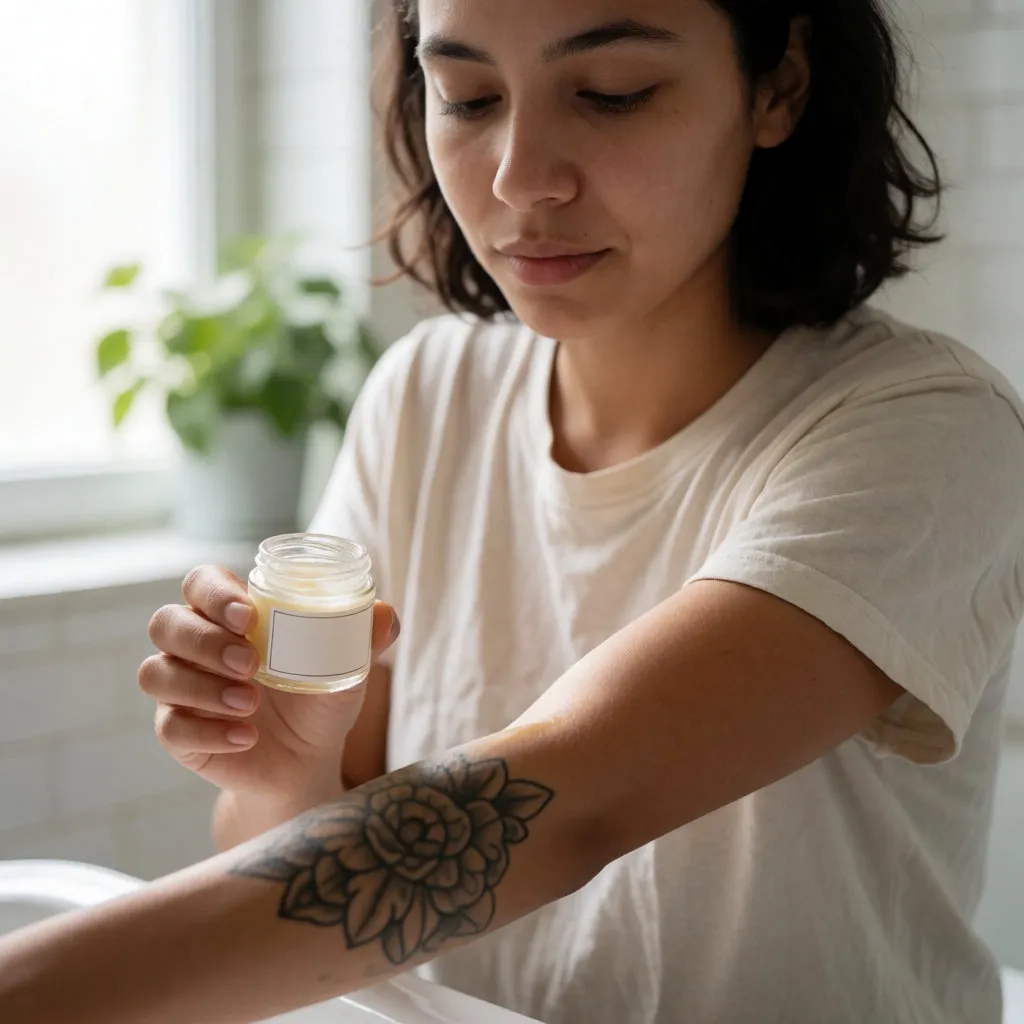
Do not pick off the scabs that form on your tattoo: ink could come away with them. Let the tattoo heal and the scabs fall off on their own.
Throughout the healing period, you'll need to avoid sun exposure and swimming in salt or chlorinated water.
All these instructions should be repeated and clarified by your tattoo artist. Some tattoo artists may offer a follow-up appointment; if you have any doubts about healing, consult a healthcare professional.
A reputable studio will never be offended by a question about hygiene. Before you commit, ask to see the needle come out of its sterile packaging, take a look at the autoclave logbook and check that the gloves are taken from a new packet in front of you. If they dodge the question, change tattoo artist.
Budget
When it comes to cost, UK tattoo rates vary hugely depending on the city, the artist's reputation and how intricate the design is. As a rough guide, a studio artist might charge around £60–£120 an hour. A small design around 10 cm often costs £80–£200; a larger project (forearm, calf, back) can easily climb to £400–£1,500; and a full piece can run into thousands of pounds, spread over several sessions. The price normally includes the preparatory drawing, sterile equipment and aftercare advice. Ask for a written quote before booking, and be wary of unusually low prices — they rarely cut costs on anything other than safety. For aftercare, budget around £8–£20 for a decent healing balm.
Sources
- NHS — tattoo safety, risks and aftercare.
- Local council licensing — hygiene and registration requirements for tattoo studios in the UK.


Comments
Your opinion matters: rate the article, react and reply to comments.
Comments are moderated; AI-assisted comments are flagged. Text emoticons (8-), :-), <3…) are automatically shown as images.