
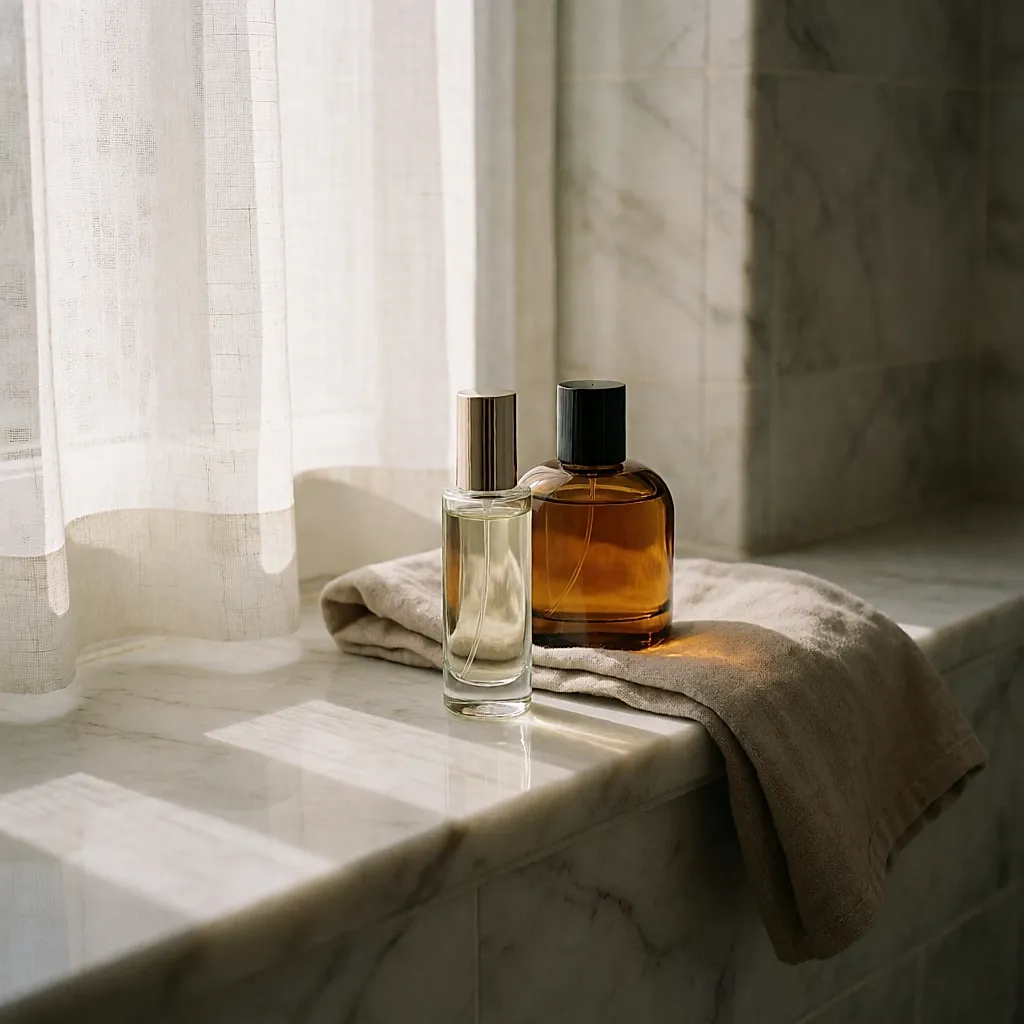
The scarf is back out of the wardrobe, the light has dropped a shade, and your summer perfume suddenly smells of holiday memories. Do you need a new bottle for a change of air? Not necessarily. On the bathroom shelf, two juices that never spoke to each other can become an autumn signature - with two conditions: an order, and a dose.
Which order
In perfumery, layering follows a simple rule: lightest first, densest second. Start with a citrus or bright floral formula, finish with the woody, amber or vanilla one. In practice, bright notes fade quickly; putting them on first lets them lead the sillage, while the denser layer holds through the day. Reverse the order and things often turn muddy: the heavy layer smothers the light one, and all that is left is a sweet base.
If both bottles play in the same category? Keep the quieter one for skin, the louder one for last - that is the one people will smell in the lift at 6pm. A single-note fragrance, vanilla or sandalwood, also makes an excellent second layer: it rounds things off without arguing.
Where to apply
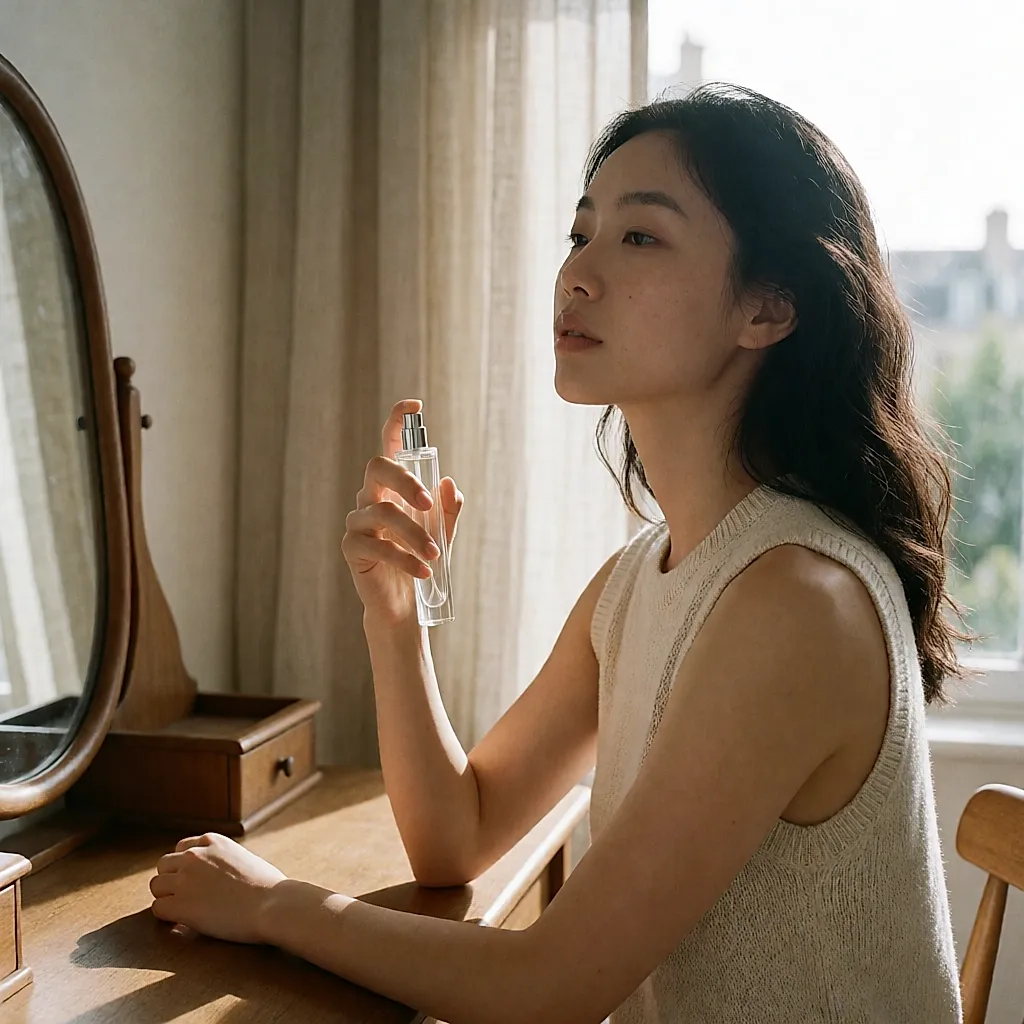
Nape of the neck, behind the ear, crook of the elbow, wrists, décolletage, back of the knee: these are the warm spots that bring a perfume to life. Two or three are enough for two juices - you are not spraying the whole map. Spray from about 15 cm, then let it dry without rubbing: the wrist-against-wrist habit mixes everything and damages the development.
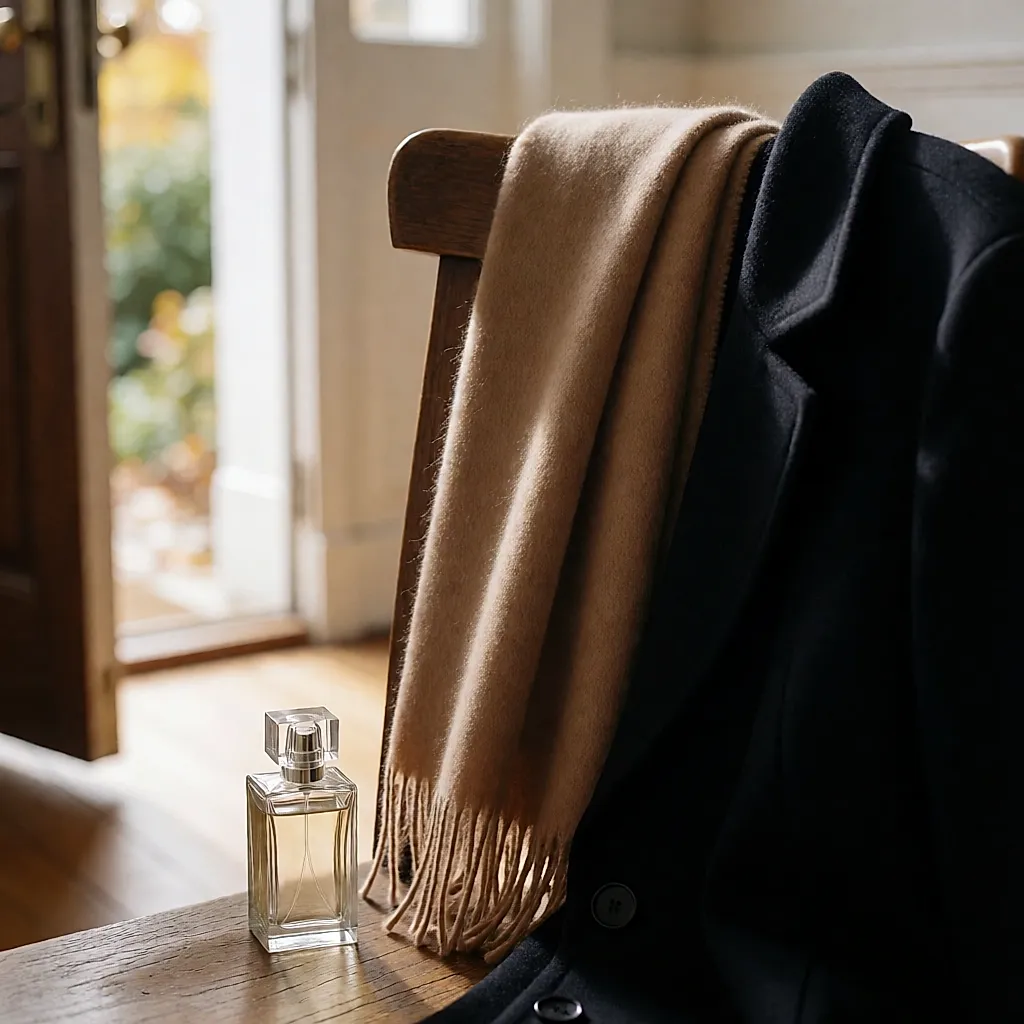
Textiles do their bit too. A wool scarf or coat collar will hold a trace longer than skin - test on a discreet corner first, because some fabrics mark. Silk, meanwhile, remembers everything and forgives little. And a scarf that still smells of the perfume you wore eight days ago is charming... until it mainly smells of eight days ago.
Three pairings that speak to each other
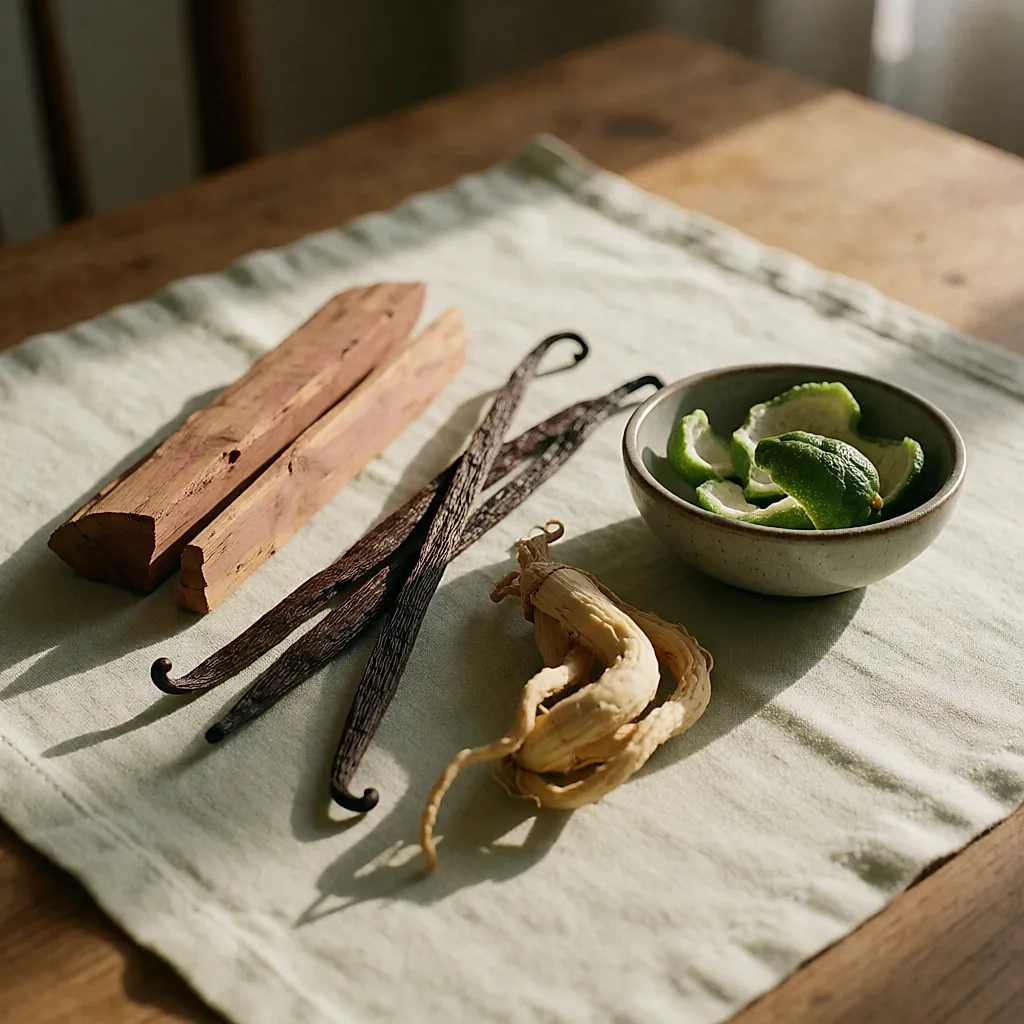
A dry woody note - cedar, vetiver - under a round vanilla: the contrast between a clean line and something soft works almost every time. A bright citrus, bergamot or lemon, lifted by a white floral gives something clean and luminous, without overdoing the jasmine, which can quickly turn soapy. And an amber, benzoin or labdanum, with a powdery touch of iris, evokes warm skin under a jumper: discreet, enveloping, deadly late in the evening.
What usually clashes is not daring pairings but duplicates: two gourmands, two smoky woods, two heady florals. Layered, they add up instead of answering each other, and the result turns pasty. If in doubt, a slightly safe pairing is better than a towering confection.
The dose, or how not to become a cloud
Aim for one spritz of each, two or three sprays at most across the day. Your nose gets used to what it smells continuously: that is why you can leave the house convinced you have been sensible and perfume the entire train carriage. Your colleagues will not say anything; they will open a window.
By the end of the day, the base often lingers where you can no longer smell it. Before adding another layer at 7pm, sniff your scarf or ask someone you trust: the answer is rarely 'it needs more'. If the evening calls for something else, one spritz of the lighter one restarts the sillage without piling it on.
Try it at home before committing
The method comes down to three moves: on skin rather than on a blotter, one wrist per combination, and a one-hour wait before your first verdict. Paper tells a different story from you: it holds the top notes and ignores the heat of your skin. What matters is what remains at midday, then around 6pm - the longevity, and that weariness that creeps in when a pairing bores you.
Leave it two days before deciding, and test again on a rainy day as well as a sunny one. The best sign that a combination is right? You forget about it during the day, and someone else reminds you.
The testing notebook. Note the date, the two perfumes, the proportions and what you can smell after one hour, at midday and at 6pm. Three lines are enough. After two or three tries, the combination that lasts will show itself - and so will the one that tires you before the end of the meal.
Budget: two bottles rather than a third
On price, a 30 ml eau de toilette often sits somewhere between £20 and £70 depending on brand and retailer, a 50 ml eau de parfum between £60 and £120, and niche houses will happily go from £120 to £250. In supermarkets, high-street fragrance shops or on the brand's own website, the differences are real: compare before you splurge.
The real saving is not there, though. A third bottle bought out of curiosity ends up half full at the back of a drawer, and a forgotten bottle is perfumed waste. Better to have two well-chosen juices, topped up if needed with a travel format or a few 1-2 ml samples.
This autumn, you do not need a new launch to smell different. Two bottles, an order, a measured dose: that is a sillage that feels like you, built from what you already had. And if you reverse the order one morning, no one will complain - except maybe the lift.

Comments
Your opinion matters: rate the article, react and reply to comments.
Comments are moderated; AI-assisted comments are flagged. Text emoticons (8-), :-), <3…) are automatically shown as images.