

You know the scene. It's late November, someone hands you the camera for the family photo, and there it is — that grey, washed-out complexion that doesn't look like you. Nothing mysterious about it: cold air outside, the heating on full blast inside, shorter days and too little sleep. It all shows up on your skin before it shows on your face. The good news? Fresh-looking skin in winter doesn't come from a cabinet stuffed with products — it comes down to four moves you actually keep up. Here's the routine, and it won't swallow your evening.
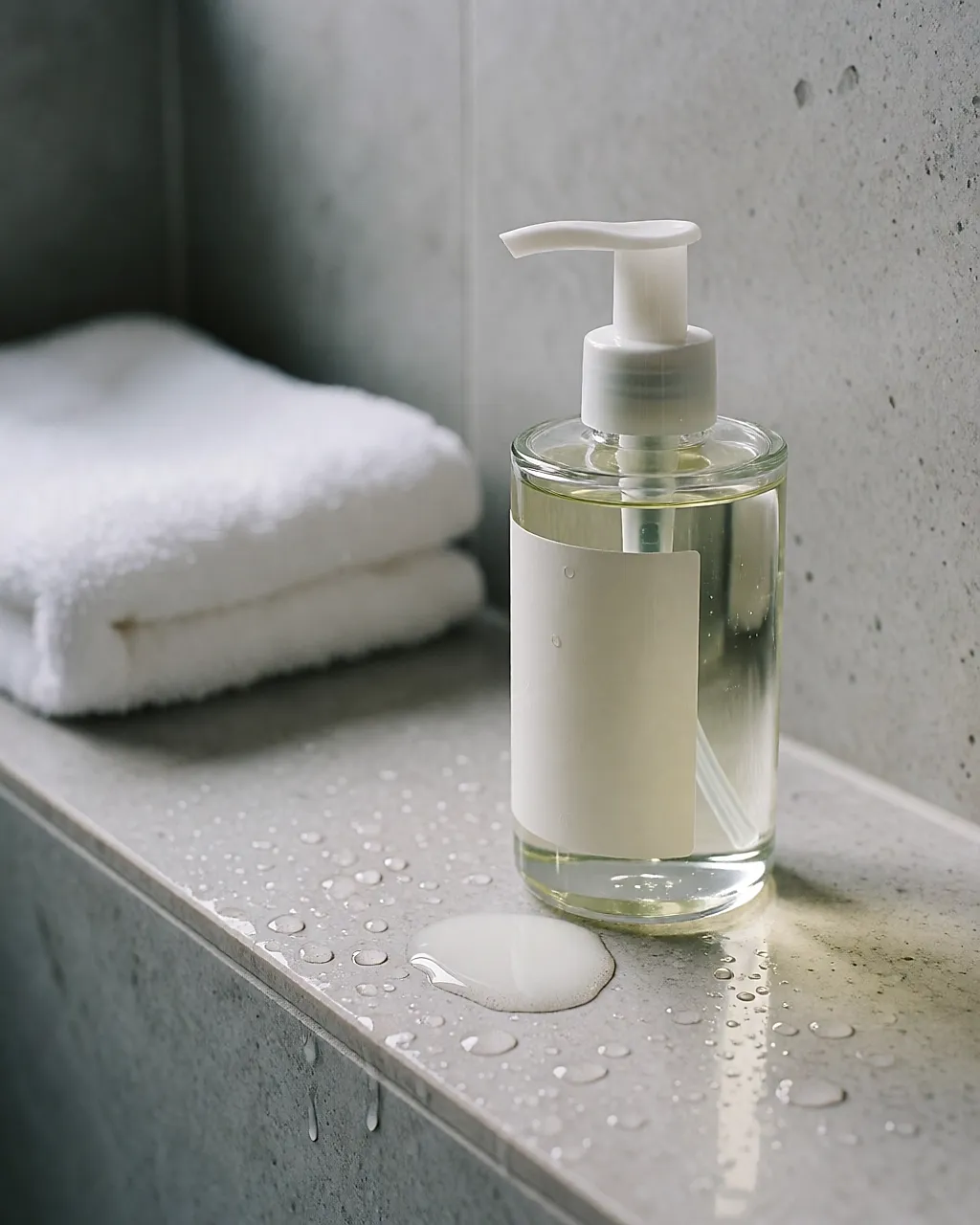
Cleanse, without stripping
A traditional soap bar usually sits at an alkaline pH, while skin tends towards the acidic side. The result is often the same: it feels tight, then produces more sebum to defend itself. So look for soap-free formulas — a cream-gel cleanser or an emulsifying cleansing oil — and rinse with lukewarm water, never hot.
Among the everyday picks, the cream-gel cleansers sold in pharmacies and health-and-beauty retailers (Avène, La Roche-Posay, Typology) do the job without pushing the price up. If certified formulas matter to you, brands such as Weleda and Melvita work to demanding standards — NATRUE or COSMOS — which set minimum levels of natural-origin and organic ingredients in the formula. Full disclosure: I've read up on these closely, I haven't tested them tube by tube.
Exfoliate, but don't scrub hard
A coarse-grain scrub, rubbed in with a heavy hand over skin already weakened by the cold, is an irritation waiting to happen. There are two gentler routes: a powder enzyme exfoliant you reactivate with a splash of water, or a scrub with round beads applied with your fingertips in light movements.
On frequency: once a week is enough if your skin is sensitive, twice if it's combination. The step that really matters is the rinse — generous, lukewarm, and no rubbing yourself dry with the towel.
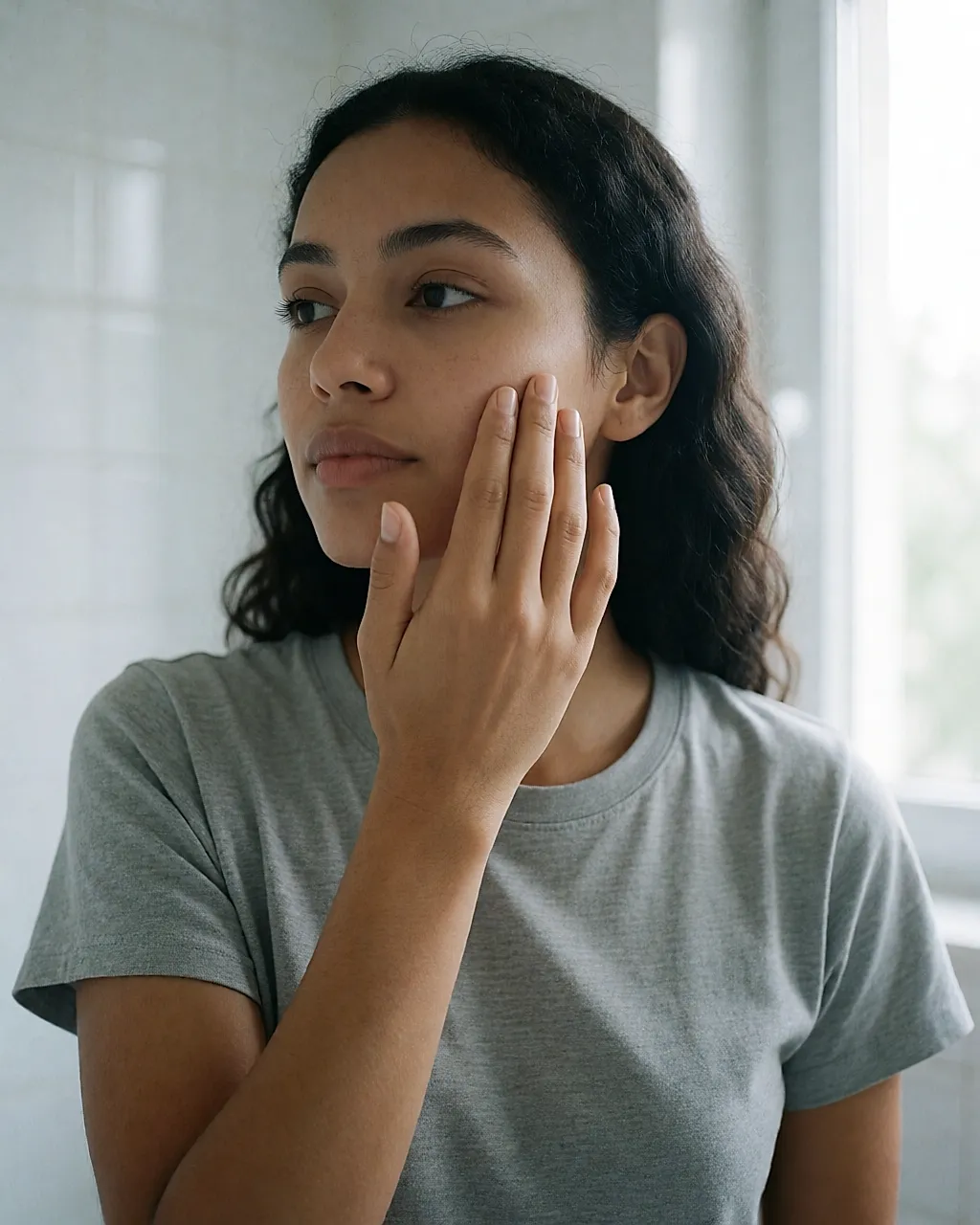
Moisturise according to your skin type
The rule is simple: the drier your skin, the richer the texture should be. A fluid or gel-cream for combination to oily skin, a heavier cream for dry. What genuinely helps, in both cases, is glycerol and ceramides, which help skin hold on to water. And let it sink in for two minutes before make-up, or your base will slide and your make-up will have given up before midday.
At Dr. Hauschka, the Rose Day Cream remains a reliable choice for dry skin, NATRUE-certified — written up, not tested by me. The trade-off to know about: a certified cream often costs more per gram than a conventional one from the pharmacy, because certification carries a real cost in testing.
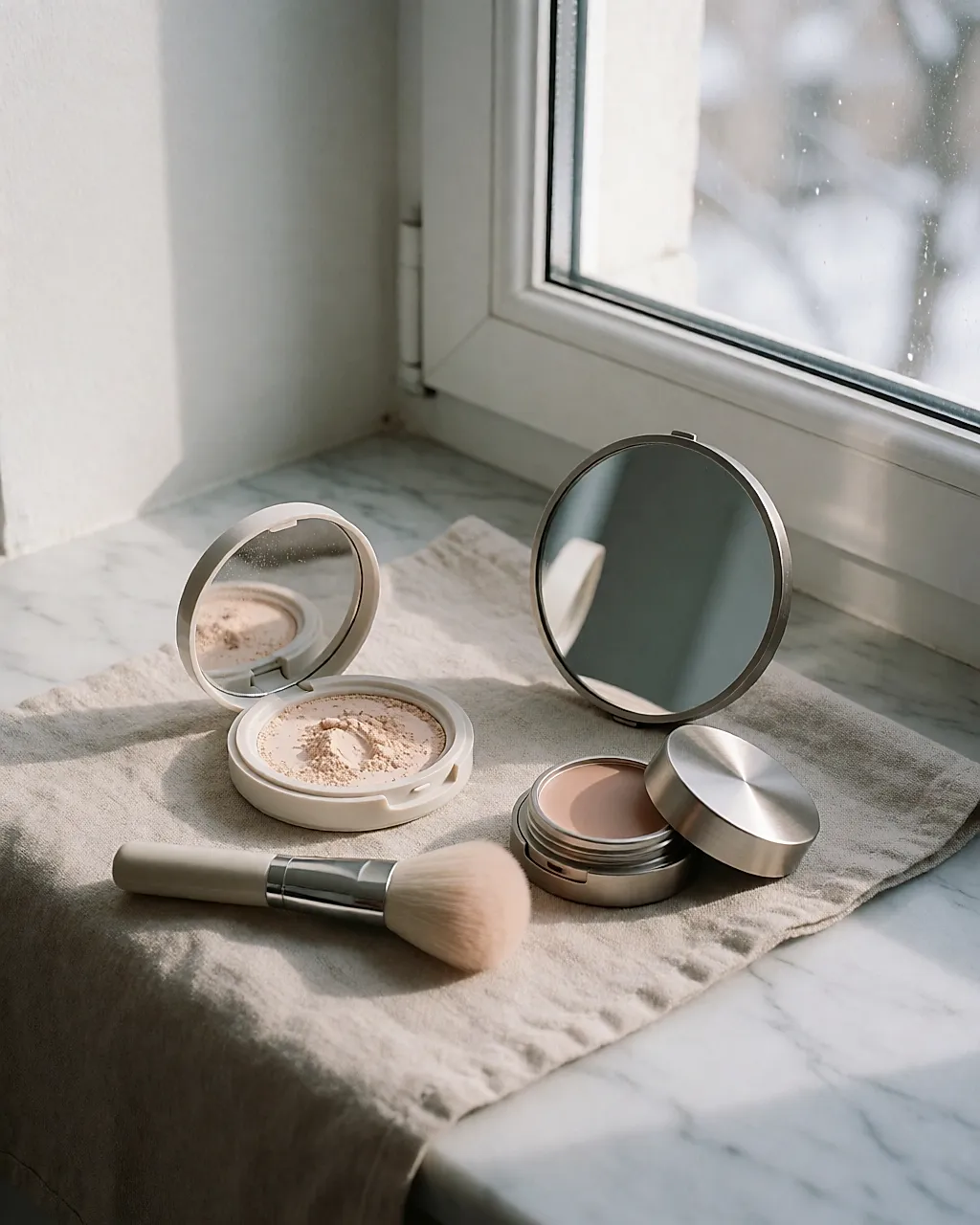
Base: sheer, not masked
Forget yesterday's advice about going a shade darker than your skin tone. Caked-on effect and a tidemark along the jaw, guaranteed. Go for the shade that matches your skin, then warm up your complexion with blusher — not with foundation.
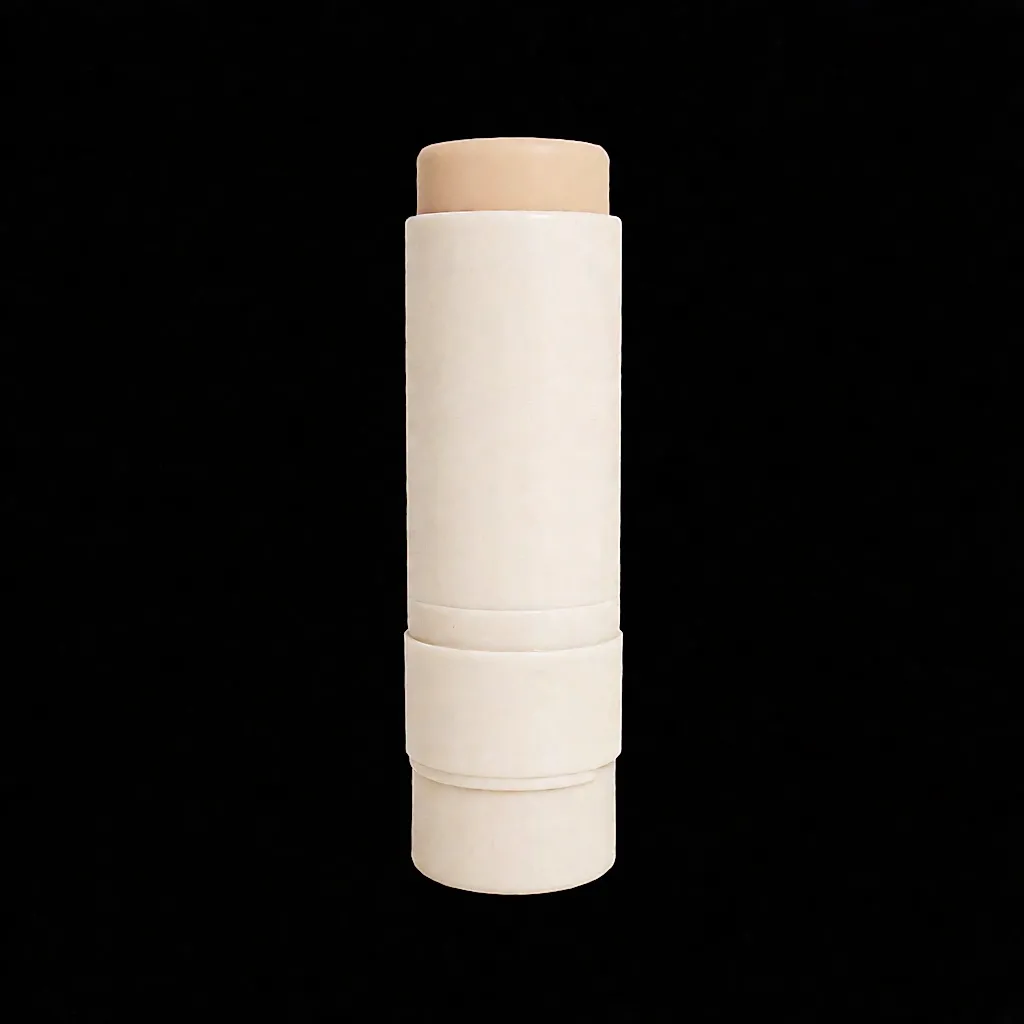
If your skin is smooth, a blurring primer isn't essential — it's usually the step you can skip without regret. A serum foundation or a tinted cream, applied with your fingers or a dense brush, is enough: from the nose out towards the cheeks, forehead to temples, and don't forget your neck. At Zao, the refillable bamboo foundations bring the cost per gram down once you've bought the case — just remember to order the refill, otherwise the eco and money-saving appeal falls flat.
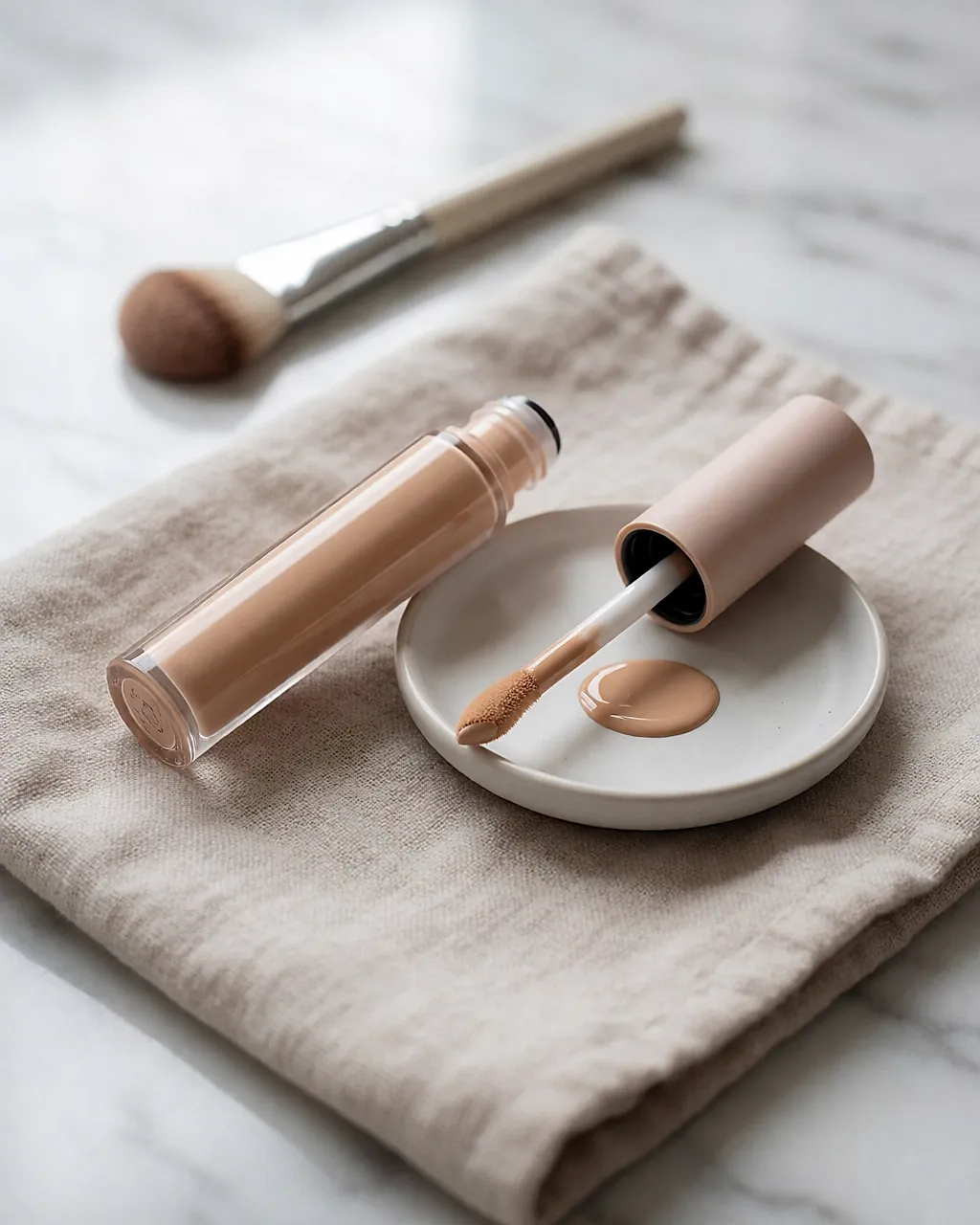
Concealer comes next, tapped on with a fingertip over dark circles and redness. Then a very fine, barely tinted loose powder to set everything without over-mattifying. And blusher — cream for a fresh finish, powder for staying power — on the cheeks, with a light veil swept up towards the temples.
The order that changes everything, in 30 seconds
- Cleanse, rinse with lukewarm water.
- Exfoliate — once or twice a week, no more.
- Moisturise, leave for two minutes.
- Make up: primer if needed, base, concealer, powder, blusher.
A short routine you repeat beats a perfect one you do once a month.

Budget
Typical UK prices for a full routine:
- Gentle cleanser: £8 to £25 (supermarket, pharmacy, direct-to-consumer).
- Gentle exfoliant: £12 to £30.
- Moisturiser: £12 to £40, depending on texture and size.
- Blurring primer: £10 to £30 — often optional.
- Foundation or tinted cream: £15 to £45; refills bring the cost per gram down.
- Concealer: £10 to £30. Loose powder: £10 to £30. Blusher: £8 to £25.
What moves the number: where you buy it, the actual size, whether it's refillable, and organic certification, which carries a genuine testing cost. A small format often costs more per millilitre, and an online-only brand doesn't carry the same overheads as a department store beauty counter.
Sources
- OPSS, Office for Product Safety and Standards — cosmetics guidance, gov.uk
- The UK Cosmetics Regulation — labelling and claims rules, gov.uk
- COSMOS Standard, organic and natural certification — cosmos-standard.org
- NATRUE, international certification standard — natrue.org
- WRAP, packaging and recycling guidance — wrap.org.uk


Comments
Your opinion matters: rate the article, react and reply to comments.
Comments are moderated; AI-assisted comments are flagged. Text emoticons (8-), :-), <3…) are automatically shown as images.