
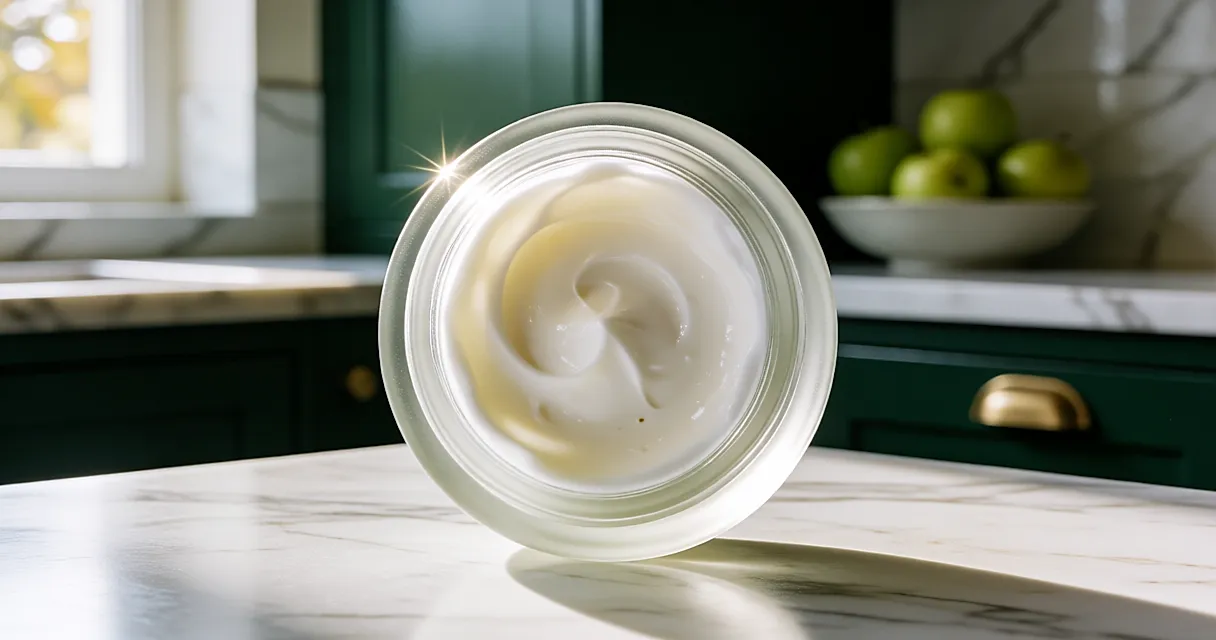
You can't judge a makeup look the moment it goes on — only a few hours later, when the light stops being kind. You're walking up the steps, the flashes go off straight in your face, and your complexion tells the whole story of everything that happened beforehand. That's where you see the difference between skin that's been prepped and skin that's simply been covered up.
The mask effect isn't about how much you use
Under strong light, it isn't the colour of your foundation that gives the game away — it's the texture. A formula that doesn't melt into the skin turns into a film, and that film settles into every place that pulls: the sides of the nose, the lines around the mouth, the space between the brows. The product isn't at fault; it's just following the terrain it finds.
Hence the familiar reflex: add another layer. Bad idea. Piling more product onto skin that's already taut is like painting over a wall that's crumbling — it holds for an hour, then flakes off with even more conviction. Before you reach for the concealer brush, ask yourself whether your skin has actually had enough water in the hours before. The answer is often no.
The night before is when you build the reserve
An evening out isn't prepped at 7pm. Gentle cleansing, a layer of moisturiser applied without rushing, a night of something close to proper sleep: that's what shows up under the lights the next day, far more than the name on the serum bottle. In practice, a moisturiser applied the night before and again that morning already does a lot. Would five products stacked on top do better? That's far from certain.

One practical precaution, though: don't try anything new the night before an event. No unfamiliar exfoliant, no active ingredient you've never used, no improvised homemade mask. If your skin decides to react, it will pick the exact evening you spent the price of a concert ticket on your dress. A gentle exfoliant, if you fancy one, is better scheduled a few days earlier, when there's still time to undo the damage.
The waiting time nobody bothers with
Between skincare and makeup there's a moment most of us skip. And yet that's the bit that changes things. The rule of thumb is simple: your skin shouldn't feel tacky under your fingers when you start on your base. Two or three minutes — long enough to brush your teeth or track down your charger — is usually enough, and it costs nothing except a little patience.
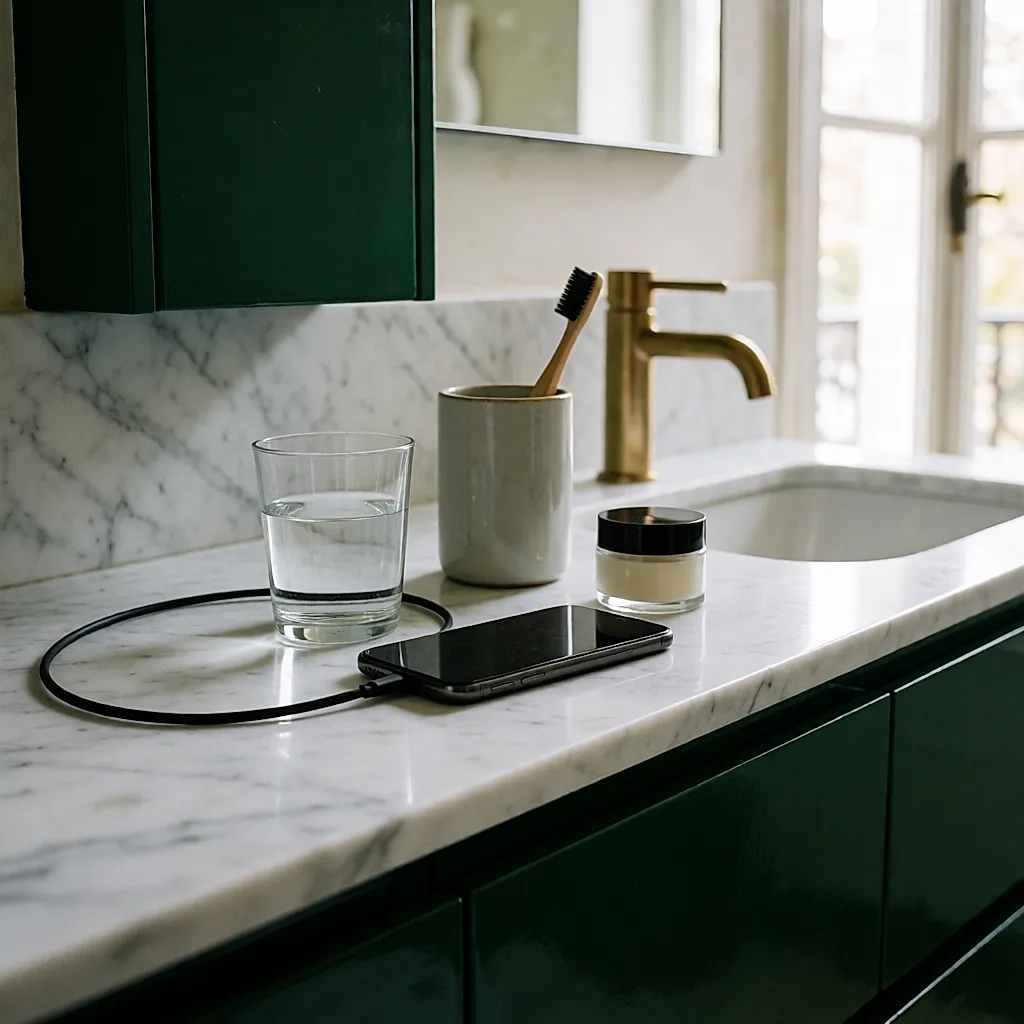
Same logic between layers. Primer, then foundation: leave a moment before adding anything else. And when a patch starts to show late in the evening, press it with your fingertips rather than spreading — the warmth of your hand can help the product melt back into the complexion. A ten-hour flawless-wear claim is worth treating with suspicion. That little pause, on the other hand, is free.
Getting home: take it off kindly
Taking off your makeup is part of the plan, not the after-sales service. A few drops of plant oil or a cleansing balm, massaged into dry skin, helps dissolve makeup without scrubbing; emulsify with a splash of water, rinse, then finish with a gentle cleanser. Reusable cotton pads save you leaving half your face — and half a forest — on a disposable one.
On the formula side, solid balms in glass or refillable pots, virgin oils and waterless cleansers can mean less packaging, less water in the formula and often fewer preservatives, with an ingredients list that's easier to read. There is a trade-off: some solid balms are firmer and need warming between your palms, which adds thirty seconds to the ritual. Only you can decide whether those seconds cost you more than a plastic tub.
What's worth spending on, and what can wait
Expect to pay around £10–£20 for a decent cleansing oil or balm from a pharmacy, a health food shop or a supermarket, £15–£30 for a face moisturiser that suits you, and £8–£15 for a set of reusable cotton pads. All three can do the job; beyond that you're mostly paying for texture, fragrance and a pretty jar.
You'll find all of it in pharmacies, supermarkets, health food shops and online. One thing to keep in mind: price doesn't tell you much about how well a product will suit your skin. A £40 moisturiser can be entirely wrong for you — which is an argument for asking for samples, not for signing up to a subscription.
The back-of-the-hand test. Before you do your face, put a pea-sized amount of foundation on the back of your hand and leave it for about fifteen minutes. If it cracks or clings there, it may do the same on your cheekbones. Better to know before the photos.
When the evening comes, well-rested skin rarely lets you down. If you're short on time, keep the cleansing and the layer of moisturiser: those are the two steps that survive when everything else gets dropped. The rest is optional — and under the flash, all anyone sees is the base.


Comments
Your opinion matters: rate the article, react and reply to comments.
Comments are moderated; AI-assisted comments are flagged. Text emoticons (8-), :-), <3…) are automatically shown as images.