

After 11pm, the house is finally quiet, and the only thing you want is your pillow. Let's be honest: that's exactly when make-up removal gets skipped. Yet those two minutes shape a good part of your skin's night. Foundation, SPF, sebum, pollution particles — it all stays on your face, and your skin spends the night cleaning instead of repairing. Removing your make-up isn't a quick hygiene job to rush; it's the first step of your night-time ritual.

What it really does
In the day, your skin accumulates. At night, it renews itself and rebuilds its skin barrier. If nothing is removed, residue settles in pores, and by morning your complexion feels tight, shiny or warm. The goal isn't perfect skin: it's to arrive at your night cream with skin that's clean and supple. One test is enough: after cleansing, your skin shouldn't feel tight, tingle or redden in the minutes afterwards.

Every skin type has its texture
A make-up remover is a skincare step, not just a cleanser. The right question isn't 'which is best?' but 'which texture can your skin tolerate tonight?'
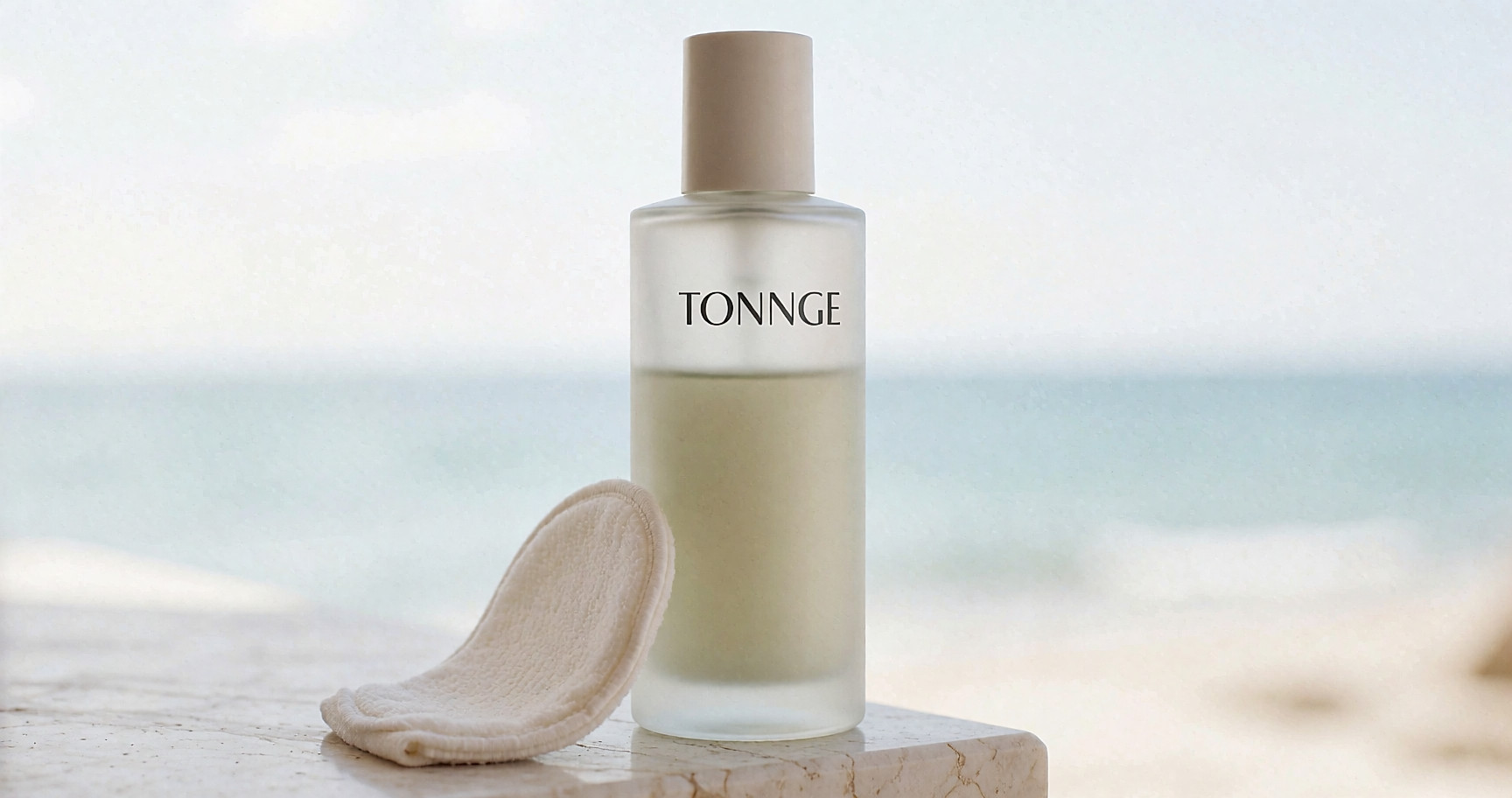
Micellar waters are solutions of very mild surfactants. Soak a cotton pad, pat without rubbing, and you don't need to rinse — although a quick splash of lukewarm water helps if your skin reacts quickly. This is the texture for sensitive, intolerant skin or skin that reddens with many cosmetics.
Oils and balms dissolve grease: waterproof make-up, SPF, stubborn mascara. Massage into dry skin, then emulsify with a little lukewarm water — the texture turns milky — before rinsing. Rinsed properly, an oil doesn't leave a greasy film: rinsing is what makes the difference. It's ideal for dry skin and for anyone who wears a lot of make-up.
Milks are comfortable on dry or sensitive skin. One small trap: applied with a cotton pad, they can irritate very reactive skin. If that's you, apply the milk with your fingertips, massage over the whole face, then rinse with lukewarm water.
Foaming gels appeal to those who like the feel of water. The foam cleans deeply, as long as you rinse thoroughly. Be wary of overly detergent formulas: on dry skin, they strip more than they cleanse.
The technique matters as much as the product
Two principles: little product, plenty of gentleness.
Eyes first. Place a soaked cotton pad over the closed eyelid, let it sit for a few seconds, then sweep from the inner corner outwards, without rubbing. The eye area is thin and marks quickly. For waterproof mascara, a biphasic texture or an oil is more effective than micellar water alone.
Then double cleansing: oil or balm to dissolve, followed by a gentle water-based cleanser to remove residue. No need to do this every night. It's useful in the city, after exercise, or on days of heavier make-up.
And don't forget the edges of your face, jawline and neck: that's where foundation builds up most, and also where it's least noticed.
If your skin tingles with a fragrance-free micellar water, rinse with lukewarm water and follow straight away with your skincare. Applying cream to skin that's still damp helps limit the feeling of tightness. Also check your technique: rubbing is a common cause of irritation, though that doesn't rule out the formula playing a part too.
Products: a researched selection
I'll say it straight away: this selection is researched, not tested by me. I'm giving you the criteria; you check the label.
For a fragrance-free, alcohol-free micellar water, Bioderma's Sensibio H2O — sold as Créaline H2O in France — remains a pharmacy reference, with a minimal formula. In organic ranges, several Cattier and Melvita products are Cosmos Organic certified: the label sets rules on the share of naturally and organically sourced ingredients and bans certain substances, but it says nothing about how well your skin will tolerate it.

For stubborn make-up, a cleansing oil such as Shu Uemura Ultime8 has been a classic for years, though it can be harder to find on the UK high street; a widely available alternative is DHC Deep Cleansing Oil. The honest trade-off: no organic certification, and a plastic pump bottle — check whether a refill exists. Conversely, a solid balm sold in a glass jar or loose format limits packaging — as long as you check the ingredients; the word 'natural' alone proves nothing.


Budget
On budget, here are the rough UK prices. A micellar water sits at around £5 to £12 for 200 to 500 ml in supermarkets and high-street pharmacies, and more like £12 to £20 in pharmacies for dermatological ranges. A cleansing milk or gel sits between £6 and £18. For a cleansing oil, expect between £20 and £45 for 150 to 200 ml, and more like £25 to £55 for a balm. If you switch to washable pads, budget between £8 and £25 for a set; they can be washed and reused.
What pushes the price up: the sales channel, the size, an organic label, glass packaging or a pump. For buying, supermarkets and high-street pharmacies usually offer the best value for size; pharmacies are the right place for reactive skin, and you can ask for a sample before investing. Organic brands can be found online or in specialist shops. One last habit: when a refill exists, it's often cheaper than the full bottle.
Sources
- UK Cosmetics Regulation, OPSS — Office for Product Safety and Standards, guidance on cosmetic products.
- Cosmos Standard, Ecocert Greenlife — criteria for natural and organic cosmetics.
- British Association of Dermatologists — public information on skin hygiene.
- Official websites of the brands mentioned: Bioderma (Sensibio range), Cattier, Melvita, Shu Uemura (Ultime8).



Comments
Your opinion matters: rate the article, react and reply to comments.
Comments are moderated; AI-assisted comments are flagged. Text emoticons (8-), :-), <3…) are automatically shown as images.