
Every summer it's the same dance: cap off in the shop, eyes closed, and off you go to the coconut groves. Perfectly understandable. The snag is that your underarm isn't going on holiday — it sweats, it rubs against your cotton top, and by six in the evening it's the formula you can smell, not the daydream. So instead of picking a deodorant on the strength of an exotic name alone, we've gone back to the start: what it actually does, what the scent really changes, and what you can spend without regret.
Deodorant or antiperspirant?
A deodorant works on the smell. An antiperspirant reduces sweat: the aluminium salts in it — usually aluminium chlorohydrate — limit how much leaves the body through the sweat duct. It isn't a question of banned versus allowed, but of your skin and the dose. France's ANSES, the national agency for food, environmental and occupational health, published an opinion on aluminium in cosmetics back in 2011: no ban, but a recommendation to be cautious, especially on broken skin or just after shaving. In practice: if you shave your underarms, put the deodorant on the following day instead.
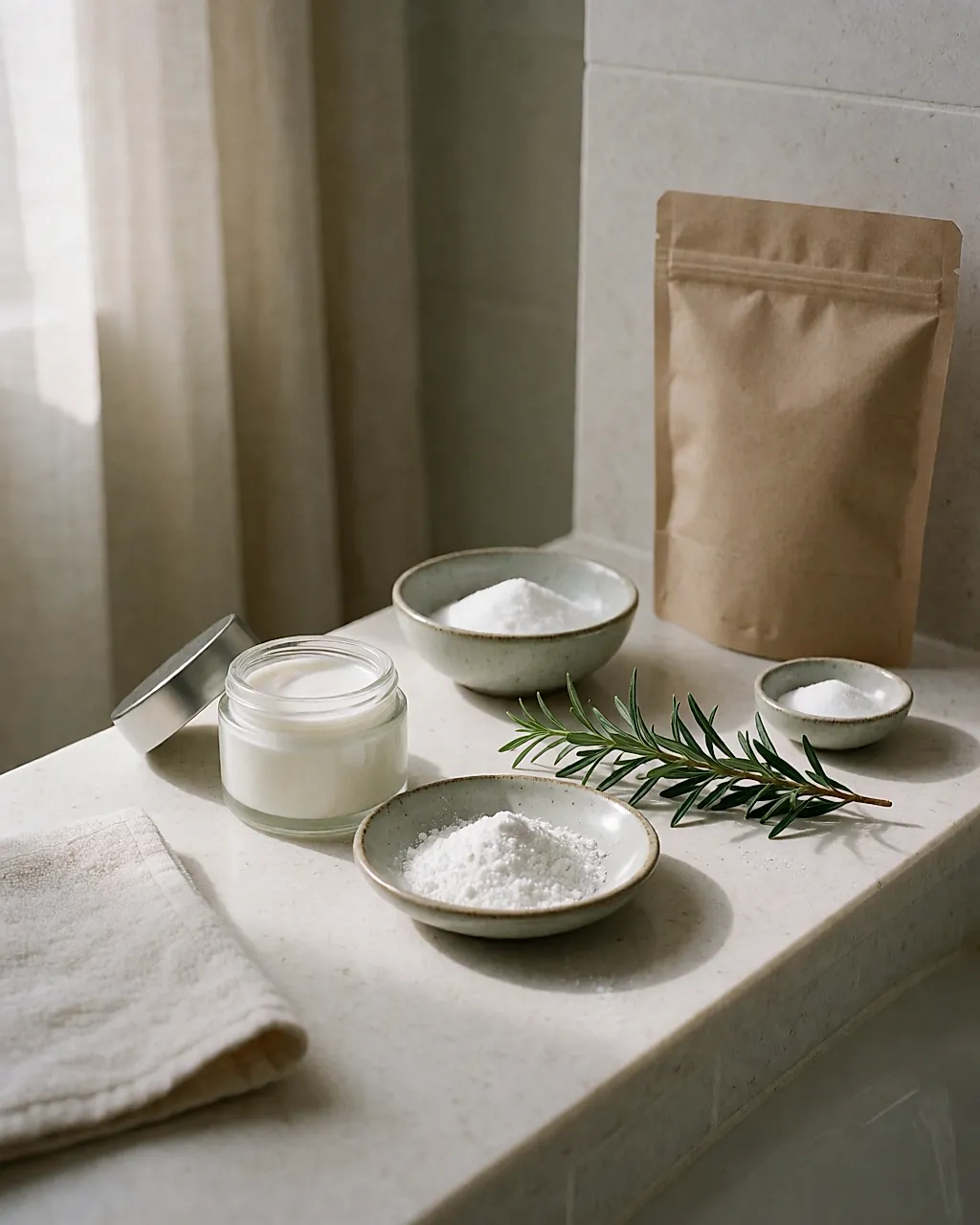
Without aluminium salts, other ingredients step in — but they don't all work the same way. Bicarbonate of soda mostly tackles acidity, clay tackles moisture, zinc ricinoleate neutralises the molecules behind the smell, and certain essential oils have an antibacterial action. They work, but results vary a great deal with the format and with the kind of day you're having.
What actually matters: start with clean, dry skin, two or three passes, a minute in the air before you pull your top on. Don't add an extra layer during the day over an underarm that's already red — that's how you end up sore.
Spray, roll-on or solid: format before fragrance
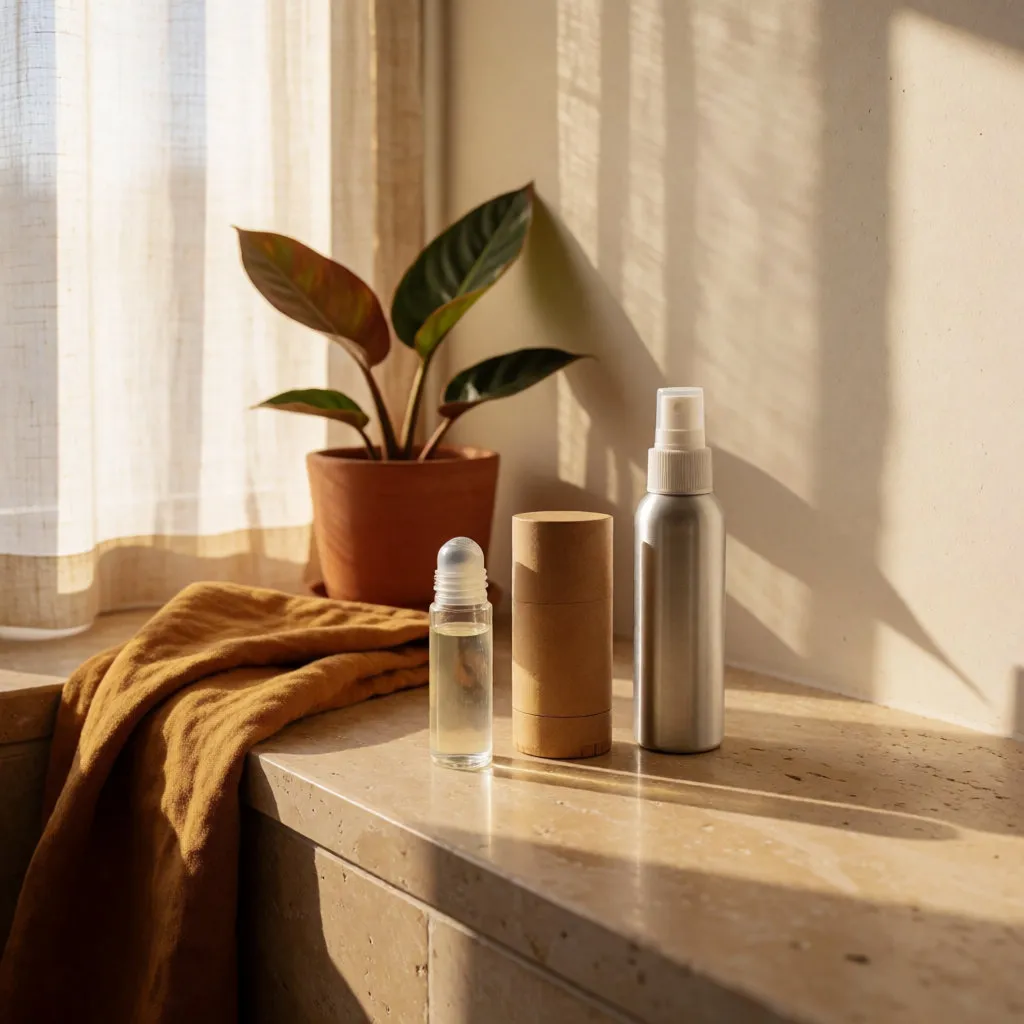
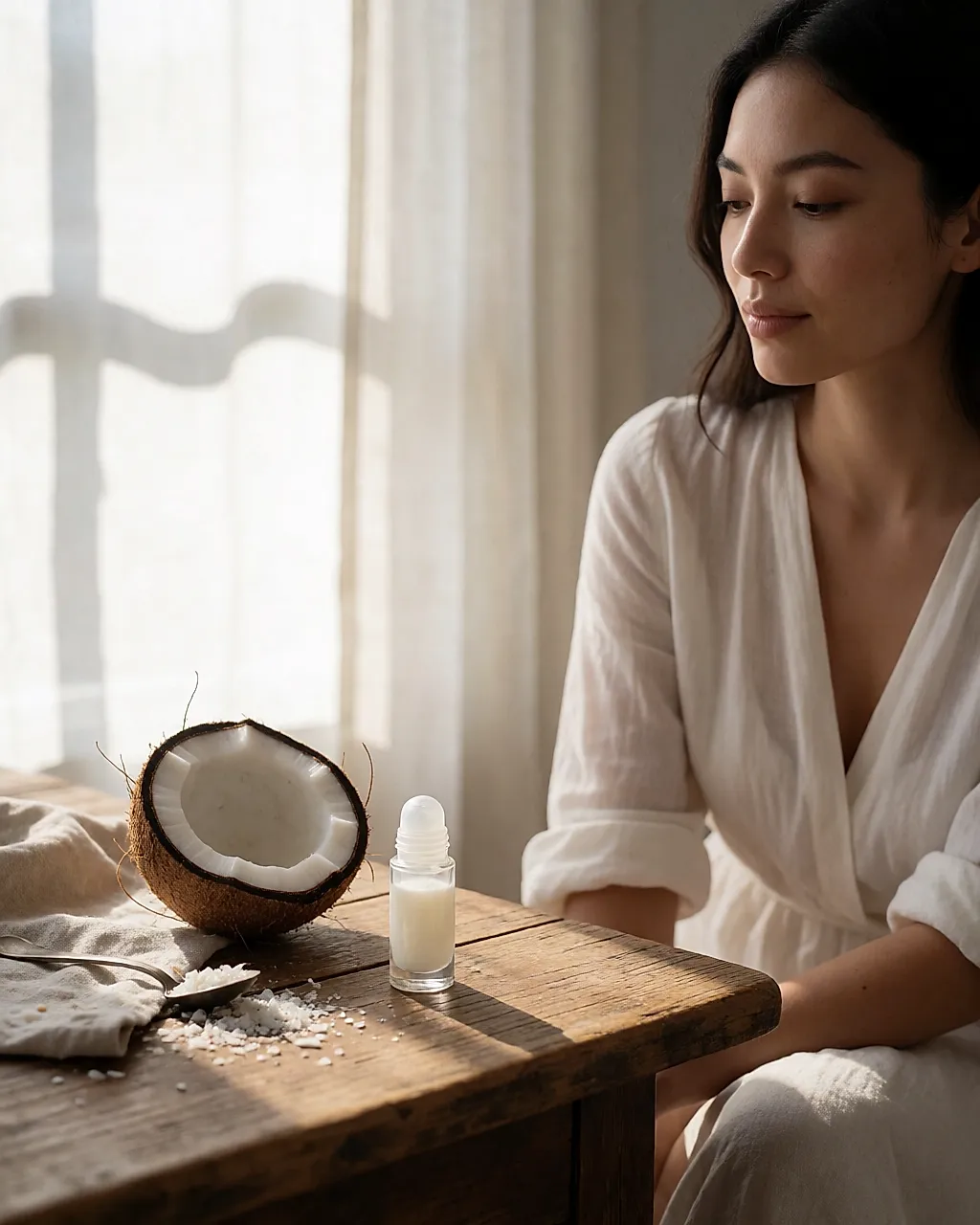
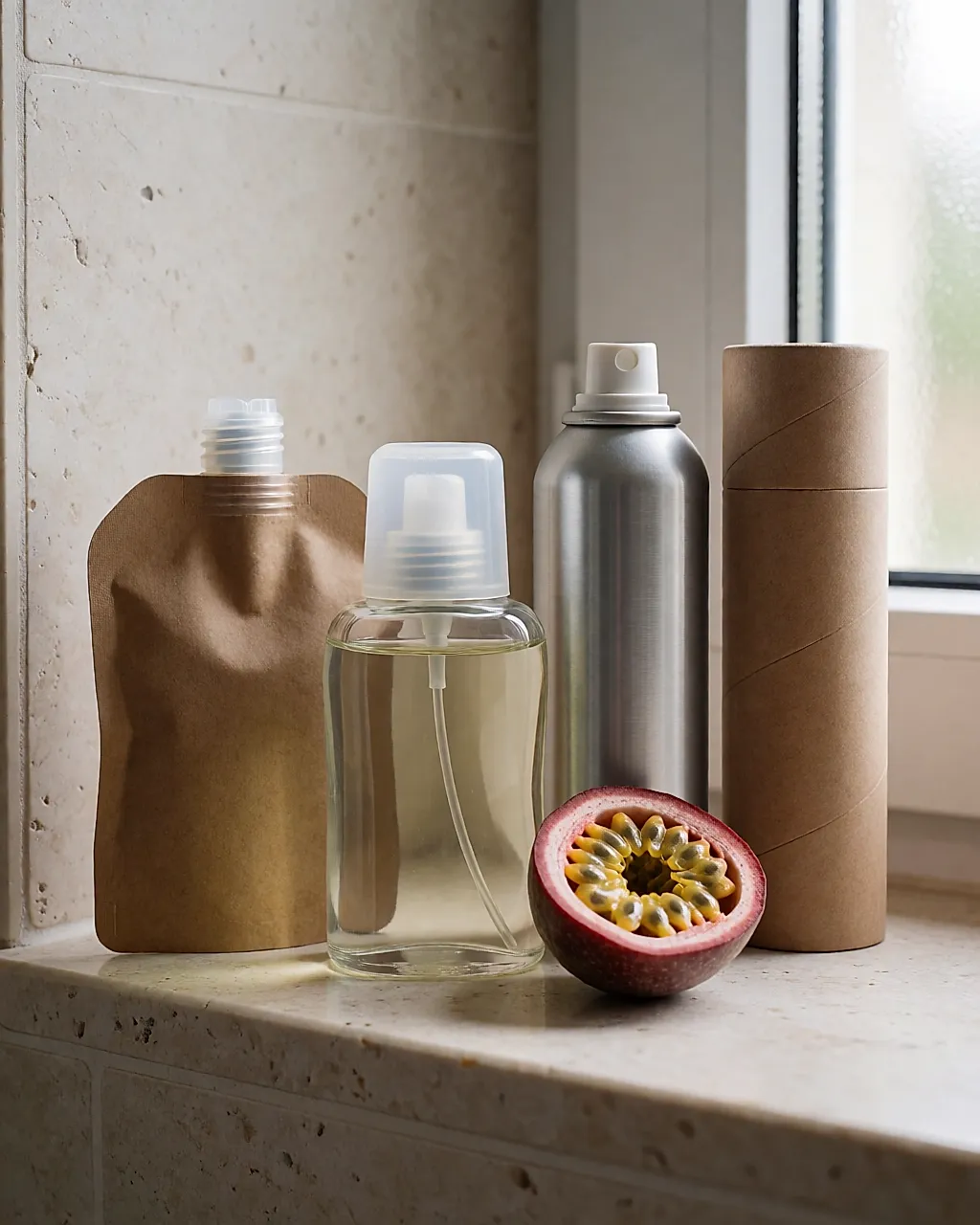
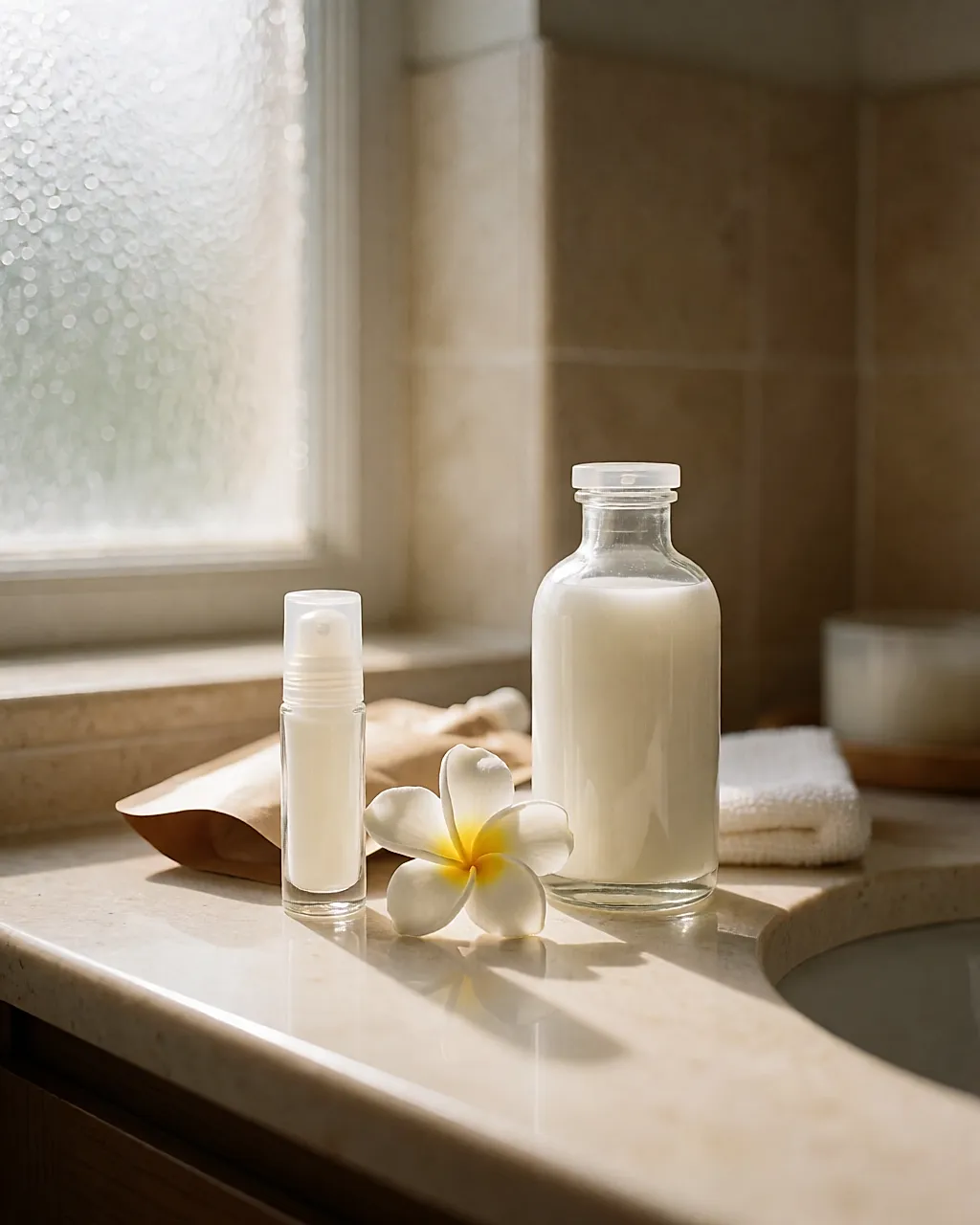
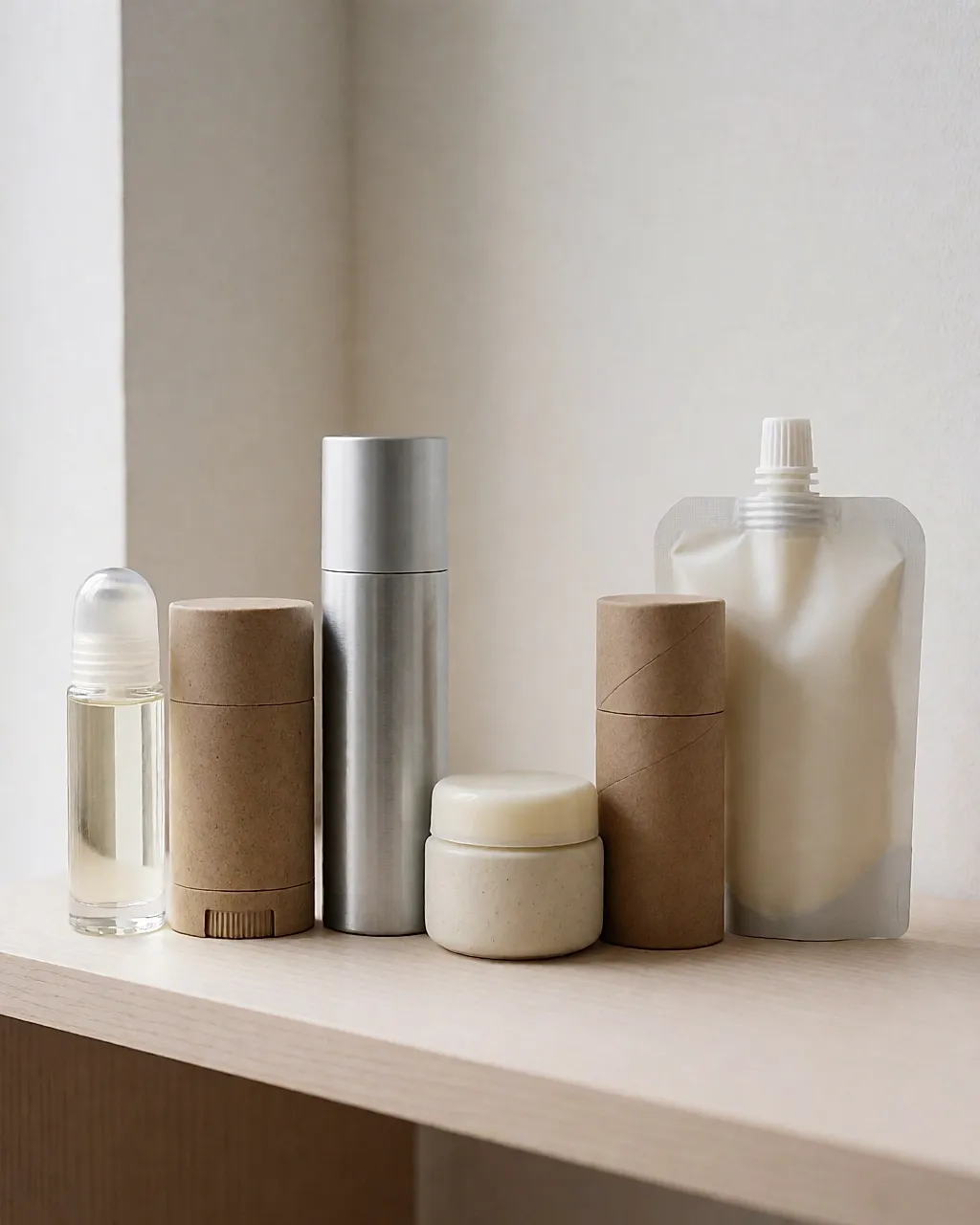
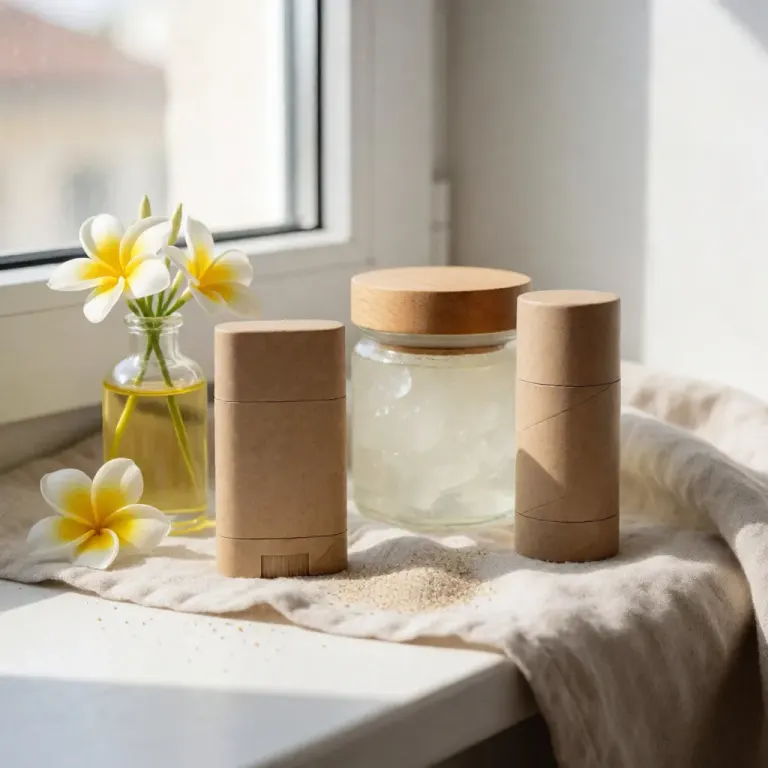
An aerosol dries fast and gives instant freshness: handy when you're in a rush, more questionable if your skin reacts, because the formula often contains alcohol. A roll-on gives precise dosing and a neater finish, but its glass bottle almost always hides a plastic ball. A solid, whether a stick or in a cardboard tube, takes two seconds to apply — keep it somewhere dry or it softens. As for a cream, you apply it with your fingers: a gentler texture, a slower routine, for skin that won't tolerate anything else.
A word on bicarbonate of soda: at high doses it doesn't suit everyone. Patch-test it on your forearm for two days before it goes anywhere near your underarms.
Exotic scents that don't turn sour
Monoï, tiare, vanilla, coconut, hibiscus, papaya, passion fruit, green tea: these are the summer classics. Just be wary of the very sweet fruity ones, which can turn late in the day on skin that's been sweating. The honest test isn't the cap in the shop, it's your wrist at 6pm.
Watch out, too, for the phrase 'naturally derived fragrance': natural doesn't mean risk-free, and a natural allergen is still an allergen. The INCI list, mandatory on every cosmetic sold in the UK, will show limonene, linalool or eugenol once they pass the regulatory thresholds. If you've reacted before, that's the list to read before you buy.
Labels and end of life: what you can really check
The COSMOS Organic standard, run by Ecocert with its European partners, governs the share of organic ingredients, the processes allowed and the packaging. 'Natural' on its own, though, has no regulatory definition: that one word doesn't justify paying more. What you can check is whether a refill is available, whether the bottle is glass or card, where it was made in Europe, whether the aerosol can is recyclable aluminium. And the compromises exist: a glass roll-on still contains a plastic ball, and an aerosol billed as recyclable carries a propellant gas.
Budget
In the UK, expect to pay roughly £1.50 to £4 for a supermarket or chemist own-brand, £5 to £10 in a pharmacy or health-food shop, and £10 to £25 for a short-formula or refillable brand — with refills on their own usually somewhere between £7 and £15. Artisan or British-made solids tend to sit between £6 and £14. What shifts the price: the format, whether there's alcohol in it, the certification, and the refill.
The advice that's genuinely useful: start with a small size, keep an aluminium-free one for shaving days and an antiperspirant for the long ones. You'll work out soon enough which of the two comes away with you for the weekend.
Sources
- ANSES, opinion on the risks linked to the use of aluminium in cosmetic products, 2011 (anses.fr).
- Regulation (EC) No 1223/2009 of the European Parliament and of the Council on cosmetic products (eur-lex.europa.eu).
- COSMOS-standard, the COSMOS-ORGANIC and COSMOS-NATURAL standards (cosmos-standard.org).
- ADEME, the French agency for the ecological transition — resources on reuse and packaging end-of-life (ademe.fr).

Comments
Your opinion matters: rate the article, react and reply to comments.
Comments are moderated; AI-assisted comments are flagged. Text emoticons (8-), :-), <3…) are automatically shown as images.