

Fringe or no fringe? Short or long? How do you get rid of split ends? Can you go for layers? And how often should you actually have a trim? We ask ourselves a lot of questions about our hair and how we wear it. And with all the old wives' tales and advice flying around, it's easy to end up doing more harm than good. So here's a quick refresher on a few essentials: how hair grows, how to look after it and what a cut can—and can't—do. With one big caveat: it's hard to judge someone's hair type, or the right cut for their face, without seeing both first. So ask your hairdresser all of this and more. A good one should also be willing to rein you in when they think you're about to make a mistake.
Can split ends be fixed?
Split ends can come from towel rubbing, frantic brushing, blow-dries and colouring. Hair gets damaged and the ends eventually split. It's also worth knowing that we're not all equal here: some people are far less prone to split ends than others. That's just how it is.
A treatment, honestly, is a sticking plaster, not a repair. The main culprits are repeated friction, heat, lightening, sun, chlorine and water that's too hot. And the longer your hair is, the more time it has had to rack them all up.
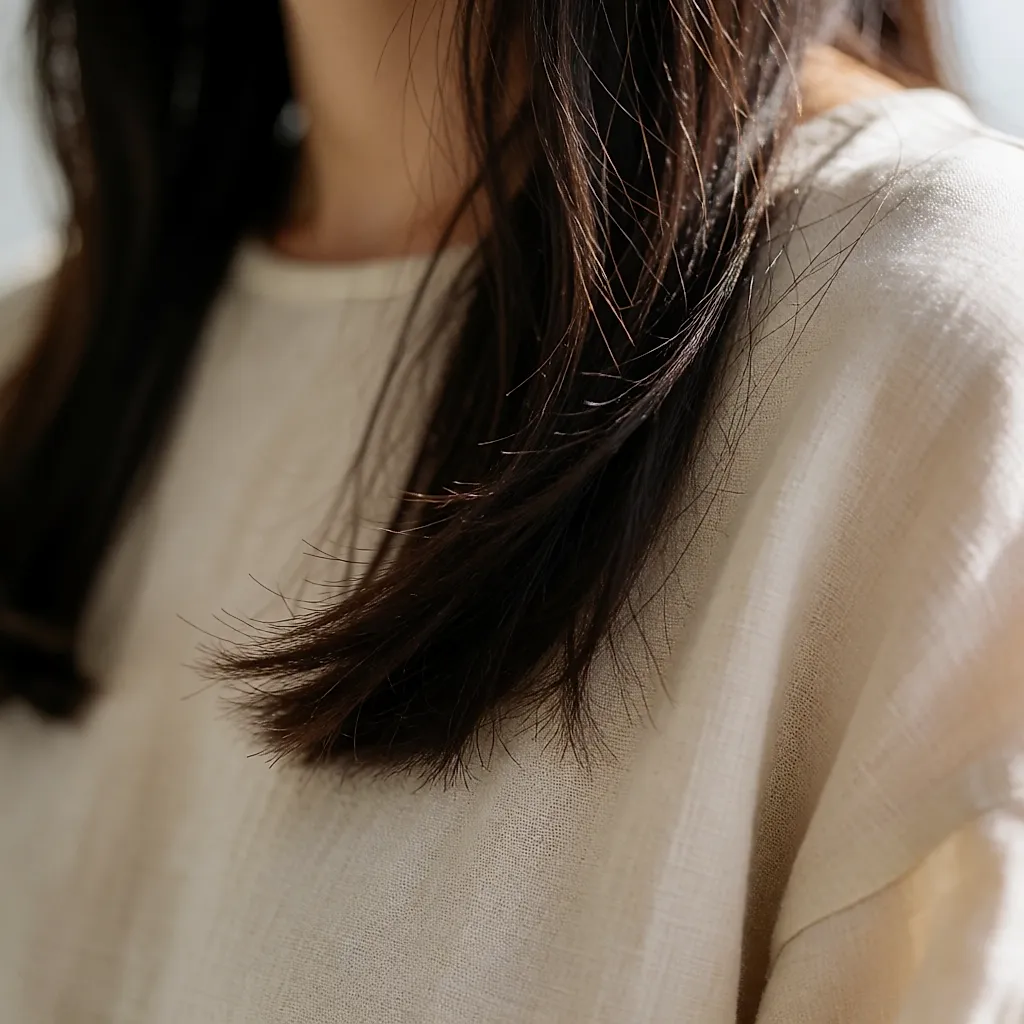

But you can't treat split ends—by which I mean repair them. The only way to get rid of split ends is a proper cut. So don't believe every advert promising that some product will mend your ends. Do still invest in products for dry, damaged hair: they won't make split ends disappear, but they can help prevent them or at least keep them in check. Nourishing oil, a gentle shampoo and conditioner will be your best allies. Add a balanced diet, moderate use of hairdryers, straighteners and other hair-torture devices, and regular trims to keep your lengths in order.
One small note: an itchy scalp, thick flakes or patches that linger aren't just a shampoo issue. If it carries on, it's worth speaking to a healthcare professional.


How often should I cut my hair?
Broadly speaking, how often you need a cut depends on the style you've chosen. A short cut will need frequent salon visits to keep it looking sharp, and the same goes for very elaborate styles that quickly become unmanageable as they grow out. For long or mid-length hair, on the other hand, many hairdressers advise in practice waiting until the ends need tidying before taking off a few centimetres.
It's not hard to spot, either: as soon as your lengths start looking less neat or uneven, or your hair feels limp and shapeless, book a hairdresser to give it some structure again.
And if you've gone for a fringe, no prizes for guessing that it will need more frequent maintenance to stay looking good: a quick salon visit to have it trimmed whenever it starts getting in your eyes.
Would a fringe suit me?
Ah, the fringe. When you see one on the right face, it's easy to dream: it gives a face character, a hairstyle attitude and a gaze a bit of mystery. Plenty of us want one. But just because it looks perfect on someone else doesn't mean it will do the same for our face.
It really is a case-by-case thing, and the ideal is to ask your hairdresser, who—if they're honest—will tell you straight whether or not you're a fringe person.
Generally, though, it's worth considering if you have a fairly large forehead—it can be an excellent way to balance the face—and finer hair, since a fringe creates the impression of volume, which is perfect for hair that falls a little flat. Think about your overall hair texture too: a fringe on straight or only slightly wavy hair will usually look prettier than one on curly hair, which often needs regular styling and some protection from humidity. Not exactly practical.
And it doesn't have to be a thick, blunt fringe. A softer side-swept piece is more mobile, and can be clipped back on lazy days.


Does cutting your hair make it grow faster?
No. You do need regular trims to keep your style in shape, get rid of split ends and even up the ends, but cutting has no influence on how fast your hair grows. Hair is not a houseplant. Because hair grows from the root, not the tip, a regular 'trim' won't boost its growth. A balanced diet does support hair health, but it won't speed up growth either.
For context, hair grows slowly—yes, patience is required.
Should I get my hair thinned out?
Thinning out means removing bulk, making the lengths finer and creating depth or texture. It's often done with thinning shears or a razor and gives a layered cut a lighter, more considered look—often very pretty just after you leave the salon. But heavily thinned cuts are hard work to maintain: styling becomes tricky as soon as hair grows out a little, and thinning quickly makes hair look too fine, with ends that flick out and become unmanageable. Then you have to cut it again—not a great look. So yes to thinning, but sparingly, and preferably on thick hair or hair with plenty of body.
Should I go for layers?
Layers suit almost every face shape. They're an excellent way to give long hair a more sophisticated finish, they can create the impression of volume in fine, flat hair, and they're also a good way to take some bulk out of thick or curly hair by lightening the lengths.
So yes, layers are worth considering when you want a style that's easy to manage but still polished. Your hairdresser can choose the right kind: around the face only or all over, starting at cheekbone, jaw or chin level, with a side-swept section, a fringe or neither, depending on your face shape and what you want.
One thing worth knowing: for fine hair with no volume, layers with a few lighter pieces are a great way to create the impression of depth and thickness.
Can I have a cut that shows off my neck?
We don't always think about it when choosing a short cut such as an angled bob, but simply exposing the nape can highlight certain facial features—and also a slightly thick neck. Those with a fine, straight neck will find an exposed nape makes their silhouette look slimmer and sets off the way they hold their head. Those with a short or slightly thick neck, however, may find that detail accentuated by a bare nape. Similarly, a face with soft, rounded features works very well with this kind of cut, while an angular face is better softened by some length.
Also pay attention to how your hair grows at the nape: some people's grows upwards, which can create a rather unflattering effect as it regrows.
What cut suits my face shape?
It's always tricky to recommend a cut without seeing the face in question. But broadly, some general patterns hold.
A rounder, fuller face will be flattered by a cut that finishes at least below the chin, to soften that roundness and avoid a slightly childish look.
Square or very angular faces are softened by a rounder cut that wraps around the face with a little volume—face-framing layers, for example. With this type of feature, avoid exposing the nape, which could emphasise the angularity. Don't hold back on a few curls or waves around the face for a soft, airy finish.
With a long face, go for a relatively short cut, since length tends to emphasise the elongation. A fringe can also break up a long face, provided you have a large enough forehead.
Finally, a heart-shaped face—neither fully round nor long—can carry off plenty of styles, short or long. This fairly neutral face shape usually takes to lots of different looks.
Budget
Salon cuts are the most variable line in the budget: expect roughly £30 to £70 depending on the city, salon, stylist and hair length, with higher prices in big cities or for a very in-demand stylist. For at-home maintenance, a nourishing oil or leave-in treatment often costs around £8 to £30, and a gentle shampoo around £5 to £20—prices climb quickly once you add active ingredients or a premium beauty brand. You'll find these products in pharmacies, supermarkets, beauty stores and online. A fringe trim is usually charged at less than a full cut. The sensible move: ask the price before you sit down, and choose a hairdresser who is happy to advise before they start cutting.
A simple habit to help limit split ends: never brush wet hair. It's more fragile then and breaks more easily. Detangle with your fingers first, then with a wide-tooth comb, on towel-dried hair—patting, not rubbing.



Comments
Your opinion matters: rate the article, react and reply to comments.
Comments are moderated; AI-assisted comments are flagged. Text emoticons (8-), :-), <3…) are automatically shown as images.