


A cut can take months to grow out. A fringe, though, can be decided in minutes — and yet it's the thing people notice most. Worth knowing before you sit down in the chair. A fringe is a commitment, no point pretending otherwise — but it's also what can reframe the eye area in two snips.

Why the hairline changes everything
Move the hairline, and you move how a face is read. A thick, blunt fringe shortens the face and makes it look rounder. By contrast, a centre-parted or side-swept fringe lengthens and slims the face. The trend itself has never really left salons: what matters is hair texture, which dictates how it falls. And a face-framing layer does the same job in a subtler way.
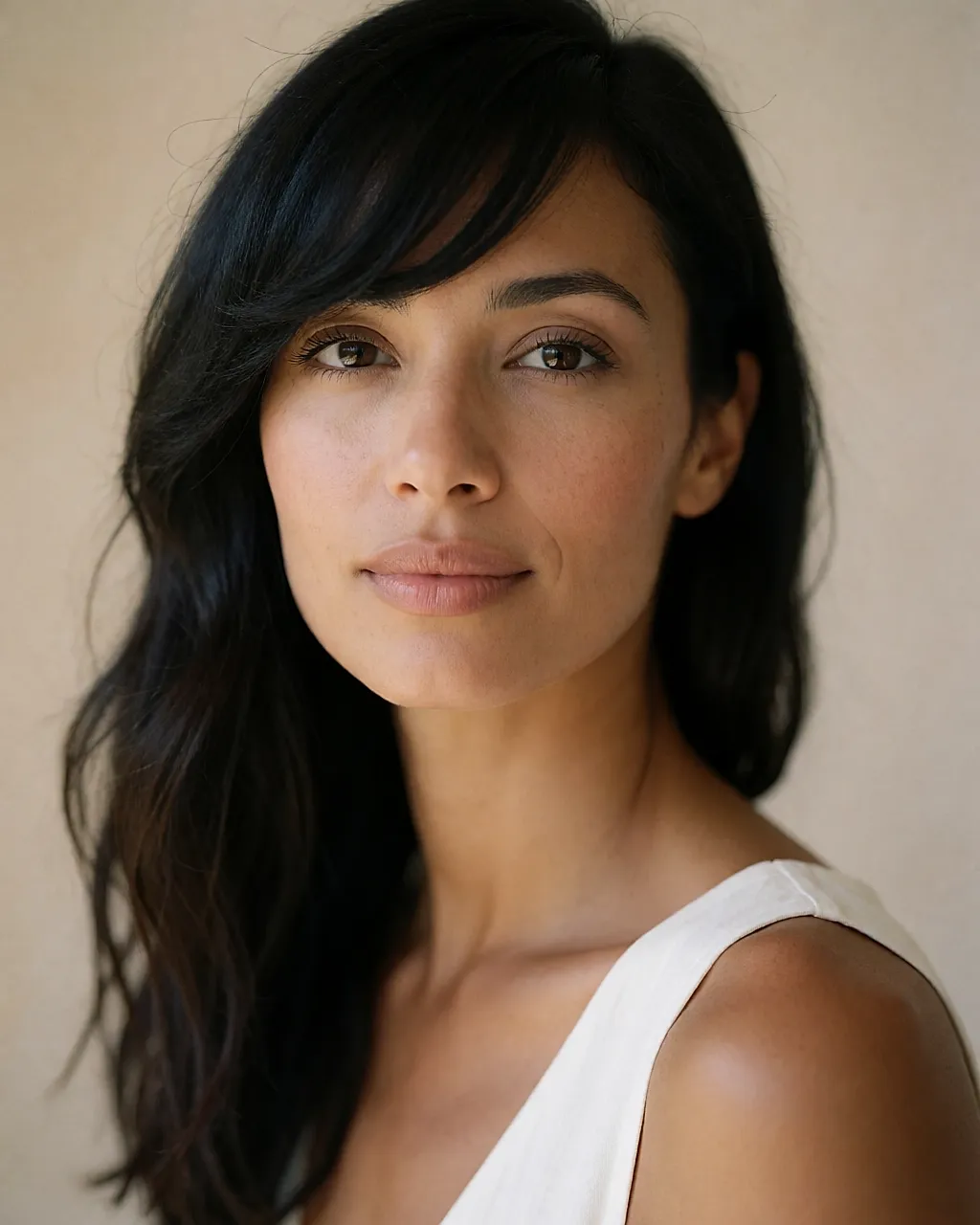
Which fringe suits which face shape?
A round face breathes more easily with a tapered curtain fringe, sitting below the brow and opening over the cheekbones. A long face can carry a full, straight fringe, or a short micro-fringe that breaks up the vertical line. On a square face, a light fringe with face-framing layers works better than a sharp horizontal line.
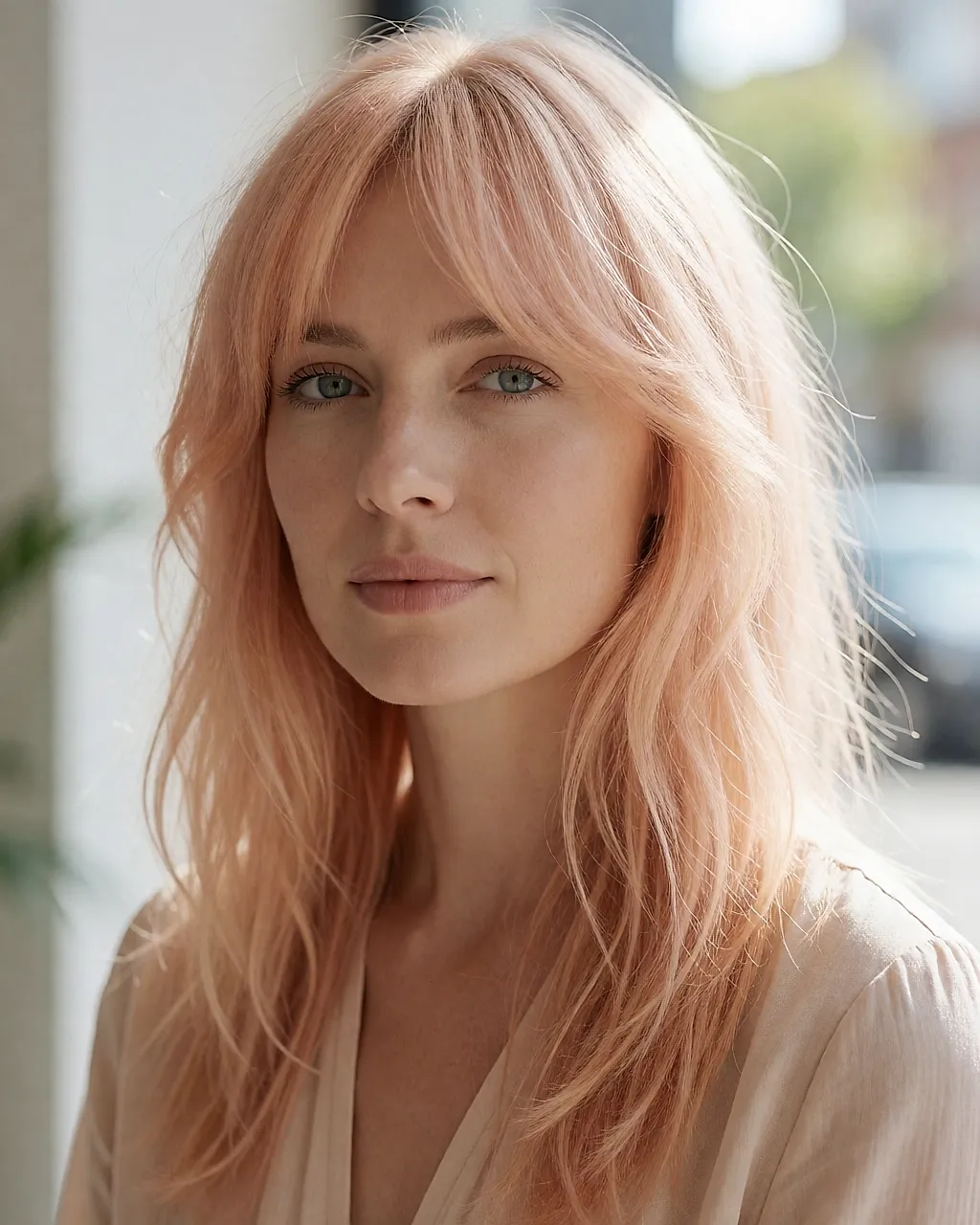
Hair texture matters as much as face shape. On fine hair, a light fringe holds better than a thick one. On curly or textured hair, keep it below the brow: cut shorter, it springs up. And if you're torn between a fringe and a face-framing layer? A fringe can split perfectly into two face-framing pieces — just part it where it suits you.

The technique that makes all the difference
Dry your fringe first, while it's still damp, with a round brush and airflow from top to bottom. That's the step that decides whether it falls well or not. Never cut it yourself when wet: it springs up as it dries, and the gap shows immediately. On curly hair, apply a light gel, let it dry without touching, then scrunch out the cast.
To tame a fringe without setting it rigid, a texturising powder or flexible hairspray does the job beautifully. I haven't tested a certified organic hairspray, so here are my criteria rather than a review: start with the ingredients, using a standard such as COSMOS ORGANIC, co-signed by Cosmébio in France, which sets rules for the share of natural and organic ingredients; then think about end-of-life, as a glass bottle or refill is preferable to an aerosol. The honest trade-off: a certified hairspray often doesn't hold as long as a classic salon hairspray. You decide what works for you.


Budget
For a cut with a fringe, expect around £25–£55 in a neighbourhood salon or a chain. In a big city or with a stylist who specialises in face shapes, the bill climbs quickly. A fringe on its own is often charged at around £5–£18, and sometimes it's free between cuts — ask when you book. At a hairdressing college, a cut can come in at around £10–£18. For finishing products, a hairspray, powder or serum sits between £8–£22, cheaper in supermarkets, pricier in department stores or online from professional brands. What changes the price: the city, the salon's status, hair thickness and the technique requested.
Sources
- Cosmébio — French reference for organic beauty (cosmebio.org)
- Ecocert — COSMOS Organic standard (ecocert.com)
- ADEME — consumption and product end-of-life (ademe.fr)



Comments
Your opinion matters: rate the article, react and reply to comments.
Comments are moderated; AI-assisted comments are flagged. Text emoticons (8-), :-), <3…) are automatically shown as images.