

What we're really looking for in a hair product
You know the moment. You step out of the shower, work in your favourite product, dry your hair without a care — and an hour later the ends are flying in every direction. The culprit? Rarely your hair type. More often than not, it's the technique and the texture of the product you picked that make all the difference.
At Frédéric Fekkai, the house built its reputation on leave-in treatments and styling mists. So we've taken the blog's original selection and re-read it against 2026 criteria: formulation, ingredients, and above all what happens to the bottle at the end of its life. Safe to say the shortlist was ruthless — and everything below is documented, not tested on our own heads.
Shiny hair is, at heart, hair with a closed cuticle. When the scales lift — friction, heat, lightening — light scatters in every direction and the shine goes out. Hence the appeal of a slightly film-forming formulation: it wraps the length, smooths the surface, without smothering the fibre along the way. That's the balance to strike.
Then there's the question of the roots. It's the finest area, the most reactive to sebum, and the one we so often overload. With almost every leave-in product the rule is the same: mid-lengths, ends, and let the scalp breathe. A pea-sized amount is plenty. Any more and you've overdone it.
And then there's the packaging, which nobody talked about a decade ago. Glass, refills, solid formats: all concrete ways to cut down on new material with every repurchase. Just don't swing the other way and call it "zero impact" — that would be untrue. "Less plastic with every refill", on the other hand, is something you can actually check.
The leave-in cream: three minutes well spent
The Crème Brillance remains the historic reference in this selection. A rich texture that nourishes, coats and makes styling easier. Its principle hasn't changed — what has changed is what we now expect from a formula: less heavy silicone, more humectants.
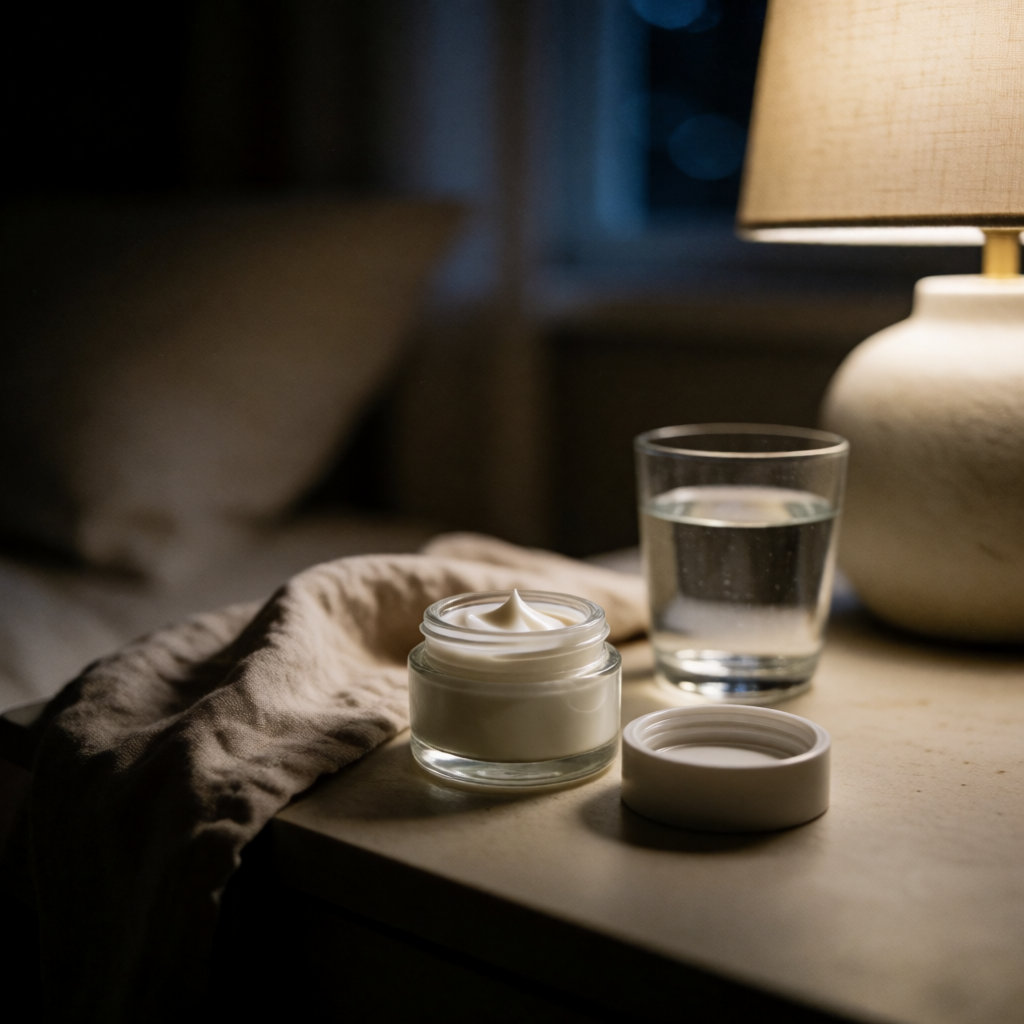
The method hasn't aged a day either: on towel-dried or dry hair, warm a pea-sized amount between your palms and work it through the mid-lengths and ends, avoiding the roots and paying extra attention to damaged ends — then run a wide-tooth comb through before styling.
Why does it work? The cream smooths the surface before drying: it may help tools glide and reduce friction, though it won't guarantee the fibre heats up any less. It's the technique that changes everything before straightening.
In practice? No leave-in product repairs hair that's already split — you need a trim, full stop. Let's not kid ourselves.
The shine mist: a veil, never a soaking
The Brilliant Glossing mist relied on olive oil: emollient, it may coat the hair and limit water loss; it doesn't add water to the fibre. The technique still stands: a few spritzes on dry hair, mid-lengths and ends only, then distribute with your hands or a comb.
It's all about dosage, and that's where plenty of us go wrong. Spray from 30 cm, in fine layers. Too close, too much product: hair drops flat, clumps together and the glossy effect turns greasy. A light veil is enough to bring a bit of life back to dull hair.
For a current equivalent, look for a formula without non-volatile silicones, ideally in a glass bottle. Several French brands make lovely lightweight oils.
Curls: the duo that defines without setting anything in stone
The Luscious Curls conditioner and lotion made up a routine designed for curls: redefining, adding bounce, keeping frizz in check. Ginseng and honey did the job back then, and honestly, as a first curly routine, it was rather clever.
Since then, specialist brands have taken over, and that's a good thing. Les Secrets de Loly, a French brand, formulates products designed for curls and waves, with a genuine full routine behind them: gentle cleansing, conditioning, definition, light hold. Nothing like the simple "two-in-one" we were sold 15 years ago.
The technique matters more than the bottle, anyway: on soaking wet hair, detangle the conditioner with your fingers before rinsing, then apply the lotion to damp hair, pressing the sections upwards to re-form the spiral. Air-dry or use a diffuser — and then leave it alone. That pause is what makes the difference, not the price of the pot.
Mask: the Sunday-night ritual
The conditioner mask remains the basic step, once a week in most routines. Apply it to towel-dried hair, mid-lengths and ends only, and follow the time on the pack, without trying to leave it on longer than needed.
What really makes the difference is the rinse: generous, with lukewarm water. A mask that isn't rinsed properly weighs hair down and dulls it, whatever it costs. No brand will rescue you from that.
On the formula front, look for a certification rather than a slogan. The word "natural" has no regulatory definition in cosmetics — everyone interprets it however they like. A standard such as COSMOS ORGANIC, checked by an independent body, sets a minimum percentage of organic ingredients and a list of permitted ingredients. It's verifiable — and better than a claim invented for the occasion.
The pea-sized test. Before splashing out on a large format, ask for a sample at a beauty counter or a pharmacy. Apply a pea-sized amount to towel-dried hair, dry, and watch. Soft fibre and clean shine? It's right for you. Sticky or taut? The formulation isn't the one, and there's no point forcing it.
The takeaway? Beautiful hair is rarely about one wonder product — it's about careful technique, the right texture and a sensible dose. A pea-sized amount well distributed beats a careless handful, and a refillable bottle is never a bad thing when the chance comes up. So next Sunday, get the mask out, breathe, and let it get to work. It's a modest gesture, the habit does the rest — and honestly, that's usually where it all plays out.
Budget
Prices swing wildly from one channel to the next, even for near-identical formulas — worth knowing before you reach for your card.
- Leave-in treatment: expect around £5–£15 for 100–150 ml in supermarkets or pharmacies, and £20–£35 in department stores or direct from the brand. What moves the price: active-ingredient concentration, format, organic certification, packaging.
- Shine mist or light oil: £8–£22 in pharmacies, up to £30 direct from the brand.
- Mask: £5–£18 in supermarkets, £20–£40 in department stores.
- In the salon: a cut £30–£70 depending on the city, a deep treatment £20–£55, a blow-dry £25–£45.
Refills are usually cheaper than the full bottle, since the first purchase includes the container. Where to find all this: supermarket, pharmacy, department-store beauty hall, salon, brand website. Online, compare the price per litre rather than the label — that way you won't end up paying for the bottle.



Comments
Your opinion matters: rate the article, react and reply to comments.
Comments are moderated; AI-assisted comments are flagged. Text emoticons (8-), :-), <3…) are automatically shown as images.