
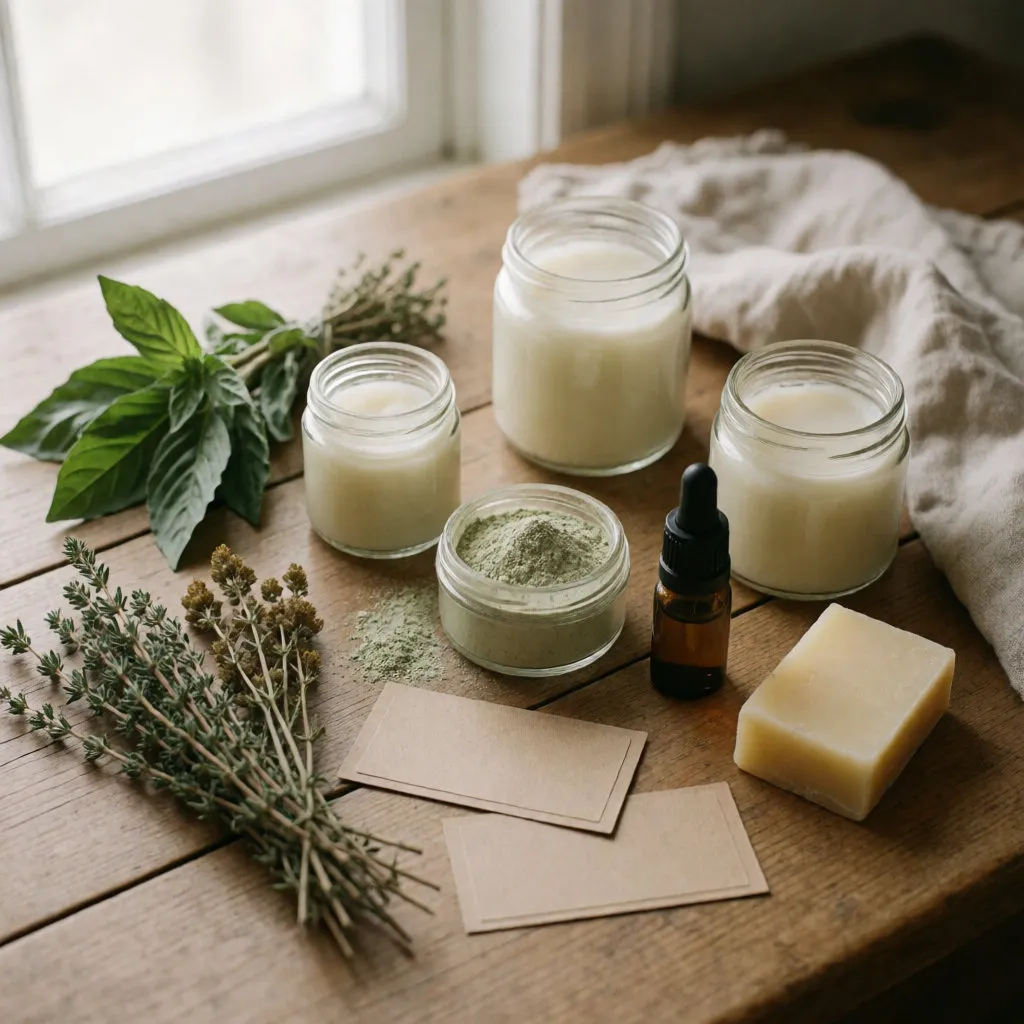
Far be it from us to run down the cosmetics that rescue us on those grim weekday mornings, but we've stumbled on something genuinely cheering: you can make some of these products yourself, and it's far more achievable than you'd think.
Natural cosmetics are having a moment, and it's no secret why. There's a real pleasure in knowing your skin is being looked after by ingredients you've chosen and understand, without a long list of additives — looking after yourself, but knowing what you're doing. And yet, the moment we need a hydrating mask, a hair treatment or even a lip balm, most of us dash to the nearest shopping centre for a tube whose ingredients list, full of deeply obscure names, runs the whole length of the packaging in tiny print.
You might be wondering what the point is when a squeeze of a plastic tube would do the job. We can see four main benefits:
- You choose and understand the ingredients that go into your cosmetics: no artificial fragrance, no synthetic additives, and above all you know exactly what's in the jar.
- Making a beauty product yourself from a handful of natural ingredients often works out cheaper than a branded cream from a shop, where you're paying for the packaging and, above all, for the name.
- Remember the old saying that has more than proved its worth: if you want something done properly, do it yourself.
- The sheer fun of it, of course. We're not suggesting you make every single product you use (though...), or that you give up your favourite day cream — more that you play the apprentice witch and mix up a little potion when a frantic day has kept you from picking up your hair mask. Needs must, eh.
We'll start with a natural mask for a grey, tired-looking complexion. Sleeves rolled up — here's what you need:
- 30 g basil leaves
- 30 g lemon verbena leaves
- 30 g thyme leaves
- 30 g chervil leaves
You'll find these in sachets, usually cheap, at a chemist, a herbalist or a health food shop.
Blitz the leaves until you have a fine powder, then stir in mineral water until you have a smooth paste.
Apply in a thin layer, leave it on, and rinse with clear water once your skin starts to feel slightly tight as the mask dries.
What can you expect? A brighter-looking complexion, we hope, and cheeks with a bit of colour back in them — like after a good walk in the fresh air.
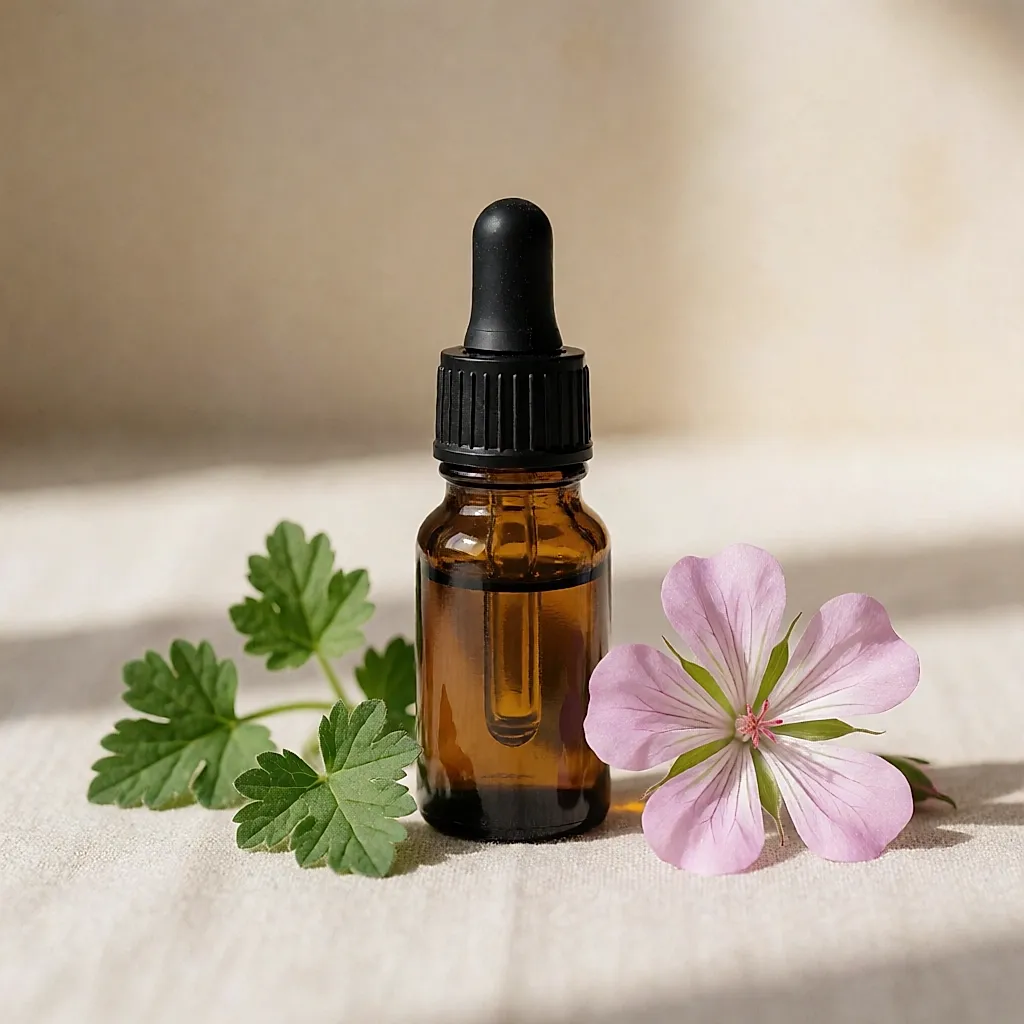
Fancy a deeply nourishing lip balm? It's easy and a pleasure to make. You need:
- one tablespoon of beeswax (the little yellow pellets you can get from a chemist)
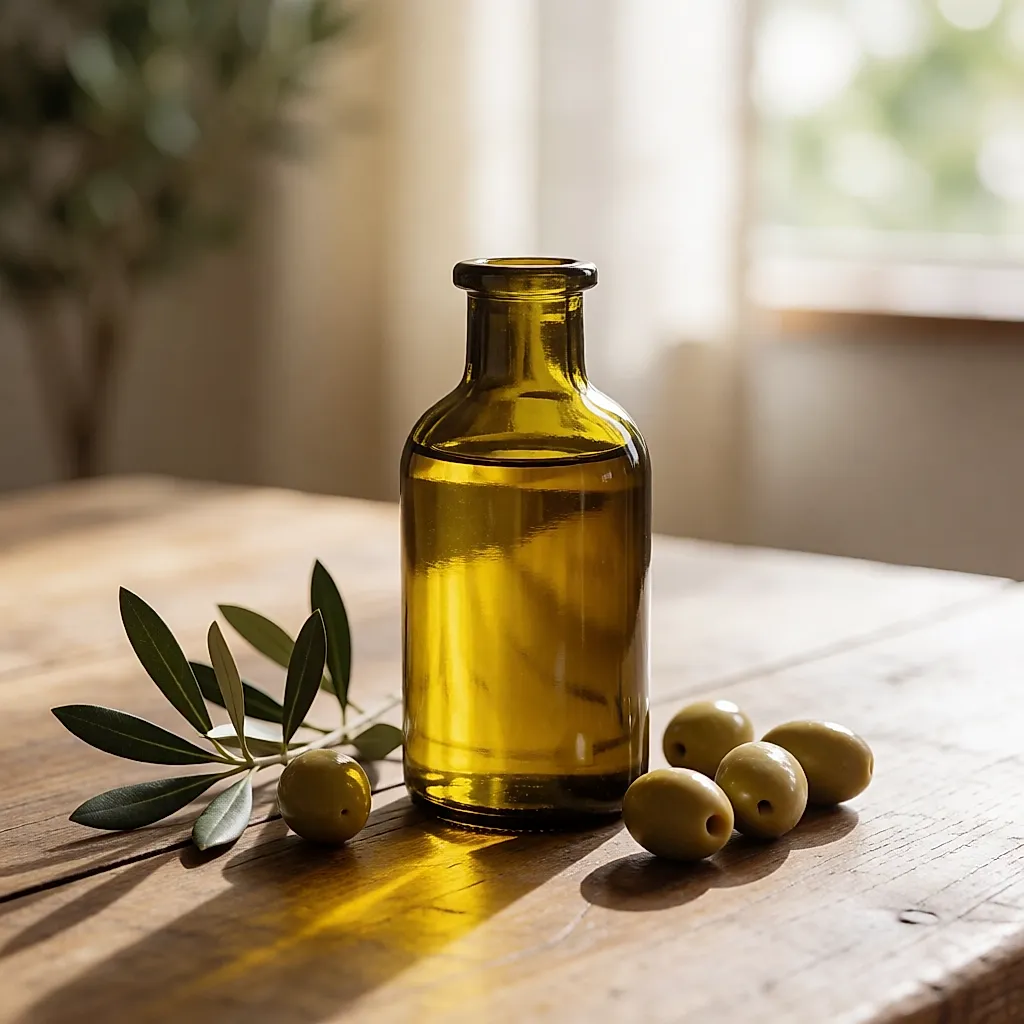
- 20 ml olive oil
In the kitchen, melt the beeswax pellets into the olive oil in a heatproof bowl set over a pan of simmering water. Once melted, take the pan off the heat. Stir gently until the mixture cools.
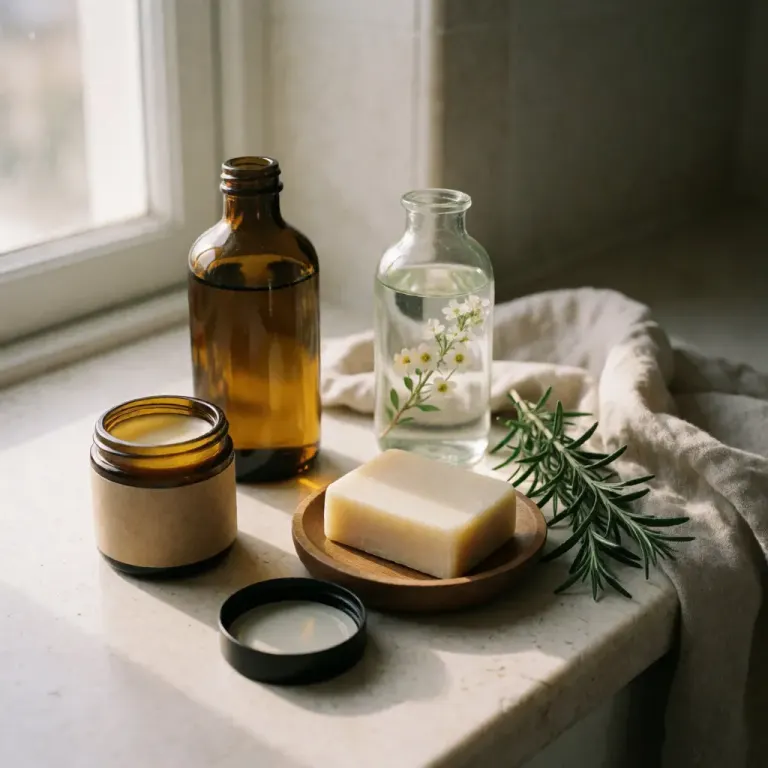
Keep it in a small airtight jar (an old cream jar will do nicely) away from heat. Apply and reapply in a thin layer whenever you like — just don't eat it.
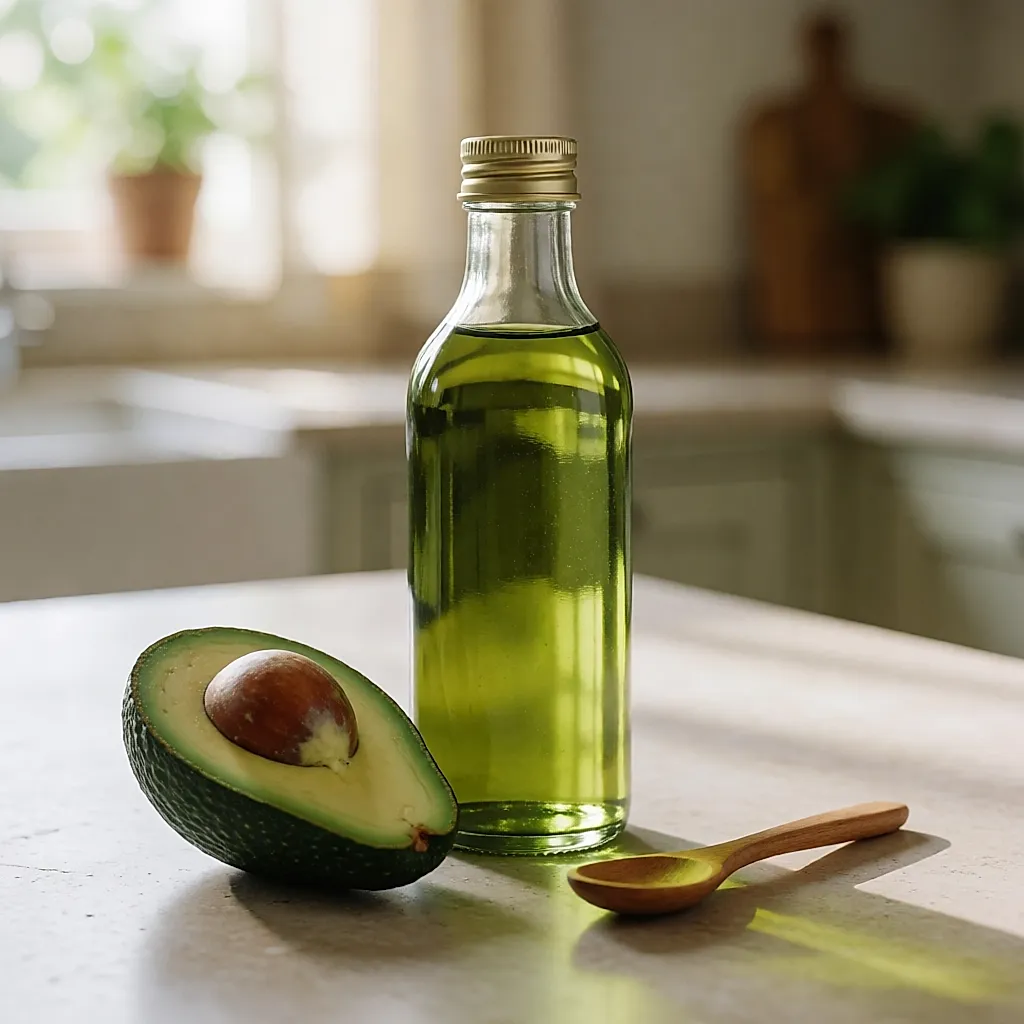
Next, hair: a nourishing mask to make at home.
- 2 heaped tablespoons of shea butter (unrefined if you can)
- 20 ml avocado oil
- 8 drops of rose geranium essential oil, for its delicate floral scent
On to the practical bit: melt the shea butter into the avocado oil, stirring thoroughly. Take it off the heat and add the essential oil, stirring as you go.
Apply the mask while it's still warm, from roots to ends, leave for a good half hour, then shampoo as usual. Repeat once a week if you like; and if your scalp is sensitive or irritated, keep it to the mid-lengths and ends.
For hands dried out by winter, a massage with plant oils is a gentle treat. You need:
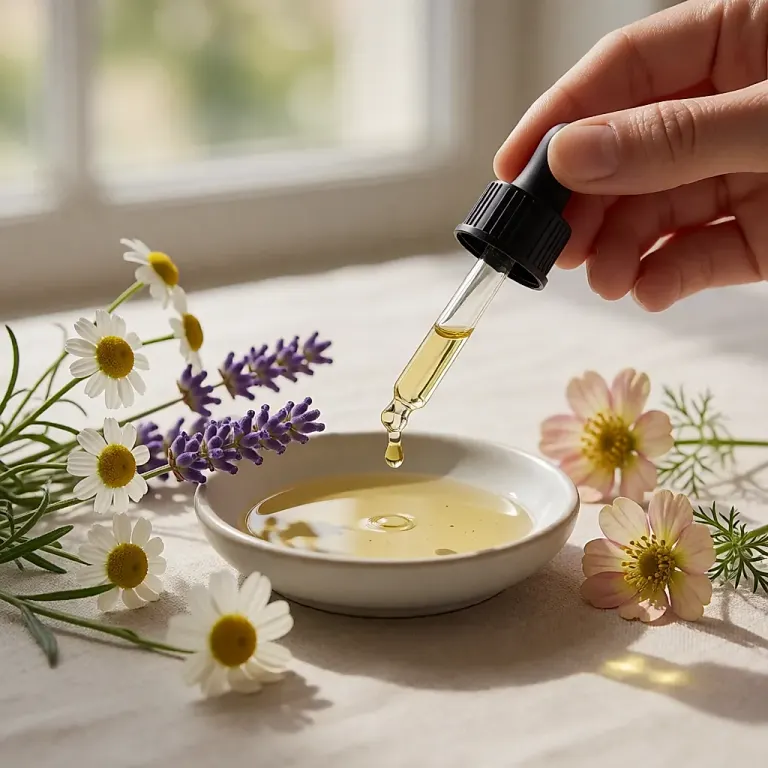
- 50 ml wheatgerm oil
- 15 drops of rose geranium essential oil
Massage it in, morning and evening if you like.
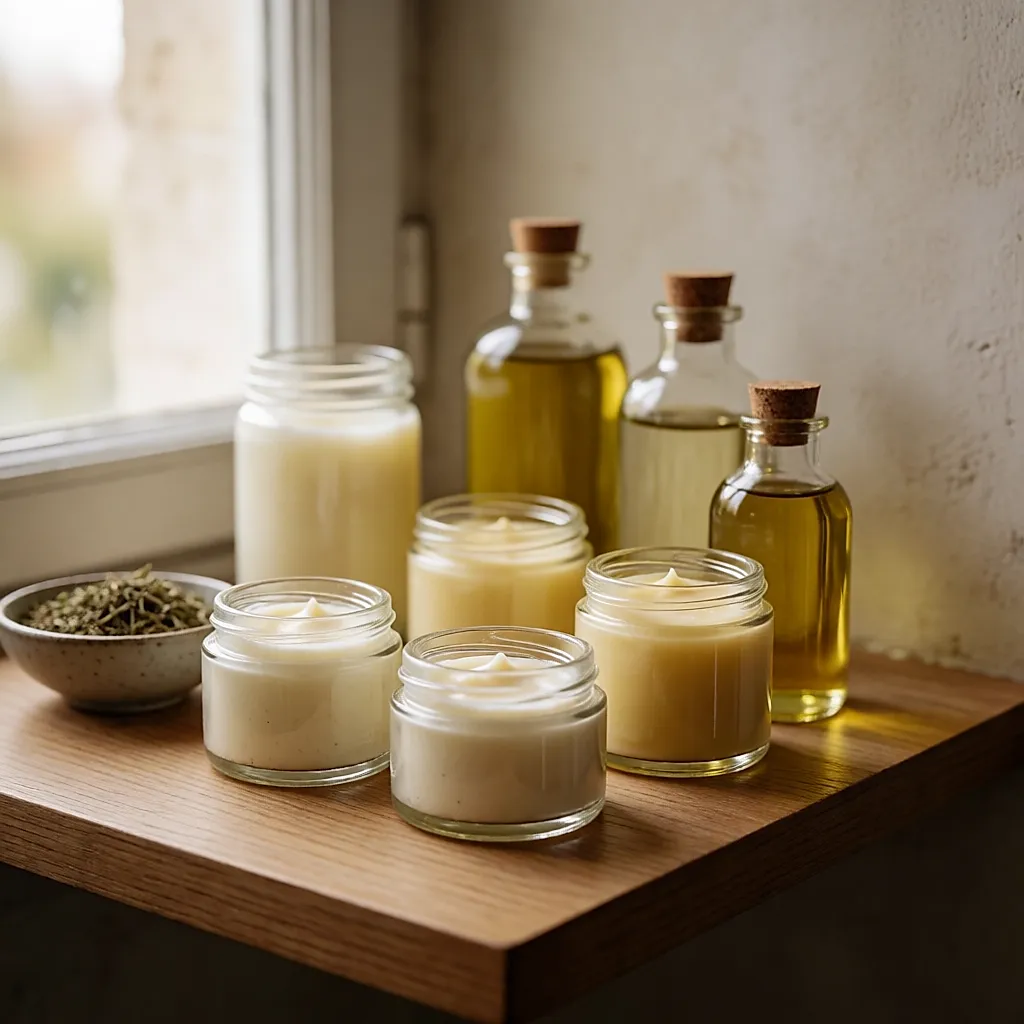
You're now equipped for beauty the natural way — all set to look after your body with ingredients you've chosen and understand. Simple as that.
One thing to know: essential oils may be entirely natural, but they still need handling with care. Do not swallow them. Never apply them neat to the skin: dilute them in a carrier oil or a neutral base, following the proportions given by the manufacturer (usually a few drops per tablespoon of carrier oil, and never more than the recommended amount), and always patch-test in the crook of your elbow before the first use. If you're pregnant or breastfeeding, if you're using them on young children, or if you have asthma, epilepsy, allergies or sensitive skin, ask a healthcare professional before any use. Watch out for citrus oils such as lemon, too: they don't get on with sun exposure. If in doubt, ask a professional. And not every essential oil is used the same way, so follow the instructions and the recommended doses, and stop using it if irritation appears.
Worth a read: Amélie Brochier's Secrets de beauté au naturel (Flammarion) — in French, but worth it if you read French.
The habit that makes the difference: before you blitz, melt or fill a jar, wash your hands, pour boiling water over your bowl, spoon and container, and work on a clean worktop. Without a preservative, preparations that contain water — like the mineral water mask — should be made in small quantities, used straight away and not kept; oil-based preparations, on the other hand (oils, butters and waxes: lip balm, shea hair mask, hand oil), keep for several weeks away from heat. That's what separates a nice little potion from a dodgy one.
What it costs
Making your own cosmetics isn't free to begin with: expect to pay around £5–15 per 100 ml for an organic carrier oil (olive, avocado, sweet almond), £5–10 per 100 g for beeswax pellets, £6–15 per 100 g for raw shea butter, and £4–15 for a small 10 ml bottle of essential oil. Add £2–6 for a glass jar or two with airtight lids, and around £3–8 per 100 g for dried herbs from a herbalist: that lot will last you months, since a recipe only uses a few spoons.
Prices vary with quality (organic or not), pack size, brand and where you buy. You'll find most of it at a chemist, a herbalist, a health food shop or on market stalls; for carrier oils, wholefood co-ops and specialist brands often work out better value in larger sizes.
Comments
Your opinion matters: rate the article, react and reply to comments.
Comments are moderated; AI-assisted comments are flagged. Text emoticons (8-), :-), <3…) are automatically shown as images.