
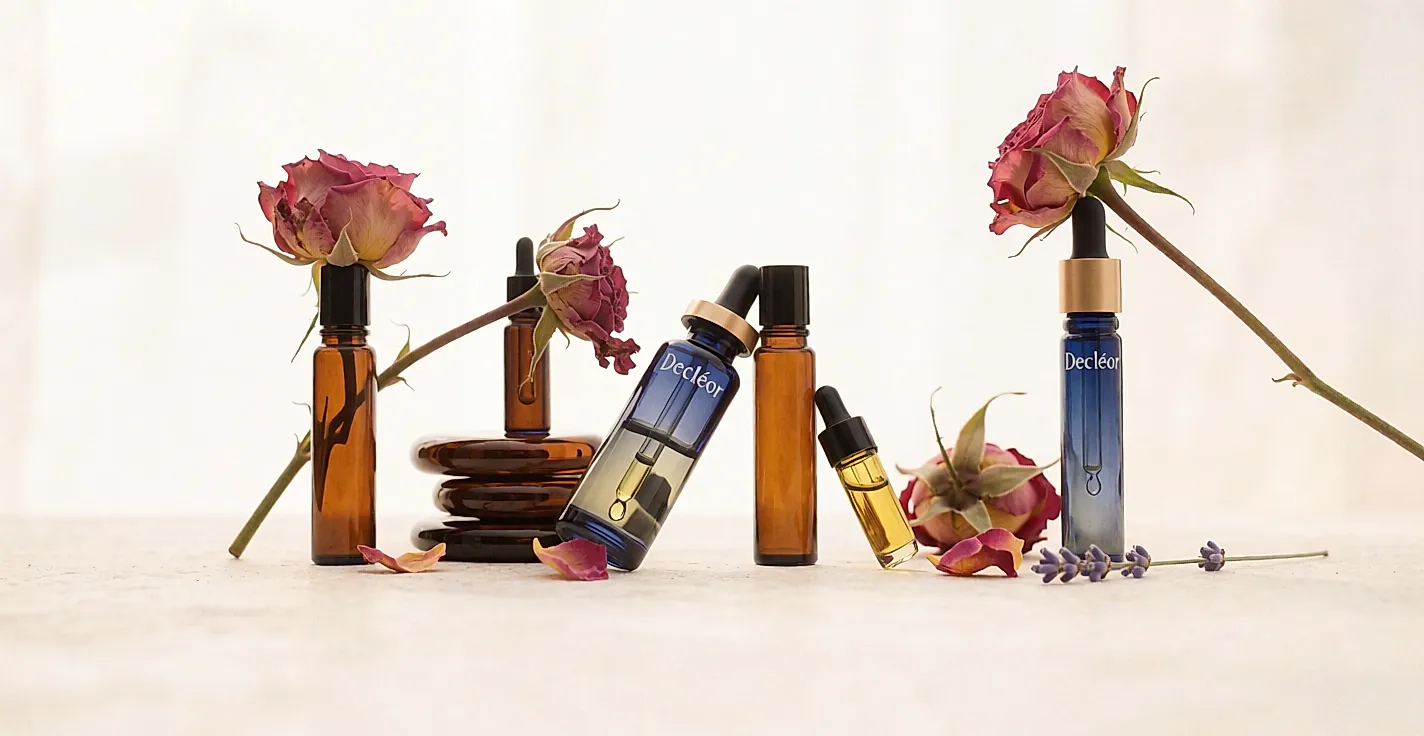
Technique first, product second
Have you ever unscrewed the cap on an essential-oil serum and quietly wondered whether you were about to dab perfume on your face? A friend asked me exactly that the other day, a little blue bottle between her fingers. The short answer is no. But cosmetic aromatherapy isn't something you can improvise: a fragrant essence only becomes an active ingredient once it is dosed, diluted and applied with a precise gesture. That is exactly where Decléor left a lasting mark in our bathrooms.
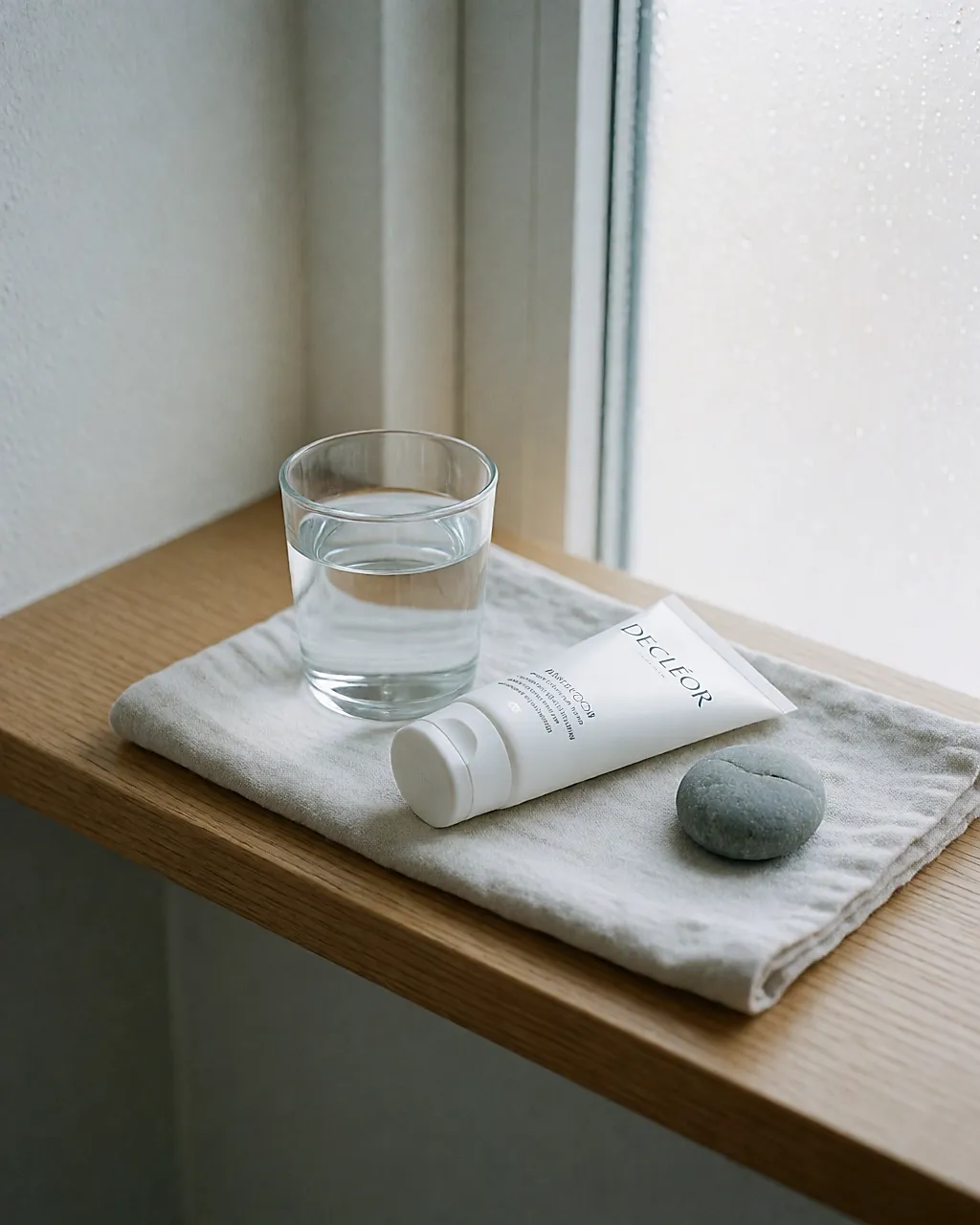
Decléor, aromatherapy out of the chemist's
Founded in 1974 by Solange Dessimoulie, the French house was among the first to bring essential oils into facial skincare, at a time when they were still a matter for pharmacists. The principle came down to a single sentence: a fragrant raw material can also be an active, provided you control concentration and dosage. The brand belonged to the Shiseido group before joining L'Oréal in 2014, and it has since ceased trading, so there is no point chasing new bottles. The method, though, transfers perfectly well.
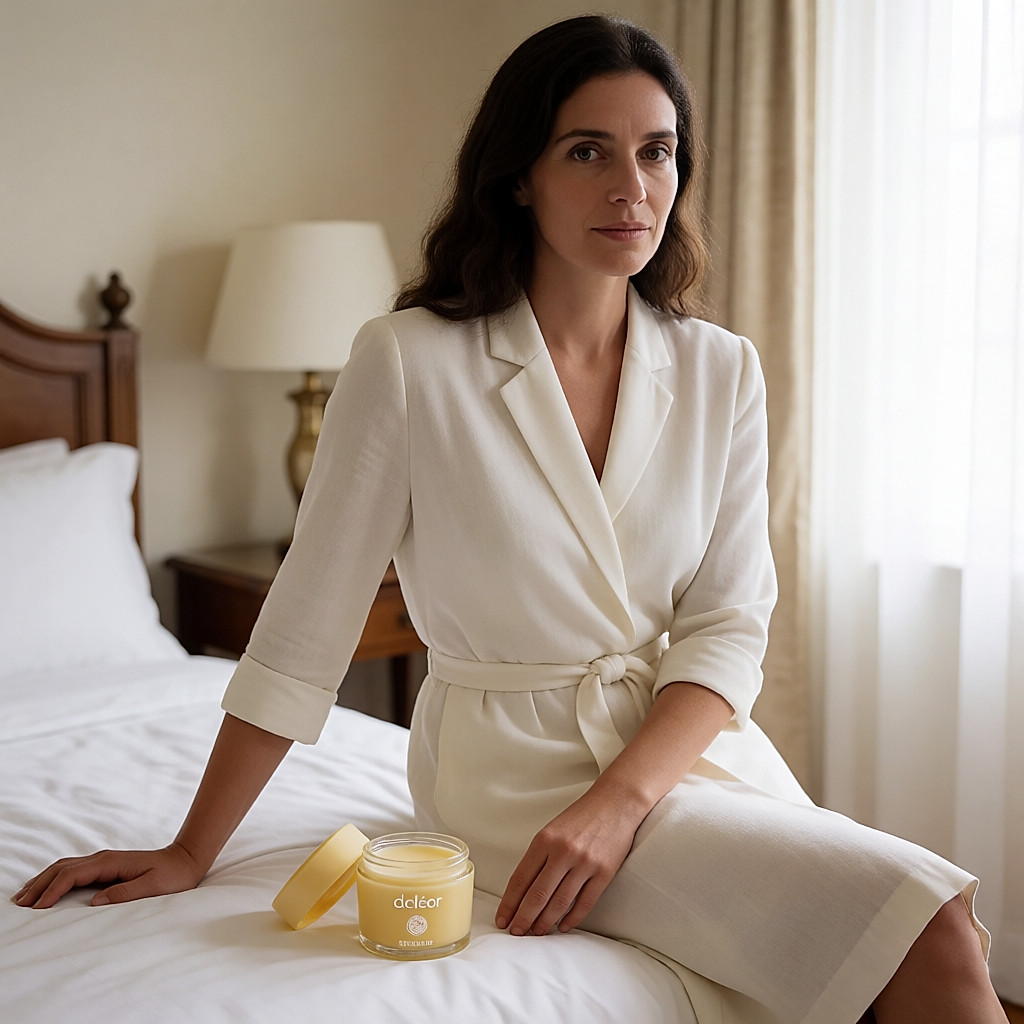
Aromessence: two drops, no more
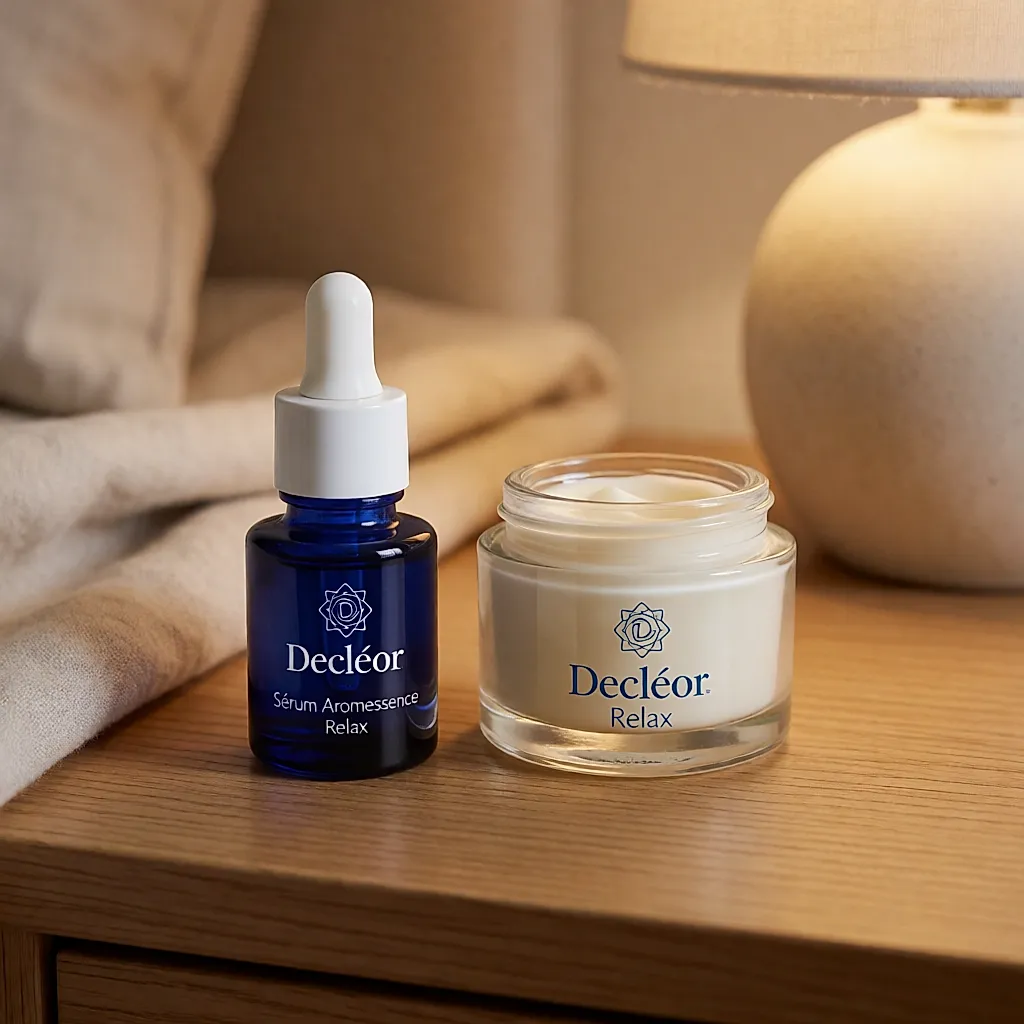
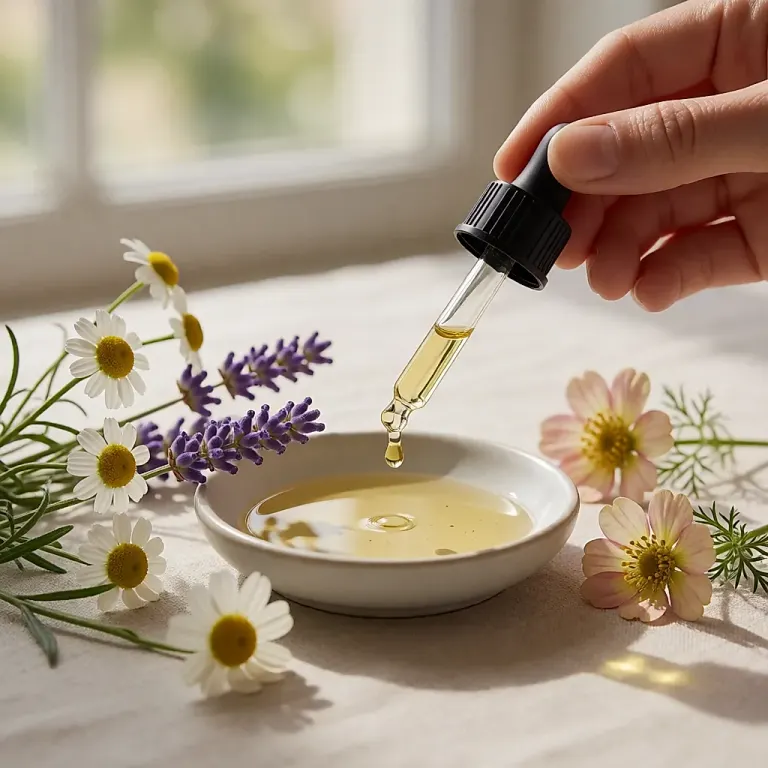
These serums were concentrates of essential oils, with no water phase. Hence the tiny bottle and a dry-oil texture that sinks in fast without a greasy film. The formulation explains the whole method: warm two drops in the palm of your hand, then press onto face and neck with light, sweeping strokes, never rubbing. The heat of your palm thins the oil; your nose does the rest.
Sérum Aromessence Rose d'Orient was calibrated for delicate, reactive skin: Damask rose, Roman chamomile, neroli, petitgrain. Fairly soothing essences, to go on before your moisturiser — a serum prepares the skin, it does not replace it.
Two habits to adopt before trying an essential-oil formula. First, a patch test on the crook of your elbow for 24 to 48 hours: some essences, citrus ones in particular, are photosensitising and can be poorly tolerated by reactive skin. Second, keep the ritual for the evening if you will be out in the sun during the day. And remember that a highly concentrated serum is not meant to go on in a thick layer: past three drops the effect does not change, but the risk of irritation does.
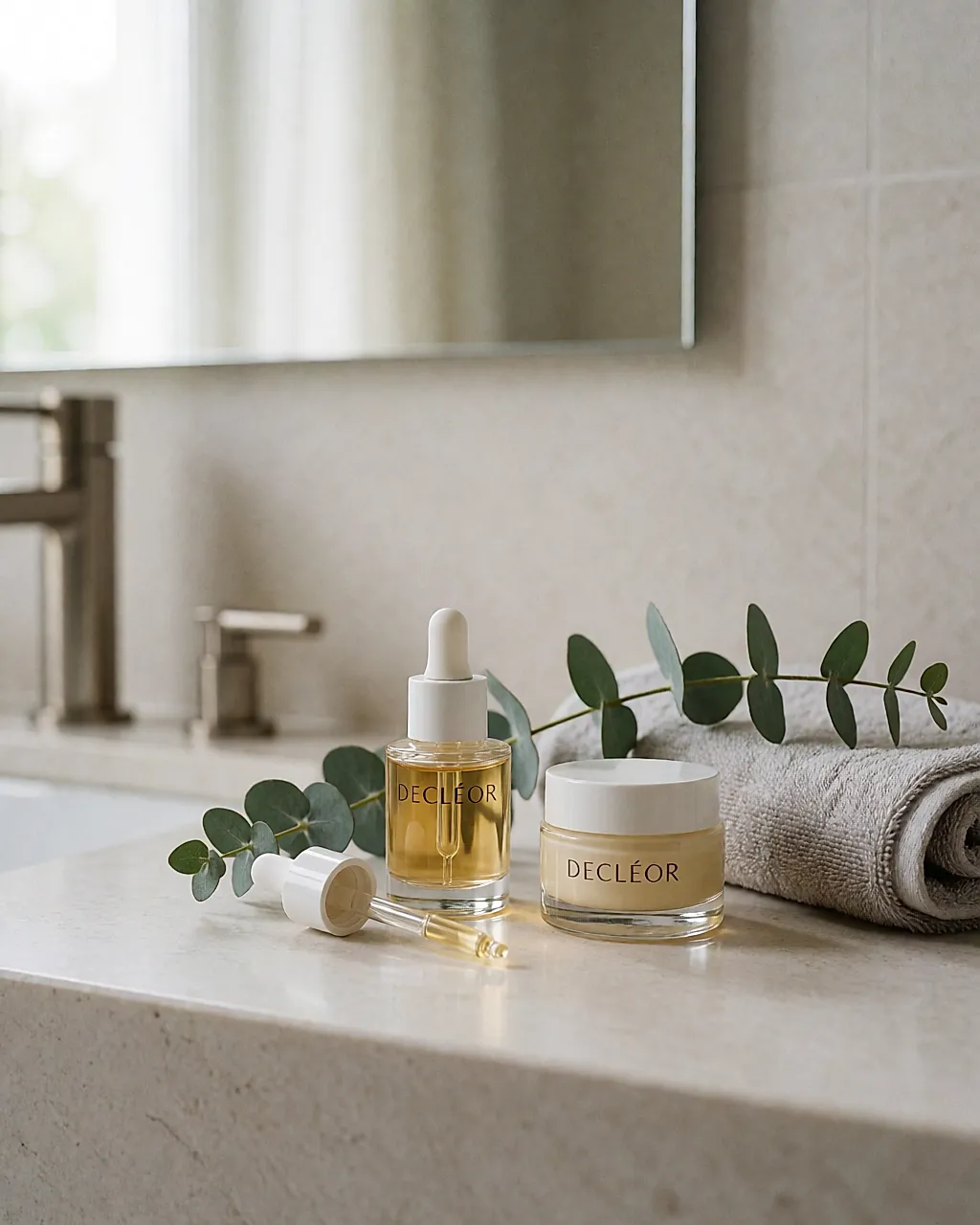
The rest of the routine: balms, creams and masks
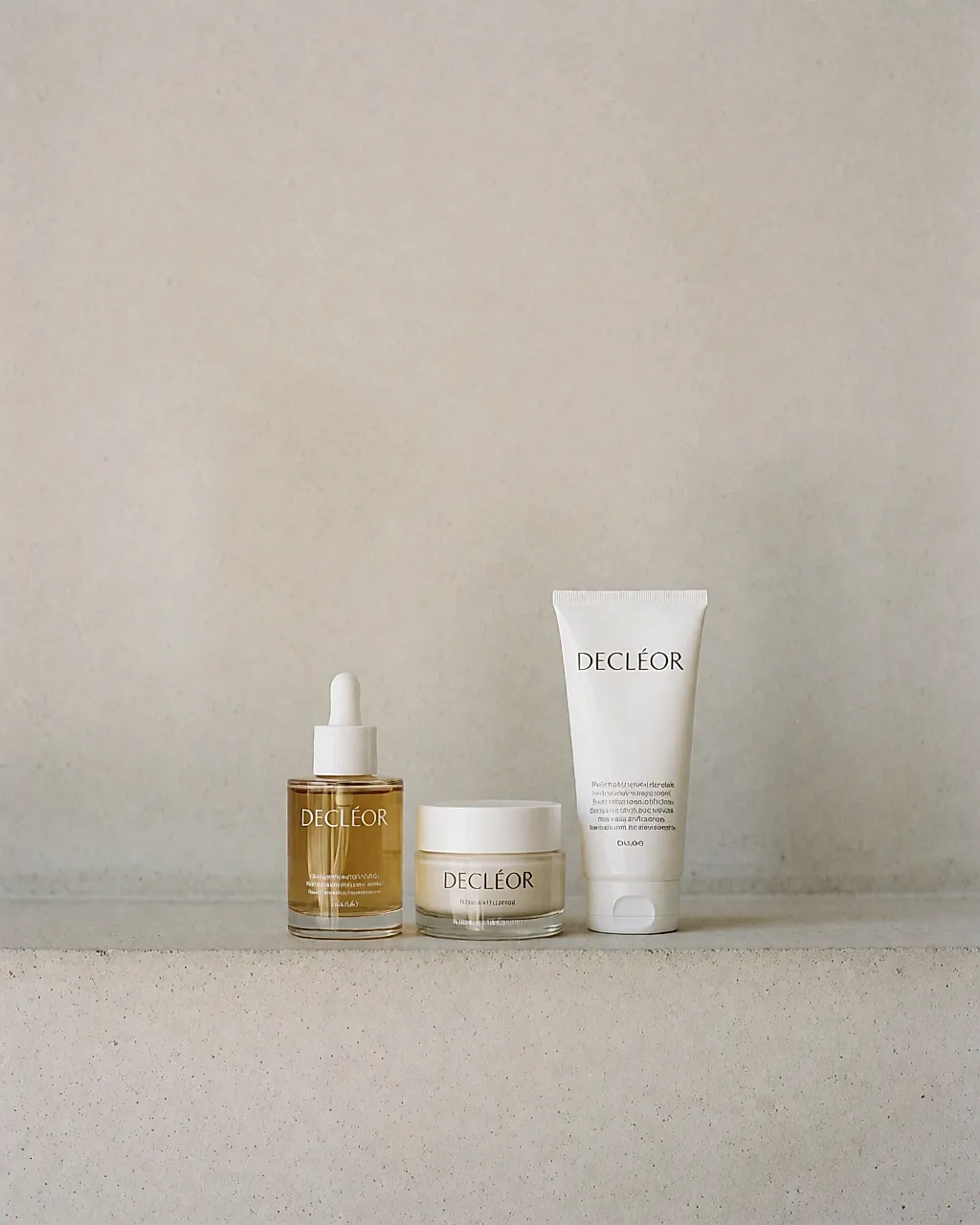
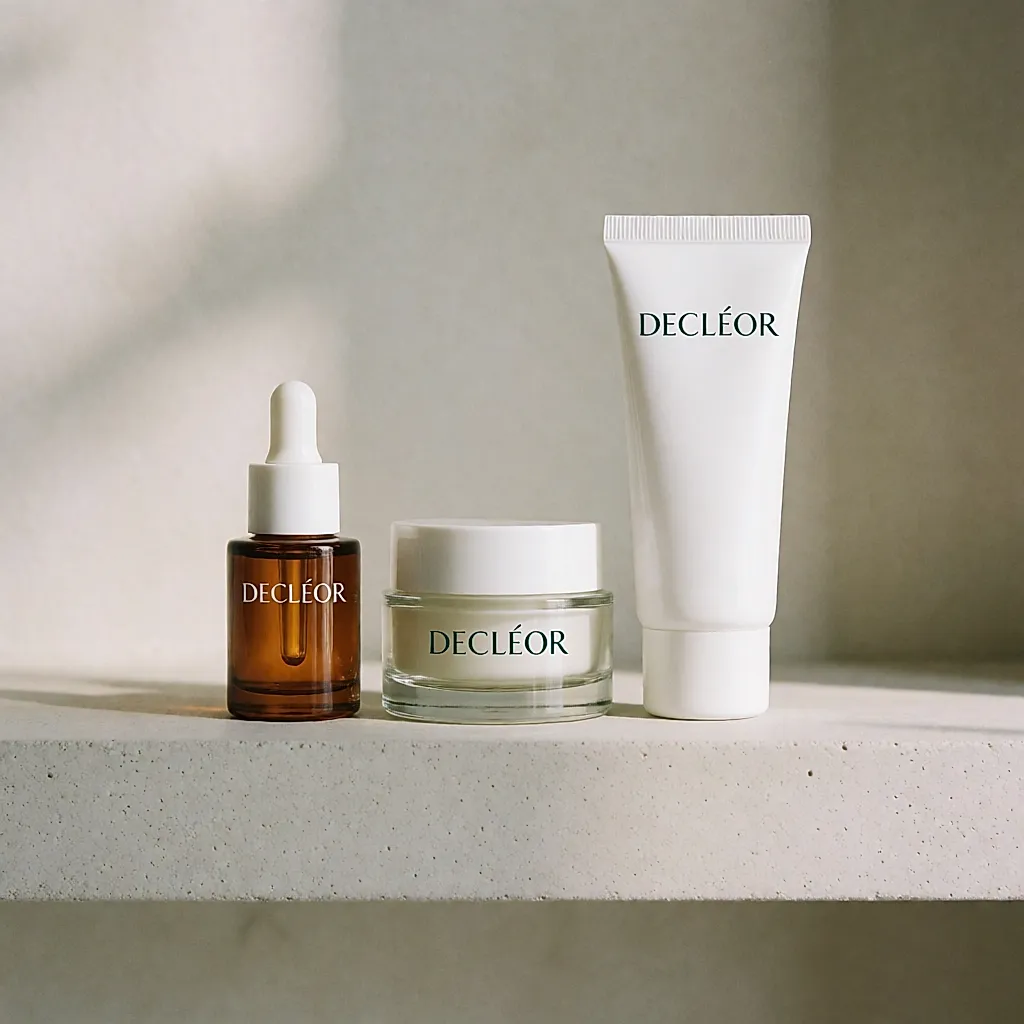
The brand applied the same logic across the whole routine. The Aroma Night balms, with their melting texture, went for cocooning care: Angélique for dry skin, with rosemary, geranium and chamomile, then avocado and borage oils. One point worth revisiting today: red palm oil features in the historic formulas, and the supply chain remains a sensitive subject. If you are looking for an alternative, argan, jojoba or shea with a traced origin are the safer bet.
On the hydration side, the Hydra Floral range relied on mint and orange-blossom floral waters, with an anti-pollution complex, in an emulsion version for combination skin. And for sensitive skin, the Harmonie Calm milky fluid delivered a second-skin effect with no mineral oil and no alcohol — a short ingredient list, which is still a good thing to look for.
What to buy instead
The organic aromatherapy market has filled out a lot since. Melvita, a French brand based in the Ardèche, offers virgin oils and certified organic serums (COSMOS Organic standard, audited by accredited bodies) in glass bottles. Typology, made in France, goes for short formulas and a readable INCI. Aroma-Zone lets you buy essential oils and hydrolats individually, in refillable amber glass. Patyka, finally, for more elaborate formulas.
I did not test any of these for this piece: I am citing them for what they document, namely supply chains, certifications and packaging formats. The compromise, if you want the sensory finish without an organic label: Clarins or Darphin, whose formulas are conventional but whose aromatic heritage stays close.
What it costs
Expect roughly £15 to £30 for a natural face serum from a pharmacy, a health and beauty retailer or a supermarket; £30 to £60 for a certified organic or French-made formula in a beauty hall. Above £60 you are mostly paying for the name and the luxury bottle. A single essential oil sits at around £5 to £15 for 5 to 10 ml, a hydrolat at £8 to £15 for 200 ml. What moves the price: concentration, certification, the container (glass, amber glass, refill) and where you buy it. Online prices are often lower, but check the batch date and the country of origin.
Sources
- Decléor, brand website and archives (1974 history, Aromessence, Hydra Floral and Aroma Night ranges).
- L'Oréal, press release on the acquisition of Carita and Decléor from Shiseido, 2014.
- Regulation (EC) No 1223/2009 on cosmetic products (rules on claims and INCI labelling).
- COSMOS-standard, the certification standard for organic and natural cosmetics, and the accredited certifying bodies (Ecocert, Bureau Veritas).
- DGCCRF, France's consumer and anti-fraud authority: guidance on cosmetic labelling and claims.
Comments
Your opinion matters: rate the article, react and reply to comments.
Comments are moderated; AI-assisted comments are flagged. Text emoticons (8-), :-), <3…) are automatically shown as images.