
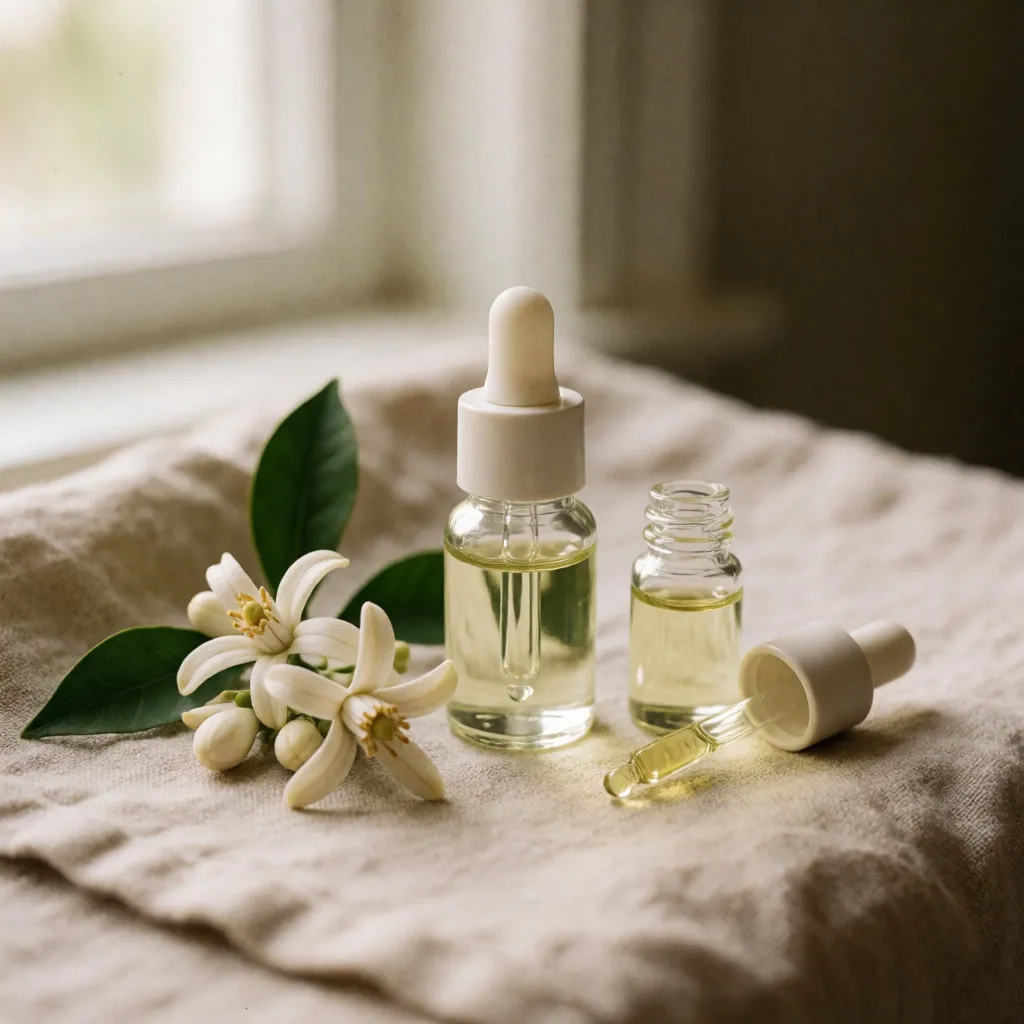
You've probably unscrewed a bottle of essential oil and wondered whether your skin would cope? It's not a silly question, and it's exactly what I asked a beautician the first time someone mentioned facial aromatherapy to me. Decléor has made it its business: the house founded by Solange Dessimoulie in 1974 put essential oil at the heart of its formulas long before ‘clean beauty’ became a shelf pitch.
An essential oil is not a fragrance
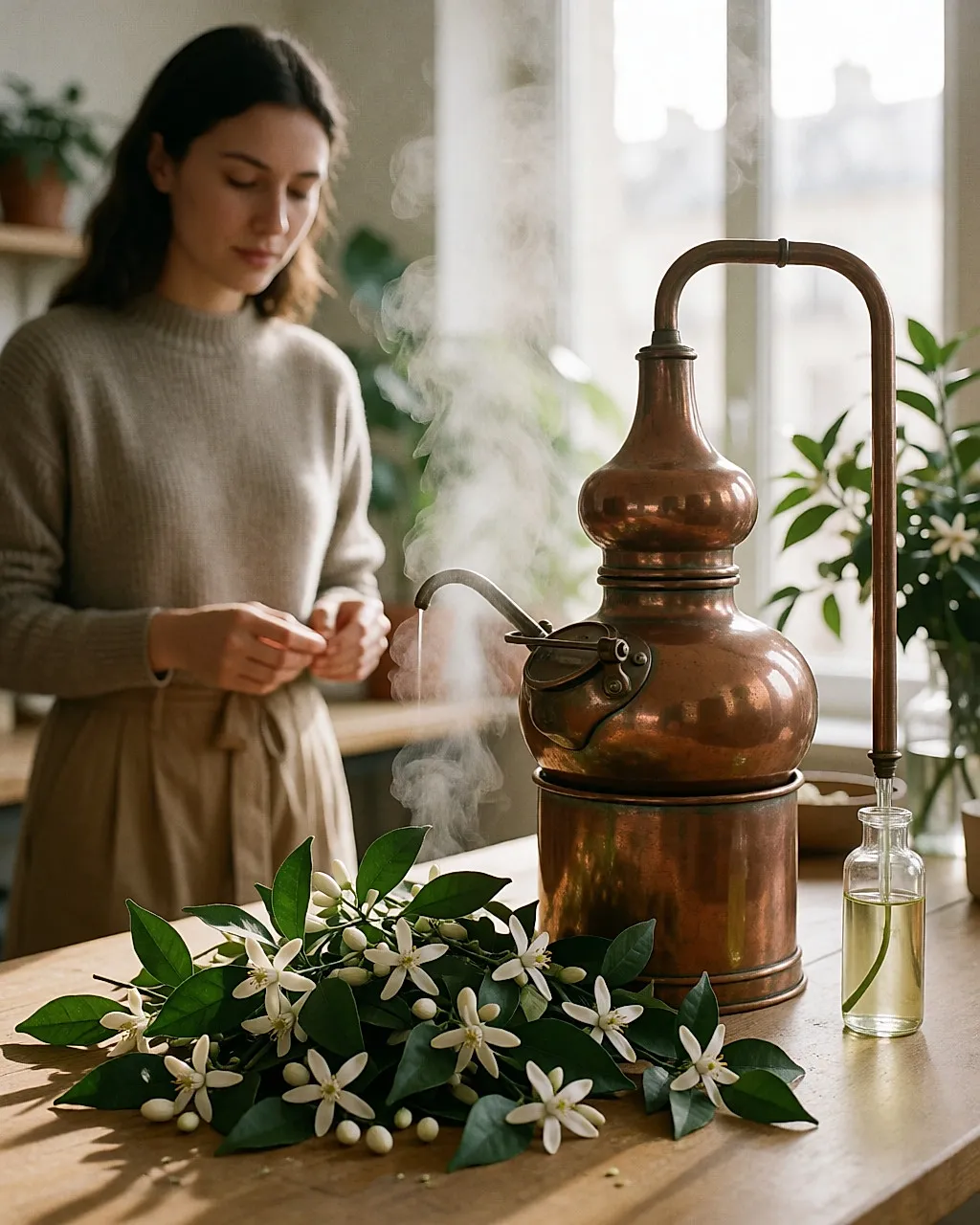
Everything starts with steam distillation. Steam passes through a flower, a leaf, a bark, and comes away with the plant's most concentrated molecules. The yield is sobering: it takes a mountain of bitter orange blossom to collect a few grams of neroli essence. That's why the bottle costs so much, and why dosage is counted in drops, not spoons.
An essential oil is not a fragrance oil. The first is a concentrate of aromatic molecules; the second is a cosmetic composition that smells nice. In the EU, cosmetics law—Regulation (EC) No 1223/2009—covers both, but it does not require the same transparency about botanical origin. In the UK, the UK Cosmetics Regulation does similar work. So read the label closely: Citrus aurantium amara flower oil and ‘parfum’ do not tell the same story.
The aroma-duo ritual, to try at home
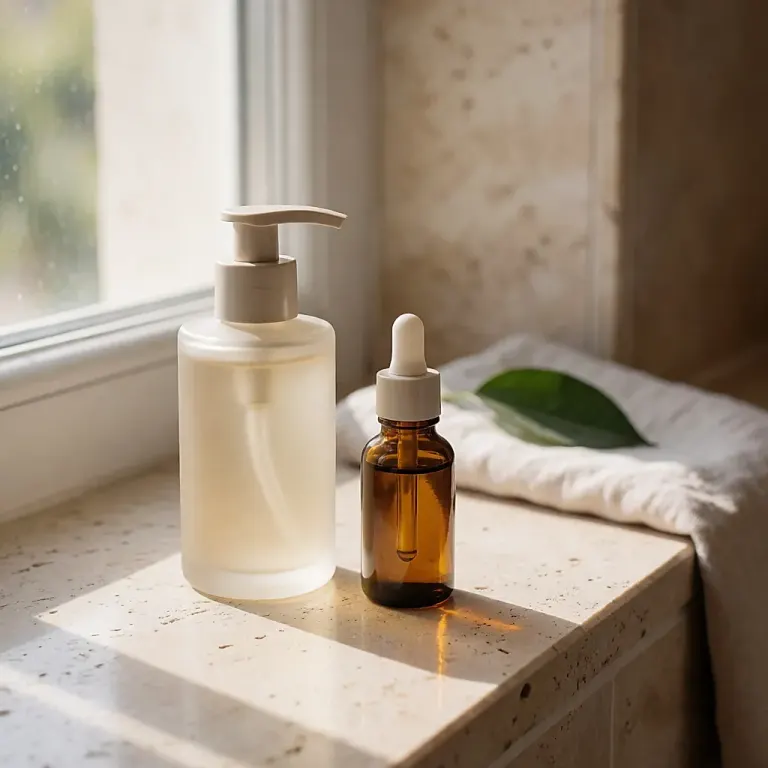
The house's guiding principle is to pair an essential oil with a skincare product. A few drops of a properly diluted essential oil blend, pressed between your fingertips onto clean skin, then your serum or cream over the top. In practice, it changes how the product glides: the oil prepares, the cream nourishes. The gesture that makes the difference is three drops, not a whole bottle. Do not apply neat essential oil to your skin unless a qualified professional has advised it; essential oils are potent and can irritate or sensitise skin.
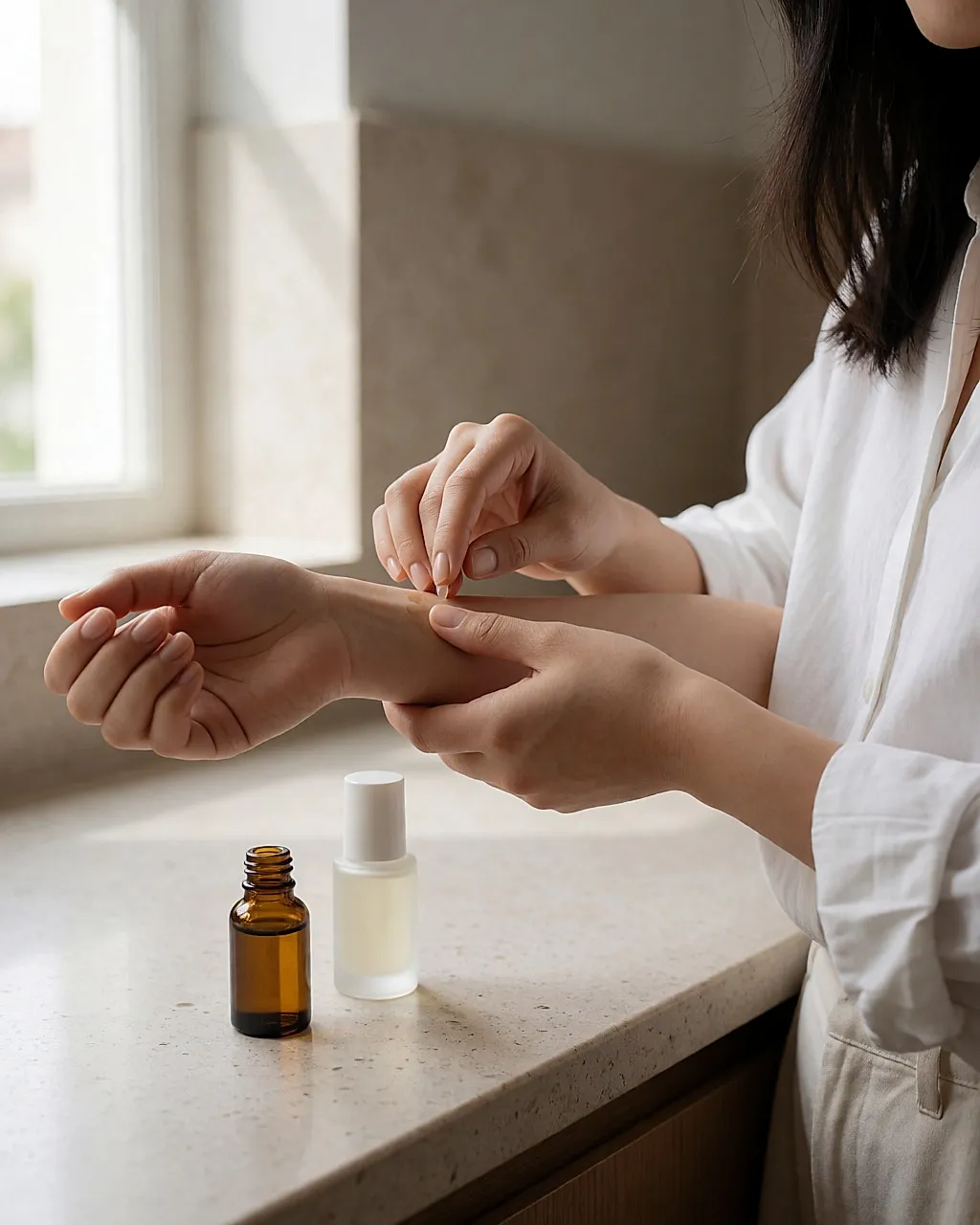
A few pointers before you start. Patch-test on the inner elbow 48 hours beforehand. Avoid citrus oils—bergamot, lemon, orange—before sun exposure: they are photosensitising. If you are pregnant, ask a healthcare professional before using any essential oil. Always dilute essential oils before applying them to skin, unless a qualified aromatherapist or the product instructions tell you otherwise. And essential oils never replace medical treatment.
The night balm, the luxury that checks out
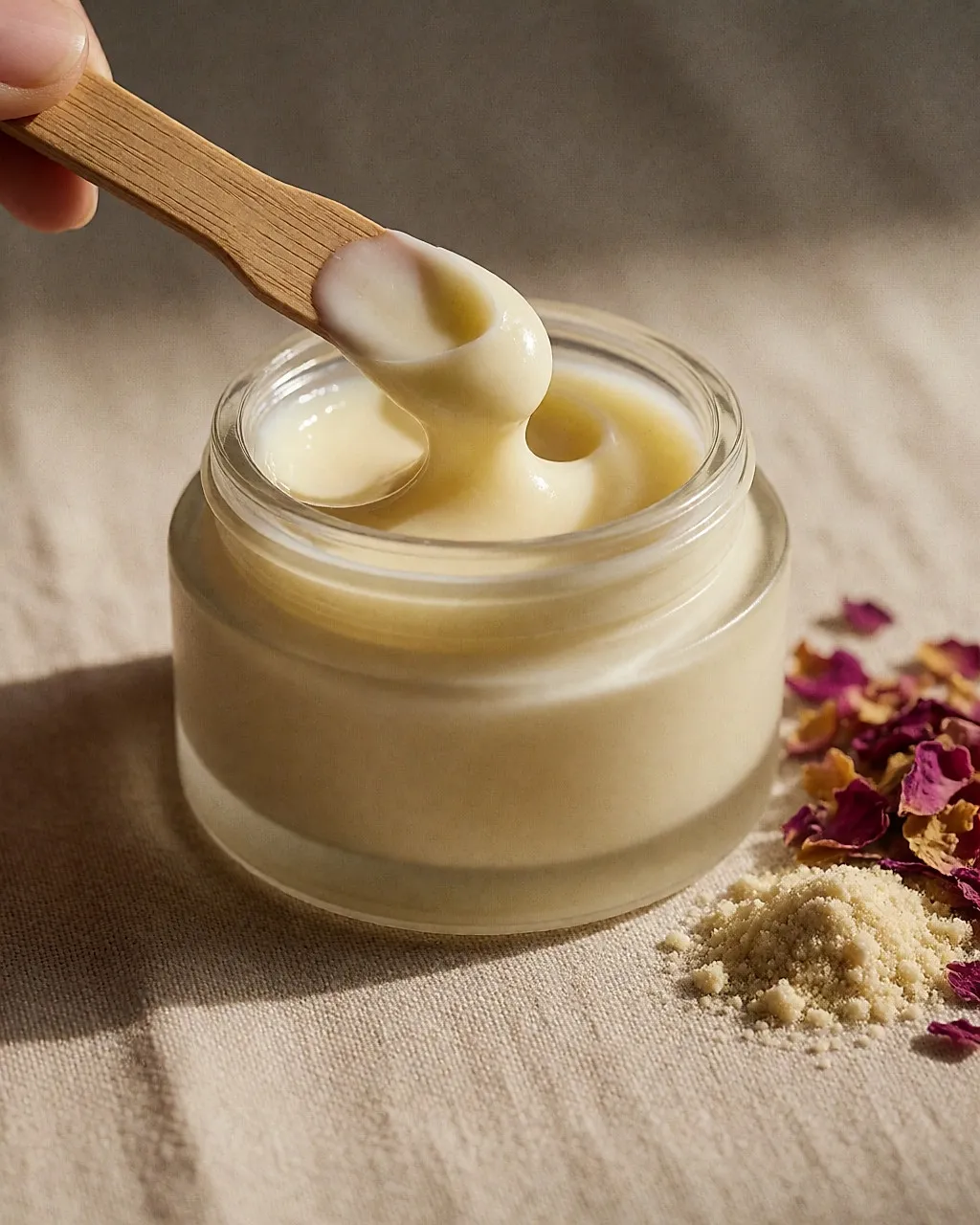
For night, Decléor built its reputation on rich-textured balms—iris, Oriental rose, angelica—designed for skin that feels tight. The formulation is clever: a base of waxes and plant oils that melts on contact, without a heavy occlusive finish.
To find an equivalent today, look for products certified COSMOS ORGANIC or COSMOS NATURAL. This standard, run by Ecocert and its European partners, covers the proportion of naturally derived ingredients, processing methods and packaging. A refillable glass jar, a cardboard carton: these are end-of-life criteria you can verify, not promises. A word of caution, though—an organic label says nothing about how well the essential oils inside will be tolerated.
Budget
Expect to pay around £8–£20 for a 10 ml bottle of pure essential oil from a pharmacy or health-and-beauty retailer, and more in a department store or perfume hall. A facial serum built around essential oils tends to sit between £25 and £70, while a night balm is usually £30–£55. Price follows concentration, the rarity of the plant, the packaging and the distribution channel: supermarkets and pharmacies push prices down, while salons and niche brands push them up. For transparency: I haven't tested the products mentioned here; these are documented price guides, not a hands-on review.
Sources
- UK Cosmetics Regulation — GOV.UK; EU Regulation (EC) No 1223/2009 on cosmetic products — EUR-Lex.
- NHS — aromatherapy and essential oil safety; ANSES — opinions and work on essential oils and their precautions.
- COSMOS-standard — organic and natural certification standard (Ecocert, Cosmébio, BDIH, ICEA, Soil Association).


Comments
Your opinion matters: rate the article, react and reply to comments.
Comments are moderated; AI-assisted comments are flagged. Text emoticons (8-), :-), <3…) are automatically shown as images.