

You take off your make-up, the mirror hands back a slightly dull complexion, and that little brown spot is quietly settling under your right eye. Nothing alarming, but enough to keep the question ticking over in your head. Pollution, smoke, sun: it all works away silently, and that exact observation was what gave rise to the VITALPROTECTION duo by Dauphin — one product for day, one for night.
An honest note before we go any further: I haven’t tested these formulas myself. What follows comes from what we know in cosmetic science, not from my bathroom shelf. And the line as it was isn’t really on shelves today. The thinking behind it, though, still holds. So let’s look at how to rebuild that ritual in 2026, with what’s actually available.
What pollution really does to your skin
The mechanism is well documented — there’s nothing magical about it. Everyday aggressors — fine particles, smoke, UV, and to a lesser extent the blue light from screens — increase oxidative stress in the skin. In plain English: free radicals get the upper hand over the skin’s natural defences.
First effect: collagen and elastin — the stuff that gives the dermis its structure and bounce — break down faster. Fine lines settle in, and the complexion loses its fullness.
Second effect: melanocytes get out of sync. These cells make melanin, but they distribute it unevenly, leaving skin dull with patchy brown spots, often on the cheekbones and upper lip.
Third effect, the one you feel before you see: the skin barrier weakens. Tightness, discomfort, dryness, redness. Your skin reacts more strongly than it used to to products it once tolerated perfectly well.
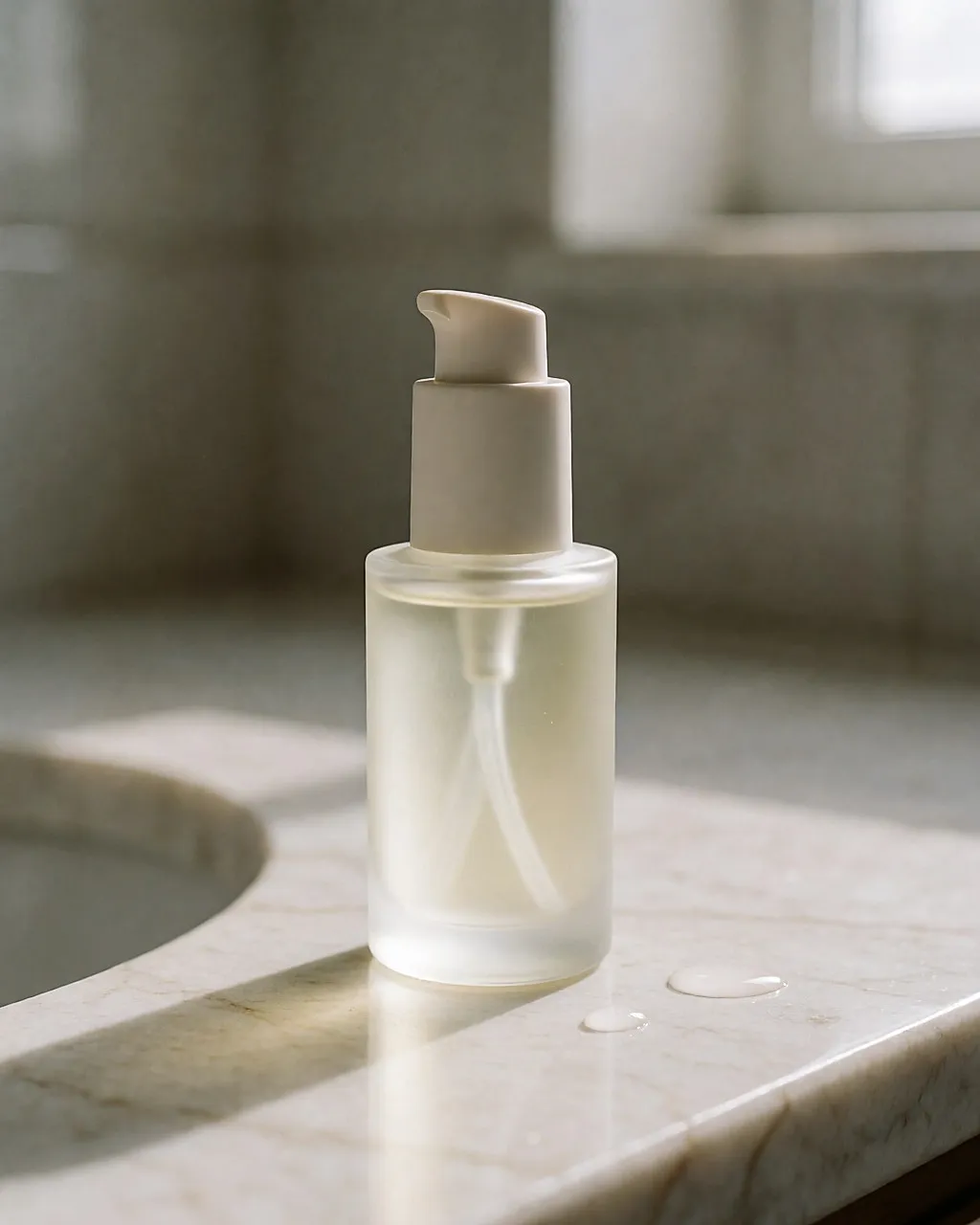
Daytime: broad-spectrum protection, done properly
This is the area that has changed most since the line launched. An SPF15 like the original day fluid no longer cuts it for daily city use. Aim for SPF30 minimum, SPF50 for prolonged exposure, with UVA protection at least one third of the stated SPF.
Mineral filters — titanium dioxide, zinc oxide — remain a good choice: they reflect and absorb rays, tend to be well tolerated by sensitive skin, and today’s textures are a world away from the chalky white cast of the early days.
On the antioxidant side, edelweiss, vitamin E and marine ferments remain classics. They don’t replace UV filters — they help limit residual damage. Important nuance: we’re not talking about total protection.
To keep things on the natural side, look for a fluid certified COSMOS Organic or COSMOS Natural. COSMOS Organic sets rules around the share of organic ingredients; COSMOS Natural focuses on natural origin. Both restrict the UV filters allowed. A glass container or a refill also cuts down on plastic waste — it sounds minor, but on a product you use every day, it adds up.

Night: repair while you sleep
At night, your skin doesn’t need a filter. It needs calm and repair. Look for a fluid texture that isn’t too occlusive, with antioxidants, hyaluronic acid for hydration, olive extract and oligopeptides that support cell renewal.

Again, a certified organic serum in a glass bottle with a refillable pipette ticks the boxes. If the only conventional option you find suits you perfectly, it’s not a disaster: take it, but at least check it’s fragrance-free and free from denatured alcohol if your skin reacts.
The step that changes everything: in the morning, apply your sunscreen last, after serum and moisturiser. Use about two fingers’ worth for face and neck. And don’t forget ears, the back of the neck and hands — that’s where dark spots tend to appear first.
The routine matters more than the bottle
A day/night duo is useless if you rush the application. The smart move: cleanse gently in the evening, apply night care to clean skin, then in the morning apply your protective product in a generous enough layer. Outdoors, reapply every two hours. In reality, nobody does it perfectly — myself included — but even once a day is better than nothing. A regular, imperfect habit beats a theoretical routine you apply once a month.

Budget
Price-wise, in the UK you’re generally looking at around £15–£30 for a mineral SPF50 face fluid from a pharmacy or chemist, and more like £20–£35 for a COSMOS-certified version. A night repair serum usually falls between £20 and £45, depending on the concentration of actives. What pushes the price up: the number of filters, patented actives, the formulation, the size and where you buy it. In supermarkets, online or in beauty halls, prices can vary noticeably for a comparable product. A small format isn’t always a bad buy: it stops you leaving half a bottle at the back of a cupboard.



Comments
Your opinion matters: rate the article, react and reply to comments.
Comments are moderated; AI-assisted comments are flagged. Text emoticons (8-), :-), <3…) are automatically shown as images.