
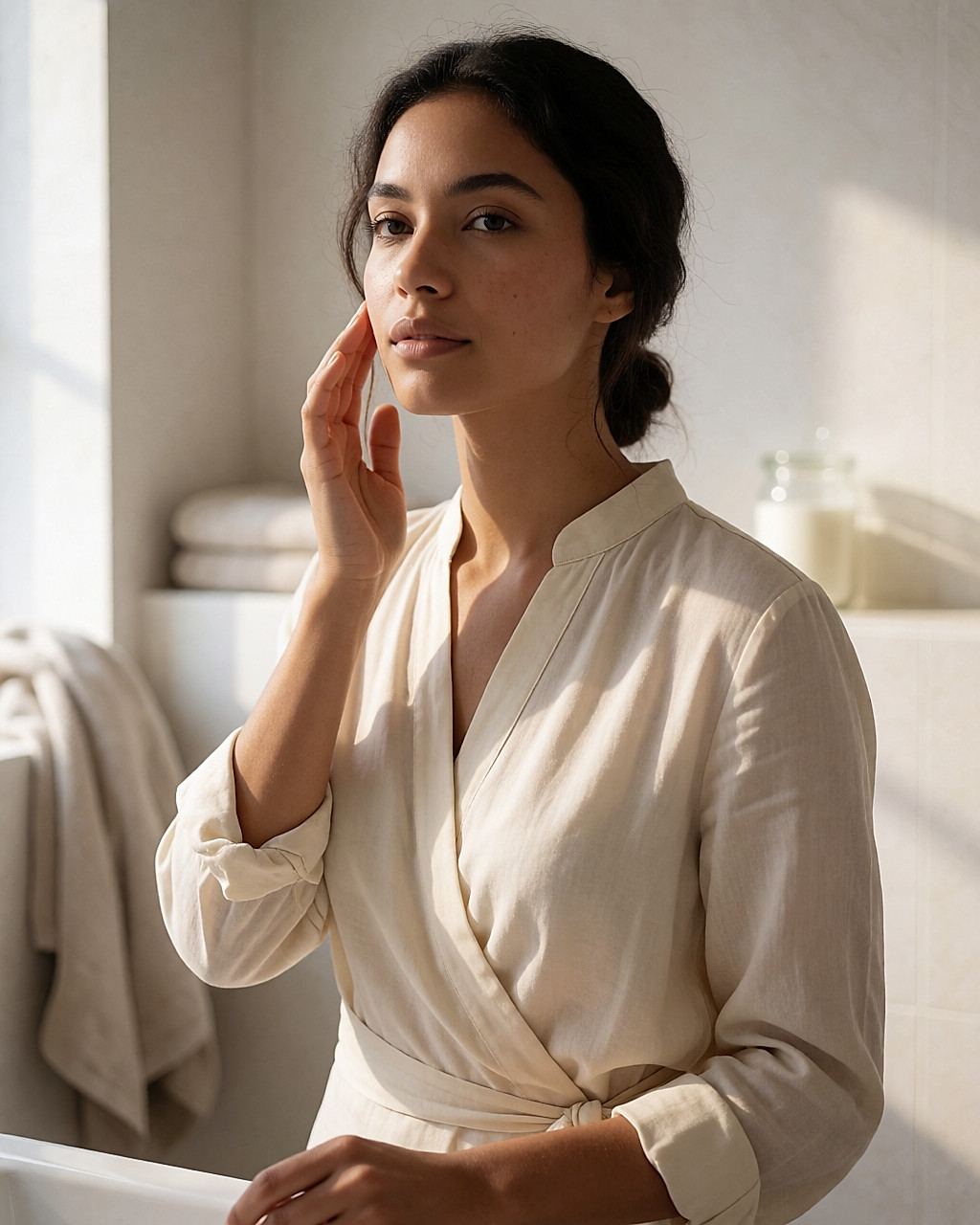
We've all found ourselves in a changing room at some point, tugging at a strap that keeps riding up, wondering if it was us. Spoiler: it wasn't. A lovely décolletage isn't just about lingerie — it's a mix of support, skin, posture and a few habits we repeat without thinking. Shall we take a look?
Support is first and foremost about back size
We think straps hold the bust. In reality, not really. Most of the support comes from the back band, the one that sits under your shoulder blades. If you feel it riding up your back, your band size is too big — and your straps are compensating by pulling. The result: marks on your shoulders and a bust that moves with every step.

A fuller bust will be more comfortable in a cup that properly encloses it, with wide straps and an underwire that contains. A smaller bust can wear a triangle or bandeau. Nothing to do with modesty: it's simply about adapting to what you have.
The advice I'd give you: get measured in a shop. Fitters are trained for it, and the right size changes everything. You can also measure yourself at home, underband then full bust, and try the sister size — 32C and 34B often support the same bust.
For sport, it's a different story. A standard bra isn't enough for running. There are three levels of support — light, moderate, high — to choose according to impact. Yoga is fine with light support; running needs high. It's less glamorous than lace, but your skin will thank you.
The everyday habits that compress without you noticing
Some very simple habits damage the delicate skin of the bust, the skin that really does the supporting, because there is almost no muscle in the breast.
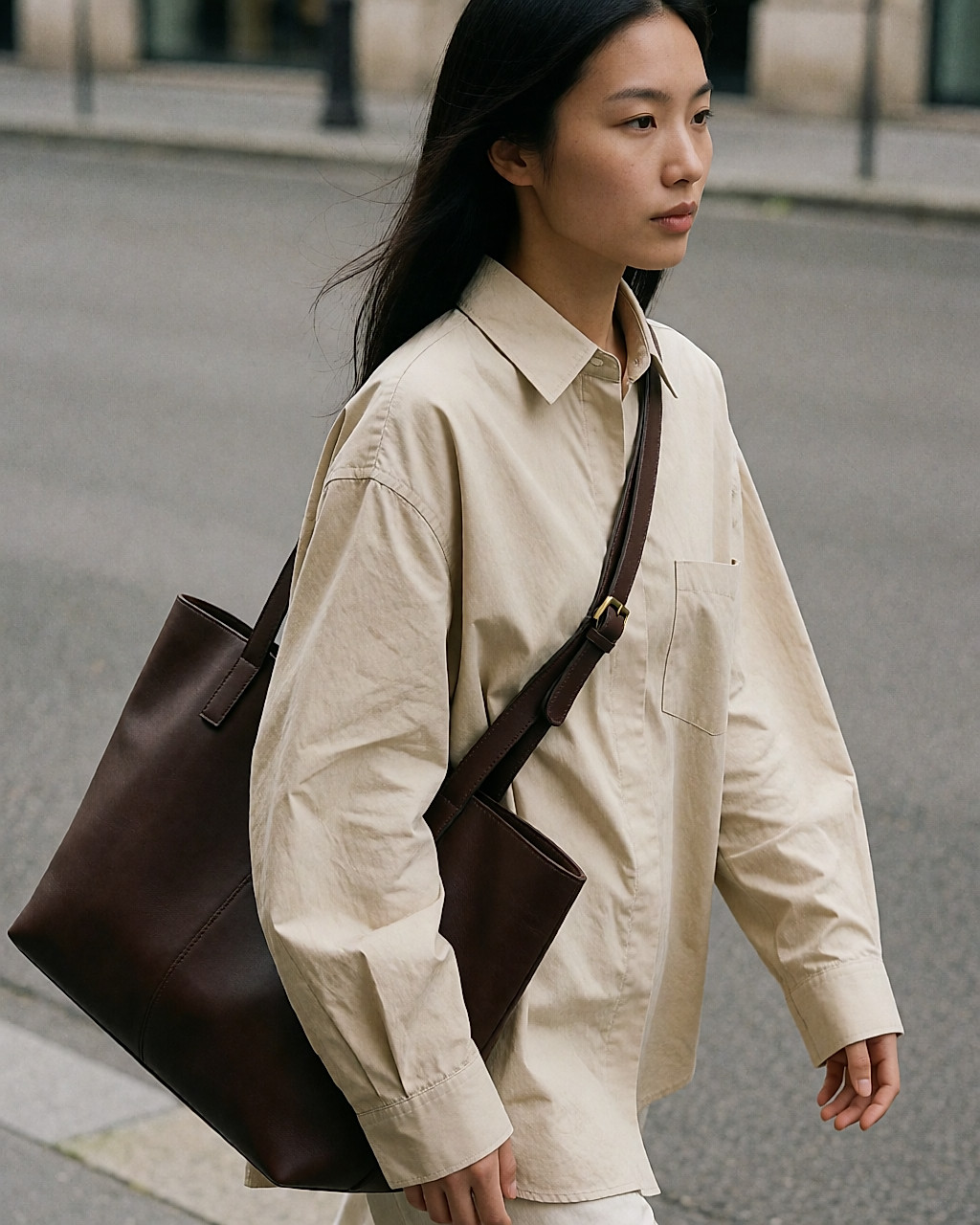
- A bra that's too small, cutting in and leaving marks.
- Carrying a heavy load against you, squashing your bust.
- Sleeping on your stomach every night.
- Doing high-impact sports one after another without a suitable sports bra.
The move that changes everything: slide two fingers under the back band. If your whole hand fits, it's too big — and all the support goes with it.
Décolletage skin needs a ritual
It's a delicate area, often forgotten because it's already there, right in front of us. It dehydrates quickly, marks easily, and likes being looked after with a proper routine rather than three products piled on top of each other.
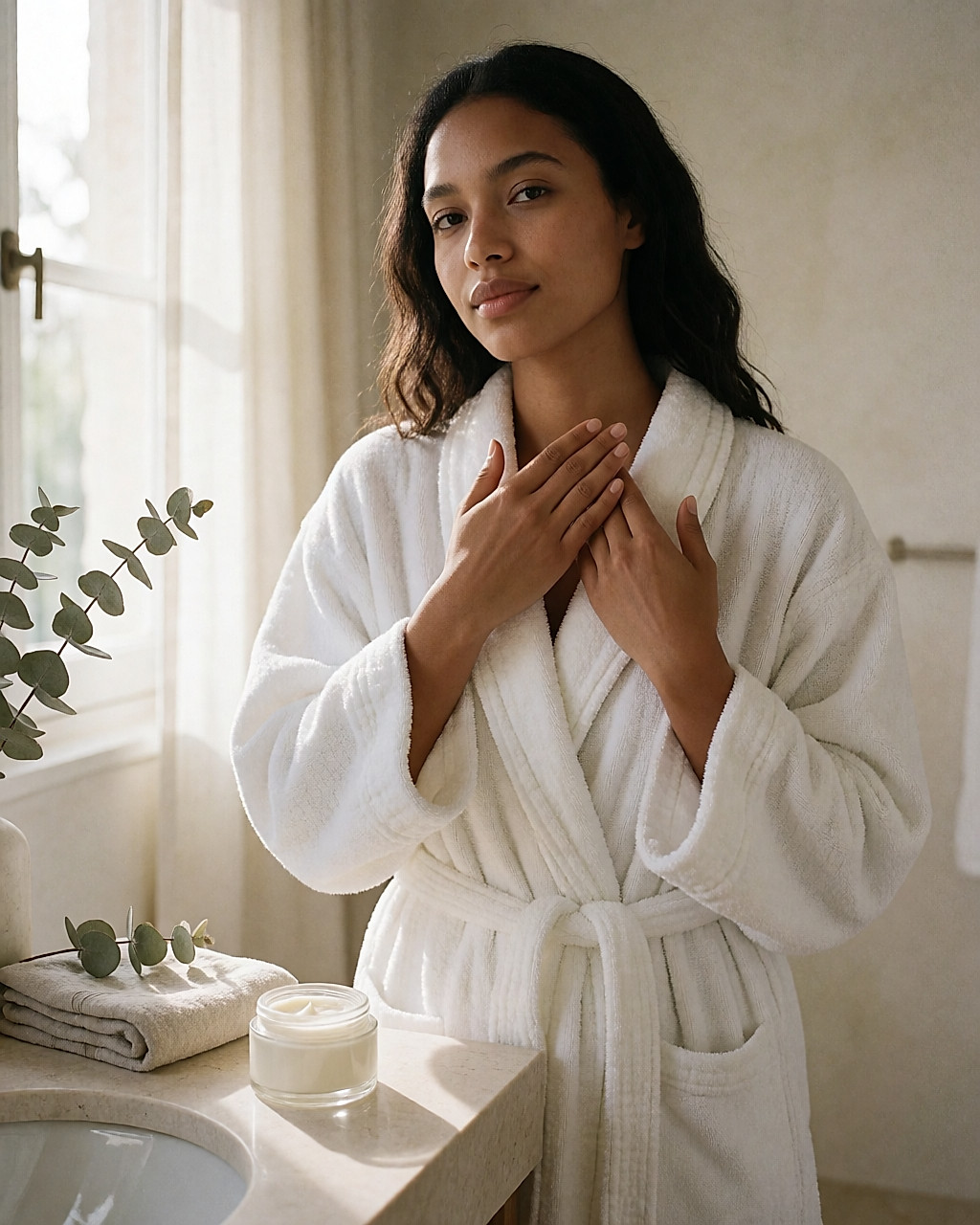
The ritual is simple: after a shower, while skin is still damp, apply your body moisturiser, sweeping upwards from bust to neck, not forgetting the sides. A light circular massage is enough; there's no need to pull or rub. In winter, a rich texture lasts longer; in summer, a lightweight fluid sinks in faster — when it comes to formulas, it's all about the season and your skin.
And sun protection — let's talk about it. The décolletage is one of the most exposed and least protected areas: we cover our face, we forget our bust. Yet that's where the sun leaves dark spots and damages collagen. When exposed, use SPF 50, reapplied every two hours. Not just at the beach: on a café terrace, in the car, on a walk!
Heat, cold, weight: what affects firmness
Long periods of heat — hot baths, repeated sauna sessions — are not friends to this delicate skin. Conversely, a cool blast of water at the end of a shower may bring a feeling of freshness and tone. Nothing miraculous, but pleasant.
Weight matters too. When you gain several kilos quickly, your bust grows and the skin stretches. When you lose them just as quickly, it doesn't always regain its elasticity. Not a reason to stay still, just to avoid sudden ups and downs.
A straight back, a little muscle, and everything holds better
A bust isn't supported by muscle, but by skin and tissue. However, the muscles of the back, shoulders and chest contribute to your posture — and good posture changes your silhouette. Swimming is a gentle activity for working on all of that: two sessions a week is already a good routine to move without forcing things.
Budget
For lingerie, expect £20–£40 for a basic bra from a high-street chain, and £45–£90 in a specialist boutique — where fitting is often free. A supportive sports bra costs between £25 and £60, depending on impact level and brand.
For skin: a body moisturiser costs between £5 and £20, an SPF 50 sunscreen between £10 and £25 depending on size. You can find all of it in supermarkets, pharmacies, beauty retailers or online. What changes the price: the size, whether there's a certification, and where you buy it.
If you're looking for a more low-key option on ingredients: GOTS-certified fabric guarantees a proportion of organic fibres and controlled processing criteria. For sun protection, mineral filters are often chosen for reactive skin, but can leave a white cast — a trade-off worth knowing depending on your skin tone.
Sources
- NHS, sun safety — nhs.uk
- Cancer Research UK, UV protection — cancerresearchuk.org
- Global Organic Textile Standard (GOTS), label criteria — global-standard.org



Comments
Your opinion matters: rate the article, react and reply to comments.
Comments are moderated; AI-assisted comments are flagged. Text emoticons (8-), :-), <3…) are automatically shown as images.