
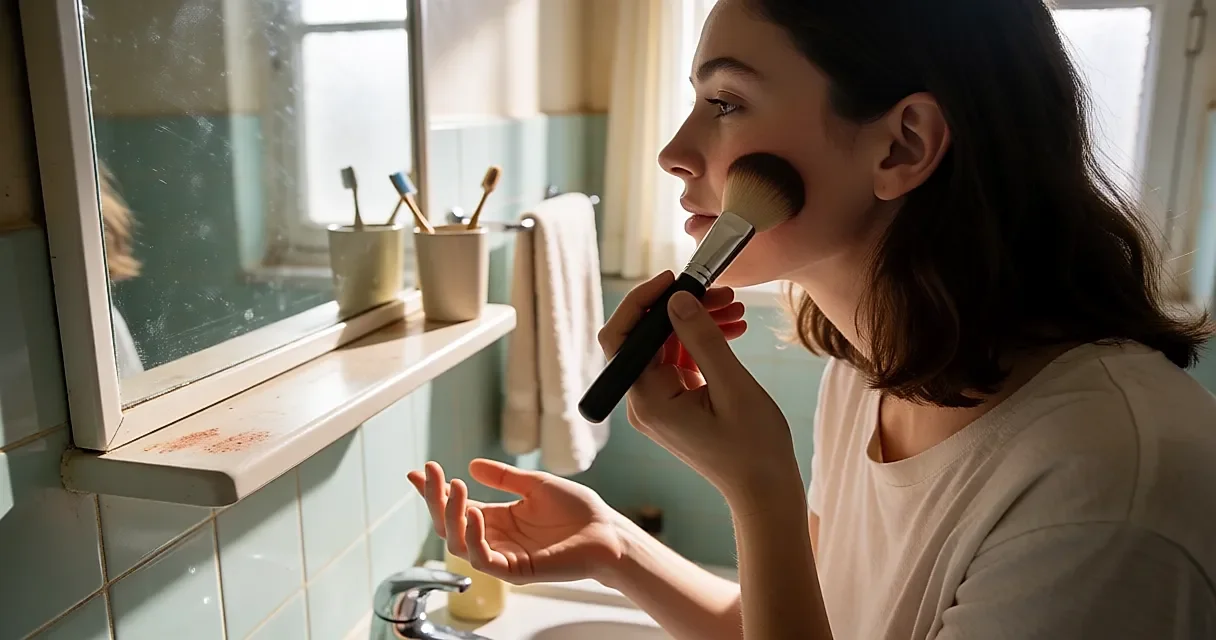
There's the blush you apply with your fingers in three seconds, and the one you lay down with a brush in thirty. For years the first method won hands down — the second smacked of a make-up lesson from an aunt. Then matte powder came back to the front of the shelf, diva manners and all: it doesn't like being spread, it likes being placed. Good news: the technique is easier than it looks, and barely longer than a cup of tea brewing.
Matte, the comeback nobody saw coming
For years, anything shiny had right of way: lit-up complexions, pearly cheeks, cream textures that melt into the skin. Powder blush was filed under "noughties finish". But beauty cycles spin faster than a carousel, and matte has become a choice again — not a regret. You see it on clean, almost velvety skin, where the colour melts in without leaving a border. So why the comeback?
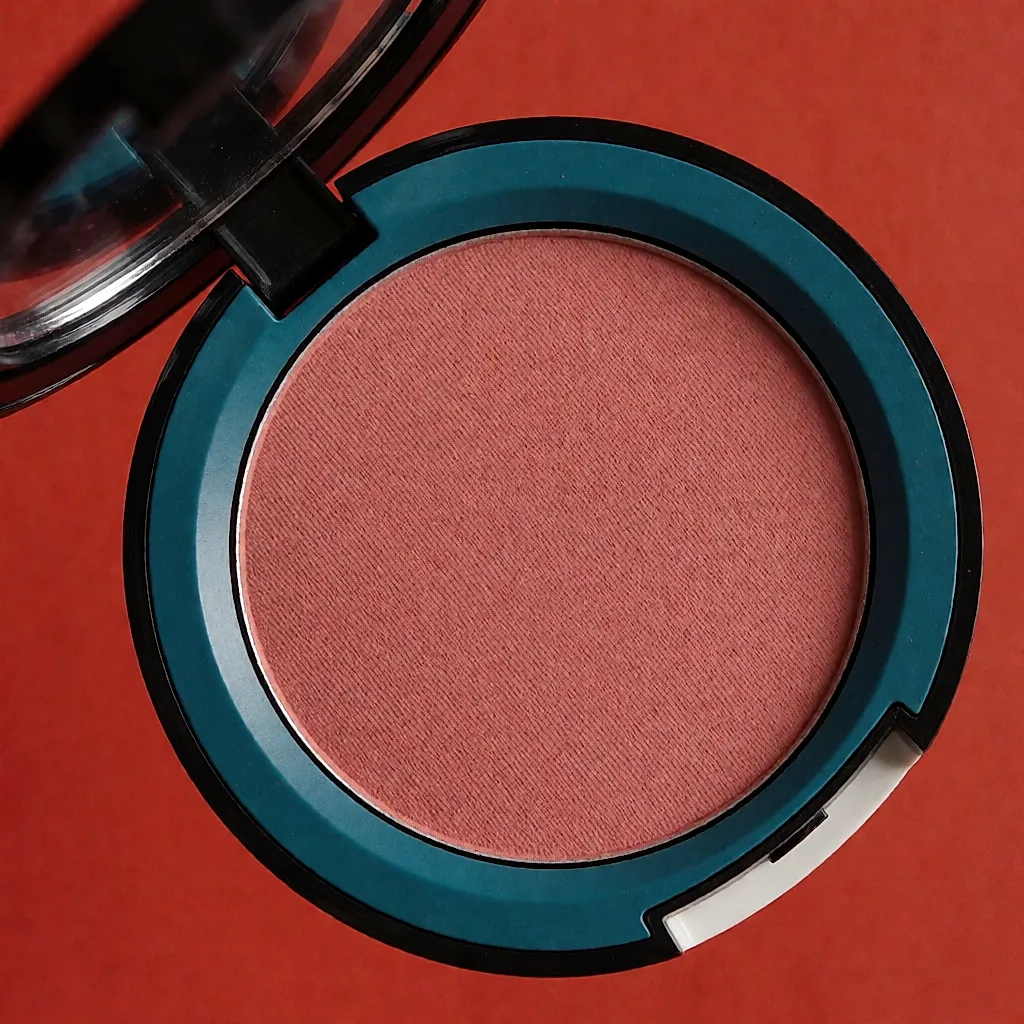
The distinction matters: matte isn't a colour, it's a texture. Choosing a finish that diffuses light instead of bouncing it back — that's the whole idea. On combination to oily skin it's often what keeps make-up looking best for longest; on dry skin it needs a little preparation so it doesn't catch on dry patches. See the difference? A blurred veil on one side, a cracking cheek on the other. It all comes down to technique.
Your fingers warm the product, a brush places it
Fingers have a genuine talent: they warm the product and melt it, which is perfect for a cream texture. With a powder it's another story. Pressing pushes the pigment into the skin, and the warmth of your hand plus the natural oil on your fingertips quickly creates clumps, patches, a "I just ran for the bus" look. Not a disaster, but not the aim.
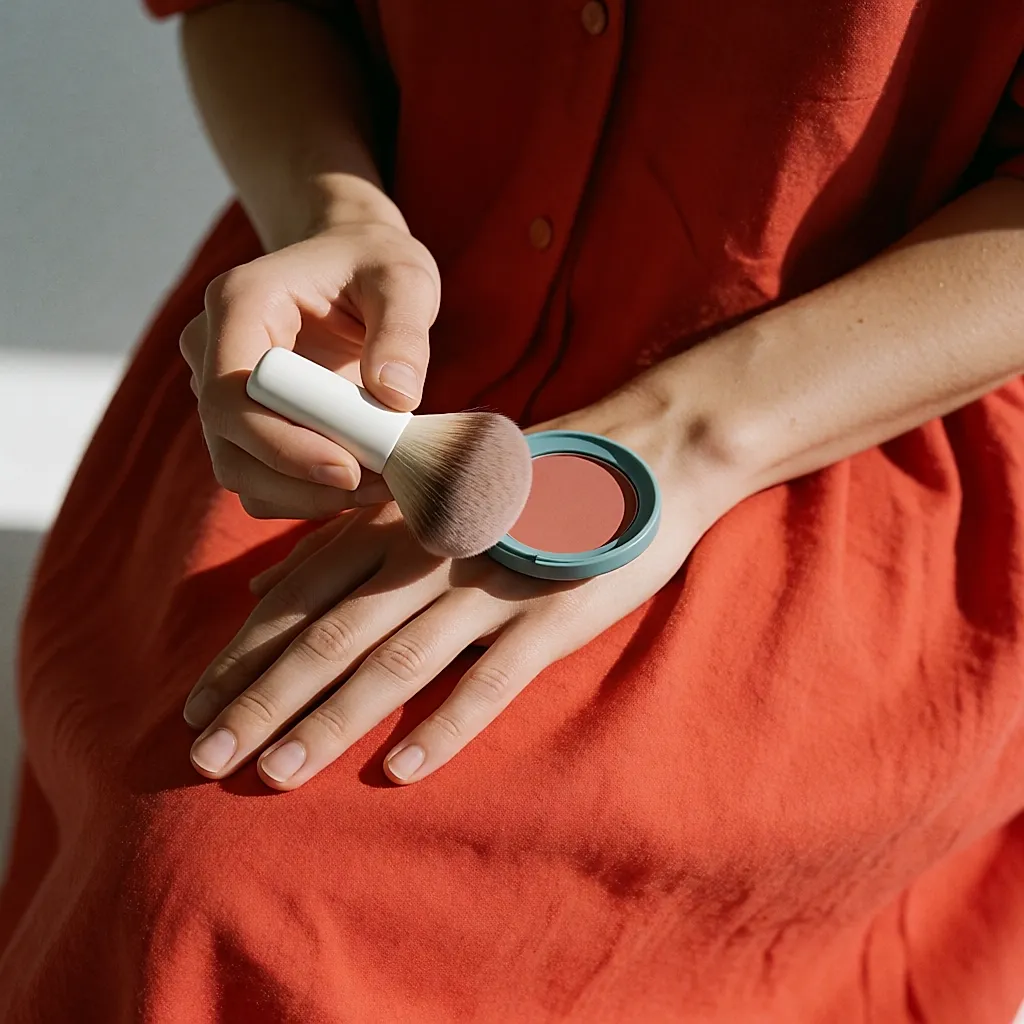
The brush has the patience your fingers don't. It picks up a small amount, lays it on the surface and lets you build. Tap the brush on the back of your hand before each pass: that removes the excess and avoids the first, too-obvious deposit — the one you then spend ten minutes blending out. A clean brush, a light hand, and the powder does exactly what you ask of it. I don't have a reliable figure for the ideal number of passes — every skin responds differently.
The technique, layer by layer
No need to get the heavy artillery out. A rounded, fluffy head that isn't too soft is enough for a veil; a duo-fibre brush, with its mix of fibres, gives a more airy result; a denser kabuki works better if you like your blush clearly visible. For a natural look, start with a thin layer, blend towards the temple, then add more if you need to — never the other way round. An extra layer isn't easy to take off, and that's where the brush wins again: it measures out, where a finger spreads.
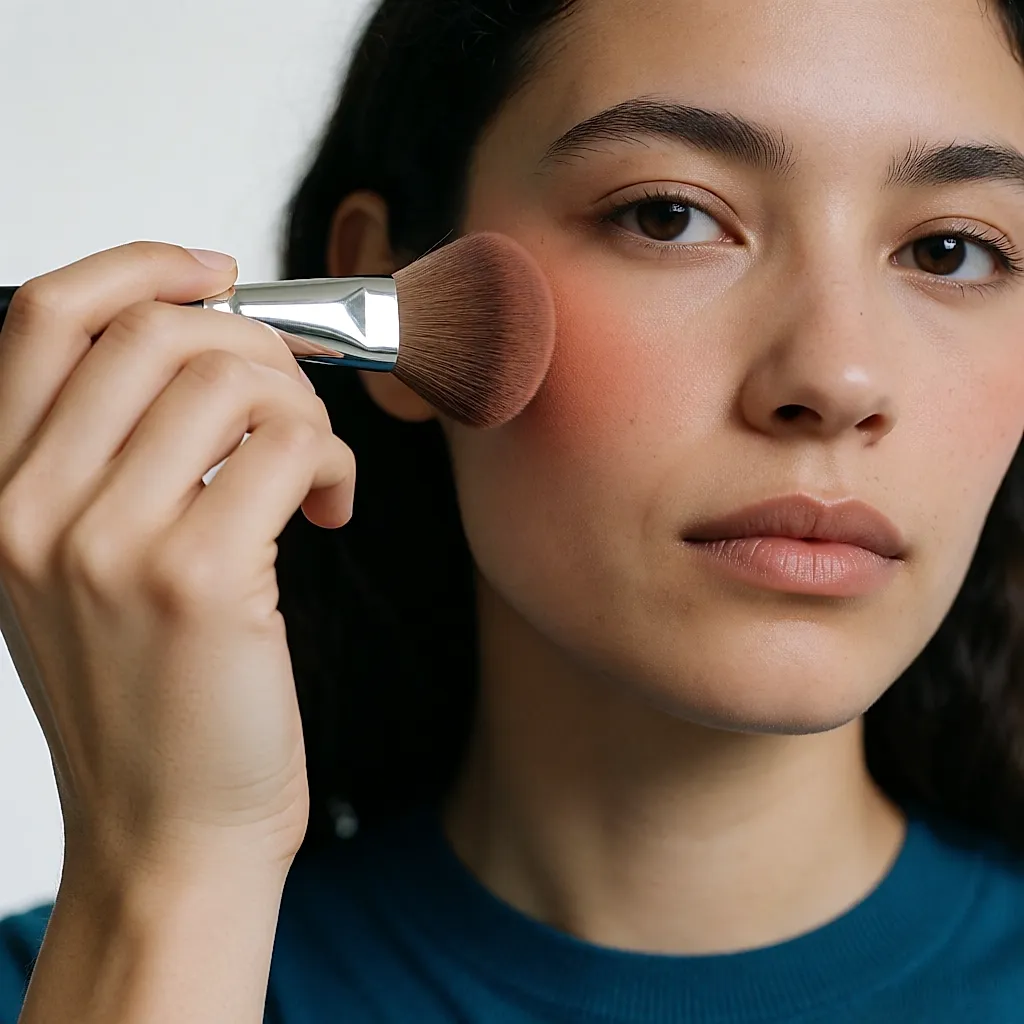
So how do you judge the dose? Trust your face rather than tutorials: the cheekbone, slightly back, towards the temple, works on almost every face shape. Look at yourself straight on, not at three-quarters, and blend until the edge disappears. One small detail that changes everything: if you already powder your base, apply blush afterwards, otherwise it will cling to fresh foundation and go patchy.
Three rules for getting the dose right
- One brush, two taps on the back of your hand, three passes maximum on the cheek.
- If the colour is too strong, go over it with a touch of loose powder: it softens without wiping everything out.
- Wash your brush roughly every two weeks in warm water with a mild soap; a dirty brush drops pigment in clumps.
What it costs
Is it really worth spending more? It's usually the first question. For the tool, expect to pay around £8 to £15 for a decent brush with a wooden handle and synthetic fibres, from a supermarket, online or a high-street beauty retailer. Between £20 and £40 you're mostly paying for the density of the hairs, the quality of the handle and how long it lasts — a well-looked-after brush stays with you for years, which makes the maths gentler.
For the powder, prices run from about £12 to £25 in a pharmacy for a simple mineral formula, and £30 to £50 for a refillable compact at a beauty counter. The savvy move: go for a fragrance-free mineral powder and a refillable case where the brand offers one — less new plastic and often a shorter ingredient list. And if money is tight, remember that a well-chosen brush will change your finished look more than a £50 blush. Prices here are a rough guide and vary by retailer.
Matte blush isn't a step backwards, it's a choice of texture — and that choice demands a technique. Fingers are still perfect for creams and for rushed mornings; for powder, give it a brush and let it do the work. The only routine left when you've got five minutes? One tap, two passes, and out the door.
Comments
Your opinion matters: rate the article, react and reply to comments.
Comments are moderated; AI-assisted comments are flagged. Text emoticons (8-), :-), <3…) are automatically shown as images.