
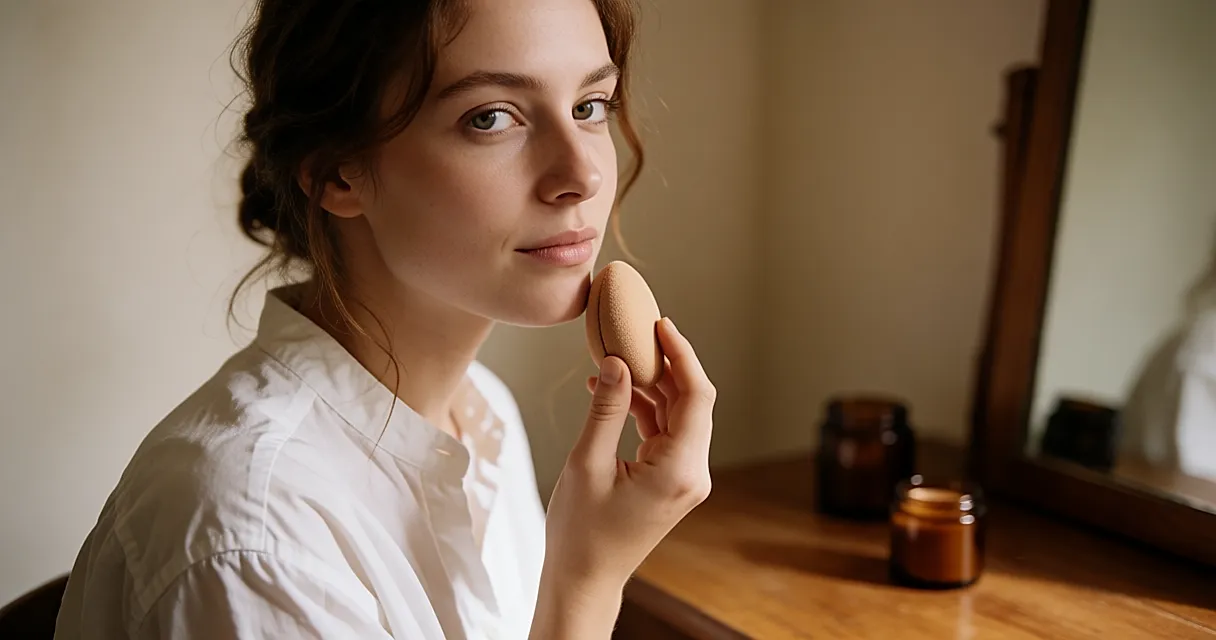
You've come across that complexion that seems to blush from within, with no hard line between the pink and the rest of the face? The finish that doesn't say "I'm wearing blusher" so much as "I slept well" — when we both know you didn't. Sometimes the whole thing comes down to something daft: the order of the layers. And on that point, opinions differ.
The reverse order, and what it actually does
Traditionally you apply foundation, then blusher on top. Reversing it means colouring the skin first, on clean, moisturised skin, then going in with foundation. Blusher first, foundation second: that's the whole trick.
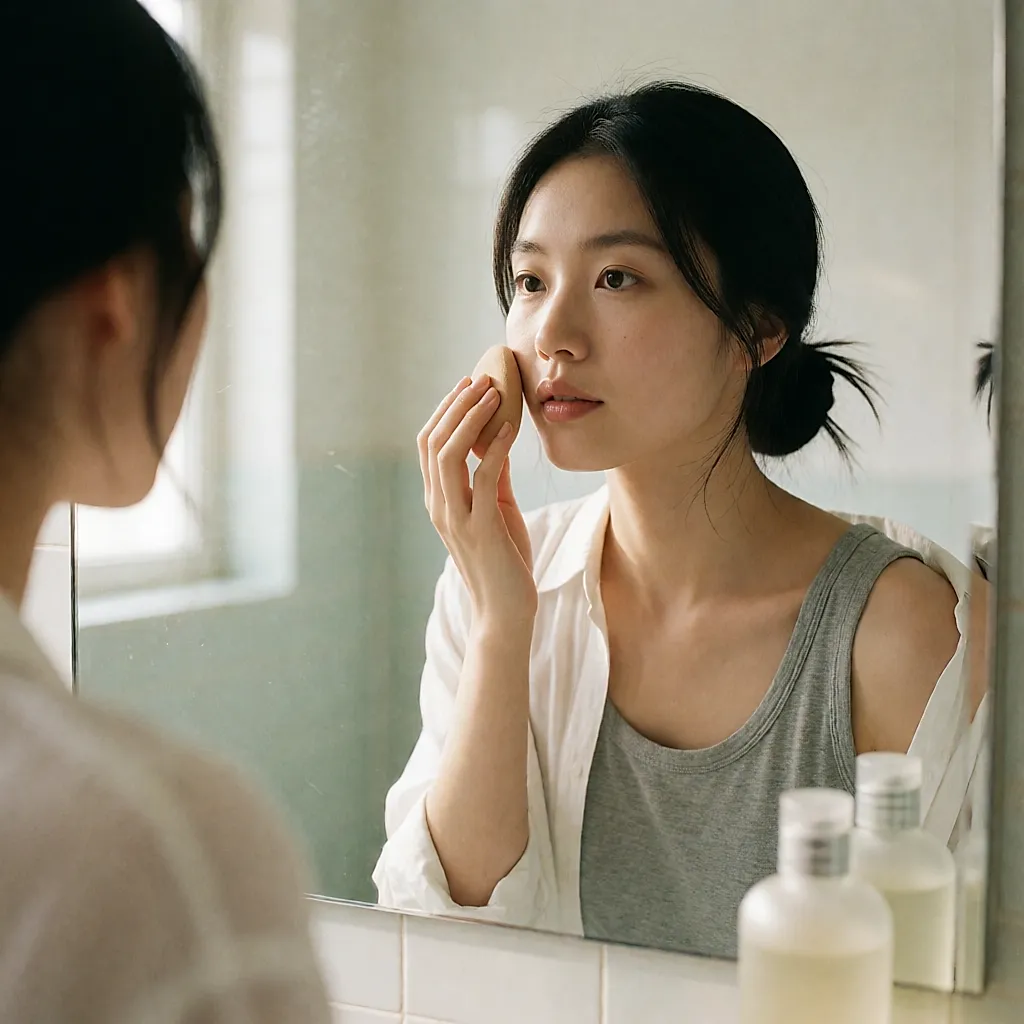
What does it change, in practice? The colour ends up under a veil, so it's softened, blended in, without the faint tidemark you sometimes see when blusher is too sharp. The pink no longer sits on top of the complexion: it seems to come from underneath. For a discreet, healthy-looking flush it's often more elegant than blusher applied as the last layer — especially if you have a heavy hand.
Mind you, there's no magic formula here. The result depends on the texture of the blusher, the coverage of the foundation and the technique. Add three layers of full-coverage foundation and you simply wipe out the work. I'm not going to promise you a red-carpet complexion in two minutes: the principle is simple, the execution takes a little finesse.
Fine, a veil — but which one?
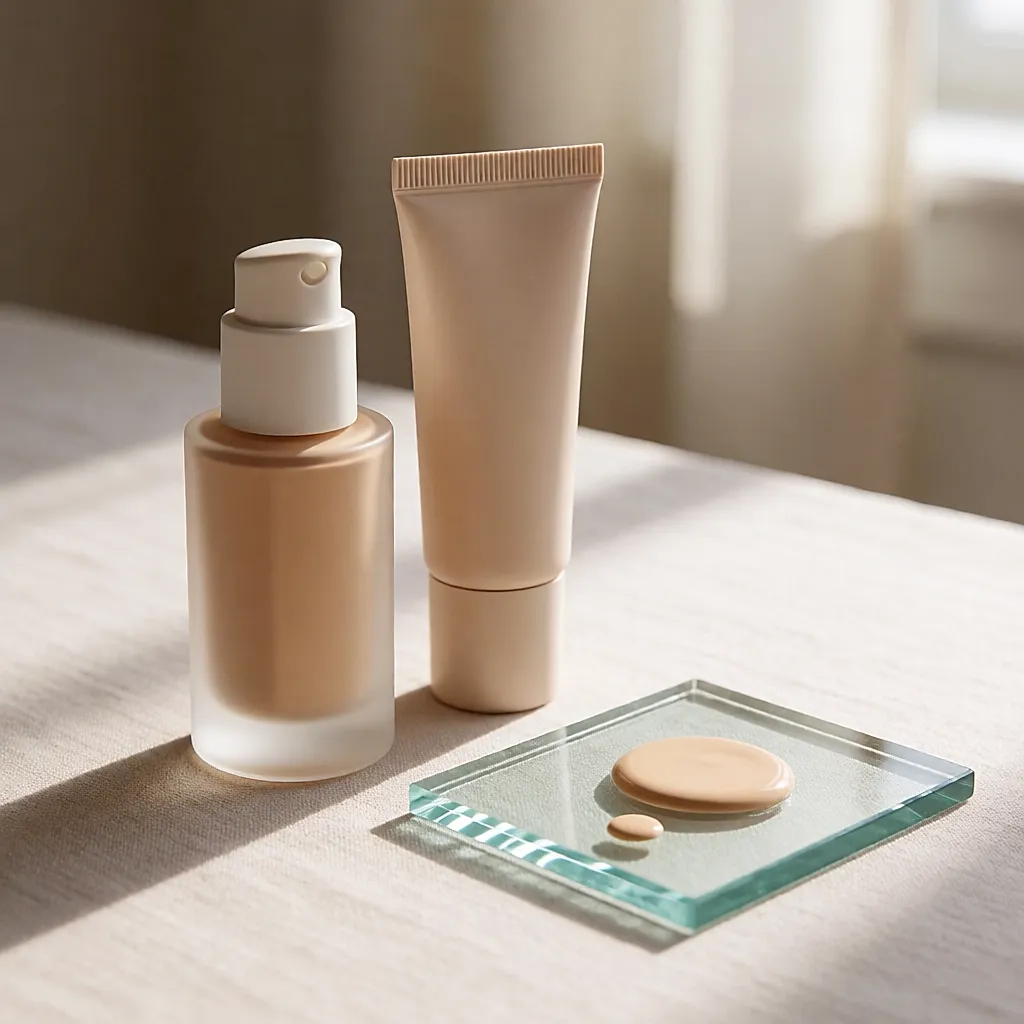
The veil principle explains almost all of it: the lighter and more transparent the foundation, the more of the blusher colour stays visible. The more coverage it has, the more the blusher fades or turns grey. Hence a simple rule — the reversal works best with a fluid base, a BB cream or a light-to-medium coverage foundation.
Before any of that, the skin needs prepping: hydrated, but without a tacky layer that would make the blusher slide. A light cream, a minute or two to sink in, and you're away.
Technique matters as much as product. Dab the blusher on in small taps, blend it well, then apply foundation by tapping, not sweeping. Spread it with a big brush or a wandering sponge and you push the colour down the face, leaving cheeks that look as though they've slid. A dense brush or a damp sponge pressed on gently is safer.
And if the result is too timid? A touch of blusher on top, at the end, can rescue it. You don't have to pick a side.
The blushers that are happy to go underneath
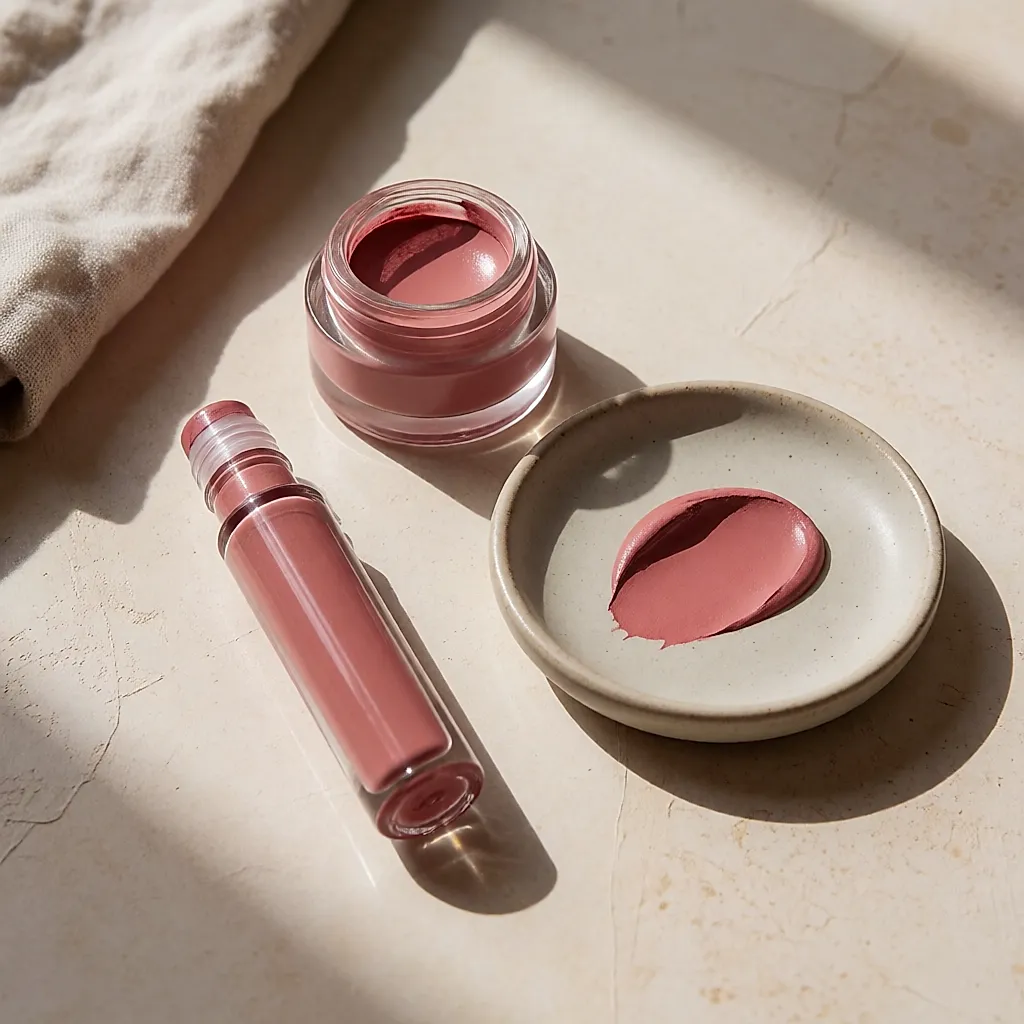
Not every texture plays along. Cream, liquid and gel formulas melt into the skin, grip, and cope well with something going over the top. Stain or ink-style formulas do too, provided you go drop by drop.
Powders, on the other hand, sit on the surface. Put a liquid foundation over a powder and you risk the two balling up and the complexion turning mask-like. Save your favourite powder for the end, guilt-free.
On pigmentation, be wary of highly concentrated formulas: under a light foundation they can come up stronger than expected, or even stain. Start with a tiny amount — a pea-sized dot — and add another layer if you need one. And if you're buying, look for refillable formats or glass tubes where they exist: blusher is used up slowly, so it's worth choosing packaging that won't be in the bin within three months.
When to keep blusher for last
There are cases where reversing makes no sense. If your foundation is very high coverage, for instance, or you want long wear on a hot day: blusher applied last will hold better. Same if you like sculpting your face with a precise play of light and shadow — the colour needs to stay visible and defined.
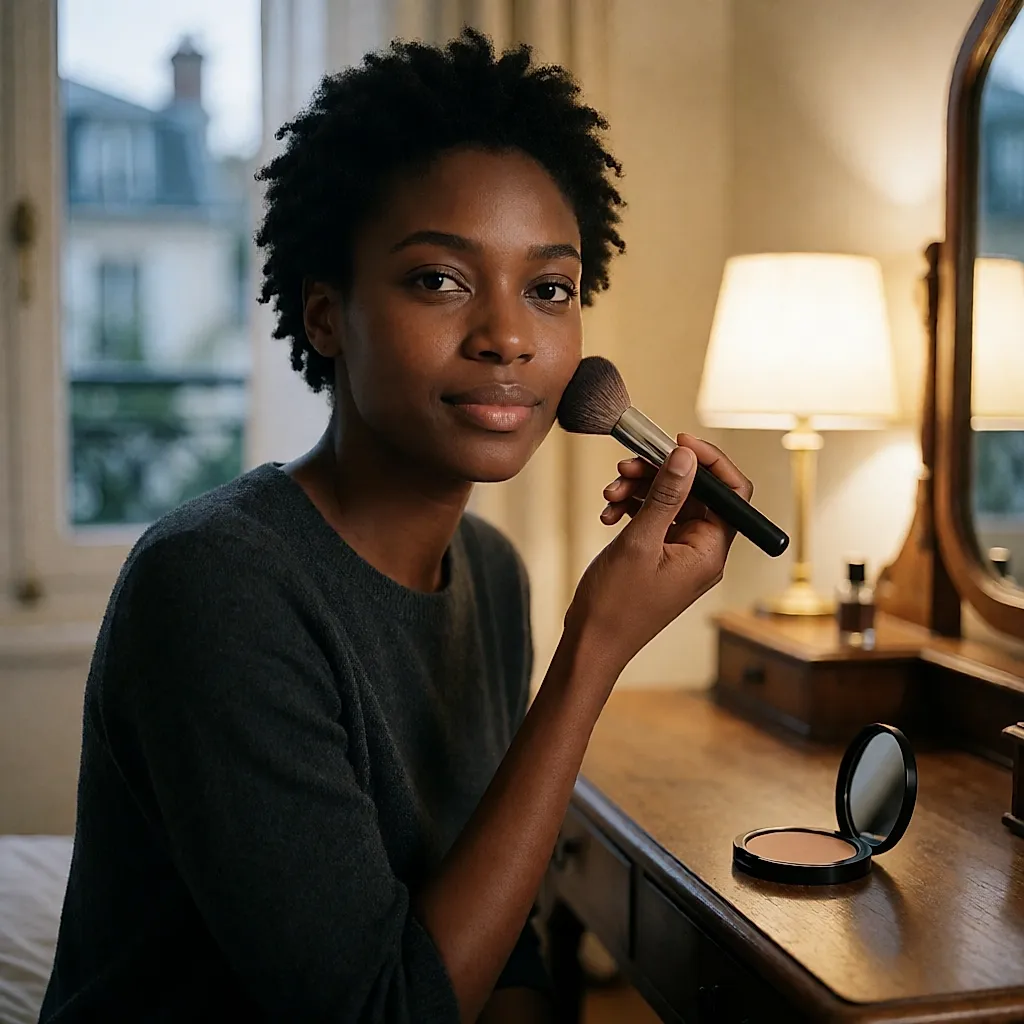
Combination or oily skin, a packed day, an evening that stretches on? Keep blusher for the end there too, with a dusting of loose powder if you like. The reversal is mainly for complexions after a fresh, luminous, natural finish. The rest of the time, do as you please: nobody's going to ask you to sign a register.
The three-step move: skin moisturised but not tacky; a pea-sized amount of cream blusher tapped onto the apples of your cheeks; a light foundation pressed in with fingers or a damp sponge. If it streaks, there's too much product — blot the excess with a clean tissue, not with yet another layer.
Really, the reversal isn't a rule, it's just another tool in the kit. Try it on a quiet morning: if you like the result, keep it; if not, go back to the classic order without agonising. The one move that still works when you've only got five minutes is not overloading — and no layer order will ever replace that.
Budget
Blusher and foundation are not one-price buys. Expect roughly £6–£12 for a high-street cream or liquid blusher, £12–£30 for a mid-range one, and £30–£50 for premium formulas; foundations follow a similar spread, from about £8–£15 on the high street to £30 or more at premium counters. Prices vary with the retailer, the city, the coverage and the packaging, and refillable options can make a difference over time. You'll find them in pharmacies, department stores, specialist beauty shops and online.
Comments
Your opinion matters: rate the article, react and reply to comments.
Comments are moderated; AI-assisted comments are flagged. Text emoticons (8-), :-), <3…) are automatically shown as images.