
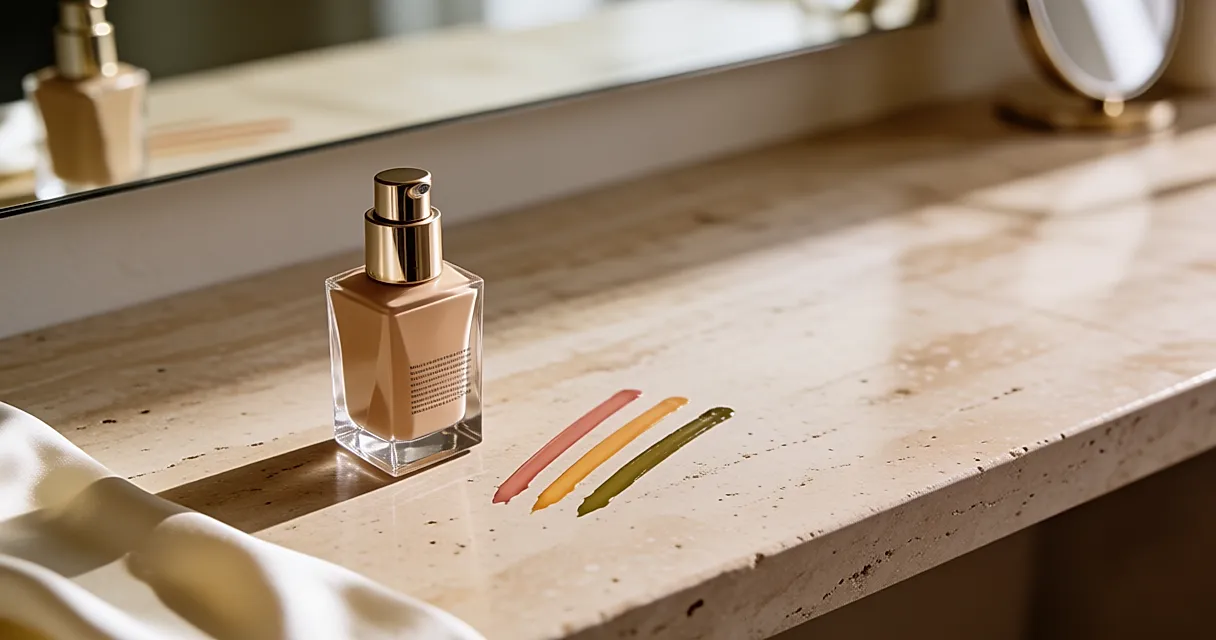
The mirror at the beauty counter is merciless. It turns you yellow, then grey, then peachy pink, and there you are, hunched over your own jawline like a surveyor examining a crack in the wall. Behind the counter, someone hands you two bottles that cost about as much as a pair of shoes. This is where the couture houses are playing their biggest hand.
A category with no room for error
A lipstick, a couture house can launch without breaking a sweat: one colour, one case, one campaign image, job done. Foundation is a different beast. It has to cover an enormous spread of skin tones, handle what the pros call undertone — rosy, golden, olive, neutral — cope with skin that's dry in the morning and shiny by 4 pm, and still be there in the evening. Then there's oxidation: some formulas darken slightly as they set, and the perfect match you found in the shop looks distinctly average in daylight.
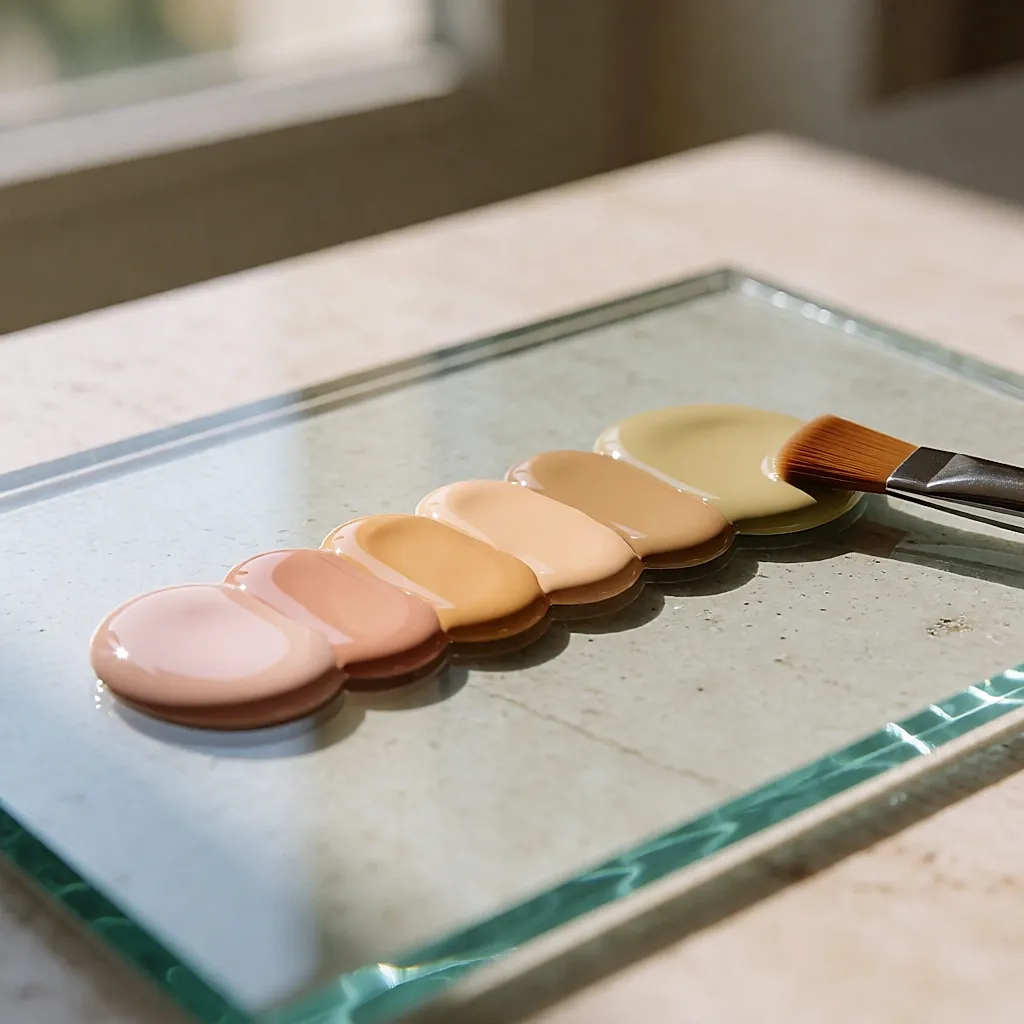
And then there's the judge that never budges: the shop floor. A fragrance you can sniff on a wrist and leave with a hunch. A foundation you compare, swatch, photograph the label, and come back the next day with a friend in tow. It's the category most exposed to direct comparison, and the least forgiving: a lipstick that's slightly off, you'll forgive. A base that turns orange gets returned.
Why they bother anyway
Because base is the starting point. It's what you reach for when there are five minutes left before you go out, what you buy again and again, what sets the tone of the whole day. A house that gets your base right often ends up with your concealer, your blusher and the rest of the routine too. The maths is simple: the hardest category is also the one that keeps customers. In practice, a foundation is used up in a few months, while a palette sits untouched for years.

There's also a question of language, and it isn't just vanity. Couture houses talk about complexion, light and skin as if it were a fabric to be draped; they have a colour heritage that gives them natural credibility on this ground. Chanel Les Beiges, Dior Forever, Armani Luminous Silk, and Hermès, which has also moved into make-up and complexion: each one shifts its vocabulary from cloth to skin. Whether the bottle lives up to the catwalk promise is another matter.
The real trap is the lighting
Beauty-counter lighting is a professional liar. Golden and flattering, it smooths everything over — including the mismatch between your face and your neck. The move that counts: test on the jawline, never on the back of your hand, blending down towards the neck, and give it a few minutes before you judge. If you can see the line, it's the wrong shade; if it disappears, you're onto something.
Second rule: don't decide under pressure. Ask for a sample, apply it to one half of your face, and go outside. Street light, office light, bathroom light at 7 am: those are the real judges. I've left a counter utterly convinced by a bottle, only to realise two hours later that what I'd actually bought was very good lighting. I haven't tried every shade from every house — nobody has — but the method doesn't change.
If you've only got one lap of the beauty hall: arrive bare-faced or ask for a quick cleanse, have two shades applied side by side along the jaw, wait a few minutes, then check outside before you pay. And if someone pushes a shade that "lights up your face", ask to see the one next to it, which is probably more neutral.
What it costs
Expect to pay somewhere in the region of £45–£75 for a 30 ml bottle from a couture house, depending on the brand — prices move with launches and retailers, so treat that as a guide rather than a rule. Pharmacy and classic skincare brands do the same job for around £20–£40, while high-street and supermarket own-label ranges start much lower, often £8–£20. Price tells you nothing about the shade that suits you: a well-chosen £15 foundation will look better than a luxury bottle that's too pink.
Where to get it? Department store beauty halls, so you can test and leave with a sample; the brand's own website for an exact shade when it's sold out at the counter; authorised retailers, where you can check the authenticity of the bottle. On formula, go for a high proportion of naturally derived ingredients where you can, glass packaging, and a refill if the brand offers one. But the real criterion is still colour: three bottles abandoned at the back of a drawer are a waste, even if they're organic.
A good base doesn't announce itself: people tell you that you look well rested, rather than asking what you're wearing. Which may be the real reason couture houses are going after it — there's no visible logo, just skin that looks well. And if you take one thing from this piece, make it this: the jawline, always, and daylight before you pay.


Comments
Your opinion matters: rate the article, react and reply to comments.
Comments are moderated; AI-assisted comments are flagged. Text emoticons (8-), :-), <3…) are automatically shown as images.