
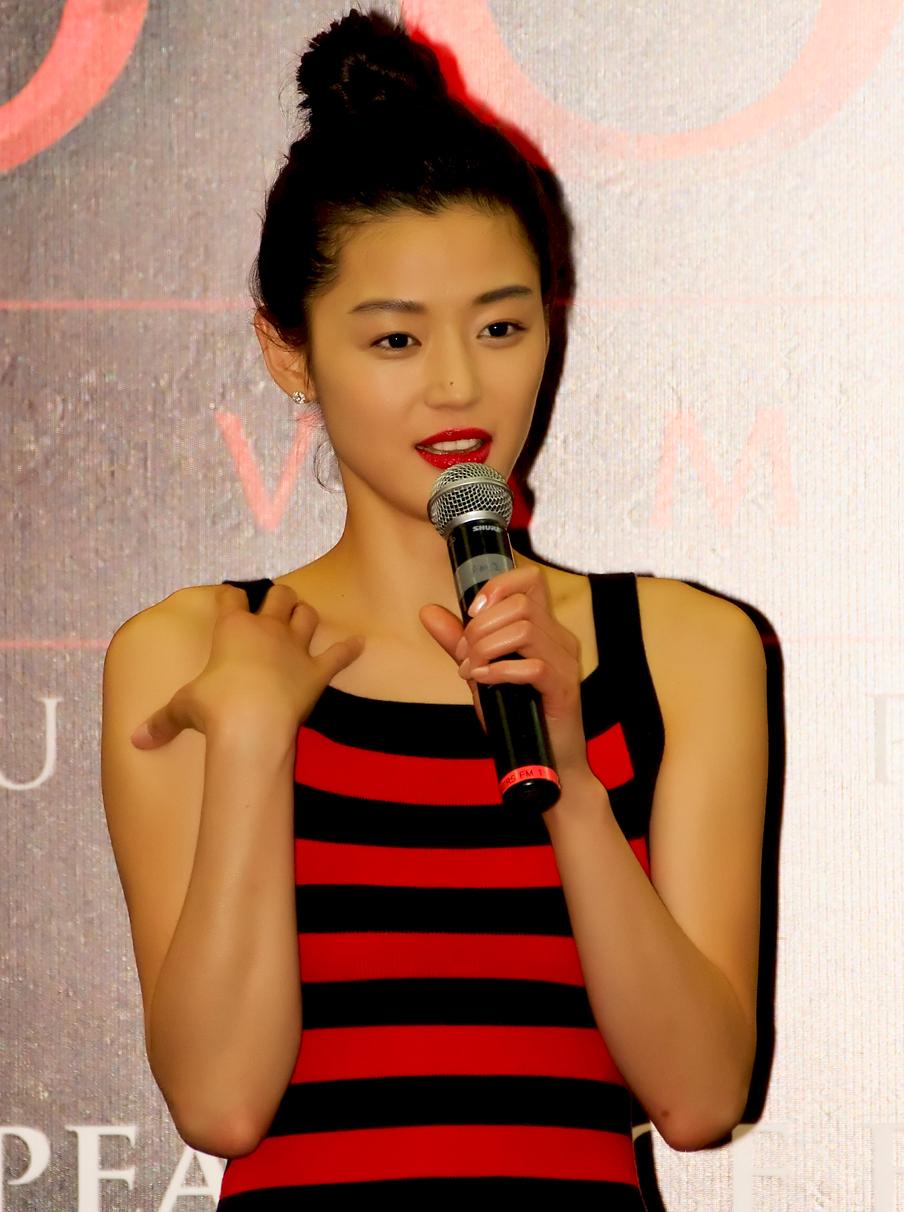
Early in 2014, a single tube started vanishing from the beauty halls of Seoul. Not a limited edition, not a showy collaboration: a coral-pink, fairly understated in the range, that thousands of Korean women went looking for at exactly the same time. The culprit was an actress who doesn't exist — a character who wears the same lipstick twice a week on television and answers to the name Cheon Song-yi. We've seen less effective marketing campaigns.
A fictional heroine, a very real sell-out
The show is My Love from the Star. It aired on the South Korean channel SBS between December 2013 and February 2014, with Jun Ji Hyun as Cheon Song-yi — a Korean television star — and Kim Soo-hyun as her neighbour, who landed on Earth four centuries earlier. Korea first, then China and much of Asia: it was a runaway hit.
What stayed with people here was the character's make-up: a coral-pink mouth, full, luminous, never red. And that is where the story turns instructive: the attribution was wrong. A rumour named YSL's Rouge Pur Couture in shade 52 as Cheon Song-yi's lipstick — even though the series was sponsored by AmorePacific and the show's make-up artist worked with several products, none of them French. The denial changed nothing: within weeks the tube sold out in Korean department stores, then in duty-free shops, then in perfumeries worldwide, reselling for up to a hundred dollars on second-hand platforms. For a few months, a lipstick tube doubled as an early indicator of a cultural moment.
Then came the wave. Korean brands filled their lines with corals, fresh pinks and bright peaches, and for two or three seasons the lip aisles ran pink. The echo reached Europe more quietly, carried by blogs and videos, and the shade stayed in the memory as a classic for a healthy glow.
The real trick: one intensity only
Look at the whole face, not just the mouth. The base is clean and luminous, the eyes barely lined, the brows defined but soft. One element does the talking, and that's the principle worth keeping: one intensity only. No heavy blush, no loaded lid, no competition between the zones.
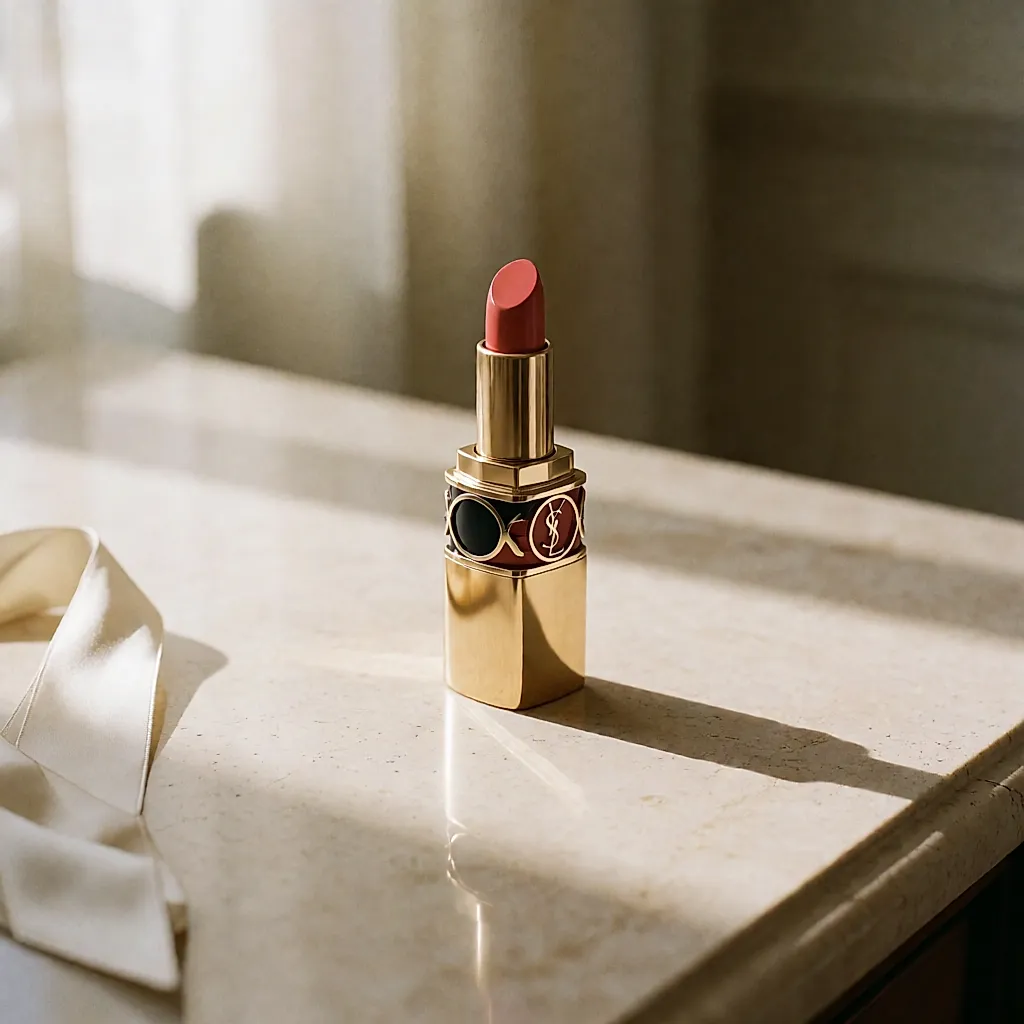
What sets it apart from a classic lipstick is the outline. No pencil border, no ultra-matte formula, no redrawn shape. The colour is laid on flat, the lip keeps a supple finish, and the result reads as a mouth that happens to be coloured rather than a mouth that has been painted.
That's exactly what made the shade easy to adopt. A coral-pink matched to your colouring lifts the complexion without demanding the precision of a true red or a burgundy. It's forgiving make-up: two minutes on a Monday morning, and your complexion follows.
What we still take from it
The rule hasn't shifted: one intensity only. If the lips take the colour, the rest of the face stays calm. No strong blush, bright lip and smoky eye in the same mirror — you pick one, and you commit.
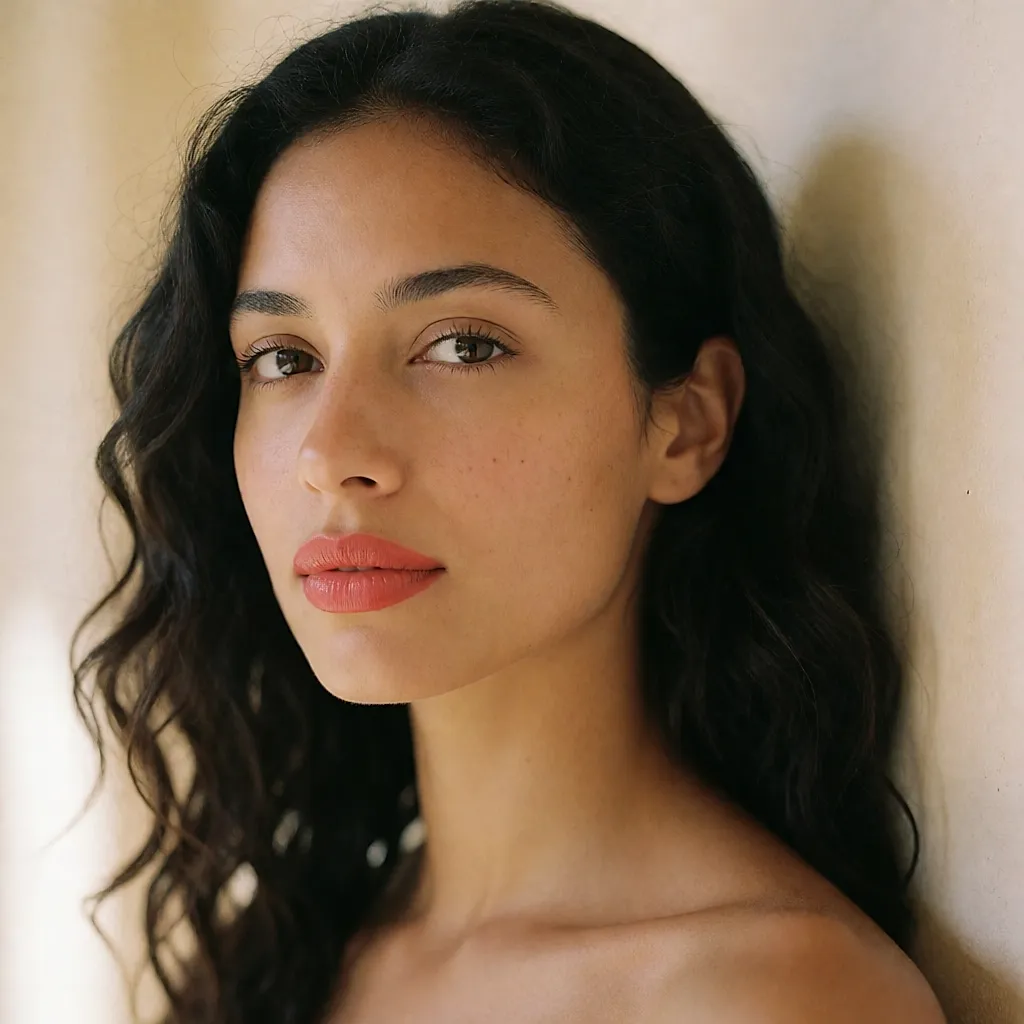
For the shade itself, undertone matters far more than whatever is trending. If your skin flushes pink easily, fresh pink, woody pink or raspberry will sit well with it. If it leans golden, a coral, peach or apricot will flatter it more. On deeper skin tones, go for a deep coral, a muted pink or a pinkish brown: the very pale shades that brighten fair skin can flatten a darker complexion. Nothing moral in that — it's just optics.
Then there's the finish, which has more to do with where you're going than with a personal style. A tinted balm for working from home and the morning coffee run. A satin for lunch or a date. A comfortable matte — supple, never drying — for an evening that has to hold. A gloss or a lip mist for dinner, where you want it catching the light. And for the make-up bag, one habit worth keeping: look for formulas built on plant oils and waxes, and for refillable tubes that replace the bullet instead of the whole case.
Budget
On price, expect around £5 to £13 for a tinted balm or a lipstick from the high street or a pharmacy. Affordable Korean brands are mostly bought online, roughly £10 to £22 depending on the brand and the delivery charge — which can easily triple from one site to the next. At a beauty counter, a lipstick from an established house, the one behind this whole phenomenon included, sits around £30 to £40, with refills often sold for £18 to £22. For organic and British-made options, budget £10 to £22 in a specialist shop, sometimes less for a stick or a loose format.
So where to look: beauty counters, the high street, pharmacies, health-food shops, brands' own websites. With Korean references, check that the shade really is what you think it is — colour names travel badly, and a "coral" can be hiding a very pale peach.
The three-second move. Put the colour in the centre of your lower lip, press your lips together, then blend out towards the corners with your fingertip. The edge stays blurry, the colour stays in the middle: that's what separates a fresh mouth from a lipstick that's determined to lead the conversation.
In the end, the show didn't sell a tube. It sold permission — to wear colour on your lips without bringing out the heavy artillery, without lining, without getting it wrong. A shade that suits you, a mouth that breathes, the rest of the face kept quiet, and you're done. The tube was born in fiction; the trick works perfectly well in real life.
Sources
- The Korea Herald — YSL gets free ride on drama sensation, 24 March 2014.
- The Korea Times — "My Love" sparks hallyu sensation, 2 March 2014.
- The Cut (New York Magazine) — A Korean TV Show Caused a YSL Lipstick Shortage, 3 April 2014.
- Character Media — The Lipstick That Sold Out Worldwide Thanks to K-Drama Is Finally Back, 13 August 2014.
- Korea.net (Korean Ministry of Culture, Sports and Tourism) — Soap opera drums up chimaek fever, 3 March 2014.
- SBS Contents Hub (broadcaster) — My Love From the Star: 21 episodes, first aired on 18 December 2013.
Comments
Your opinion matters: rate the article, react and reply to comments.
Comments are moderated; AI-assisted comments are flagged. Text emoticons (8-), :-), <3…) are automatically shown as images.