

The start of the school year is that odd moment when you push your flip-flops to the back of the cupboard, dig out the timetables and promise yourself that this year will be different. Except that after enough stacked-up promises, you can burn out before half term. What if we changed the method? Eating better isn't about signing a deprivation pact on 1 September: it's about slotting a few sustainable habits into weeks that are already full. A drastic plan abandoned in October is worth less than a small gesture repeated until June.

What we know, and what we don't yet
Let's start with what is solid. A diet rich in vegetables, fruit, pulses and wholegrains is associated with a lower risk of cardiovascular disease, type 2 diabetes and some cancers. That is what large population studies summarised by the NHS, the World Health Organization and other public health bodies show. In other words, what really counts is what you eat over months, not one tired evening's meal.

Less well established: the precise effect of additives and sweeteners. Current data suggest an association between ultra-processed food consumption and weight gain, without a proven causal link. The WHO also recommends not relying on non-sugar sweeteners for weight control. When in doubt, whole, minimally processed foods remain the safe bet.
And if you live with a chronic condition, take long-term medication, are pregnant, or are worried about your relationship with food, speak to a healthcare professional. These situations deserve personalised support, not a blog post.
When to seek help rather than trying to fix it alone
- Unintentional weight loss, persistent fatigue, unusual thirst or dizziness: see your GP.
- Cycles of restriction followed by binges, or guilt that won't let up: a professional can help, and it is not a failure.
- A significant weight-loss goal or a family history of diabetes: personalised support is worth more than any general advice.
Balance is about the week, not the meal
No single food is off limits, and that is probably the best news here. What matters is frequency and proportion. A birthday cake changes nothing; it's daily sweet snacking that tips the scales. So you can stop negotiating with your conscience at every meal and look at the week as a whole. That simple shift in perspective already makes a big difference psychologically.

Fruit and vegetables: the foundation, at every meal
Five portions of fruit and vegetables a day: that is the NHS 5 A Day benchmark. Fresh, plain frozen or tinned all count — just rinse tinned pulses and vegetables to remove some of the salt. Whole fruit is better than juice, even freshly squeezed, because it provides fibre and is more filling.
In practice, buy with the seasons and use local or short supply chains: it tastes better, is often cheaper, and comes with less packaging. A piece of fruit at the end of a meal can easily stand in for the midday slice of tart without feeling like deprivation.

Fats: don't cut them out
For years, fat has been cast as the villain. Yet some fats are essential: the body cannot make essential fatty acids, and it gets them from plant oils and nuts. Rapeseed, walnut and flaxseed oils provide plant-based omega-3s; olive oil, rich in monounsaturated fats, works for gentle cooking and dressings.
To choose, look for three simple things: cold-pressed or virgin, dark glass bottles (light degrades oils), and a clear origin. Some carry a Protected Designation of Origin (PDO) label, such as olive oils from Nyons, Provence or Corsica, or Périgord walnut oil: it guarantees a production area and know-how, nothing more. Buy small bottles and store them away from heat: an opened oil keeps for a few months, then turns rancid. Butter and cream aren't banned; they just move to the background.

Starchy carbohydrates: wholegrain rather than highly processed
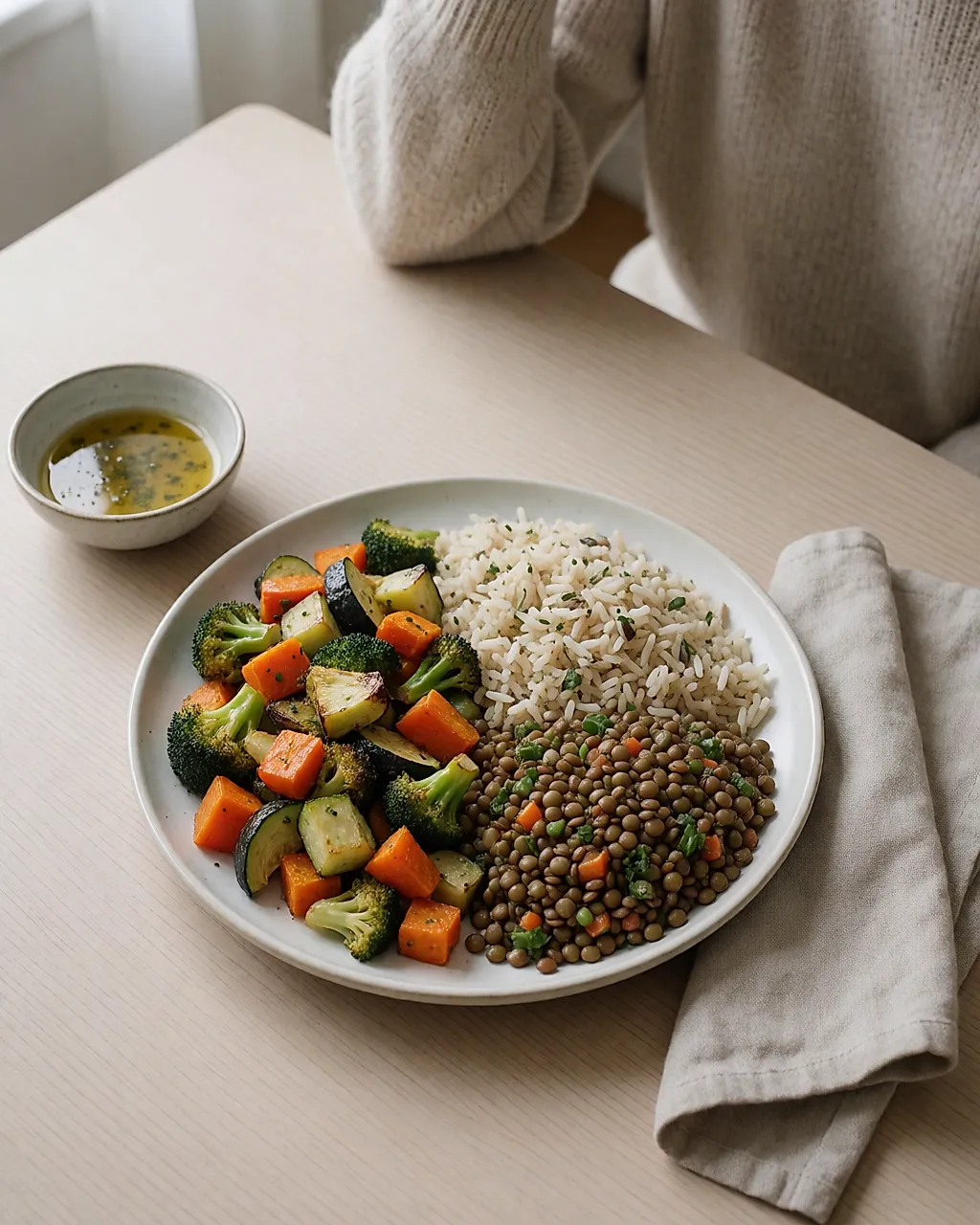
Bread and cereals have long had a bad reputation, unfairly. What matters is how refined they are: wholemeal or partially wholemeal flour, brown rice, oats and other wholegrains provide fibre, which slows digestion and helps you feel fuller for longer. Also think about pulses — lentils, chickpeas, dried beans — which official guidance encourages us to eat more often.
On the shopping side, dried pulses from bulk bins or cardboard packets cost less than tinned ones and create less waste. Be wary of 'multigrain' or 'seeded' breads: if the first ingredient is white flour, the wholegrain claim is mostly on the label.
Sugar, salt and ultra-processed foods: cut back without demonising
Three changes have the biggest impact. First, sugary drinks, fizzy drinks and carton juices, best kept for occasional treats. Next, salt: the WHO recommends staying below 5g a day; in the UK, the NHS advises no more than 6g. Either way, it means cooking more and limiting processed meats, ready meals and salty cheeses. Finally, ultra-processed products, whose ingredient lists can run to ten lines.
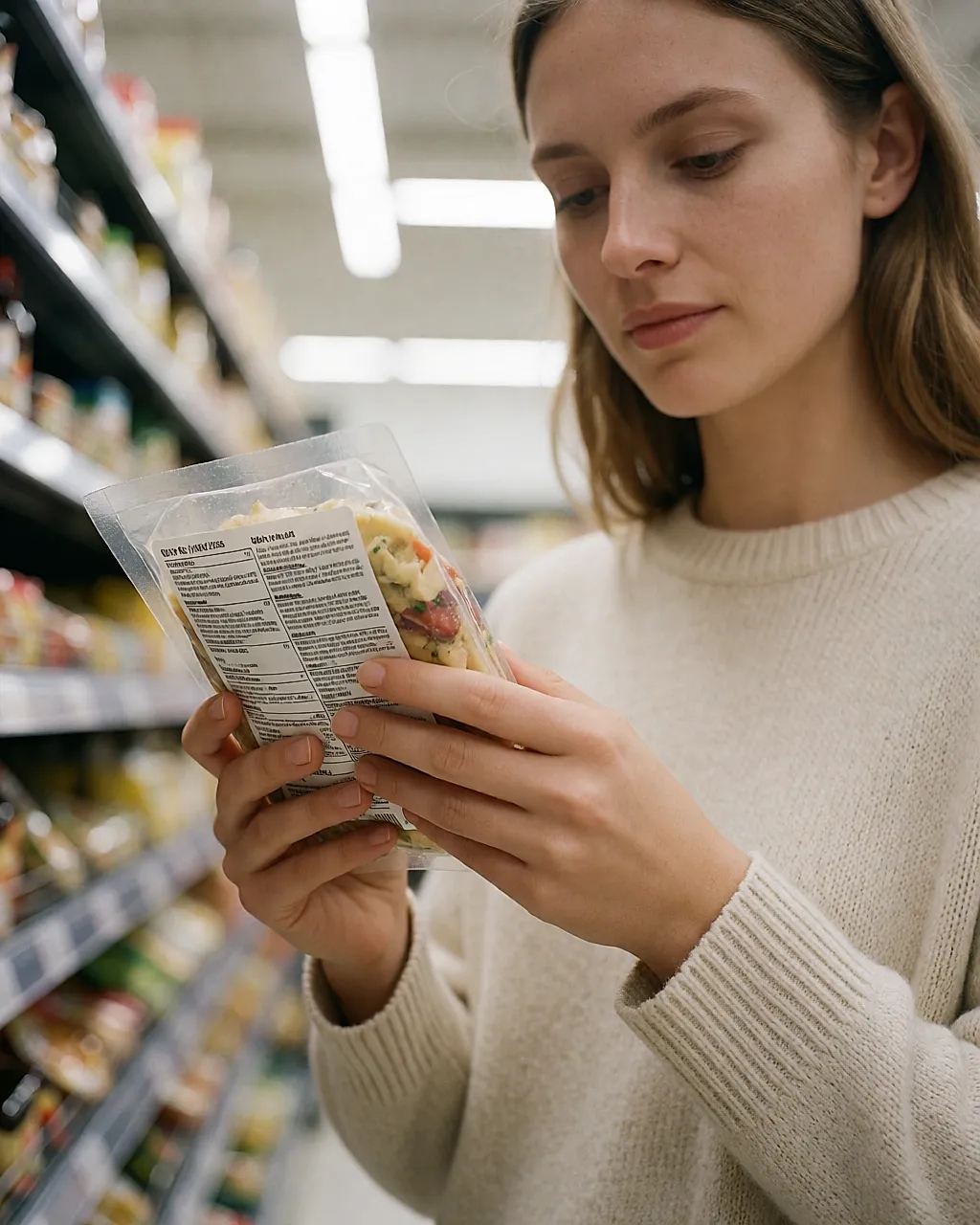
Front-of-pack traffic-light labels, used widely in the UK, help compare two products in the same aisle, but they don't replace reading the ingredients or cooking from scratch. A well-rated ready meal is still a ready meal.
Moving and sleeping: the two forgotten factors
Diet isn't everything. Public health guidance recommends at least 150 minutes of moderate activity a week — for example, around 30 minutes on five days — plus at least two sessions of muscle-strengthening exercise a week. Brisk walking, cycling, swimming: what matters is what you'll keep up over time.

Sleep counts too. Data suggest that repeated sleep deprivation is associated with a stronger appetite for fatty and sugary foods. Going to bed a little earlier can sometimes help, and looking after your sleep may help stabilise appetite.
Stop weighing yourself every morning
Weight can vary noticeably over the course of a single day, depending on hydration, salt and the menstrual cycle. So the scales aren't a reliable daily judge. Look instead at your energy in the late afternoon, your digestion, your sleep and how your clothes fit. Those signals don't lie.

Budget
Eating a balanced diet doesn't have to mean a big budget, as long as you know where to look.
- Fruit and veg: from a market at the end of the day, a veg box scheme or a bag of plain frozen vegetables, budget around £10–£25 a week for one person, depending on season and region.
- Pulses and wholegrains: a few pounds per kilo, bought from bulk bins, a health food shop, a grocer or supermarket. This is where the gap with ultra-processed food widens most.
- Quality oils: around £6–£15 per litre, more for a PDO oil or a small bottle of walnut or flaxseed oil. The price rises with the raw material, extraction method and label.
- Appointments: GP appointments are free at the point of use in the UK. An NHS dietitian appointment may be available through a GP referral and is free if you meet the clinical criteria. Private registered dietitian sessions are paid for; some private health insurance policies may reimburse part of the cost of private sessions. Always ask the fee before booking.
- Tracking apps: many are free, with paid options costing a few pounds a month. Useful for spotting habits, not for judging yourself.
Prices vary by region, city and practitioner: always ask the fee before booking.
Sources
- NHS, The Eatwell Guide and 5 A Day (dietary and physical activity guidance).
- WHO, recommendations on salt and guidelines on non-sugar sweeteners (2023) (who.int).
- IARC/WHO, classification of processed meat (2015).
- EFSA, scientific opinion on dietary sugars (2022) and related reports on sweeteners and pulses (efsa.europa.eu).
- ANSES (French food safety agency), reports on sugars, sweeteners and pulses (anses.fr), cited for specific reviews.


Comments
Your opinion matters: rate the article, react and reply to comments.
Comments are moderated; AI-assisted comments are flagged. Text emoticons (8-), :-), <3…) are automatically shown as images.