
We all know that moment when you come across an old photo of yourself from ten years ago. The look is the same, the smile too, but something in the mood has changed: back then, losing weight meant lists of forbidden foods, counting every gram and downing shakes standing at the kitchen sink. Today, the talk is more about your plate, your rhythm, sleep, and movement slipped into an already busy day. You may have noticed it: the slimming conversation seems to be changing channels, and many professionals are watching this shift. And honestly, it's worth pausing on, because it affects your head far more than your fridge.
What seems to be losing ground, what seems to be gaining
What seems to be losing ground is, first, anything that promised quick results. Spring detoxes sold as purifying, endless 'zero' lists — zero sugar, zero fat, zero carbs — long fasts decided alone after a video watched at 11pm, shakes that replace a whole meal. All of them dramatic on paper, exhausting after three weeks. We've seen these fads come and go, and we know roughly how they end.
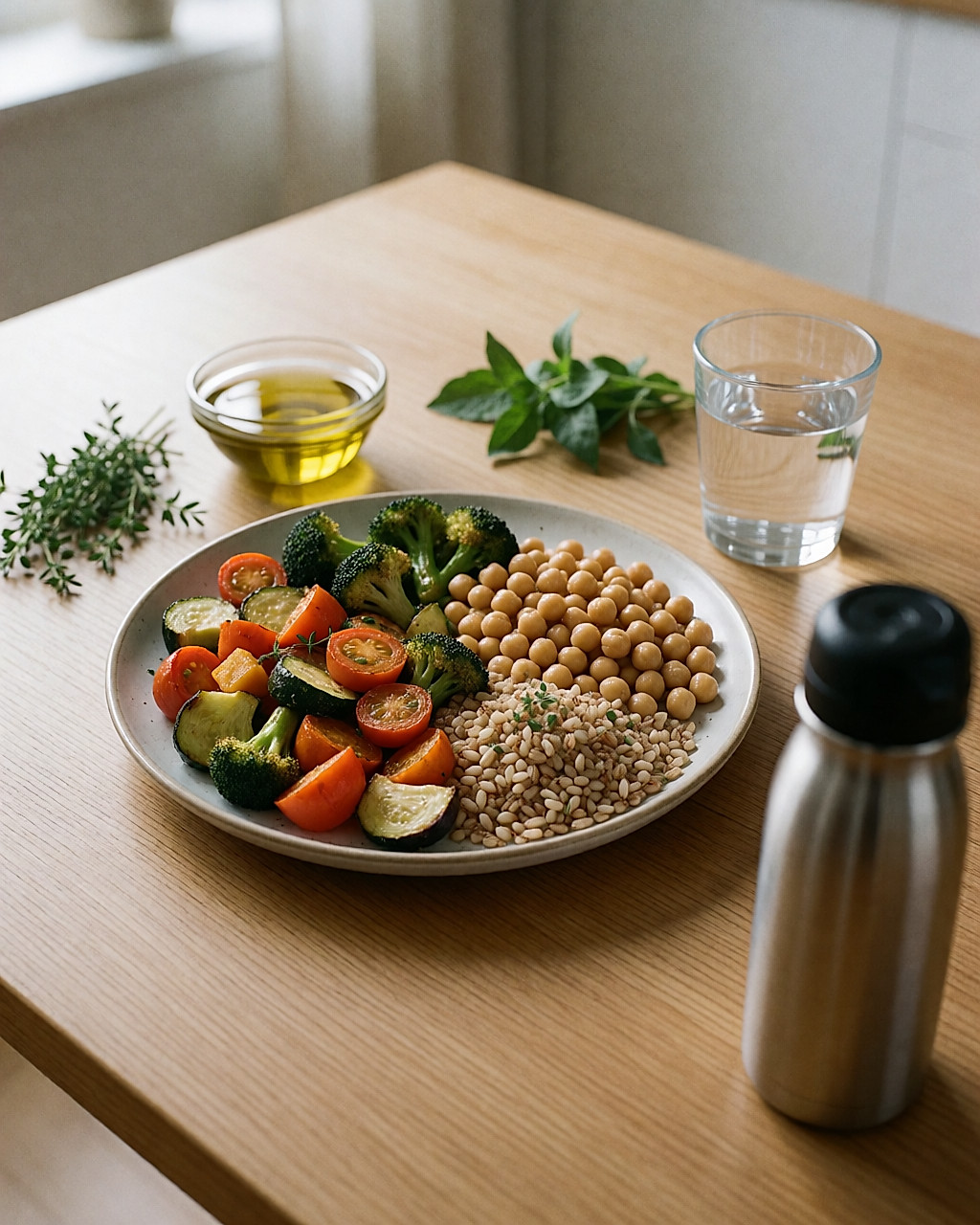
What seems to be gaining ground, by contrast, is a flexible framework: a structure that holds over the week without banning anything, a Mediterranean-inspired plate, consistency, sleep, and movement woven into daily life. Less dramatic, it's true. But so much more manageable on a Tuesday evening in November, when it's dark by 5pm and you have absolutely no desire to weigh courgettes!
Why this shift seems to be taking hold
Current evidence suggests that very strict restriction is hard to maintain long term, and that it feeds cycles of loss and regain — uncomfortable back-and-forth for both body and mind. This isn't bar-room intuition: in 2010, the French food safety agency ANSES was already warning about the risks of restrictive weight-loss practices without support. In other words, it isn't willpower that's missing for those who crack after a few weeks — it's the framework itself that's unsustainable over time.

On top of that, public messaging is more cautious. Weight depends on multiple factors — environment, stress, sleep, genetics, some medicines — not just willpower. In a consultation, that nuance changes everything: there's less talk of individual performance and more of your background, your anchors, your context. It's less sellable, obviously, but far more honest.
The Mediterranean plate, flexible version
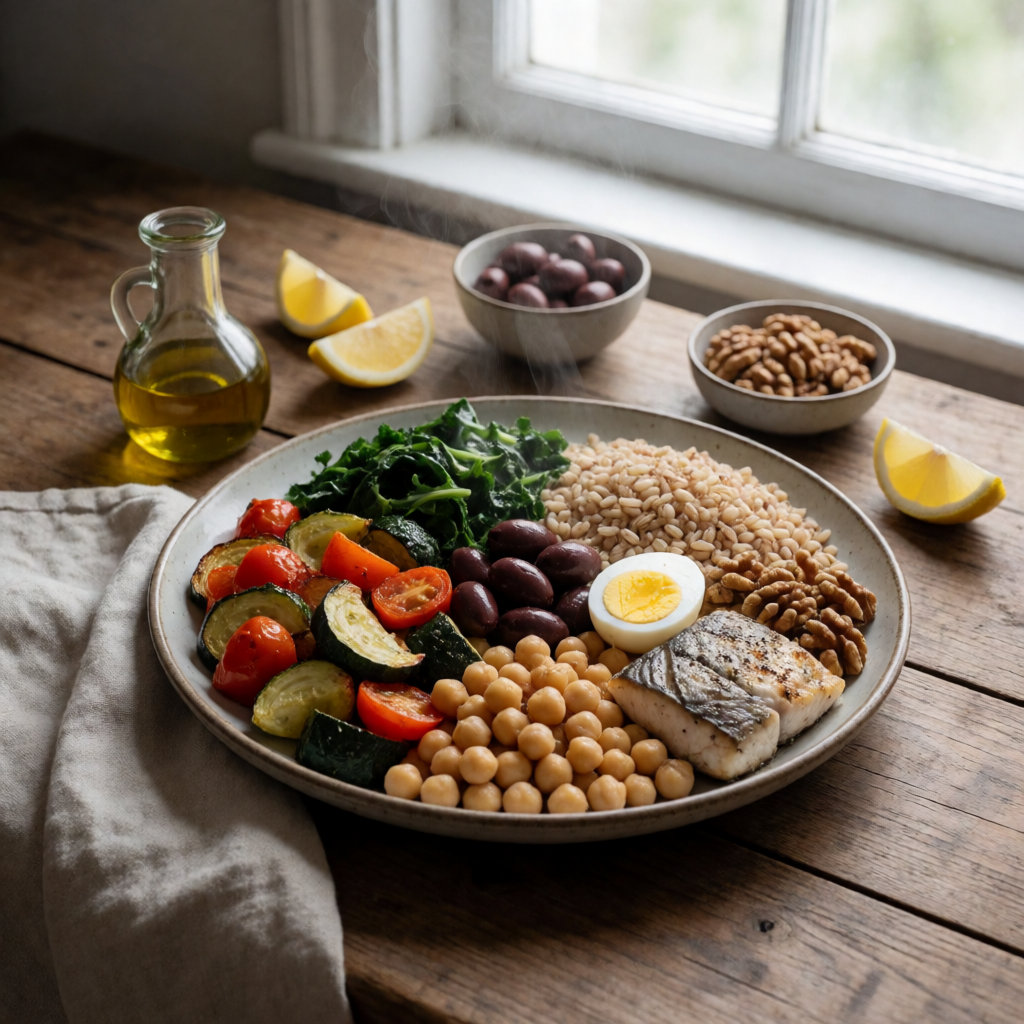
This is the best-documented part of the subject, and it's almost reassuring. The Mediterranean diet, evaluated in prevention trials, combines an abundant plant base — vegetables, fruit, pulses, wholegrains, nuts and seeds — olive oil, fish, eggs, with a more measured place for red meat and ultra-processed foods.
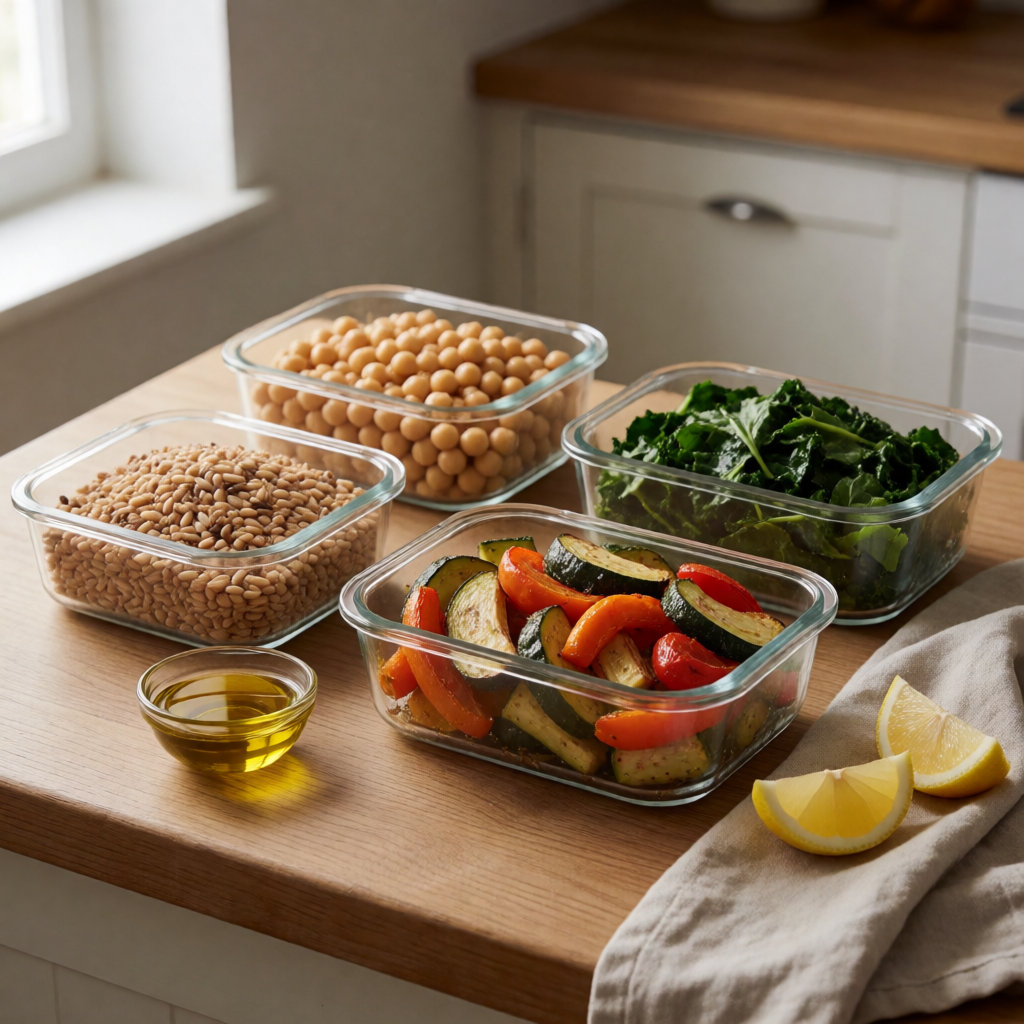
Flexible version: it gives you a plate to build rather than a menu to recite word for word. You choose your foods, your timings, your cooking — but you keep the frame: plenty of vegetables by volume, protein at every meal, good-quality fats, and starchy carbs that are mostly wholegrain. No dogma, just a backbone.
In practice: four anchors rather than ten bans
The first is a plant base: a vegetable or fruit at every meal, without fixing on a magic number. The second is protein — eggs, fish, pulses, dairy, meat in reasonable amounts — which helps you stay satisfied without thinking about it all day. For fats, keep olive oil, rapeseed oil, nuts, avocado: fat isn't the enemy; too many ultra-processed foods are more of one. And then there's the anchor that still throws quite a few people: no food is banned. You decide on a frequency, not a deprivation. A planned cake is easier to handle than a guilty one, let's be honest.

Add two non-food anchors that matter more than you might imagine: getting enough sleep, and moving a little every day. Walking, taking the stairs — that's already movement; you don't need an athlete's programme to start.
Flexibility doesn't mean 'anything goes'. If you notice episodes of losing control around food, vomiting, intense fear of certain foods, or if you're eating significantly less without meaning to, talk to a professional: your GP, a registered dietitian, a psychologist. These situations need support, not yet another diet.
What flexibility doesn't promise
Let's be honest: no method can promise an outcome, and the body isn't run like a budget. What a flexible framework mainly offers is less mental load and more consistency — which is already a lot. If you're taking medication, if you're pregnant, if you live with a chronic condition or an eating disorder, don't change anything on your own: in these situations, advice from a healthcare professional is essential, and they are the one who will diagnose any potential disorder.
Budget
Support or tools can help, but you can also start without spending a penny — which is often the wisest approach at the beginning.
- Private registered dietitian appointment: around £50–£90 per session, more in London or for a long initial assessment. These appointments aren't covered by the NHS, except in specific circumstances, but some private health insurance or cash plans may cover a few sessions a year — check with your provider.
- Medical appointment (GP, specialist dietitian, endocrinologist): NHS GP appointments are free at the point of use; referral to specialist services is usually free. Private consultant appointments are typically £150–£300 depending on specialist and location, and may be partly covered by private insurance.
- NHS services, community health centres, social prescribing and exercise referral schemes: lower cost, sometimes free within a structured care pathway.
- Food tracking apps: £0–£15 per month. Useful if you like numbers, best avoided if counting makes you anxious.
- Online cooking classes, recipe subscriptions: often £5–£20 per month. And don't forget cookbooks you can borrow for free from your local library.
Where to find: private practice, hospital, community health centre, online consultation platforms, professional directories. For a dietitian, check they are registered with the Health and Care Professions Council (HCPC) — you can search the HCPC register online.
So there you have it: this season's slimming trend doesn't seem to be a new diet, but rather a way of putting things in a more liveable order — the colourful plate at the centre, the lists of bans pushed to the back of the cupboard, and a little self-kindness added to the recipe.
Sources
- ANSES — Assessment of risks linked to weight-loss dietary practices, opinion and report, 2010.
- Santé publique France — National Nutrition Health Programme (PNNS) and dietary recommendations, mangerbouger.fr.
- Haute Autorité de santé (French National Authority for Health) — Recommendations on the management of overweight in adults.
- Estruch R. et al. — Primary prevention of cardiovascular disease with a Mediterranean diet (PREDIMED trial), New England Journal of Medicine, 2018;378(25):e34.
- World Health Organization (WHO) — Healthy diet.




Comments
Your opinion matters: rate the article, react and reply to comments.
Comments are moderated; AI-assisted comments are flagged. Text emoticons (8-), :-), <3…) are automatically shown as images.