
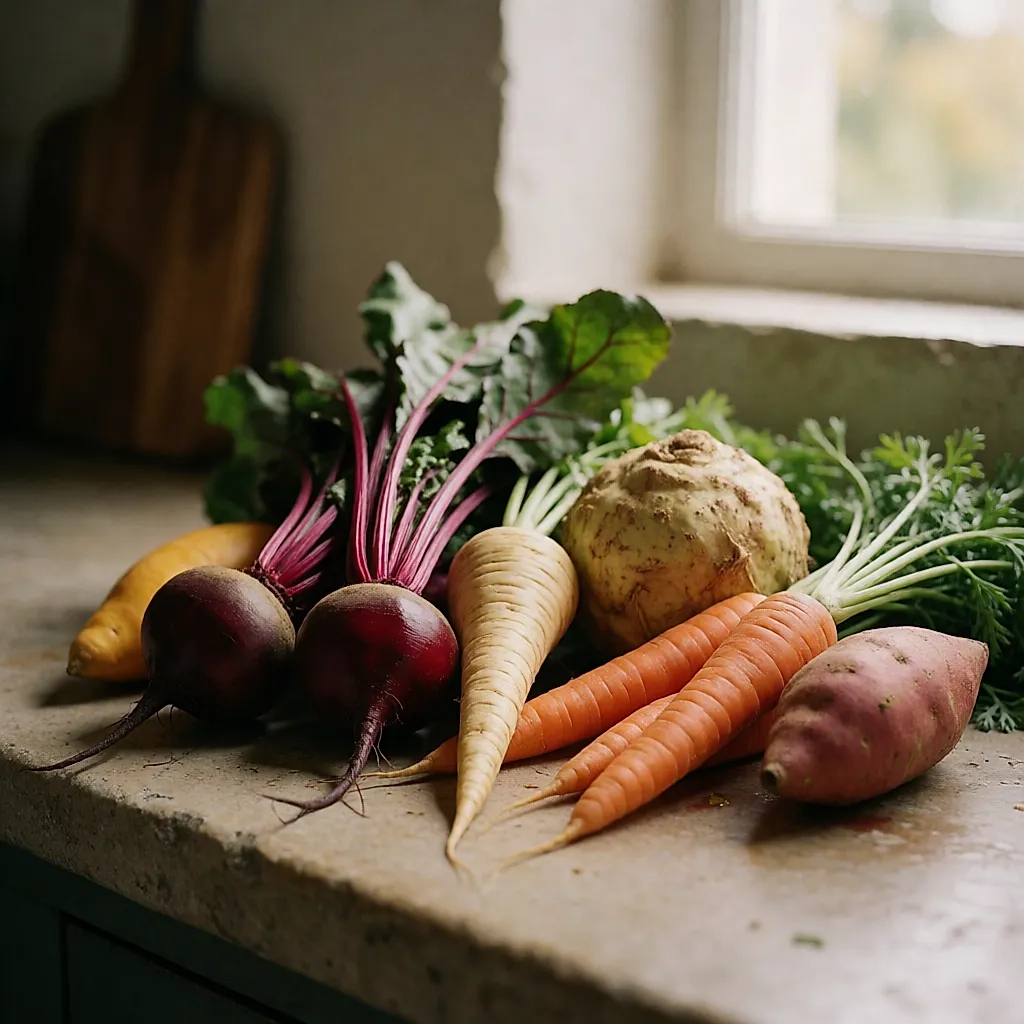
By late October the produce aisle looks like a well-kept cellar: glossy beetroot, pale parsnips, celeriac wearing its grumpiest expression. And every year the same hesitation returns, basket in hand — tonight, do these roots count as vegetables, or as the starchy part of the meal? The answer isn't botanical. It comes down to how much of them lands on the plate, and what sits next to them.
Pick three roots, not the whole shelf
Three is enough for a week, and three chosen well beat a whole collection. The idea: one sweet root (carrot, sweet potato), one properly earthy one (beetroot, Jerusalem artichoke, swede) and one more neutral (parsnip, celeriac, turnip). That little trio stops you ending up with a single vegetable you reach the point of never wanting to see again.
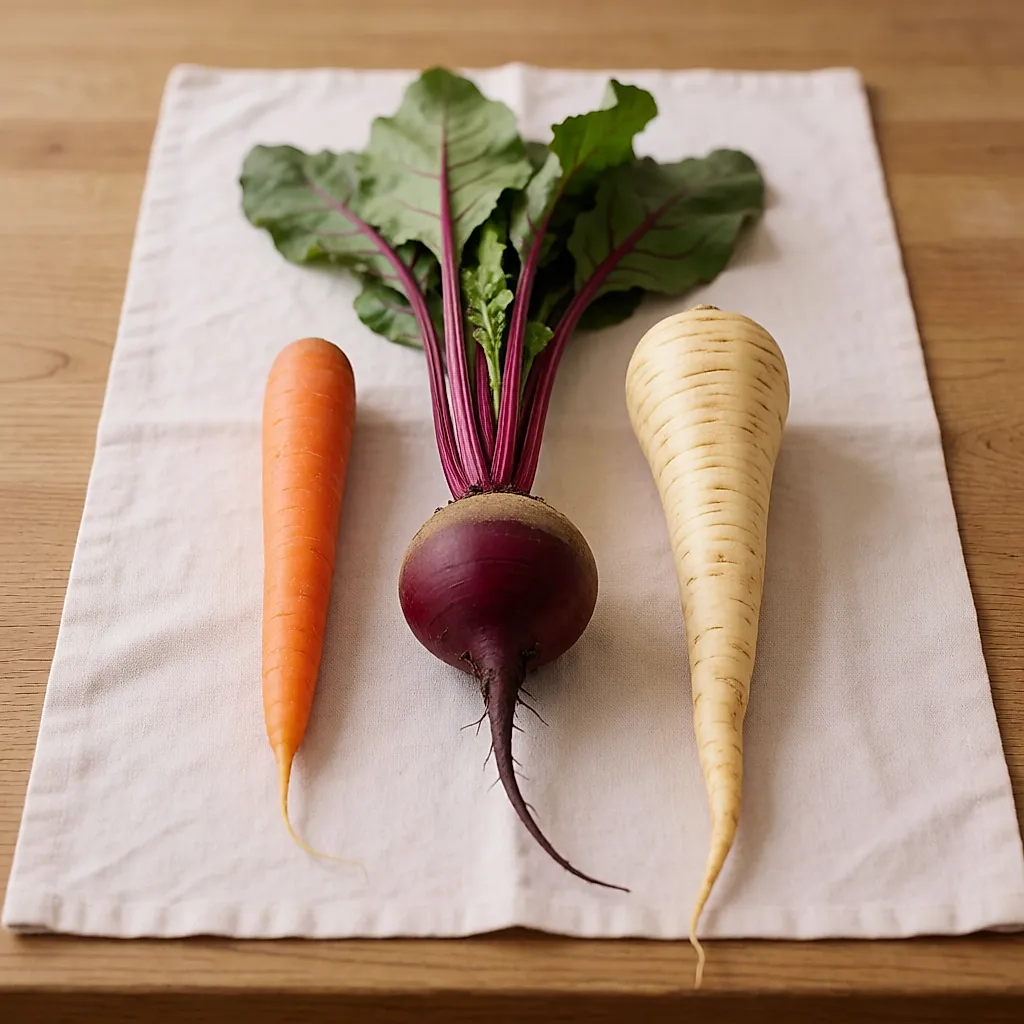
Worth knowing: they aren't all equal on density. Beetroot, parsnip and Jerusalem artichoke are naturally sweeter than turnip or celeriac. That's neither good nor bad — it's just useful when you're building a plate. And strictly speaking, the potato isn't a root at all but a tuber; it plays exactly the same role at dinner, though, so we let it in.
Skin on, roasted or steamed
The change that makes the most difference is also the simplest: don't peel them. Scrub them under the tap, cut into roughly even chunks, and that's it. The skin holds the pieces together, keeps some of the fibre and gives that slightly firm bite that resists collapsing into sad mash.
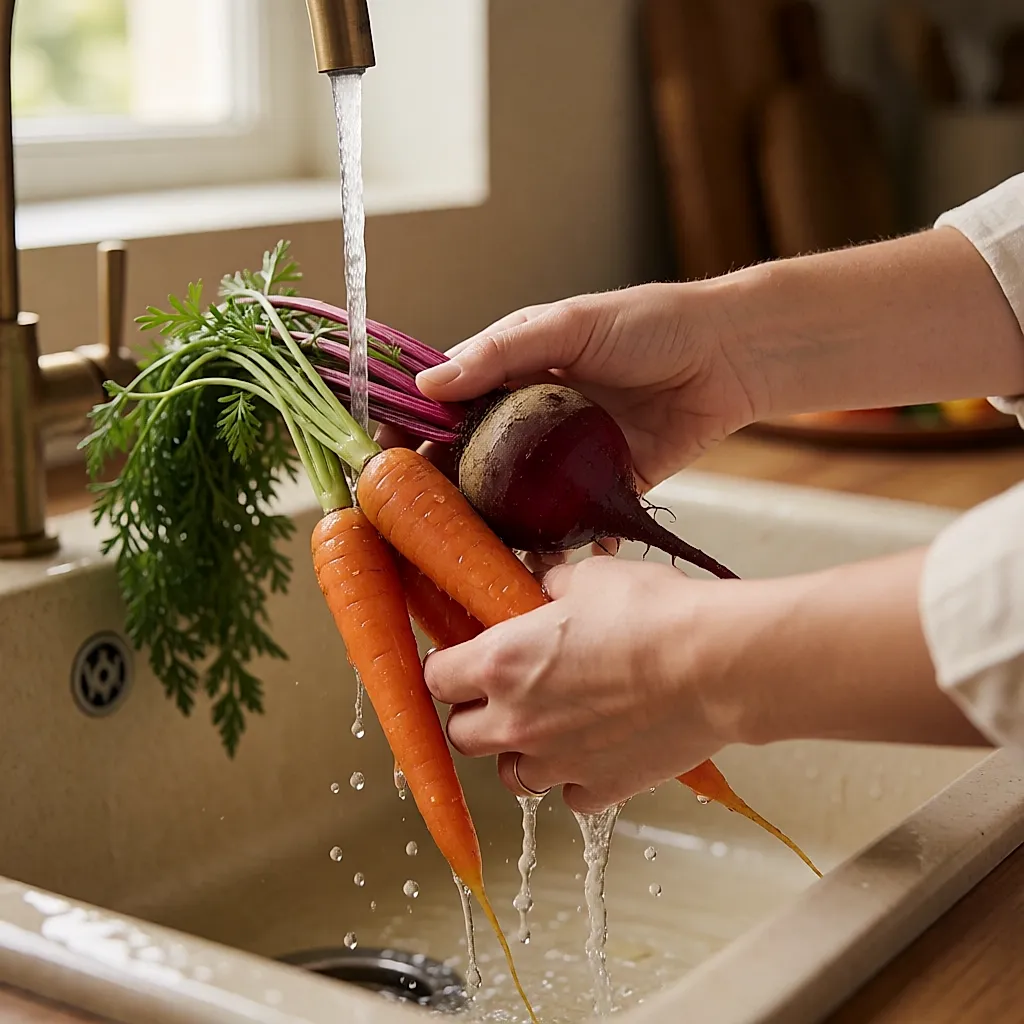
In the oven: a drizzle of oil, one tray, 200°C (180°C fan), 25 to 35 minutes depending on how big you've cut them. Steamed: same principle, skin on, about 20 minutes for medium chunks. Steam adds no fat, whereas the roasted version soaks it up happily — a generously oiled tray can carry as much energy as a plate of pasta. Cooking method isn't the whole story; the fat counts too.
Not sure if they're done? Push the tip of a knife in: if it slides in without force but the piece still stands up on its own, that's your moment. Overcooked roots turn to mush and lose the texture that's the whole point of them.
Setting the portion that replaces the carbs
In the UK, the Eatwell Guide recommends basing meals on starchy carbohydrates; in France, Manger Bouger advises starchy foods at every meal, according to appetite — and there's no single gram figure. The call being made here is a different one: for any given meal, how much of that portion can the roots take?
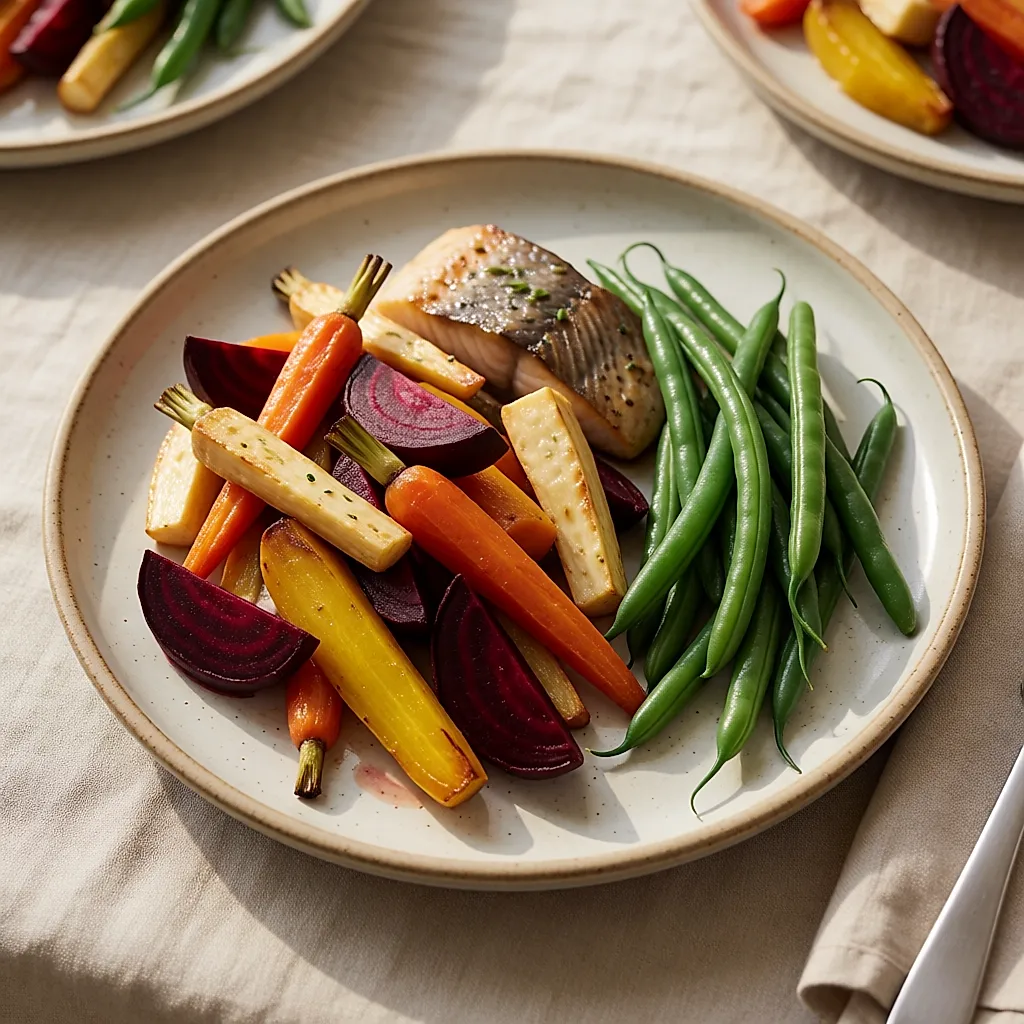
In practice, plenty of people find their balance with a portion of roots that fits in a closed fist, plus green vegetables and a source of protein. This isn't a medical rule, it's a starting marker. If hunger comes back insistent at 10pm, the portion was probably too light — or the meal was short on protein and fat.
One important nuance: roots high in fermentable fibre, beetroot and Jerusalem artichoke above all, don't suit every gut. In some sensitive people they cause bloating and discomfort. Introduce them gradually, and speak to your GP or a registered dietitian if it keeps happening.
On the plate, next to bread or pasta
Comparing is the most instructive part. 150 g cooked pasta on one side, 200 g roasted carrots and parsnips on the other, two slices of bread elsewhere: the volume isn't the same, and neither is how full you feel. Roots bring water and fibre and fill the stomach at a lower energy cost — but satiety varies from person to person and from meal to meal; some people find roots less filling than classic starchy carbohydrates.
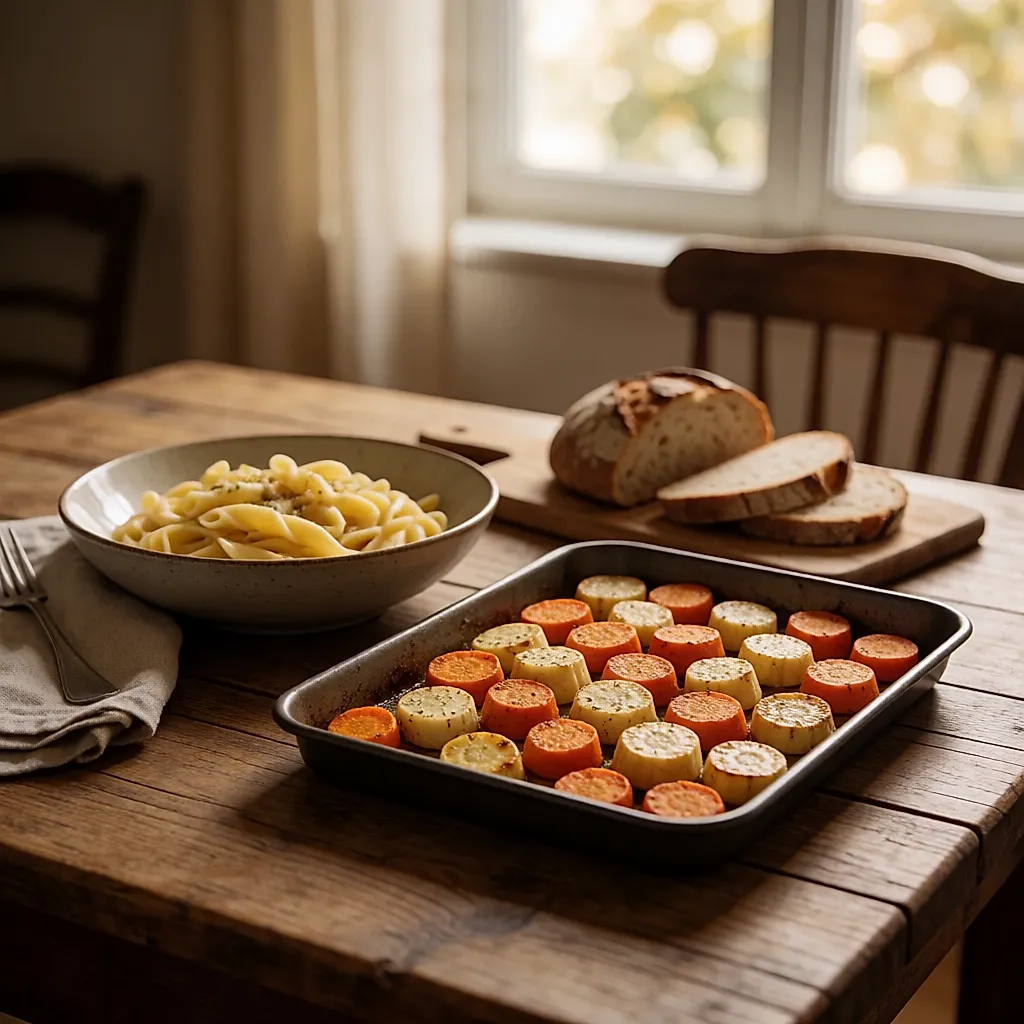
Hence the value of mixing: half roots, half starchy carbs for a few meals, then see what your body asks for. Thick squash and parsnip soup, celeriac mash, well-caramelised roasted rounds — they don't behave the same way. Soup fills you fast, mash holds you longer, rounds get nibbled without you noticing. Texture does half the work.
A week to decide, no scales
Take seven dinners, no more. Three with roots as a standard side, two where they replace half the starchy carb, two where they take the whole slot. Note three things on your phone: hunger before bed, energy the next morning, digestive comfort. Nothing to weigh, nothing to count.
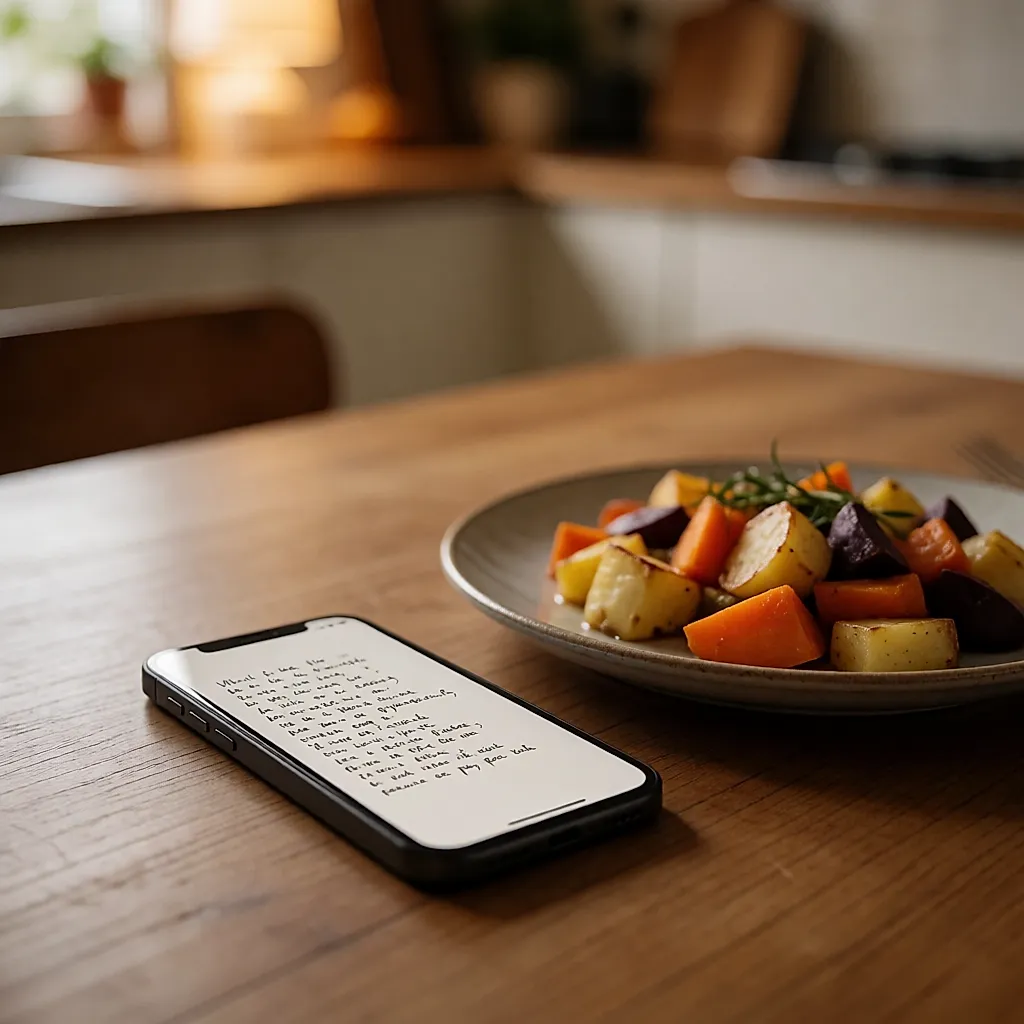
What you notice is usually nothing dramatic, and that's exactly as it should be. You find the threshold at which a plate lasts until bedtime — and the one that has you waking up ravenous. That personal marker beats a portion chart: it accounts for your sleep and your appetite at that moment.
Which leaves the question that decides everything: does it actually taste good? Roasted beetroot, a little salt, a dash of vinegar — you go back for more. A root boiled out of duty — far less so. Portioning always starts with wanting a second bite.
Sources
- NHS — The Eatwell Guide (source of the UK guidance cited above)
- World Health Organization — Healthy diet
- Santé publique France — Manger Bouger, the French national nutrition and health programme (the French guidance this article adapts)
- Anses — French national agency for food, environmental and occupational health and safety

Comments
Your opinion matters: rate the article, react and reply to comments.
Comments are moderated; AI-assisted comments are flagged. Text emoticons (8-), :-), <3…) are automatically shown as images.