

A fortnight ago we were eating lunch outside in short sleeves; this week we're leaving the office in the dark. Suddenly we're counting sunny days the way we count days off. That's exactly when vitamin D comes up again — between a friend who swears by supplements and a colleague who insists butter is enough. Let's take a calm look at what's happening now, what food can do, and what's worth discussing with a healthcare professional.
The sun does the work, but it keeps office hours
Vitamin D is mostly made in the skin when it's exposed to UVB rays. In practice, this skin synthesis works well from April to September, when the sun is high in the sky. From autumn onwards, the light comes in at an angle, travels through more of the atmosphere, and production falls — earlier or later depending on where you live, with latitude playing a far from minor role.

Other factors come into play: skin pigmentation, age, clothing coverage, pollution, how much time you actually spend outdoors. One often forgotten detail: glass blocks UVB. Behind a window, you get the light without triggering production. What we know, and what we don't yet know: the exact amount produced by a simple walk is still hard to quantify — all the more reason not to turn it into a countdown of minutes.
The gesture that costs nothing: find your midday window. A short outing around midday, without counting the minutes, depending on your skin and the weather: walking, eating lunch on a bench, letting hands and face be exposed when the weather allows. It isn't a prescription, just a habit that autumn makes easy to forget — and it's free.
What actually puts vitamin D on your plate
Three food groups deserve a proper place in your meals. Oily fish first: sardines, mackerel, herring, salmon, trout. Then eggs, where the vitamin sits in the yolk. Finally mushrooms that have been exposed to light — some producers do this deliberately, and their vitamin D content rises markedly compared with mushrooms grown in the dark.
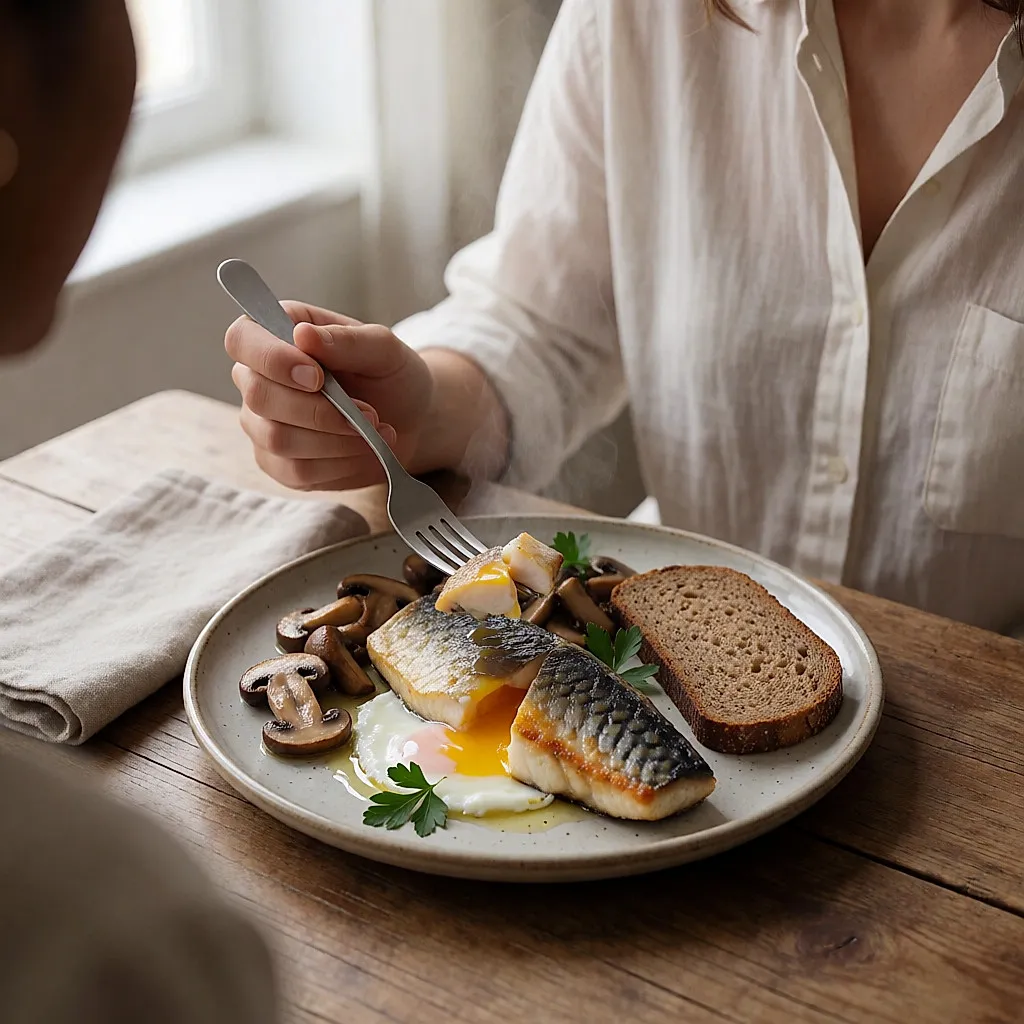
The rest of the basket plays a supporting role. Dairy, butter and some fortified cereals add a modest amount; vegetables and fruit are not notable sources, while red meat and liver can contribute a modest amount. Hence a fairly simple conclusion: oily fish once or twice a week, a fried egg in the morning, mackerel on toast when you need a quick fix. This isn't a special diet; it's ordinary meals — the kind you already want to cook in October.
Blood tests aren't an annual ritual
Many of us believe we should check our levels every autumn, a bit like changing the tyres. UK health authorities do not recommend routine vitamin D testing in the general population. Testing is discussed in specific situations, assessed by a healthcare professional: certain absorption problems, digestive surgery, medicines that interfere with vitamin D, pregnancy, older age, or skin that receives very little sun exposure for medical reasons.

And if a test is done, what matters is how your doctor reads it, not the isolated number. A low value doesn't automatically mean 'you need supplements'; a normal value doesn't excuse you from eating well and moving. It's one piece of the picture, not a verdict from on high.
Supplements: yes, but not blindly
Supplements exist and can help in certain situations, on professional advice. The real pitfall is stacking: the dose in one bottle, plus the multivitamin, plus the formula bought for your skin — and suddenly no one knows the total. Vitamin D is fat-soluble: it is stored, and excess is not harmless.

In practice, remember this: ask a healthcare professional before you start, re-read the labels of anything already in your bathroom cabinet, and keep in mind that a supplement replaces neither your diet, nor daylight, nor follow-up. Three good questions are better than one more bottle.

Budget
On the plate, the cost stays gentle: a tin of sardines or mackerel is around £1–£3, a box of 12 eggs around £2–£4, and a punnet of vitamin D-enriched mushrooms costs about £2–£4 when your shop stocks them. Fishmonger, chilled aisle or tinned: take your pick, and prices vary mostly with range and origin.
On the NHS, a vitamin D blood test is only done if a doctor thinks it's clinically necessary, and you don't pay at the point of use. Private testing is available and usually costs from around £30, depending on the provider. Supplements cost roughly £5–£20 per box depending on form and duration, from a pharmacy, health-and-beauty retailer or supermarket. Pharmacy advice is free; a GP appointment is free at the point of use, though private consultations are paid for.
What to carry into winter
Nothing dramatic, and that's exactly right. Get out around midday when you can, put oily fish in your basket, keep eggs and mushrooms in rotation, and leave testing to those whose doctor has decided it's useful. The rest — dose, frequency, duration — belongs in a consultation, not in the supplement aisle.
Winter will pass either way. Better it passes with habits you can keep, a few tins of sardines in the cupboard, and a question asked in the right place.
Sources
- NHS — Vitamins and minerals: vitamin D
- NICE — NICE guidance and advice
- NHS — The Eatwell Guide
Food supplements do not replace a varied, balanced diet and a healthy lifestyle.



Comments
Your opinion matters: rate the article, react and reply to comments.
Comments are moderated; AI-assisted comments are flagged. Text emoticons (8-), :-), <3…) are automatically shown as images.