
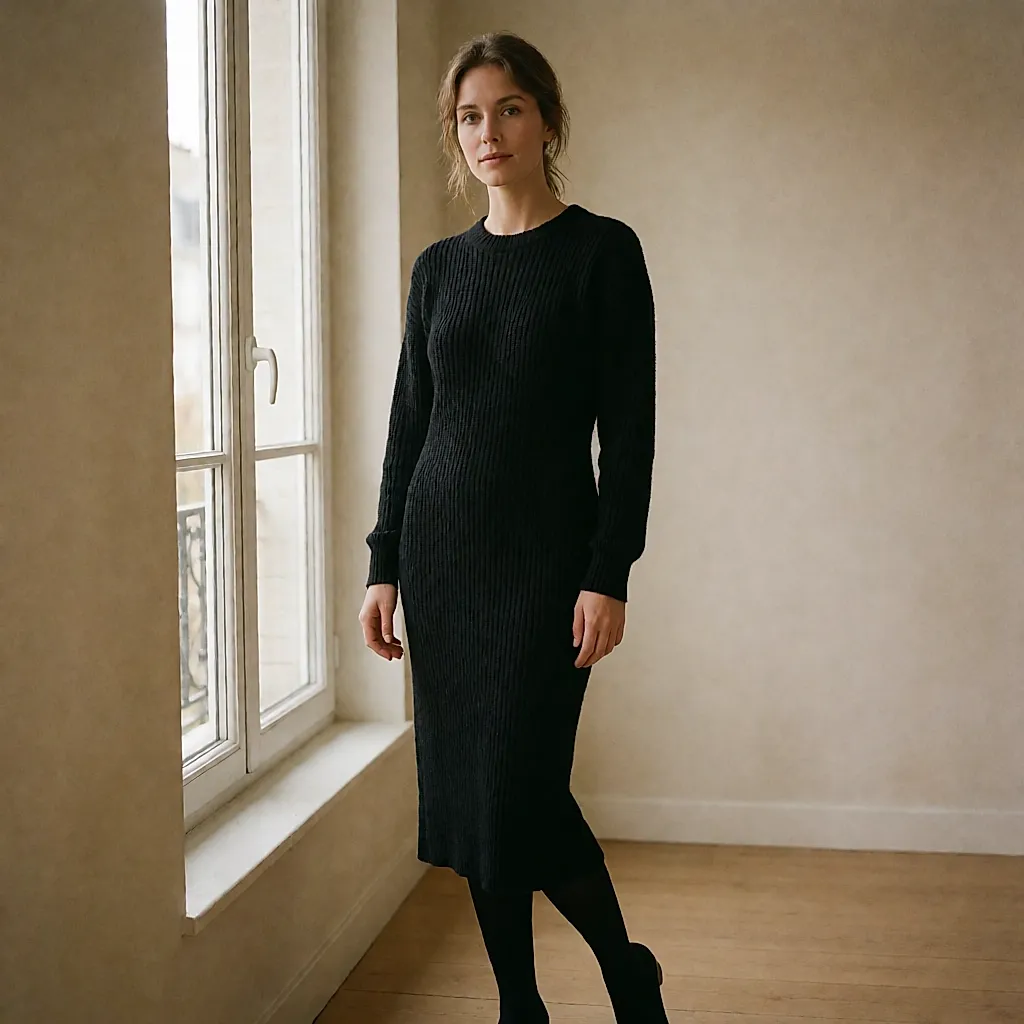
It's Monday, 7.40am, November rain is waiting outside, and the 100-denier pair you ordered in a hurry between two episodes of something has to save your morning. Ten minutes later, the verdict is in: opaque, yes, but shiny enough to look like a wetsuit. You're not asking for the moon — just legs that don't bounce the office ceiling lights straight back at you.
Why denier doesn't tell the whole story
Let's start with the definition, because it explains a lot of disappointments: denier is the weight in grams of 9,000 metres of yarn. So it's about yarn thickness, not knit density — which is why two pairs labelled 80 denier can be completely different: one may look like a mist, the other gives proper coverage.
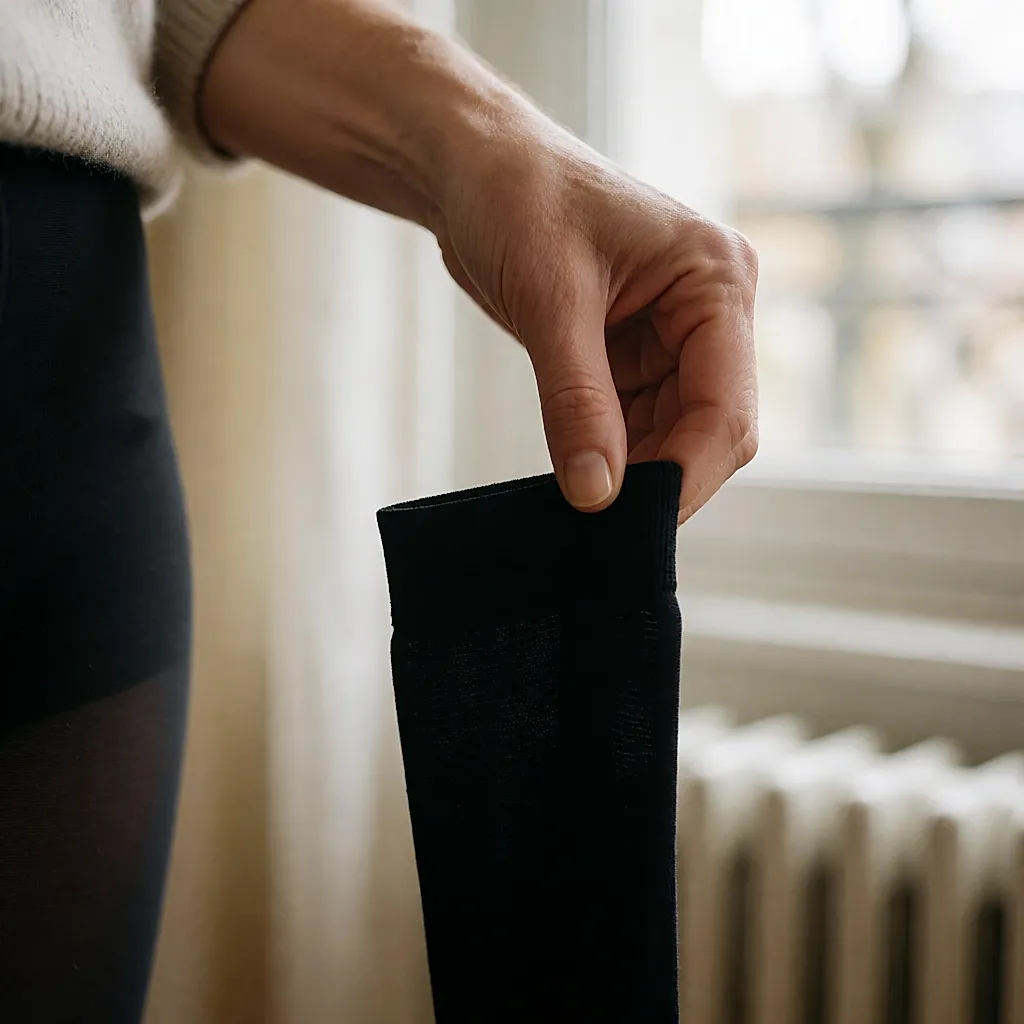
The real work is in how tightly the knit is made. The test is simple: hold the pair up to a window, without stretching it. If the fabric stays an even block, the knit is dense; if you can make out your hand behind it, it's less so. In practice, 40–60 denier is often classed as semi-opaque, 80–100 denier as properly opaque, and anything higher as very covering. But none of that is on the label, and that's exactly where disappointments start.
What causes shine and how to tone it down
Shine has several culprits. There's the yarn: a smooth yarn bounces light back, a textured one far less. There's tension: tights stretched to their limit shine, especially at the knees and between the thighs, where the knit works hardest. Then there's age — knit worn by friction reflects more than it did on day one.
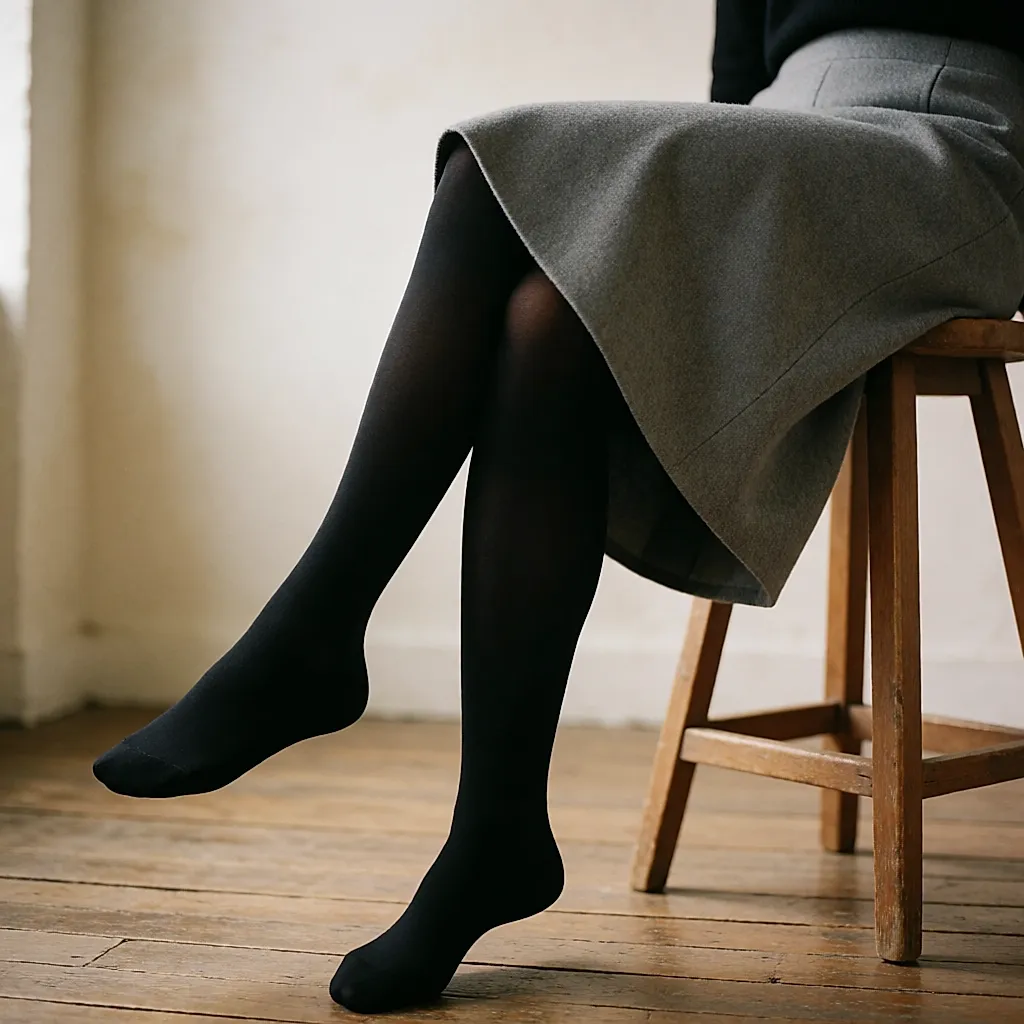
That's why it's worth looking for a matte finish when it's mentioned, and above all refusing to size down 'because it makes you look slimmer'. Let's be blunt: if you're long-legged and the size chart only offers one size, the waistband will slip down and the tights will pull — so they'll shine. Two pairs that fit properly beat one pair that's too small, by a long way.
Waistband and toe seams — the first ten centimetres matter most
A wide, flat waistband knitted in one piece holds better than a thin sewn-in elastic: it spreads pressure, marks the waist less and slips down less over the hours. Too tight, it creates a ridge under a skirt; too loose, it rolls down the moment you sit. The sweet spot is found by trying them standing up, then sitting down — yes, seriously.
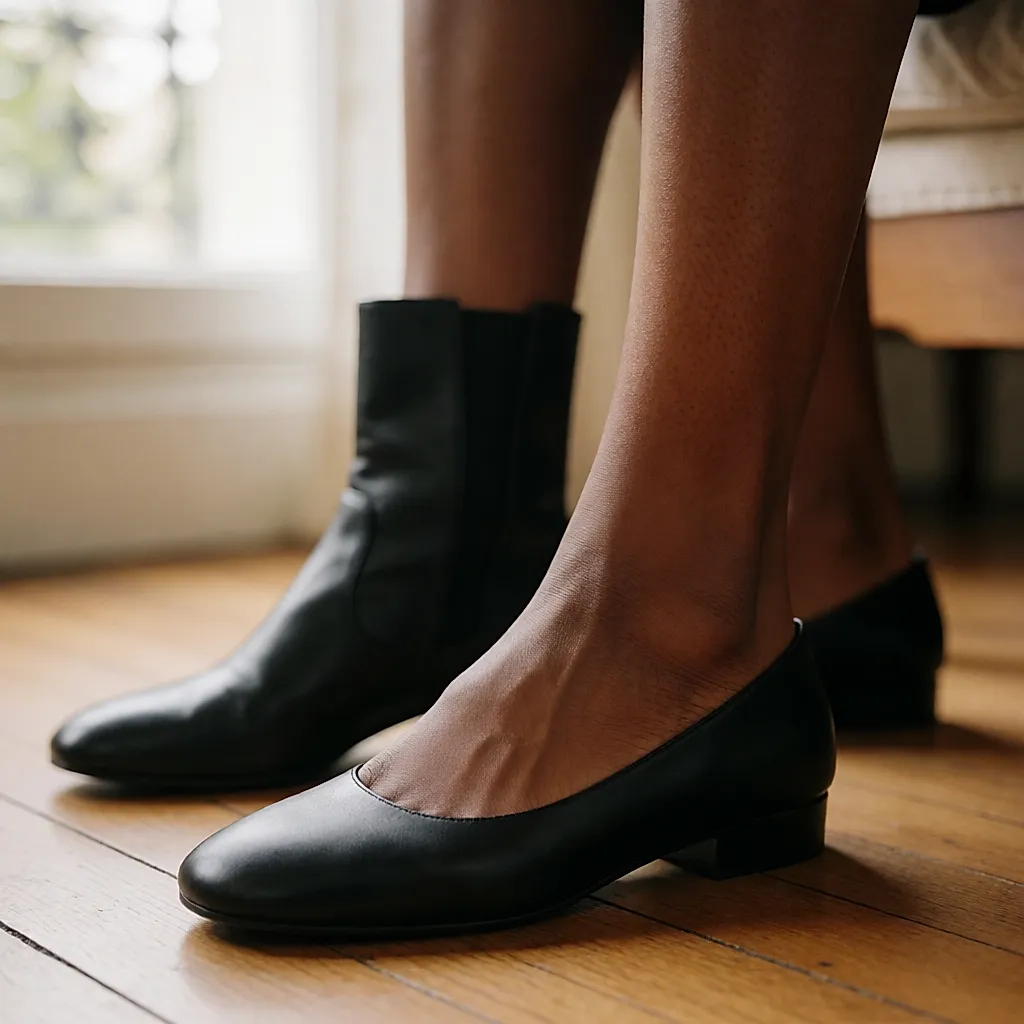
At the toe, choose a flat finish rather than a welded edge that folds back on itself. With closed shoes, a reinforced toe extends the life of the pair without being visible; with open-toed shoes, it gives itself away with every step, so it's a trade-off. The gusset, that panel often in cotton at the crotch, adds comfort and breathability — a detail you notice most when it's missing.
Height matters more than weight
Most size charts cross height and weight, and height matters more than you'd think: a pair that's too short pulls at the crotch, drags the waistband up and shines where it shouldn't. If you're between two sizes, go up one.
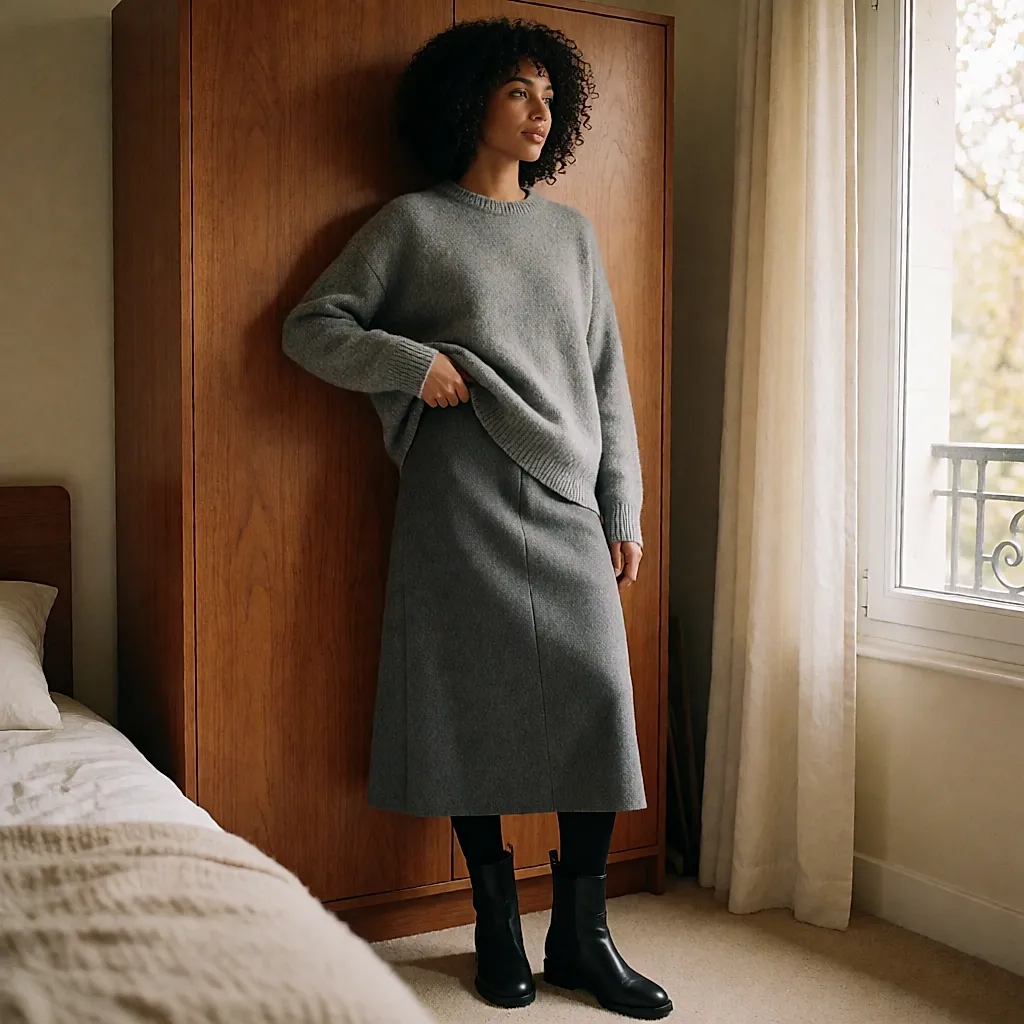
And remember, opaque tights are not leggings. Under a midi skirt with boots, they're a wardrobe basic that holds the silhouette and adds polish for very little. For a 40-minute walk at 3°C, they won't work miracles: that's when layering takes over, with a long skirt and thick socks over the top when there's room.
Budget
Expect to pay around £5–15 in supermarkets or from online accessories retailers for a decent opaque pair, often lasting one winter. From about £15–30, you're into sturdier hosiery with better-finished waistbands that can last several seasons if you launder them with a bit of care. A pair with merino wool or organic cotton, which is rarer, often costs over £25 — the synthetic content, though, is still significant for holding the leg, and a glance at the label is worth more than a packaging promise.
Where to look? Supermarkets for a quick fix, high-street accessories shops and hosiery websites for the widest choice of deniers, haberdasheries for European-made pairs, charity shops for new, still-packaged pairs — never second-hand, which shouldn't even need saying. And the common-sense habit without which the best pair is useless: rotate two or three pairs, wash by hand or in a mesh bag, dry flat.
The move that saves a new pair: put them on in small folds, from the toe upwards, without tugging them on in one go, then smooth up. Rotate three pairs, use a gentle detergent, no tumble dryer: the knit keeps its density, and your opaques stay matte for longer.
So this winter, go for a dense knit, a wide waistband, a matte finish and the right size for your height. Four criteria, and you're sorted — the rest is just shine you won't miss. Do you already have your go-to pair, or are you still on your third try on a Monday morning?


Comments
Your opinion matters: rate the article, react and reply to comments.
Comments are moderated; AI-assisted comments are flagged. Text emoticons (8-), :-), <3…) are automatically shown as images.