

For most babies, breast milk is food. For some, it is more than that. For very premature babies, for newborns who cannot tolerate cow's milk, or for those living with kidney failure or a heart condition, it can become essential. And when a mother does not produce enough milk — a common situation after a premature birth — other mothers step in. A discreet, almost invisible act that nevertheless saves lives.
What we know
For several decades, specialist centres have been collecting, testing and processing milk donated by breastfeeding women. These are known as milk banks. There are around fifteen across the UK today, run by NHS trusts and hospitals. These facilities are not businesses: they work with maternity units and neonatal services to feed the babies who need it most.
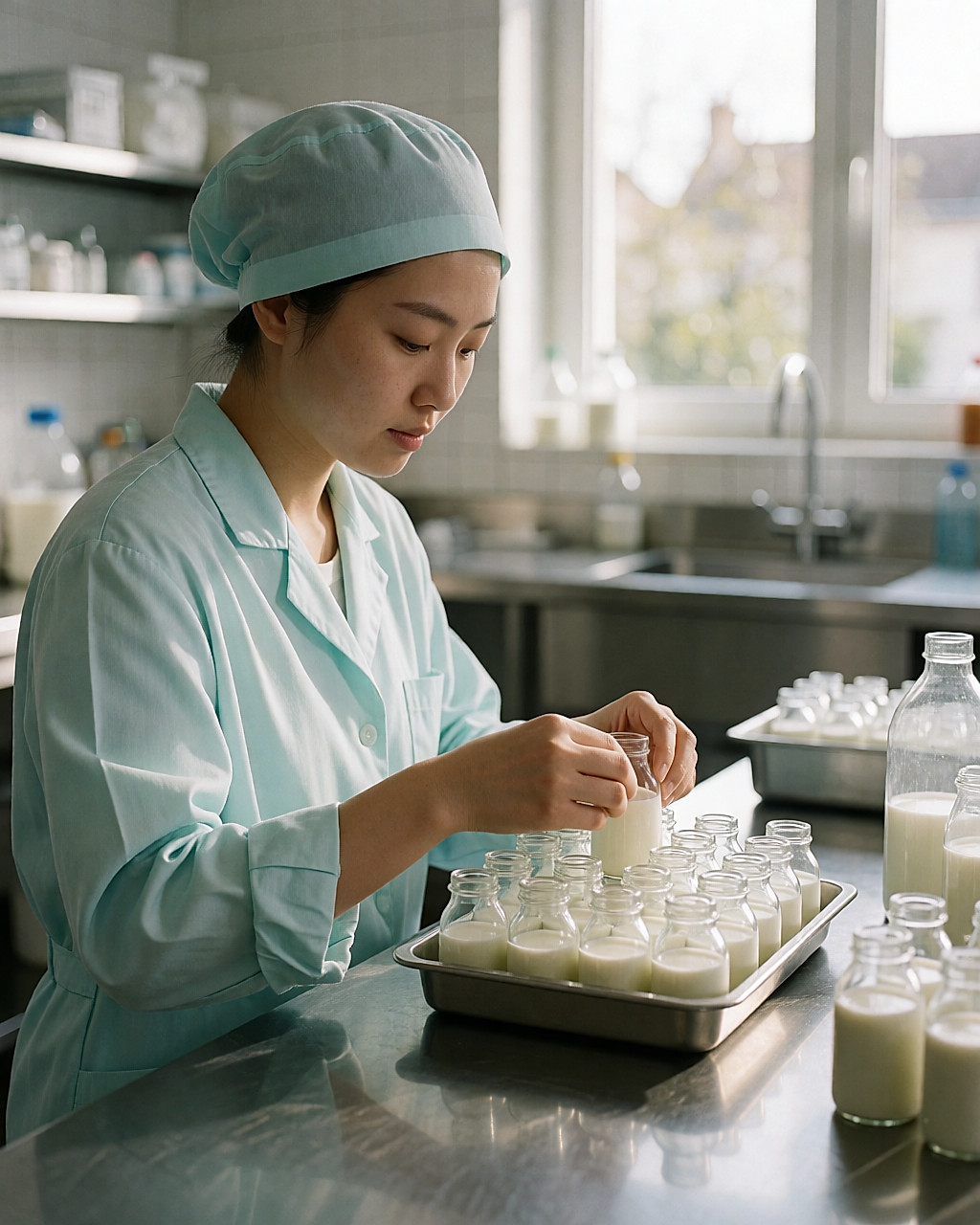
The good news: you do not need to be a "super-producer" to take part. You decide how much to give, and it can stay modest. Just a few dozen millilitres collected regularly is enough to build up precious reserves. The need, however, is very real: milk banks regularly run short. Every donation really tips the scales.
How donation works in practice
First step: contact your nearest milk bank. The team will talk things through with you, check that you meet the criteria, then give you a breast pump and sterile bottles. After that, everything happens at home.

You collect the milk while you are feeding your baby. You express your milk, store it in the fridge or freezer according to the instructions you have been given, and a collector comes to pick it up from your home. No travelling, your routine stays the same.
Hygiene, however, is the sensitive part. Sterilising equipment, washing hands, keeping to the right temperatures and timescales: these precise steps are what make the milk usable.
Once collected, the milk is tested, then treated — usually pasteurised at a low temperature — before being frozen and distributed to maternity units and neonatal services. It is never sold or charged to families.
What we do not know yet
Donation is not open to everyone. Certain diseases that can be transmitted through milk, certain medications or a particular set of circumstances may rule you out. The milk bank team will assess your situation, based on your answers and a blood test.

In other words, there is no such thing as a typical donor. What matters is the milk bank's assessment, not a general rule found online. If you are unsure, talk to your midwife or GP.
Milk donation is voluntary, anonymous and free: it is neither sold to families nor paid for. If you are not eligible, that is not a failure — there are other ways to help, and the team will talk you through them without judgement.
The budget side
Donating your milk costs nothing: the milk bank provides the pump and sterile equipment. If, however, you are breastfeeding or expressing for your own baby, a breast pump is a budget in its own right.
A manual breast pump costs around £20, up to £40 depending on the model. An electric model, single or double, is more like £100 to £250 depending on the brand and number of parts. Another option: hiring one from a pharmacy. This may be possible on prescription, and in some cases the NHS may cover it during the breastfeeding period.
Prices vary with the range, the number of parts and the retailer. You will find them in pharmacies, supermarkets or online, and the difference can be significant from one outlet to another. If you are looking at second-hand options, be aware that the parts that come into contact with milk should be replaced — it is the only way to be sure on the hygiene front.
Donating your milk means offering a few dozen millilitres that will weigh heavily for a baby born too soon. No need to be perfect, no need to be a machine: just an act, with the support of a team that knows its subject. And if a doubt is holding you back, a simple call to your nearest milk bank is enough to clear things up.




Comments
Your opinion matters: rate the article, react and reply to comments.
Comments are moderated; AI-assisted comments are flagged. Text emoticons (8-), :-), <3…) are automatically shown as images.