
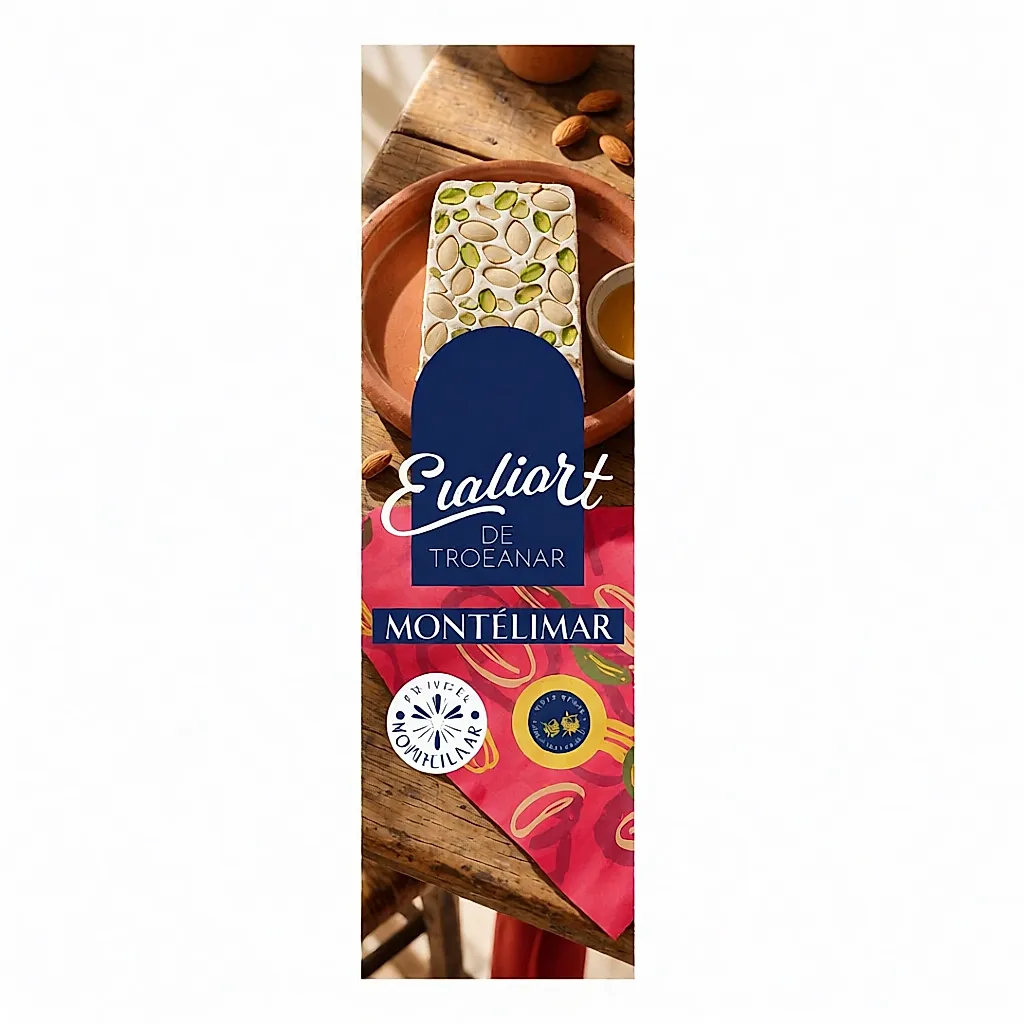
You have almost certainly come across those white bars near the tills, at a motorway service station or in a village shop, somewhere between holiday souvenirs. Montélimar nougat is quickly filed away as a 'service-station souvenir'. Yet behind the golden wrapper lies a genuine Mediterranean confection, protected since 2015 by a protected geographical indication (PGI), and a bit of a headache if you are watching your sugar.

One family, many names
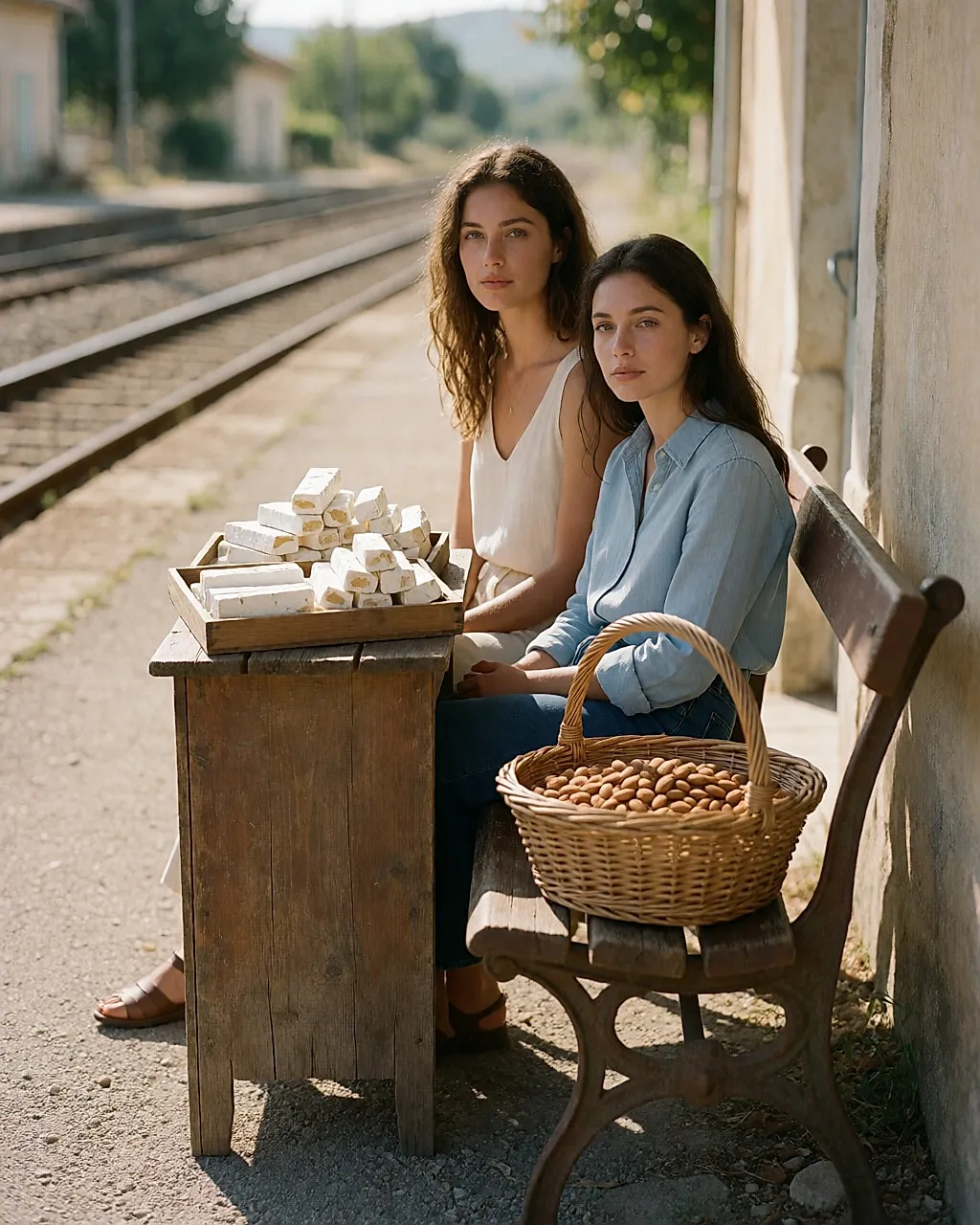
Under the Mediterranean sun, nougat changes accent: turrón in Spain, torrone in Italy, mandolato in Greece. The recipe shifts, but the basic trio remains the same — sugar, honey and nuts: almonds, pistachios, walnuts, hazelnuts. The French word comes from Provençal 'nogat', itself derived from 'noga', meaning nut, from Latin nux. The scholarly etymology 'nux gatum', long repeated, is now disputed. In France, it is eaten less than in its southern neighbours, but the phrase 'Nougat de Montélimar' is firmly lodged in the memory, well beyond actual consumption.
Montélimar, a capital born of the railways
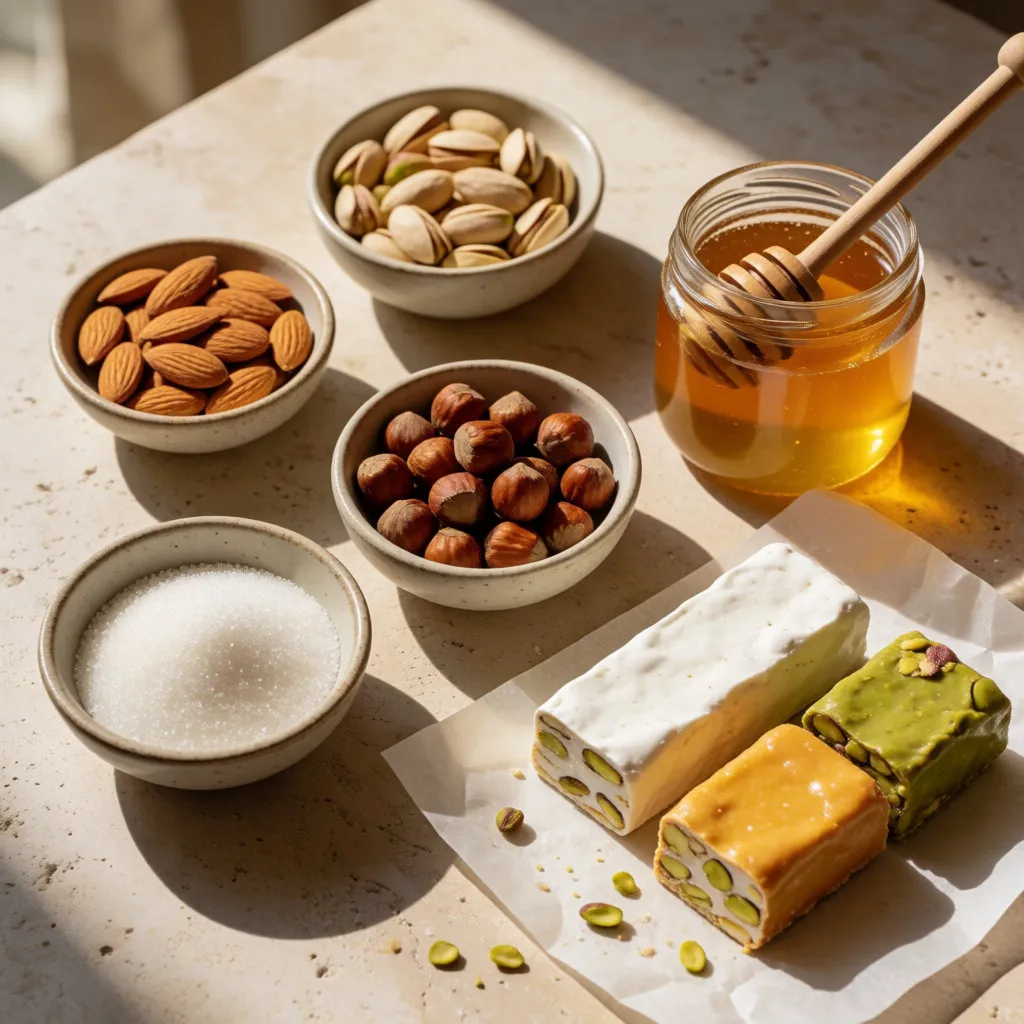
Why did this town in the Drôme, crossed by the Roubion, become the French capital of nougat? Legend credits the arrival of almond trees in the region to Olivier de Serres, a 16th-century agronomist. The reality is more prosaic. In the 19th and early 20th centuries, trains run by the PLM company (Paris-Lyon-Méditerranée), the predecessor of France's national rail operator, SNCF, stopped at Montélimar to replenish their water and coal. On the platforms, women vendors held out nougat bars to travellers. For motorists, the endless drive through the town in the summer heat led parents to buy something to keep the children quiet. The opening of the A7, the 'Autoroute du Soleil' (Sun Motorway), made local confectioners fear they would lose their passing trade. Their response was to create a group, Internougat, tasked with placing the bars at motorway services. The model still holds, supplemented by online sales and factory shops, and the region accounts for most French production.
What's really in a bar
The PGI is not vague: at least 30% almonds and 25% honey, with a strictly controlled list of ingredients. The traditional recipe often uses egg white as a foaming agent. In other words, not all nougats are 'de Montélimar', and some industrial products happily play on the confusion.

Read the label in 30 seconds
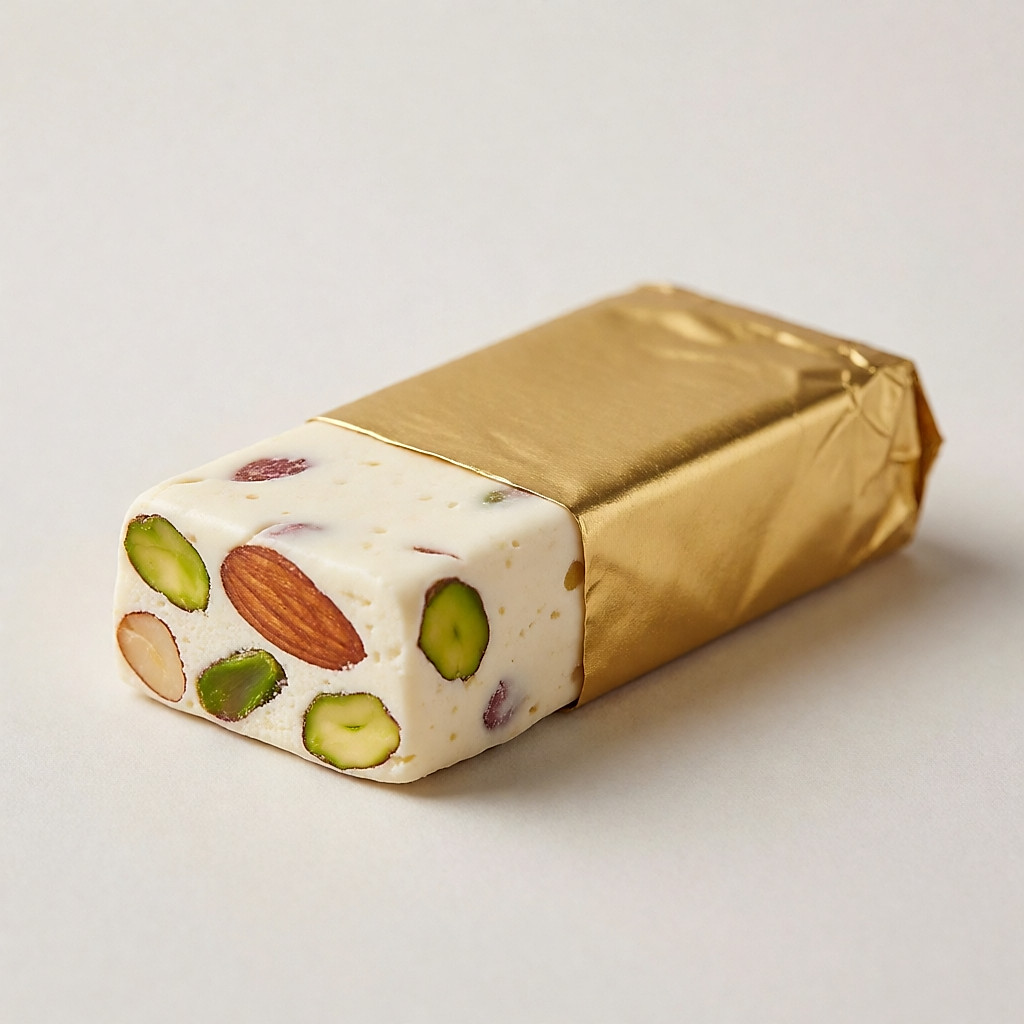
- Look for the exact wording 'Nougat de Montélimar' and the PGI logo, not just 'nougat' with a pretty photo of a lavender field.
- Check the almond content: the higher it is, the more flavourful it is, and the more it costs.
- Nougat made with egg white is not vegan: look for an egg-free version if needed.
- For allergens, check for nuts, egg and sometimes soya (lecithin).
Health-wise: neither superfood nor forbidden
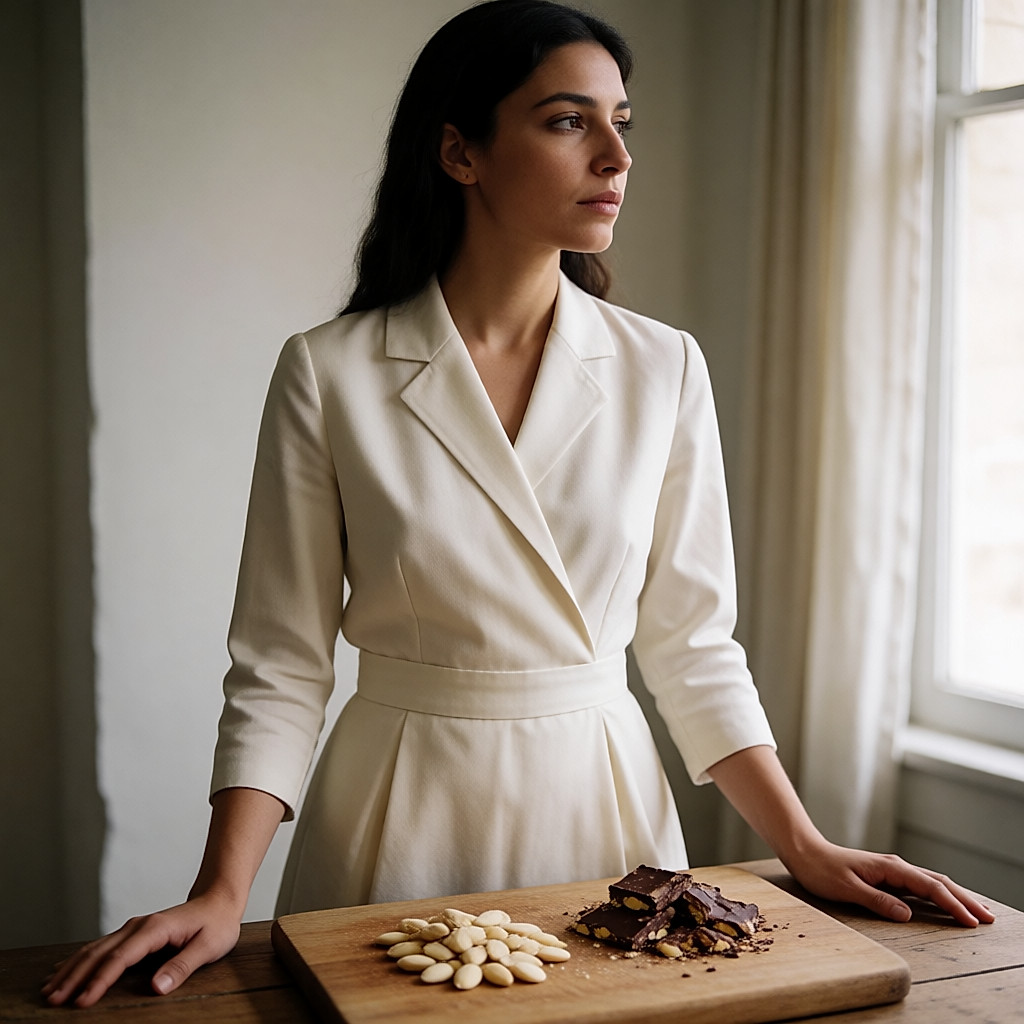
Almonds provide fibre, vitamin E, magnesium and unsaturated fats. Honey and sugar, meanwhile, provide fast-release carbohydrates. In practice, remember that it is a calorie-dense treat: a small bar counts as a snack, not as a portion of fruit. It is all about portion and timing. A square after a meal, with a coffee, is just right. Its sticky texture also points to a simple precaution: think about your dental hygiene if you eat it often. And if you live with diabetes or a strict low-sugar diet, this is not a food to manage on your own: talk to a healthcare professional.

Budget
On price, expect around £3–£5 for a 100g bar in a supermarket or from a confectioner, and more like £7–£17 for a handsome 200–400g block from a specialist shop. Gift boxes are often £13–£30. What makes the price vary? The almond content, whether it carries the PGI, the weight, the organic range and where you buy it: a factory shop is usually cheaper than a motorway service station, and online sales add delivery charges. For a first try, a small PGI bar is enough to give you an idea.
Choosing wisely
Almonds used in Europe often come from California or Spain, two regions where cultivation is water-intensive. Some Provençal growers are, however, reviving local almond trees, with more modest yields — a criterion that can guide your choice. On the trend front, organic, less-sweet or dark chocolate-coated nougats are appearing. Careful: a reduced-sugar product cannot carry the PGI, so if the label matters to you, you will have to choose your side.
The bottom line? A short ingredient list, slow enjoyment, and remembering what Mediterranean tradition makes of it: a festive treat, not an everyday food.
Sources
- INAO — 'Nougat de Montélimar' fact sheet, protected geographical indication.
- European Commission — eAmbrosia register of geographical indications.
Food supplements do not replace a varied, balanced diet and a healthy lifestyle.


Comments
Your opinion matters: rate the article, react and reply to comments.
Comments are moderated; AI-assisted comments are flagged. Text emoticons (8-), :-), <3…) are automatically shown as images.