
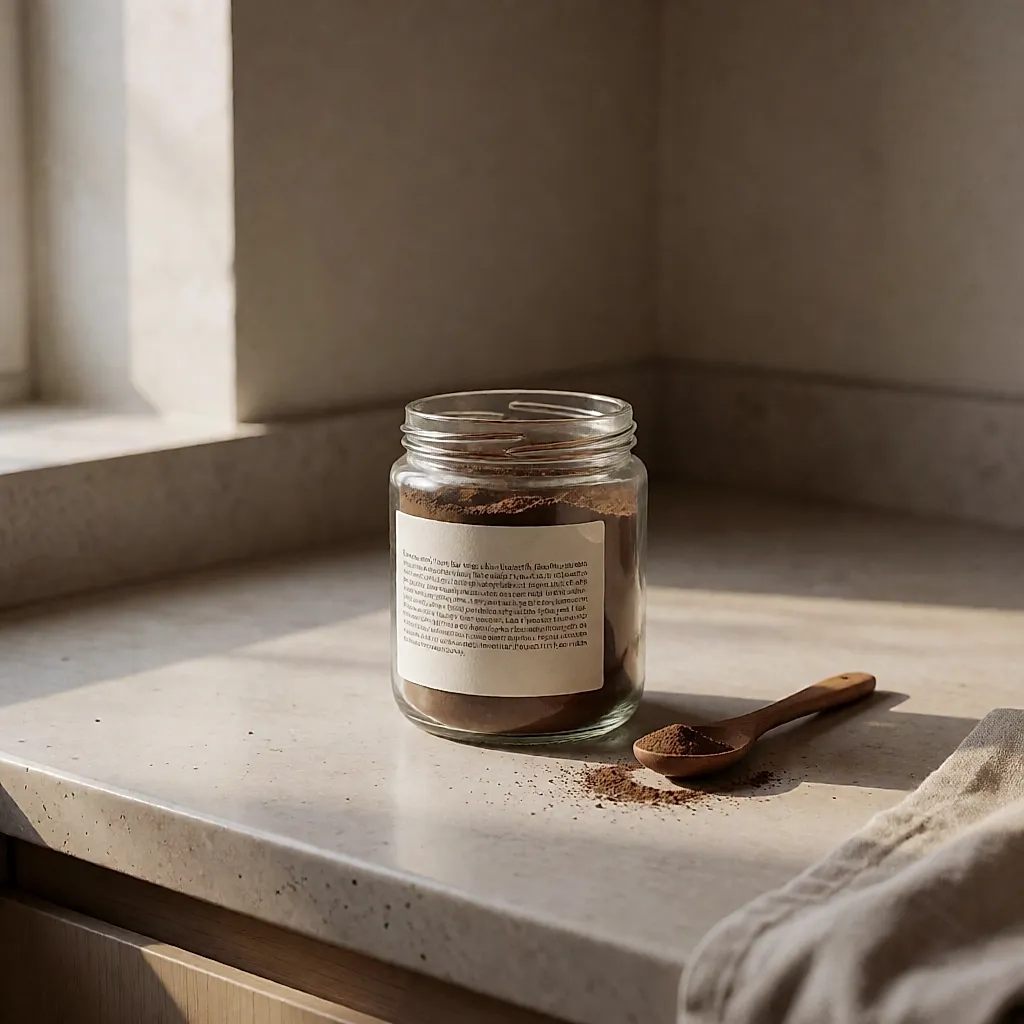
You're in the supplements aisle, a jar of brown powder in your hand, and the label is staring back at you: "Reishi, 10:1 extract". Ten to one… of what, exactly? Beside you, another shopper is weighing up two brands the way you'd choose an avocado — by feel, by sight, by instinct. Except here, instinct has very little to go on.
In recent years, so-called adaptogenic mushrooms have moved out of the niche health-food shop and onto shelves next to the vitamins and cough syrups, onto pharmacy counters and into subscription boxes. Reishi, lion's mane, sometimes shiitake: the demand is real, the promise often much vaguer. So we learn to read.
Where these two come from
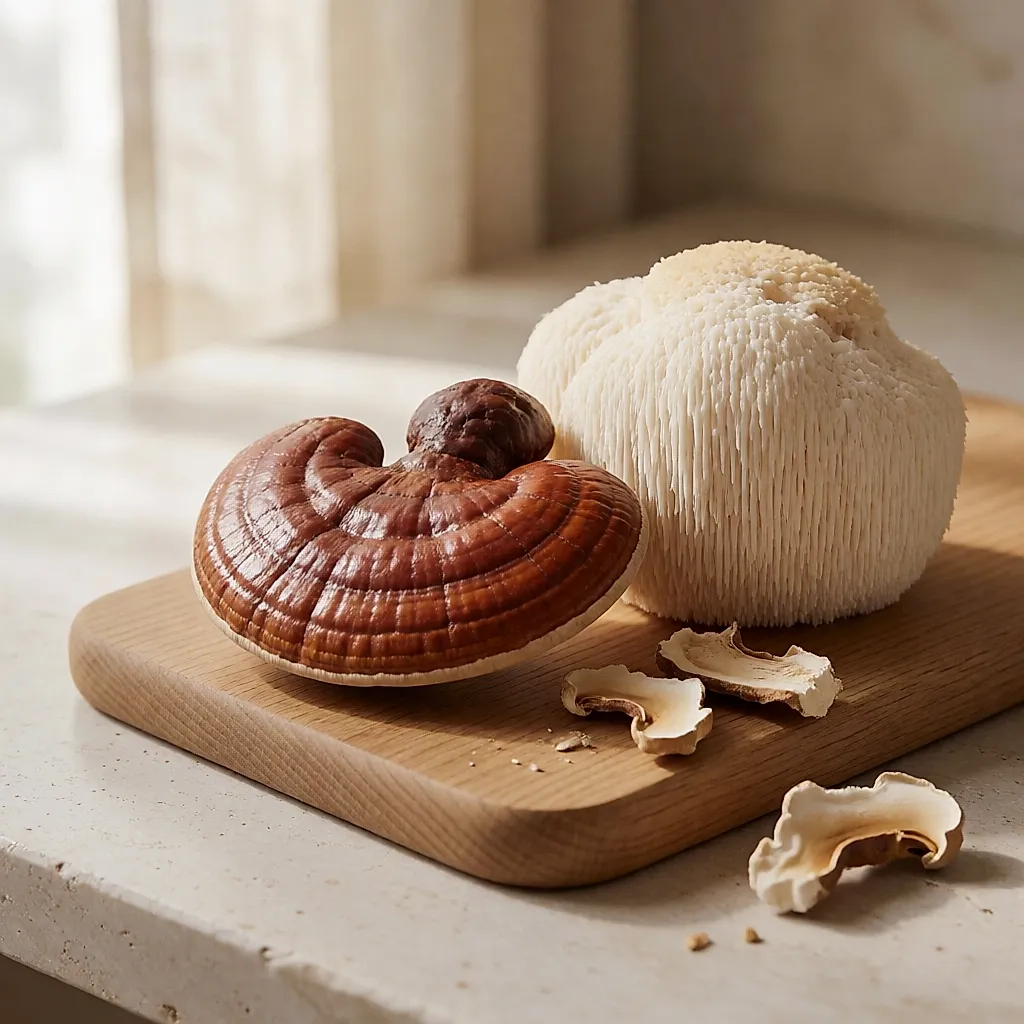
Reishi is Ganoderma lucidum, a glossy-capped mushroom long used in East Asian pharmacopoeias — sometimes nicknamed the "mushroom of immortality". Lion's mane, Hericium erinaceus, takes its name from its shaggy pom-pom shape, which does indeed suggest a mane. Both share centuries of traditional use, in a general tonic-and-support logic, some distance from the very targeted promises printed on today's packaging.
What people tend to look for here is a nudge: better focus at the end of the day, calmer sleep, an immune system they imagine is sturdier. The demand is legitimate; it isn't proof. What we know, and what we don't: modern research is looking into these mushrooms, often with small study groups, with preparations and doses that vary widely from one study to the next, and with systematic reviews that remain mixed. In other words, the available data don't support a conclusion of therapeutic effect — which isn't the same as saying "they don't work". Simply: we can't yet call it, and a label should never call it for us.
Sporophore or mycelium: the detail that changes everything
Two extracts can carry the same name without containing the same thing. The sporophore is the mushroom as you'd picture it: the fleshy part that grows, that you pick and cook. The mycelium is the network of filaments living in the substrate — often grown on rice or cereal grains. In that case, the powder also carries some of that substrate, which is hardly scandalous but worth knowing. A serious label states the part used; if it stays silent, that in itself is telling.
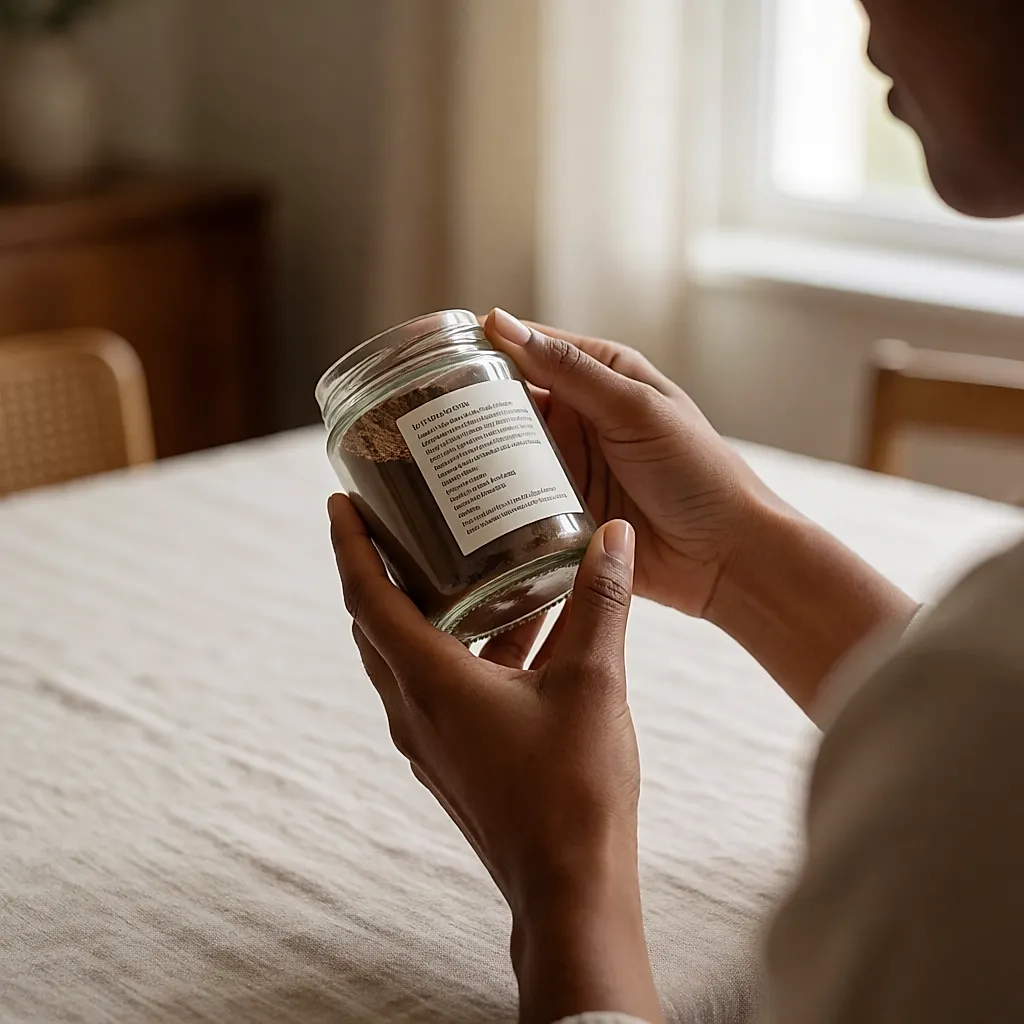
Then comes the extraction ratio, that "10:1" printed in large type. It tells you how much raw material was needed to produce one unit of extract. It isn't a regulated standard, and a high ratio isn't automatically a mark of quality: it all depends on the starting material and the process (water, alcohol, or both). Look instead at whether the part used is named, whether the ingredient list stays short, and — when it appears — the beta-glucan percentage, bearing in mind that testing methods vary and that figure remains a guide, not proof.
Powder, capsules, tincture
Loose powder has a rugged appeal: you measure it by the teaspoon, stir it into coffee or porridge, and accept the woodland taste. It's also the cheapest per gram and the least precise — between a level spoon and a heaped one, the gap is a generous one, and nobody tells you that.
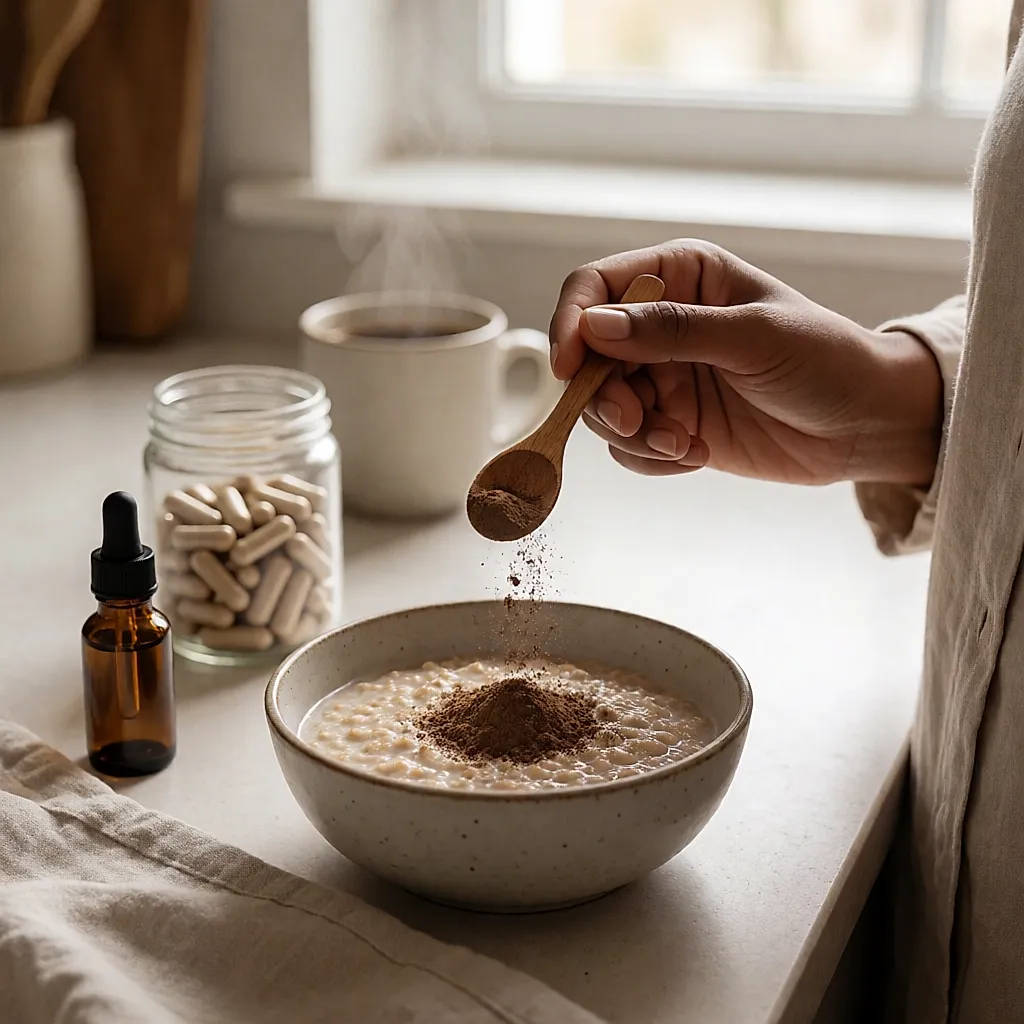
Capsules solve that vagueness, state a dose per serving and travel well: to the office, away for the weekend, in a bag that's already bursting at the seams. Their limits come down to the packaging, the number of daily servings and the make-up of the capsule itself, which is worth reading. Tinctures, finally, are counted in drops and contain alcohol; how much mushroom is actually in there is often less legible than on a powder. Three formats, three habits: it's up to you which fits most easily into your week.
What it costs
In the UK, expect to pay somewhere in the region of £15 to £35 for a jar of powder or capsules, depending on the size and the range on offer — the spread is wide, and that's normal. Loose powder often works out cheaper per gram than capsules; organic certification, the part used, the jar size and where you buy it all shift the price too. You'll find these products in health-food shops, at the pharmacy counter and in online specialist retailers.
The useful habit: compare the price per gram, or the cost per serving, rather than the price on the label. A £12 jar holding 60 g isn't better value than a £24 jar holding 120 g. And a pretty glass jar doesn't make up for three unreadable lines of ingredients.
What isn't negotiable
These mushrooms are sold as foods or food supplements, not as medicines. They don't replace any treatment, and no label should suggest otherwise. If you're pregnant or breastfeeding, taking medication — some interactions with anticoagulants or immunosuppressants are mentioned in the literature, though the data remain limited — or simply unsure, speak to a health professional before opening the jar. It's a precaution, not suspicion.
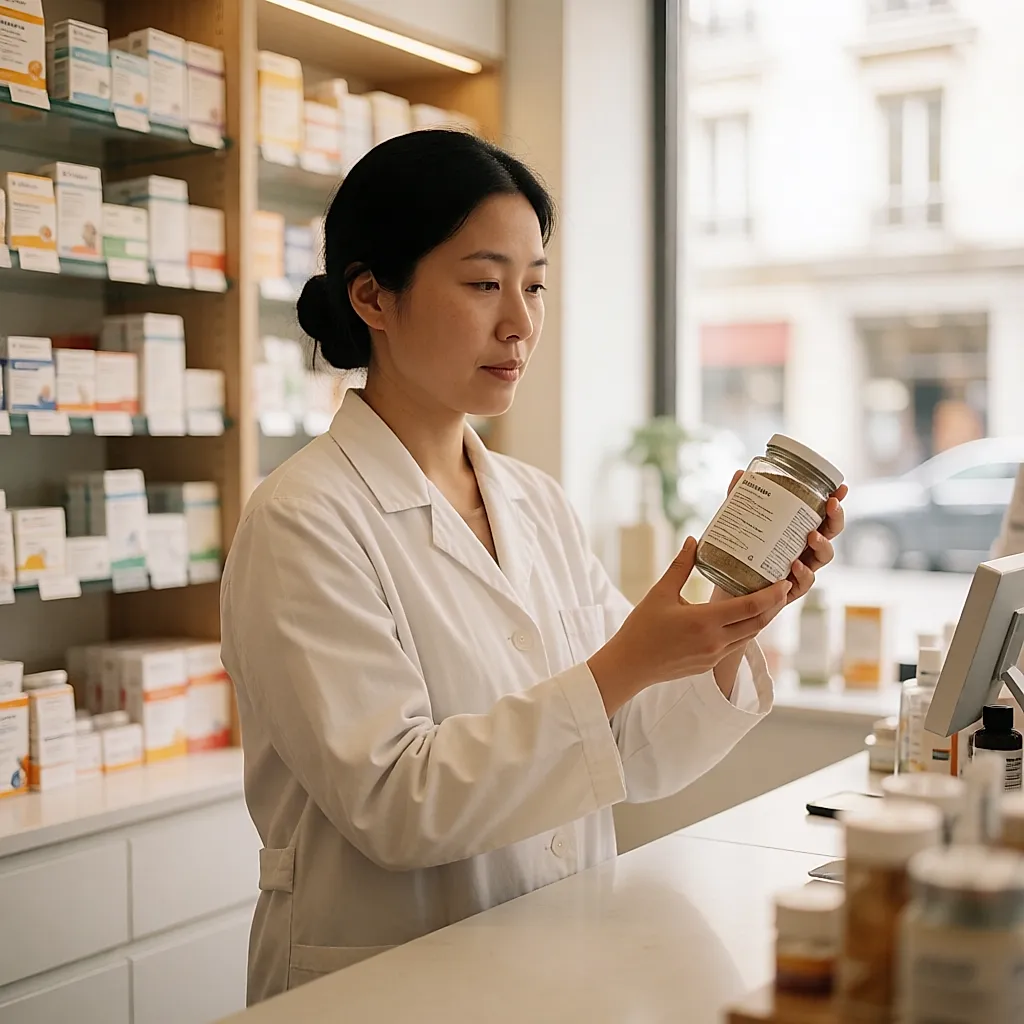
The question to ask at the counter: "Which part of the mushroom is used, and in what form?" A pharmacist or a specialist retailer should be able to tell you. If no one can, walk away: the packaging won't say any more.
There's no rush, anyway. A mushroom used for centuries won't take offence if you spend three weeks reading labels, comparing two jars and deciding your breakfast is doing perfectly well without brown powder. Maybe that's the real reading: buying with your eyes open, or choosing not to buy at all.
Sources
- Food Standards Agency (FSA) — Food supplements
- MHRA — Medicines and Healthcare products Regulatory Agency
- NCCIH — Medicinal mushrooms: what the science says
- Soil Association — Organic certification in the UK
- Chartered Trading Standards Institute — Consumer labelling and protection
Food supplements do not replace a varied, balanced diet and a healthy lifestyle.



Comments
Your opinion matters: rate the article, react and reply to comments.
Comments are moderated; AI-assisted comments are flagged. Text emoticons (8-), :-), <3…) are automatically shown as images.