
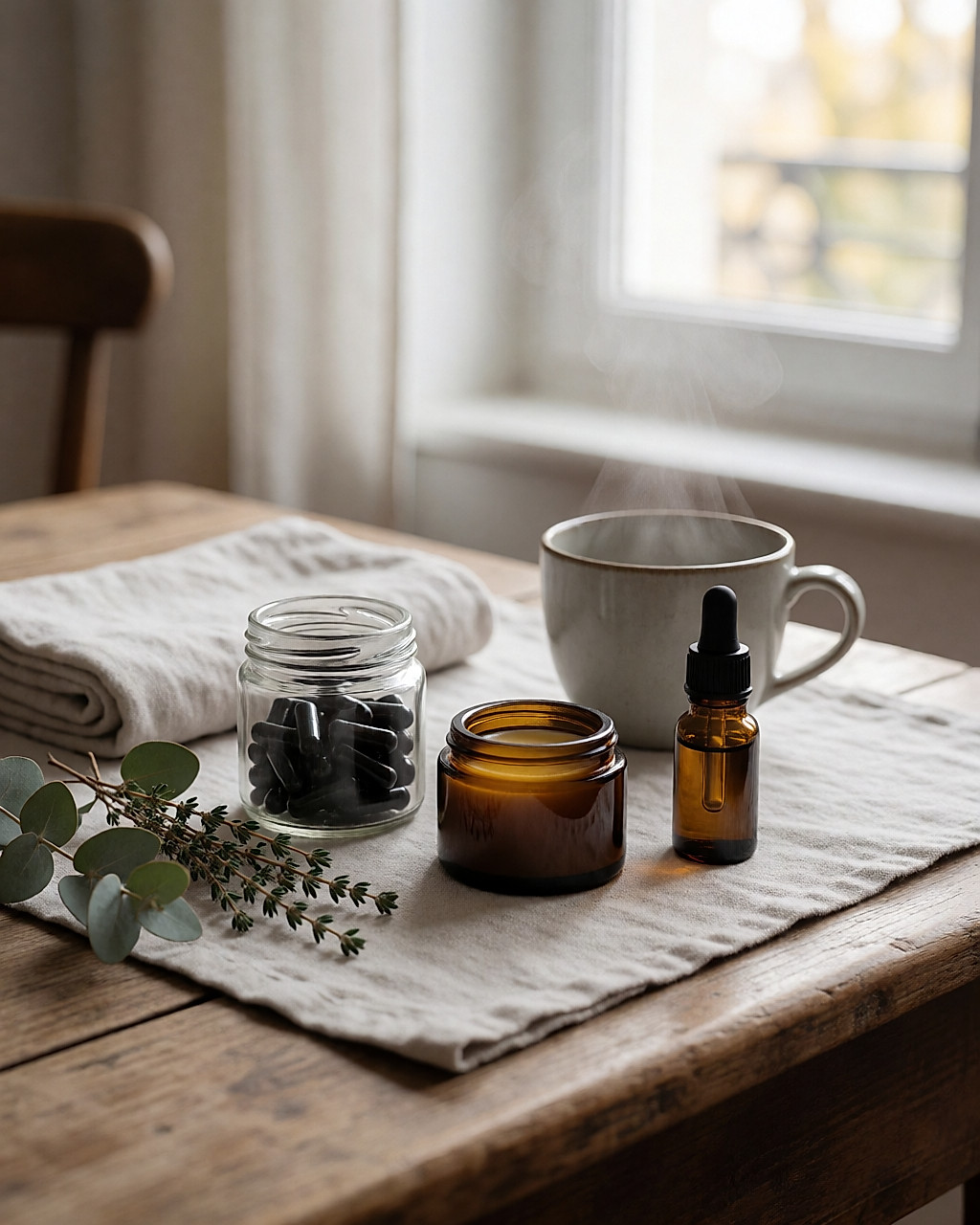
Once used by our grandmothers, some remedies were handed down for the everyday aches and pains. Neglected for many years, they are now making a comeback in homes, championed by people who are tired of conventional medicines that don't always do what they promise. Indigestion? Trouble getting to sleep? Muscle aches? For fans of natural medicine, here are a few old-fashioned remedies — and the precautions that come with them.
Activated charcoal: traditional, but it has plenty to say
Activated charcoal, traditionally used for bloating, is a natural remedy often made from carbonised coconut shells. It is available in capsule form, which makes it easy to fit into a routine.
The real point of caution lies elsewhere: charcoal also binds to certain medicines, including oral contraceptives and thyroid treatments. It is therefore best to space out doses and ask your pharmacist for advice before starting — a simple habit that can save a lot of trouble.

Tiger Balm: all about the sensation
Made with aromatic substances such as camphor, menthol and clove essential oil, Tiger Balm is used in traditional Chinese medicine for the warming or cooling sensation it provides. Applied locally, it may offer a little comfort thanks to that sensation — nothing more, but on days when your back is aching, that can be enough.
A few precautions, all the same: apply it away from the eyes and face, never on a wound, never under a tight bandage or under a hot water bottle. If you have an injury or persistent pain, seek advice from a healthcare professional. And if the pain worsens, or is accompanied by swelling or fever, it is no longer a matter for balm: you should see a doctor.
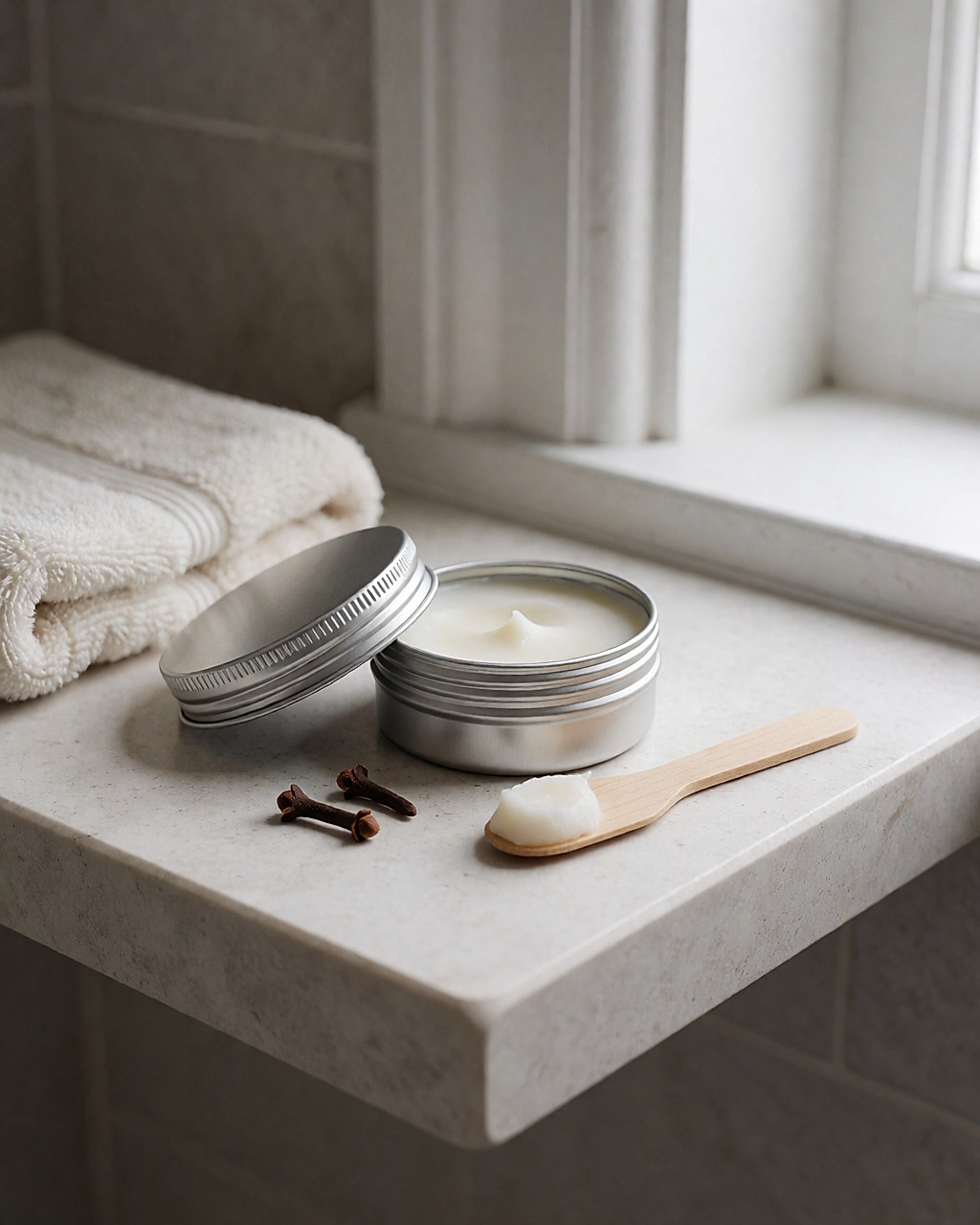
Poultices and local heat
Applied to the affected area, like a dressing, a traditional poultice provides local warmth. Our grandmothers used, for example, a mustard poultice: they heated it in boiling water and then applied it to the chest, taking care not to burn the skin. A gesture that required attention, and one not to be copied lightly.
For gentle, practical warmth, there are now heat patches available in shops — easy to use, they warm the area gently. Again, be careful to follow the instructions: no patch on broken skin, caution over the risk of burns, no layering with camphor cream or a hot water bottle. Heat mainly provides temporary comfort; it does not repair an injury, and if the pain is intense or persists, it is better to seek medical advice without delay.

Warm milk and a hot toddy: comfort, not a cure
After a busy day, it is not unusual to have trouble getting to sleep. Instead of tossing and turning in bed again and again, you can, before going to sleep, treat yourself to a glass of sweetened warm milk: a comforting hot drink, quite simply. Milk contains tryptophan, an amino acid sometimes mentioned in sleep regulation, but the effect of a glass of milk on getting to sleep has not been proven.
When it comes to a cold, our forebears' hot toddy is no remedy: a hot toddy (hot water, rum, honey, lemon) may offer a moment of comfort, provided you keep in mind that alcohol has no curative effect and is not recommended depending on age, pregnancy or medications. If in doubt, ask your doctor for advice.
And don't forget the simple steps: drink regularly, rest, air the room. The body does the rest, at its own pace.
Inhalations: steam, but keep your distance
With a cold or rhinitis, nothing is more unpleasant than a blocked nose. As a simple comfort measure, you can warm water in a bowl and add lavender, thyme, rosemary or eucalyptus. Without leaning over boiling water or inhaling deeply, you can breathe in the vapours for a few moments, at a distance, keeping your eyes protected.
Be aware of the risk of burns, especially with hot water and essential oils. If symptoms persist, speak to a healthcare professional.
Grandma's remedies are sometimes used for everyday minor ailments, but they are no substitute for a diagnosis or treatment. If pain lasts, or you have a fever, unusual symptoms or any doubt, don't push on: speak to a healthcare professional.
Budget
Budget-wise, grandma's remedies remain generally easy on the wallet. Expect around £4 to £13 for a box of activated charcoal capsules, £4 to £10 for a pot of Tiger Balm and £4 to £13 for a box of heat patches.
Milk, lavender, thyme and rosemary can be bought at the supermarket, pharmacy or health food shop for a few pounds. Prices vary according to size, brand and where you buy, with organic and short-supply-chain options often at the top of the range. And as always, it is worth comparing before you buy.
Sources
- Assurance Maladie (ameli.fr) — practical advice on colds and everyday habits.
- ANSM, French National Agency for the Safety of Medicines and Health Products — information on activated charcoal and medicine interactions.



Comments
Your opinion matters: rate the article, react and reply to comments.
Comments are moderated; AI-assisted comments are flagged. Text emoticons (8-), :-), <3…) are automatically shown as images.