
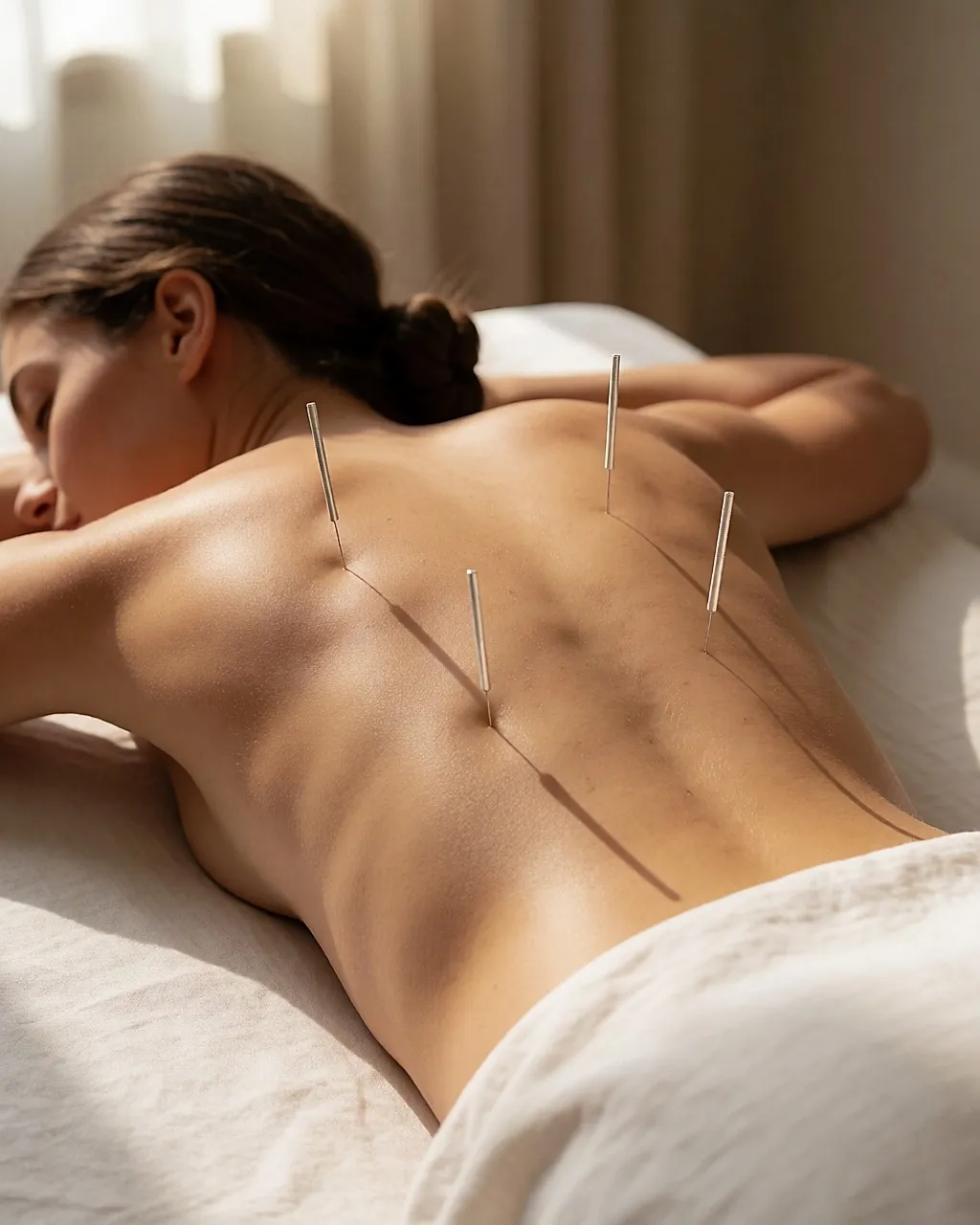
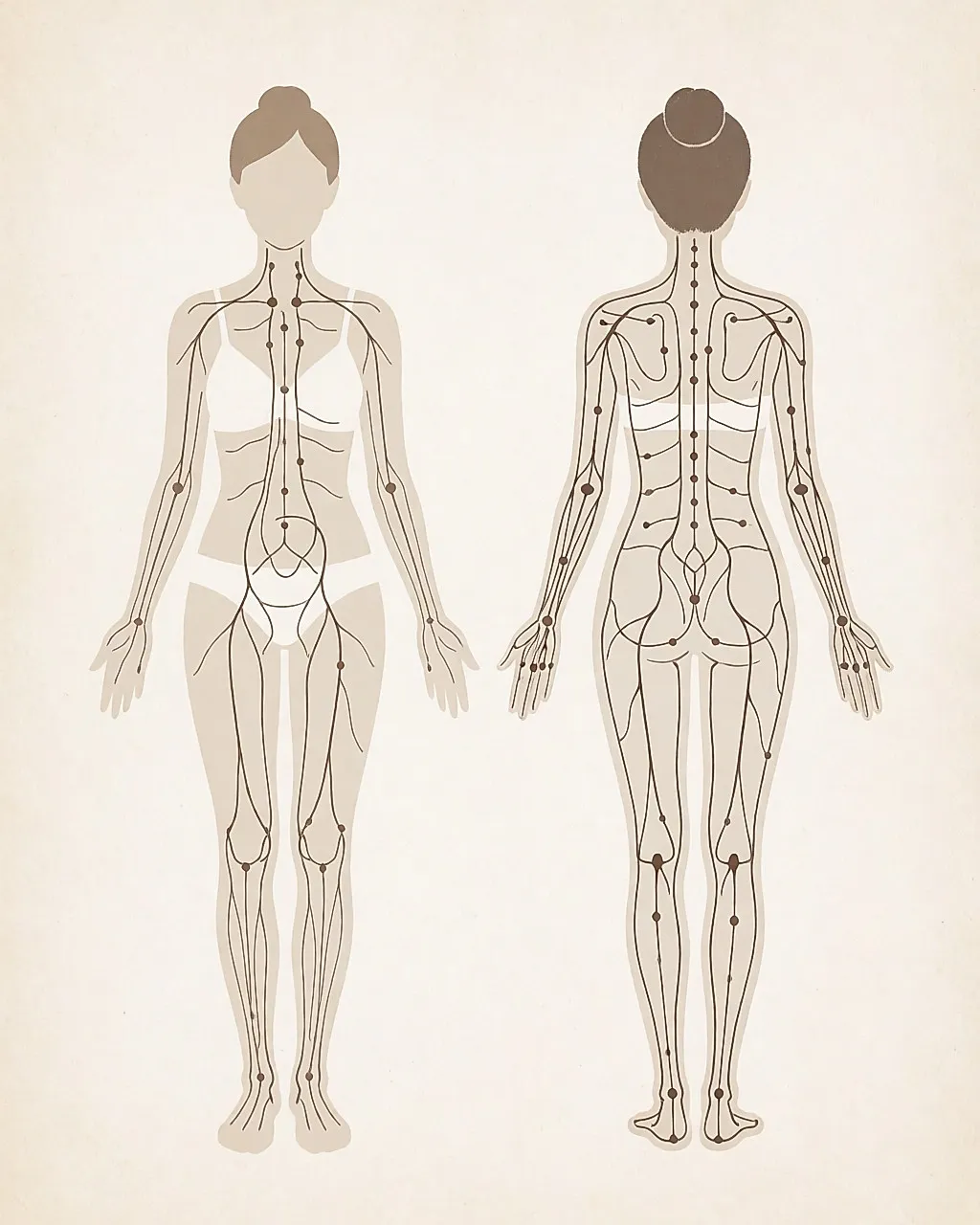
According to traditional Chinese medicine, the system from which acupuncture comes, you are in good health when qi—energy—flows harmoniously through a very precise circuit. This consists of 12 main meridians, plus extraordinary vessels, with 361 classical points across 14 meridians. When an organ is overactive or, conversely, deficient, a kind of 'blockage' is thought to form and needs to be dispersed, or a 'lack' needs to be filled.
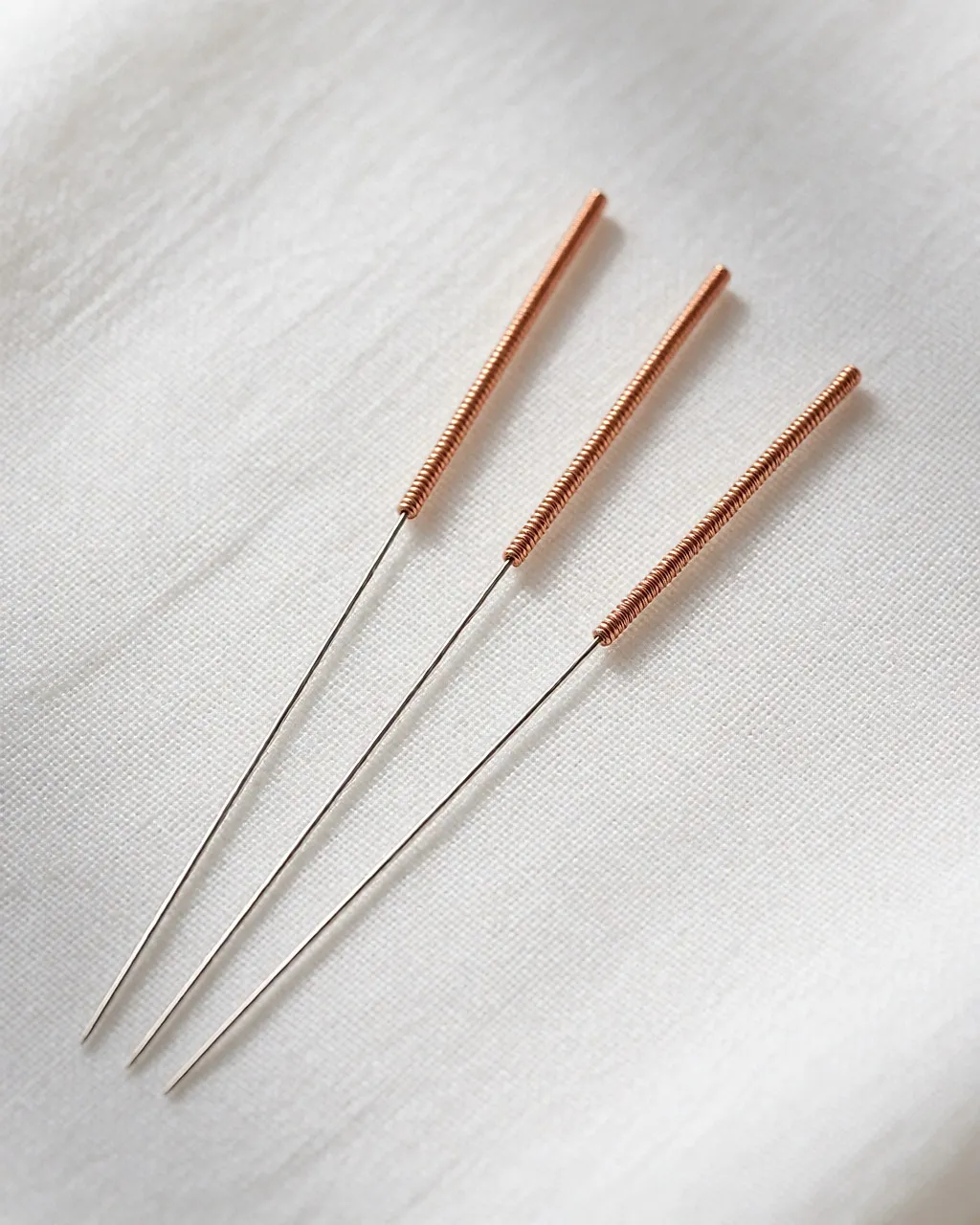
The acupuncturist uses sterile single-use needles, sized to suit the point being treated and the person's build, to stimulate points that correspond sometimes to organs, sometimes to emotions, in order to restore a smooth flow of energy—whether to help prevent illness or to move towards better health. After listening, the acupuncturist observes the tongue, the eyes and the complexion, and takes the 12 pulse positions used in Chinese medicine, which are said to reveal the state of your energy. Then, depending on their diagnosis, they insert needles at key points; in practice, these often stay in place for about twenty minutes. According to tradition, balance is supposed to be restored and, depending on the condition, health may improve; practitioners report improvement in some cases.
None of this is recent, though: acupuncture draws on more than two millennia of use and transmission. The first texts describing these principles, in China, date back to antiquity, and knowledge was long passed from master to student before reaching Japan, Korea and Vietnam, then the West during the 20th century. Over the centuries, acupuncture became one of the pillars of traditional Chinese medicine, alongside herbal medicine and body practices; it has even found a place, as a complementary approach, in some healthcare systems.
Who uses it today, and why? In the UK, acupuncture is mostly practised in private clinics, by doctors, physiotherapists, nurses and other trained practitioners, and sometimes in GP surgeries or hospitals—particularly for pain or in maternity care. You'll also find it in acupuncture schools and specialist centres. People often come for persistent pain (back, joints, migraines), nausea, sleep problems or anxiety, or as support during demanding treatment. What patients come for often goes beyond the symptom itself: many value the time taken to listen, the link made between body and mind, and see it as a gentle addition to what conventional medicine already offers. Gradually, the practice has become part of the care landscape, without replacing conventional treatment.
Some people use it during pregnancy for nausea or pain, but the evidence varies by indication and it is not a substitute for medical advice. Important: threatened miscarriage or premature labour requires urgent medical advice, and acupuncture can at best be a complementary support from a qualified professional, with no promise of results.
What does modern research show? The picture is mixed, and it is worth examining positive findings as closely as any others. Some systematic reviews and meta-analyses suggest that acupuncture can ease certain types of pain, such as chronic low back pain, headaches and migraines, and knee osteoarthritis pain, and can reduce nausea linked to treatment or surgery. In the UK, NICE guidance considers acupuncture for chronic primary pain and for migraine when standard treatments have not worked or are unsuitable. The effects seen are often modest, and their size varies widely from study to study; but these results exist, and they are not merely anecdotal.
Not all areas are equal, however. Some World Health Organization (WHO) documents list studied indications, with varying levels of evidence, but make no general recommendation for several dozen conditions. For certain functional disorders—such as tachycardia, high or low blood pressure, constipation or diarrhoea, slow digestion, a sluggish gallbladder, IBS or haemorrhoids—the data remain preliminary, contradictory or insufficient. In rheumatology, osteoarthritis and rheumatoid arthritis are being researched, and nothing establishes that a treatment can 'unblock' a joint. As for neuralgias and alcohol or tobacco dependence, caution is needed: the results do not allow any firm conclusion.
This difficulty in deciding also comes down to method: blinding an individualised treatment, where the practitioner adapts their work to each person, is tricky, and the heterogeneity of protocols makes studies hard to compare. In other words, 'we don't know yet' is not the same as 'it doesn't work'.
For more information: the British Acupuncture Council (BAcC) and the British Medical Acupuncture Society (BMAS).
By working on both body and mind, acupuncture can sit alongside conventional medicine where it sometimes reaches its limits. Side effects are most often benign — small bleeds, bruising, mild pain — and these minor effects are frequent when practice is supervised by a qualified professional using sterile single-use needles; serious complications are rare, though they do occur, so some situations require medical advice. Pregnancy, an insufficiently trained practitioner or a symptom that has not yet been diagnosed all demand the greatest caution, bearing in mind that acupuncture is a complement to—never a replacement for—prescribed treatment. It is perhaps no surprise that this technique, like homeopathy, seems to attract growing interest…
Cost
Expect to pay around £45–£75 for a private session in the UK, though prices vary by city, appointment length and practitioner experience. The first appointment, often longer, usually costs a little more than follow-ups. If acupuncture is provided on the NHS, it is usually free at the point of use, but availability varies widely—ask before you book. Some private health insurance policies may cover part or all of the cost; check with your insurer. You may also find lower-cost sessions at acupuncture schools or community clinics. In all cases, check that the practitioner is a qualified healthcare professional or registered with a professional body.
Comments
Your opinion matters: rate the article, react and reply to comments.
Comments are moderated; AI-assisted comments are flagged. Text emoticons (8-), :-), <3…) are automatically shown as images.