
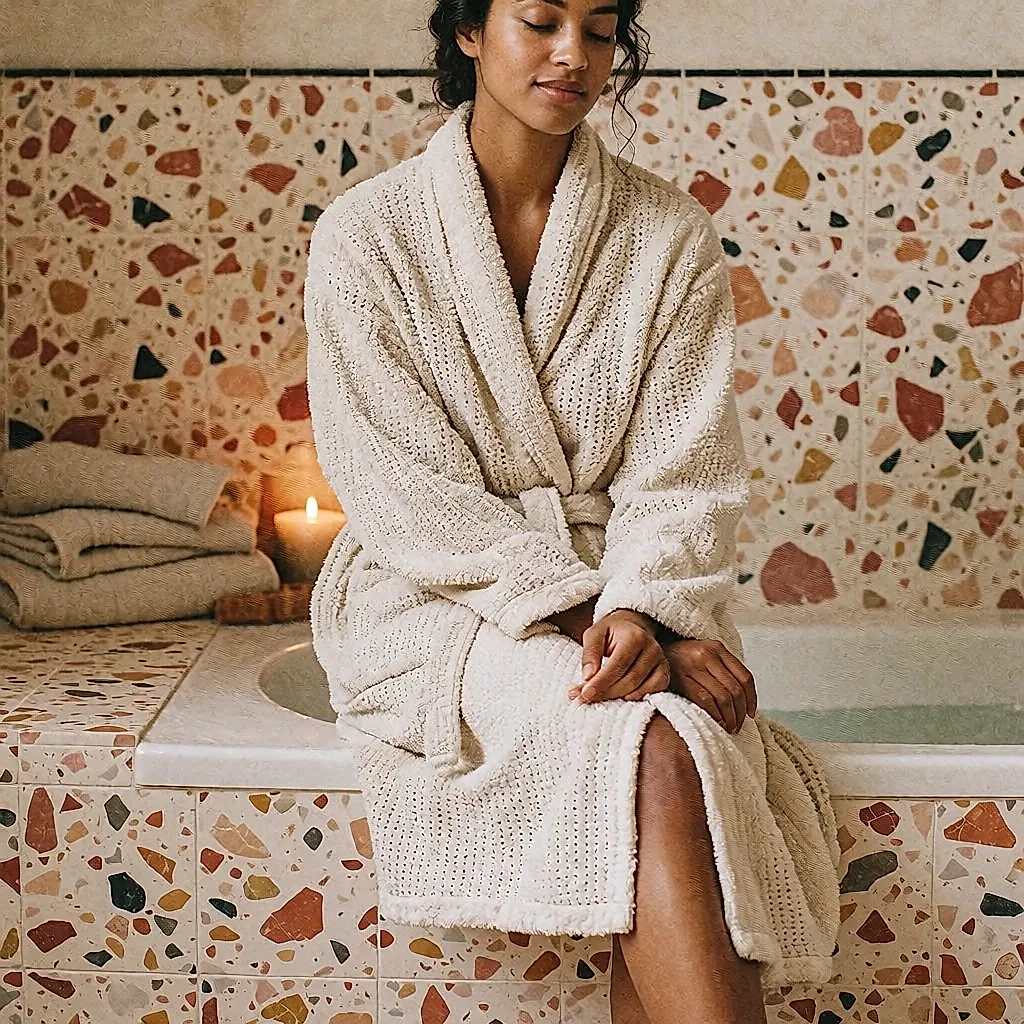
A real spa is lovely. But with the cost, finding a slot and everyday life getting in the way, going every fortnight takes a level of organisation that few people can keep up for long. The good news is that your bathroom can do the job very well. In practice, four steps, a little time and two or three well-chosen products are enough to recreate that same feeling of switching off.
Start with the atmosphere
A spa is, first and foremost, about light. Put away the overhead light, switch on a lamp, a candle or a string of warm fairy lights, and the room changes in thirty seconds.
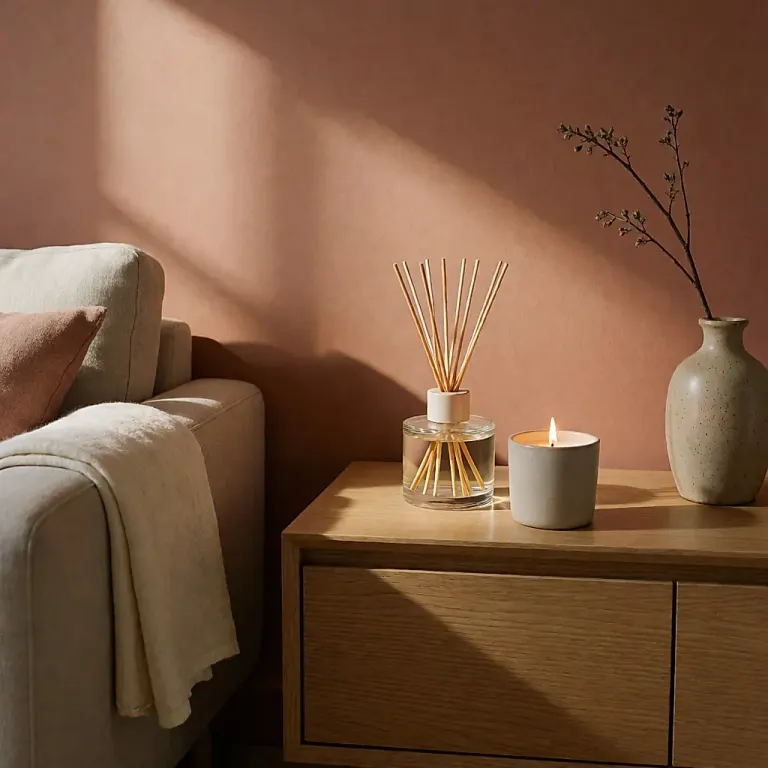
For scent, choose a candle made from vegetable wax (soya or rapeseed). A glass container you can reuse is better than a plastic pot. A calm playlist and your phone on flight mode also help: winding down happens through those cues too.
Be careful with smoke, though. In a small room with poor ventilation, it is better not to light several candles, especially if you have asthma. One candle, a wick trimmed short, and ventilate afterwards.
The bath: hot, but not scalding
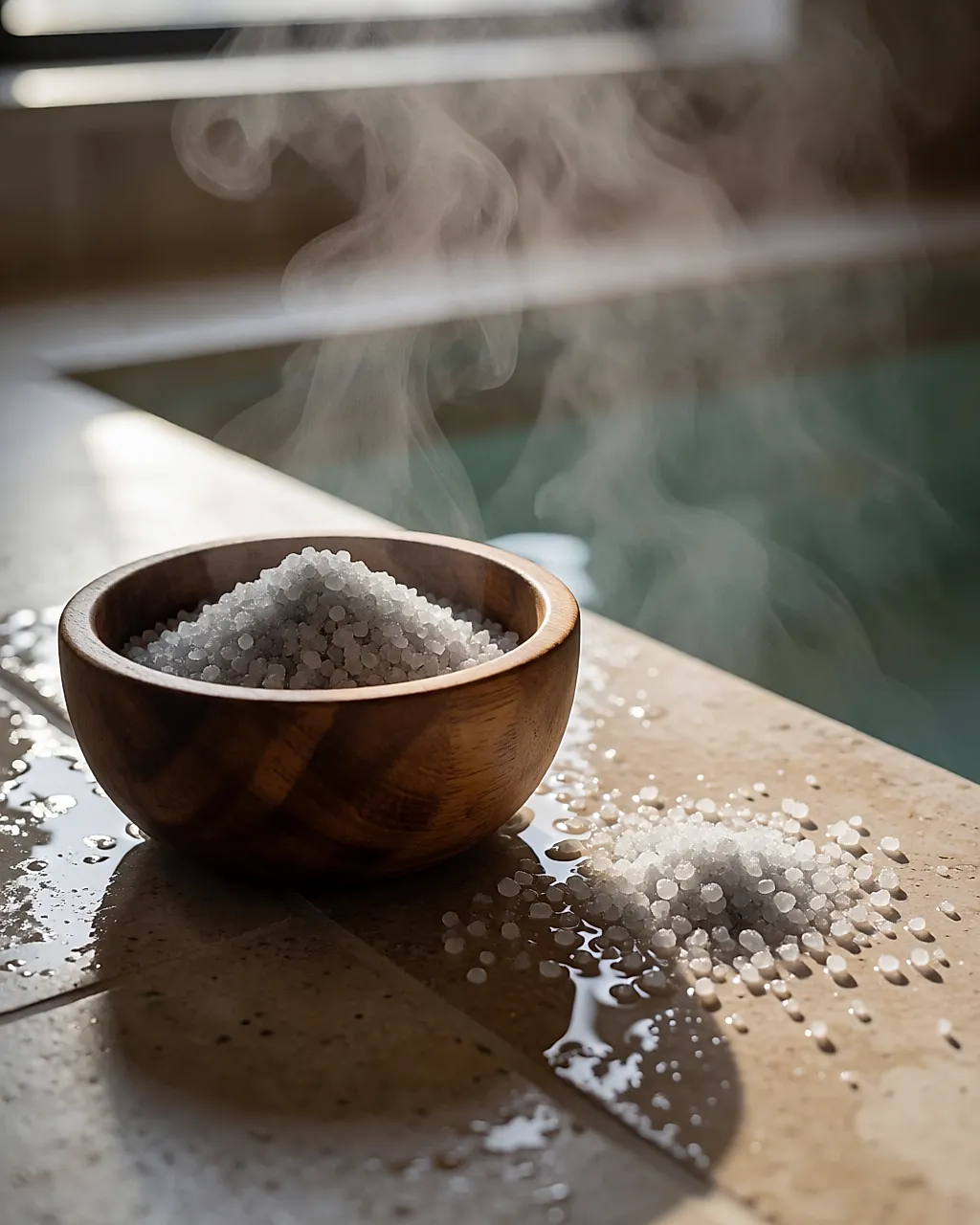
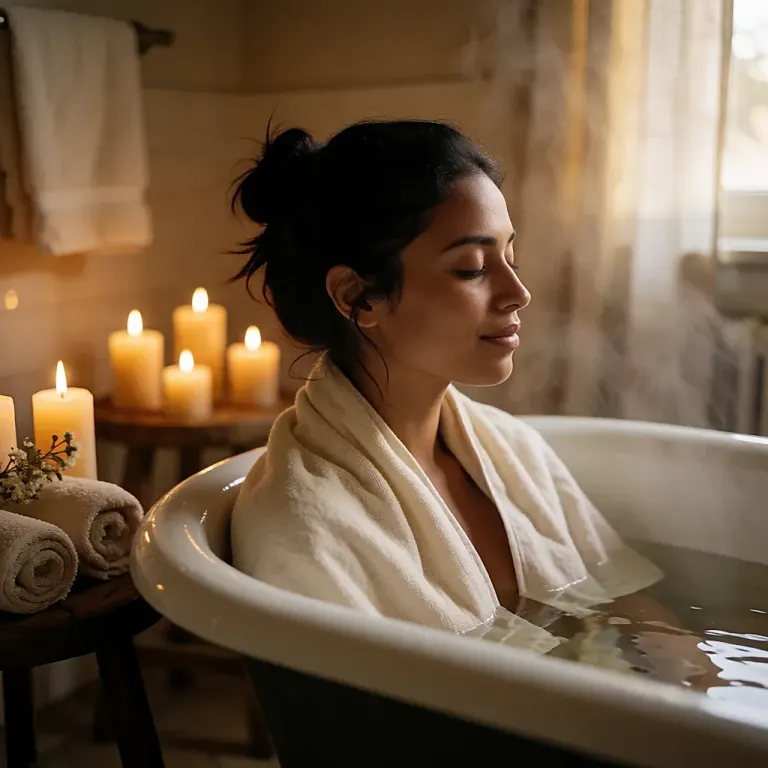
Aim for water that is hot but not scalding: that is the comfortable zone. Beyond that, you feel less well and your skin feels tight. Add a handful of sea salt or two tablespoons of Epsom salts to the water, and stay in for twenty minutes at most, no longer.
Drink a glass of water before and after. Heat makes you sweat, and that is easy to forget.
Some situations call for more caution. If your legs swell, if you are pregnant or if you have a heart condition, a very hot bath is not something to take lightly. Keep the water lukewarm and ask your GP before you start.
The scrub, once a week
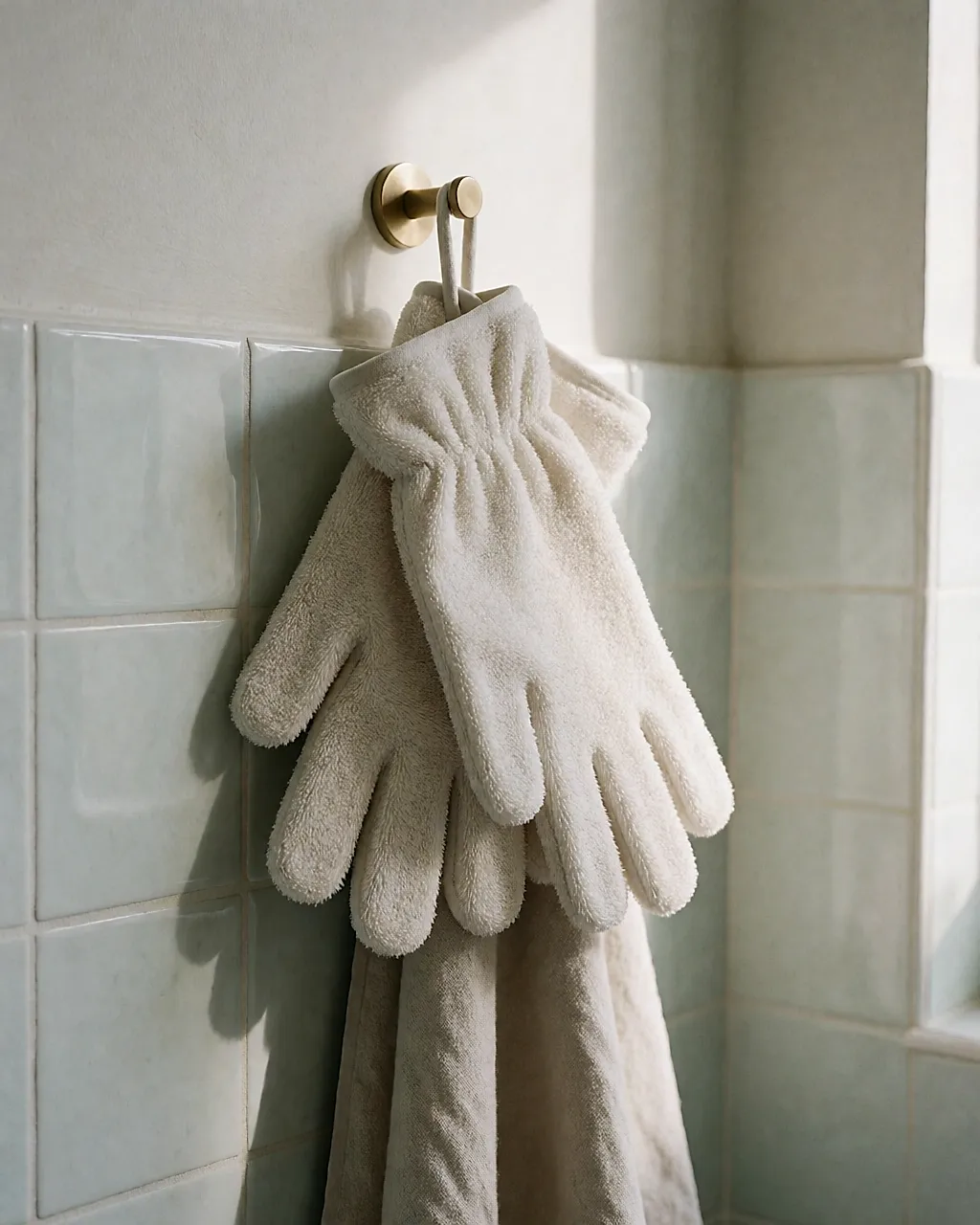
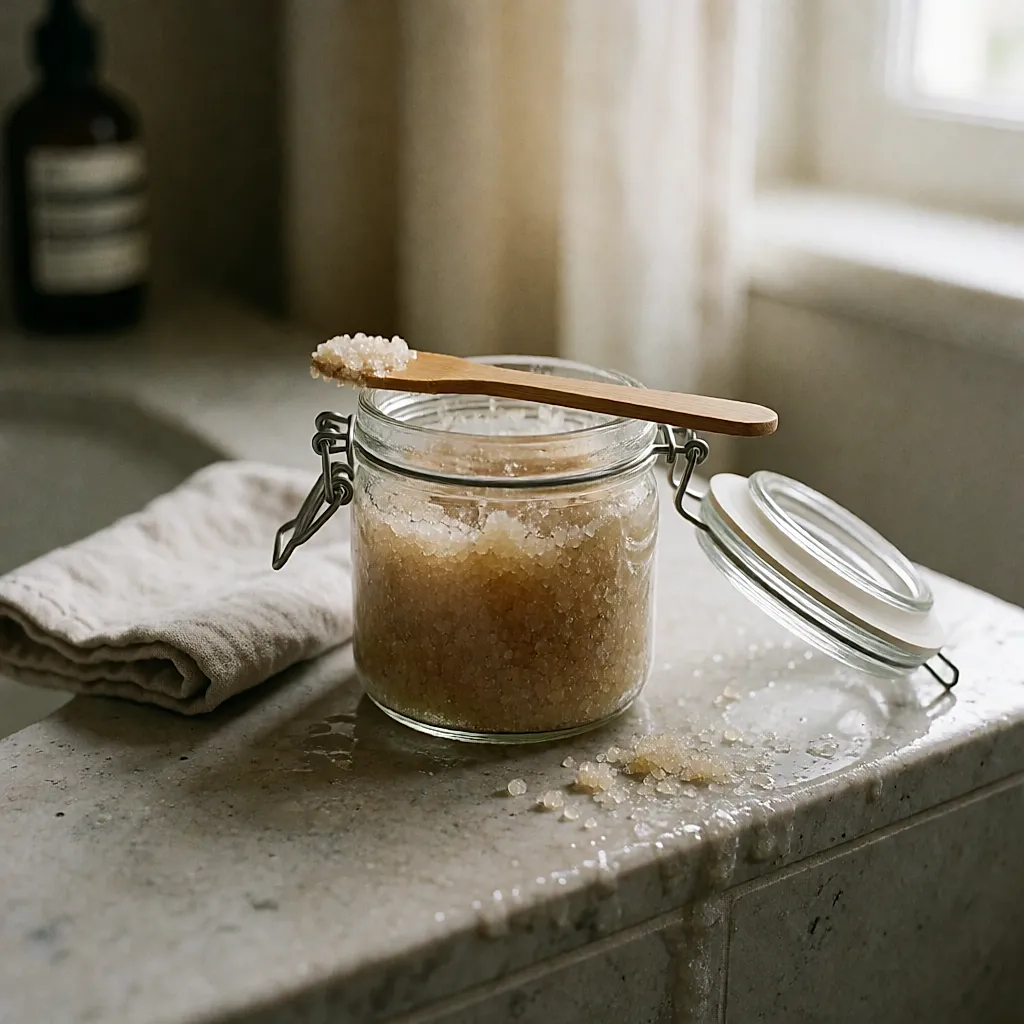
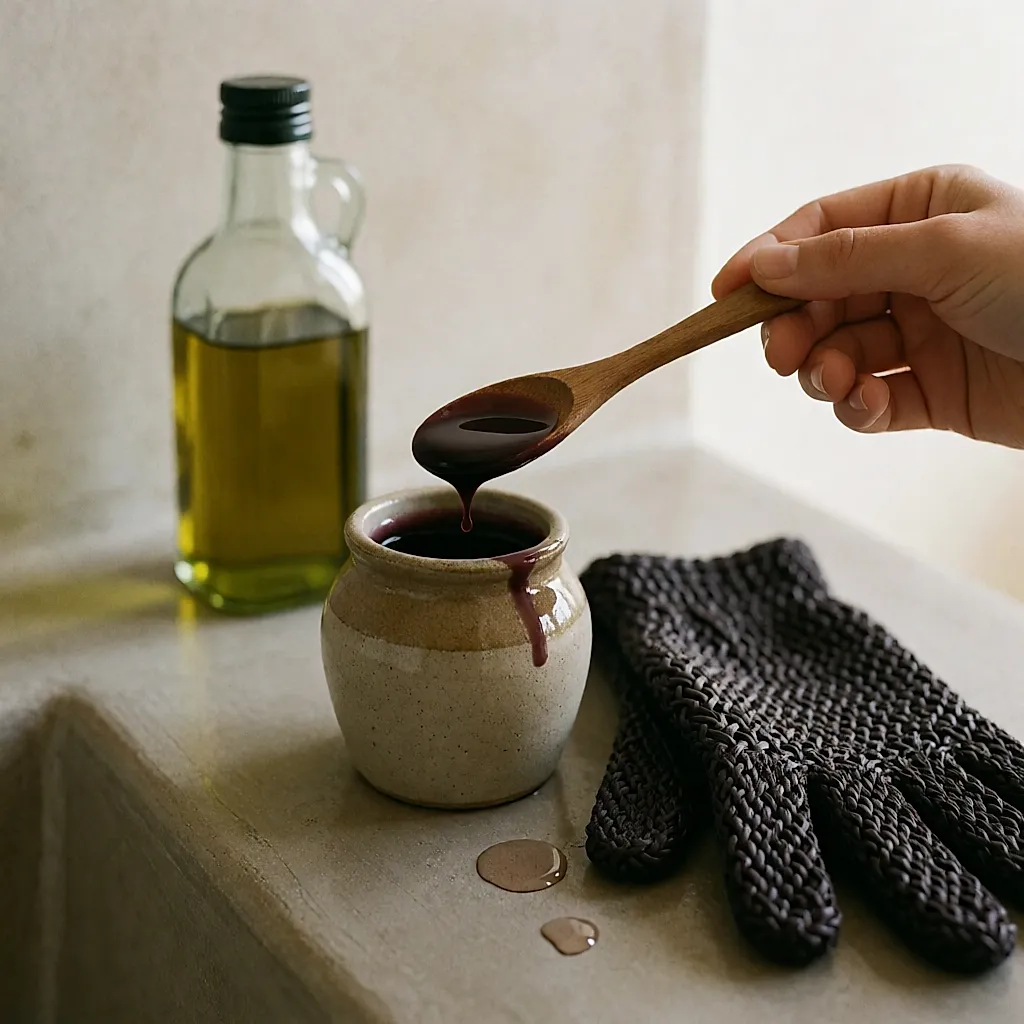
On damp skin, massage black soap (olive oil, potash) with a cotton or linen exfoliating mitt. Pay extra attention to the heels, elbows and knees, where the skin thickens.
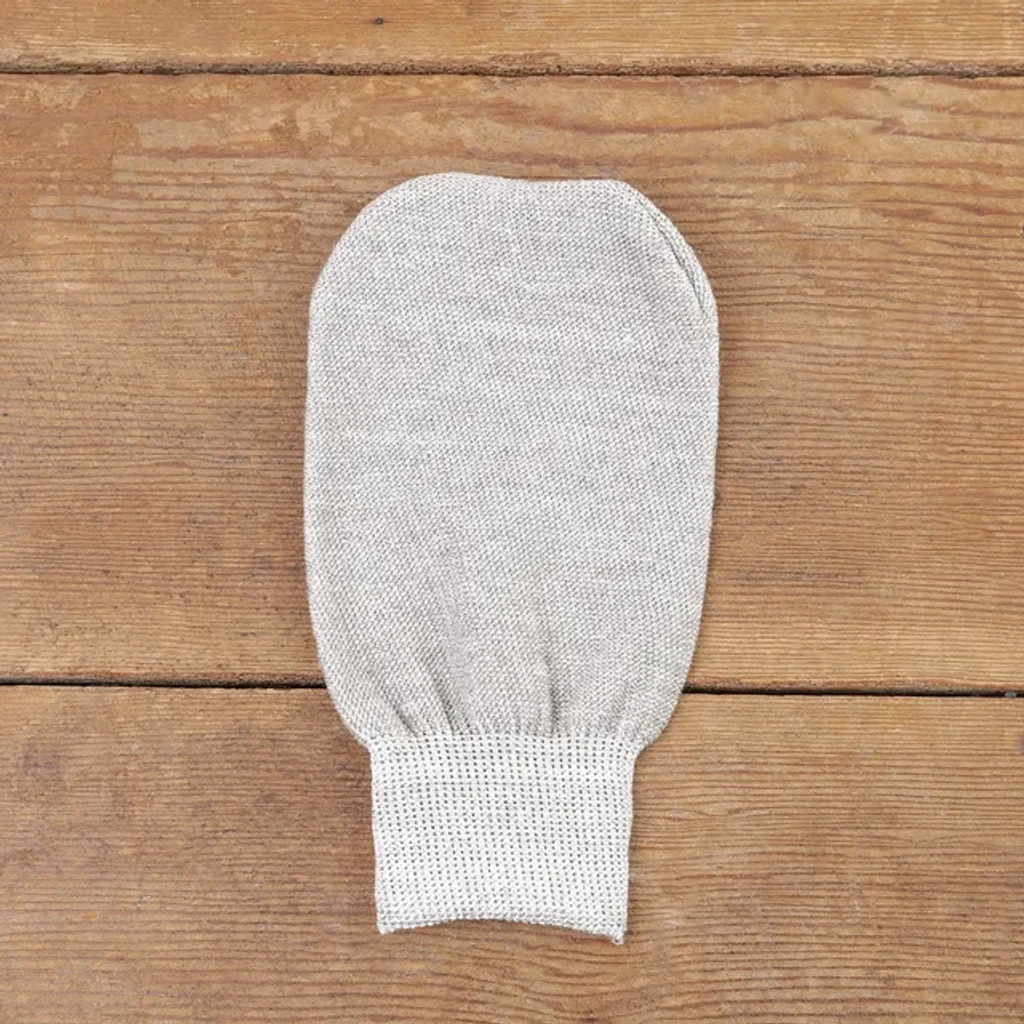
Once a week is plenty. Any more often and you risk damaging the skin barrier; your skin can become reactive, which is the opposite of what you want.
Follow with a clay mask on the face or body for ten minutes, then rinse with lukewarm water. Clay absorbs excess sebum, which is already something. It does not, however, remove toxins from the body, whatever some shop shelves may suggest.
Essential oils are not risk-free. Some are not recommended during pregnancy, for young children, or if you have asthma or an allergy. Never apply them neat to the skin without advice from a healthcare professional. If you notice redness, itching or breathing difficulties, rinse and seek advice.
Moisturising, the real end of the ritual
On skin that is still slightly damp, apply a plant oil (argan, sweet almond, coconut) or a rich cream in circular movements, from the ankles upwards. Massage does not “firm” the skin, whatever you may read elsewhere: it is moisturising that helps maintain comfort and suppleness.
When it comes to packaging, a glass bottle and a refill when the brand offers one help limit waste. Labels such as Cosmos Organic or Ecocert set standards for the share of organic ingredients and the formula, but they say nothing about the product's actual effectiveness. They are a guide, not a promise of results.
Finish in a dressing gown with a herbal tea. Use this quiet moment to check your skin: moles, marks, anything that is changing, once a month, in natural light. Five minutes, and it is one of the simplest prevention habits to keep up. If you are unsure, speak to a dermatologist.
Budget
| Item | Typical price range in the UK |
|---|
Comments
Your opinion matters: rate the article, react and reply to comments.
Comments are moderated; AI-assisted comments are flagged. Text emoticons (8-), :-), <3…) are automatically shown as images.