
Air first — that's the ground rule, the step you never skip. But once the air is fresh, there's still the finishing touch: the scent that greets you, soothes you or wakes you up. A home fragrance isn't an air freshener — it doesn't mask, it sets a mood. And every room has its own.
One caveat before we get going: something that smells lovely isn't always kind to the air you breathe. Damp, poor ventilation and heavily concentrated fragrances are among the risk factors for poorer indoor air. In practice, you ventilate before and while diffusing, and you avoid overloading a closed room.
The living room: a woody atmosphere
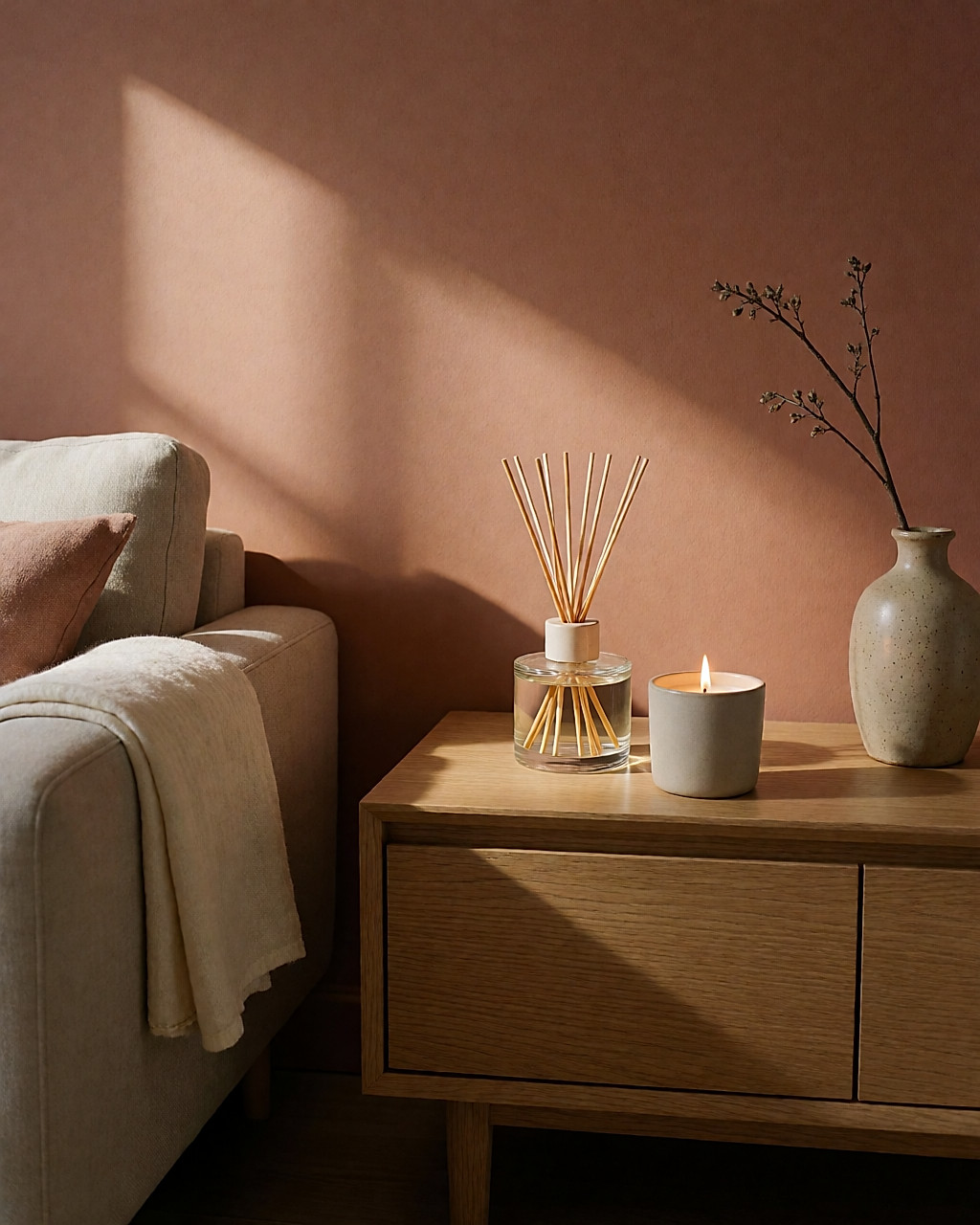
For that warm, sociable feel, go for cedar, sandalwood or polished-wood notes. A refillable glass reed diffuser is more than enough: keep the vessel, buy the refill. On the formula side, look for a phthalate-free base and a readable ingredient list — the shorter it is, the clearer your picture of what you're breathing in.
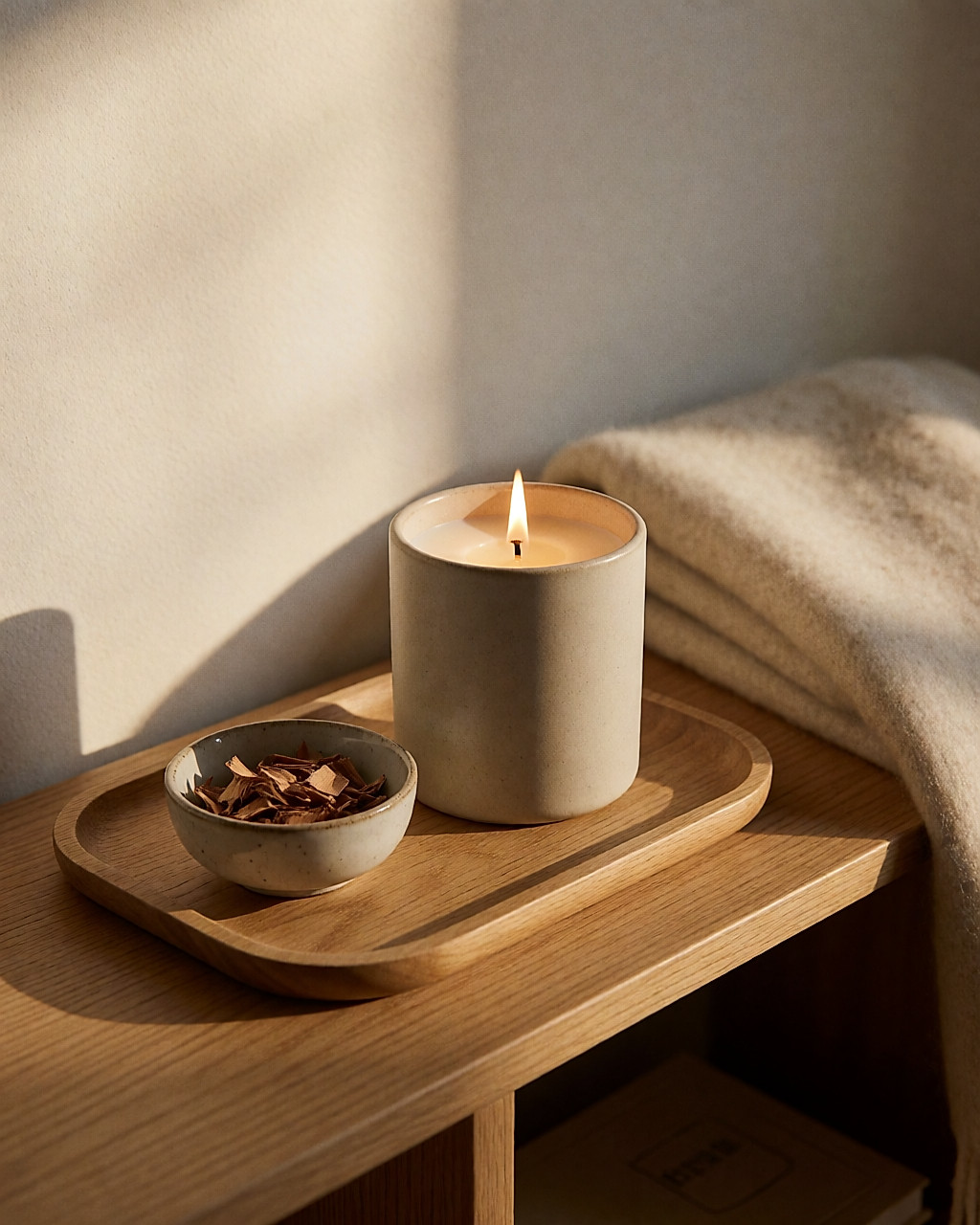
For candles, choose rapeseed, soy or beeswax with a cotton wick. Paraffin tends to give off more soot, which isn't ideal in a room where you spend time.
The kitchen: neutralise without masking
Open-plan kitchen, poor airflow? Ventilate first, fragrance second. A little dish of bicarbonate of soda sees off stubborn odours; a light citrus or verbena scent does the rest. Ten minutes with the window wide open is often worth more than a spray.

The bedroom: scents that soothe
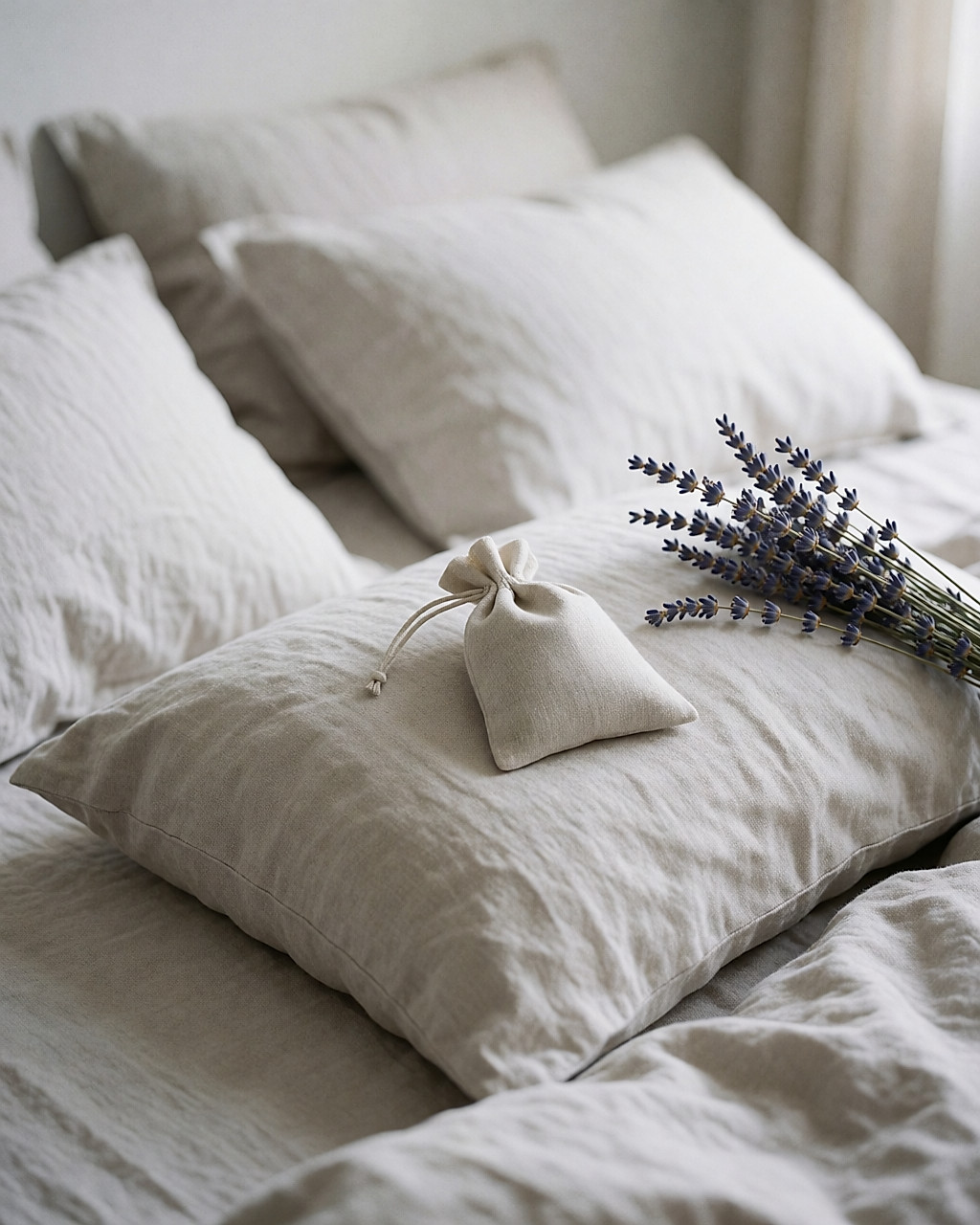
Lavender, orange blossom, lemon balm, lime flower: gentle notes that accompany you into sleep. A little sachet slipped inside the pillowcase works well, as does a scented pad made with certified organic essential oil.
During pregnancy, though, or with a baby in the room, it's better to skip essential oils. If in doubt, talk it through with a healthcare professional.
The bathroom: freshness above all
Marine notes, iodine, eucalyptus. A ceramic pebble soaked in essential oil, set on a radiator, releases its scent slowly. Rinse and dry it between uses, or the fragrance turns.
Incense and scented sticks: lovely, but burning them releases fine particles (PM2.5). Keep them for well-ventilated rooms, and never a child's bedroom. If you have asthma or allergies, check with your doctor before making them a habit.
Budget
- Refillable glass reed diffuser: expect around £15 to £40.
- Plant-wax candle with a cotton wick: around £10 to £35 depending on size.
- Organic essential oil (10 ml): around £5 to £14.
- Lavender sachet or scented pad: around £5 to £14.
Prices vary with the certification (Soil Association, Ecocert), the volume and where you shop: a specialist fragrance shop, a health-food store, a supermarket or online.
Sources
- ADEME, "Un air sain chez soi".
- Anses, "Huiles essentielles : à utiliser avec précaution".
- Observatoire de la qualité de l'air intérieur (OQAI).

Comments
Your opinion matters: rate the article, react and reply to comments.
Comments are moderated; AI-assisted comments are flagged. Text emoticons (8-), :-), <3…) are automatically shown as images.