
There is a moment, last thing at night, when you do the rounds before bed. Windows shut, door locked, cleaning products out of reach. You tell yourself that home is the safest place for a baby. Yet it is also where most accidents involving toddlers happen.
Everyday accidents – falls, burns, choking, poisoning – are the leading cause of death among children aged one to four. Public Health France estimates around 20,000 deaths a year in France from everyday accidents, across all ages. Some of this is well established; some remains less certain. Here is what deserves a second look at home.
Start with the bedroom
It was once assumed that a baby who cannot yet move around could not be at risk. That is not true. In the first year, the bedroom accounts for most of the risk of suffocation and falls.
Temperature first: aim for 18–20°C, no higher. Above that, a baby can dehydrate quickly and sleep poorly. Air the room every day, even when it is cold outside.
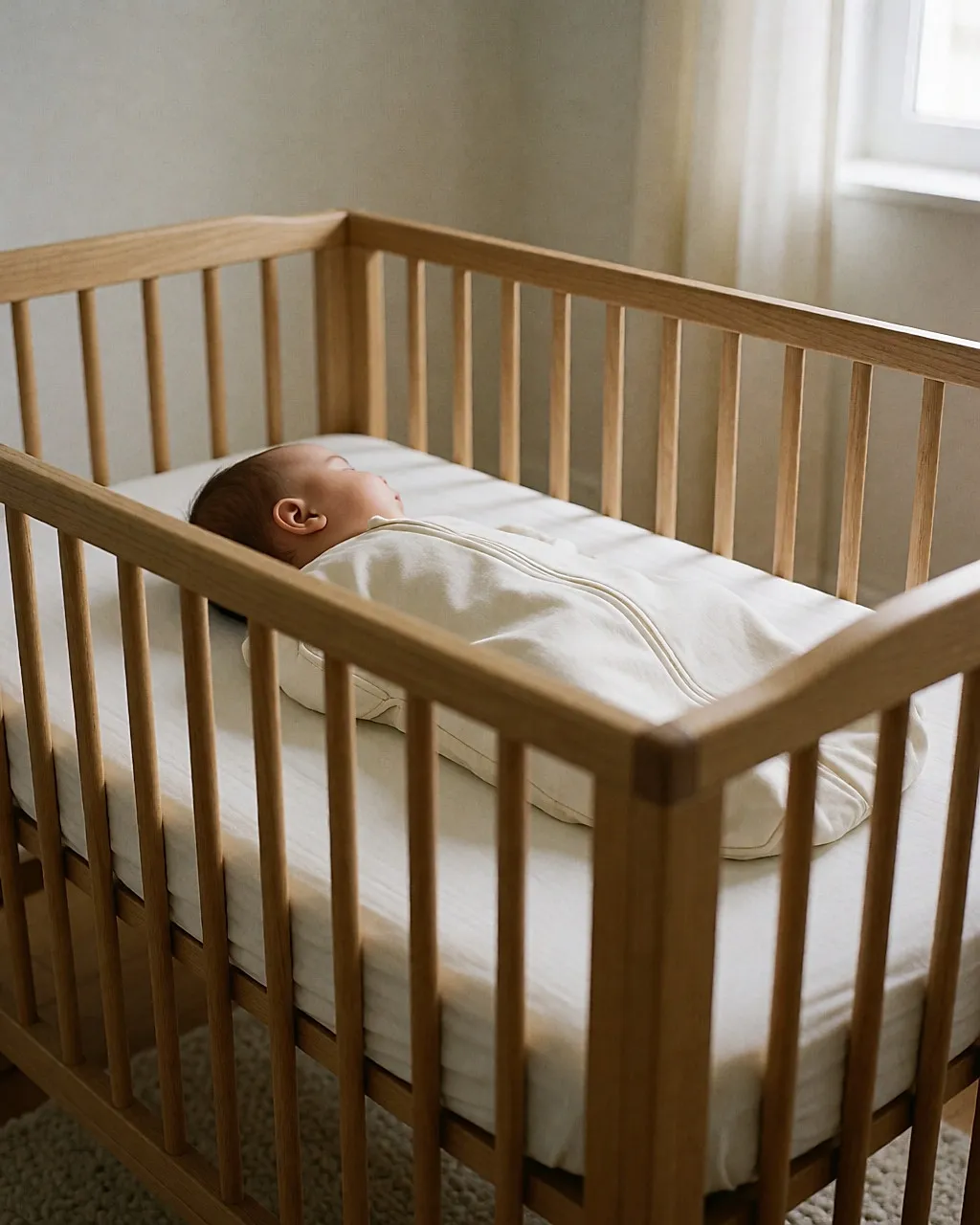
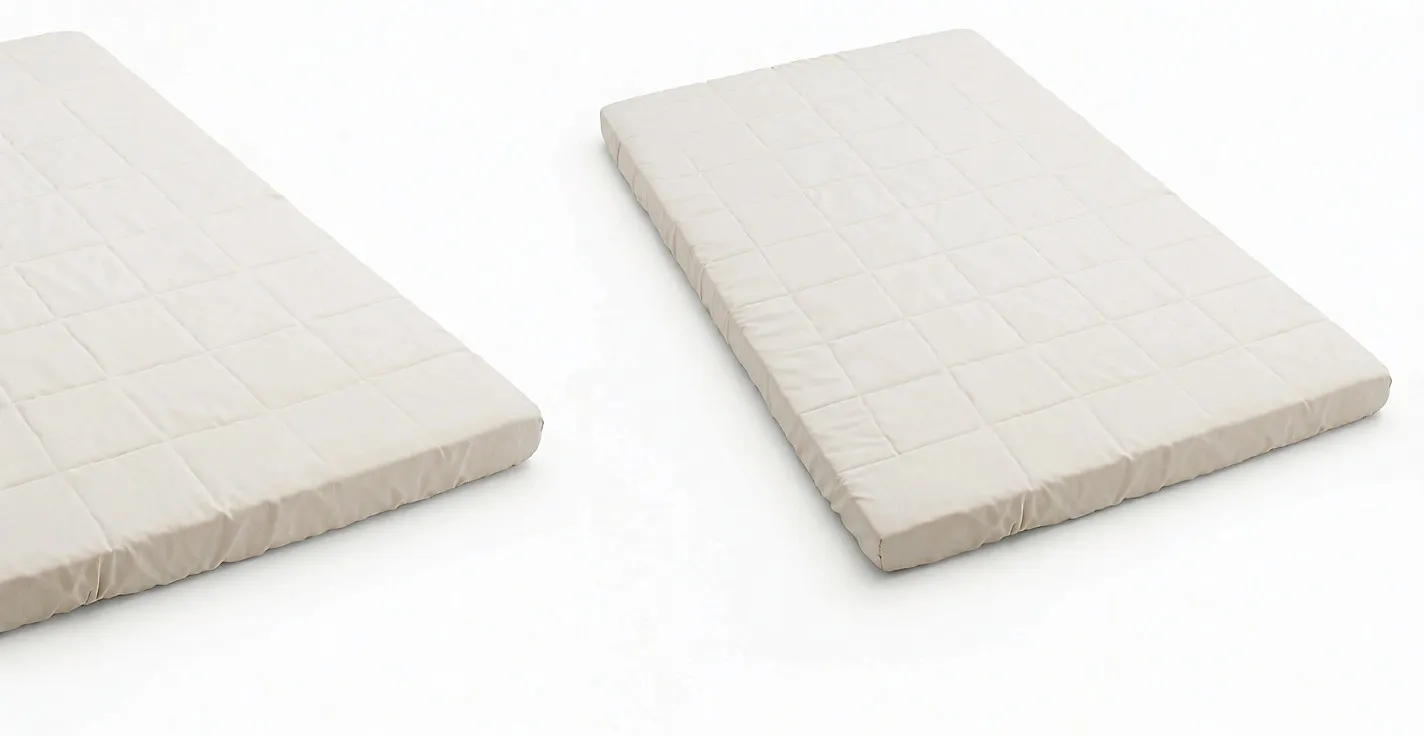
The cot next. Choose one that meets BS EN 716, the standard for fixed and folding cots: the bars and fixings are tested to withstand a child hanging on them. The mattress should be firm and fit the cot exactly – no gap between mattress and sides, or a face can slip into it. On materials, a mattress carrying the OEKO-TEX Standard 100 label (harmful substances checked, though this says nothing about firmness) or a sleeping bag in GOTS-certified organic cotton are useful markers. In a cot for a baby under one: no cot bumper, no pillow, no blanket, no soft toy, even in organic cotton.
Sleeping on the front remains the main identified risk factor for sudden unexpected infant death (SUDI). Hence the simple rule: on the back for every sleep. Guidance also recommends keeping your baby in your room for the first six months, in their own cot. Winding after a feed mainly eases discomfort; it is not one of the prevention measures.
Then there are pets. A cat curled up against a newborn can obstruct their breathing: a closed door or a stair gate across the bedroom doorway is enough to solve the problem.
Toys and small parts
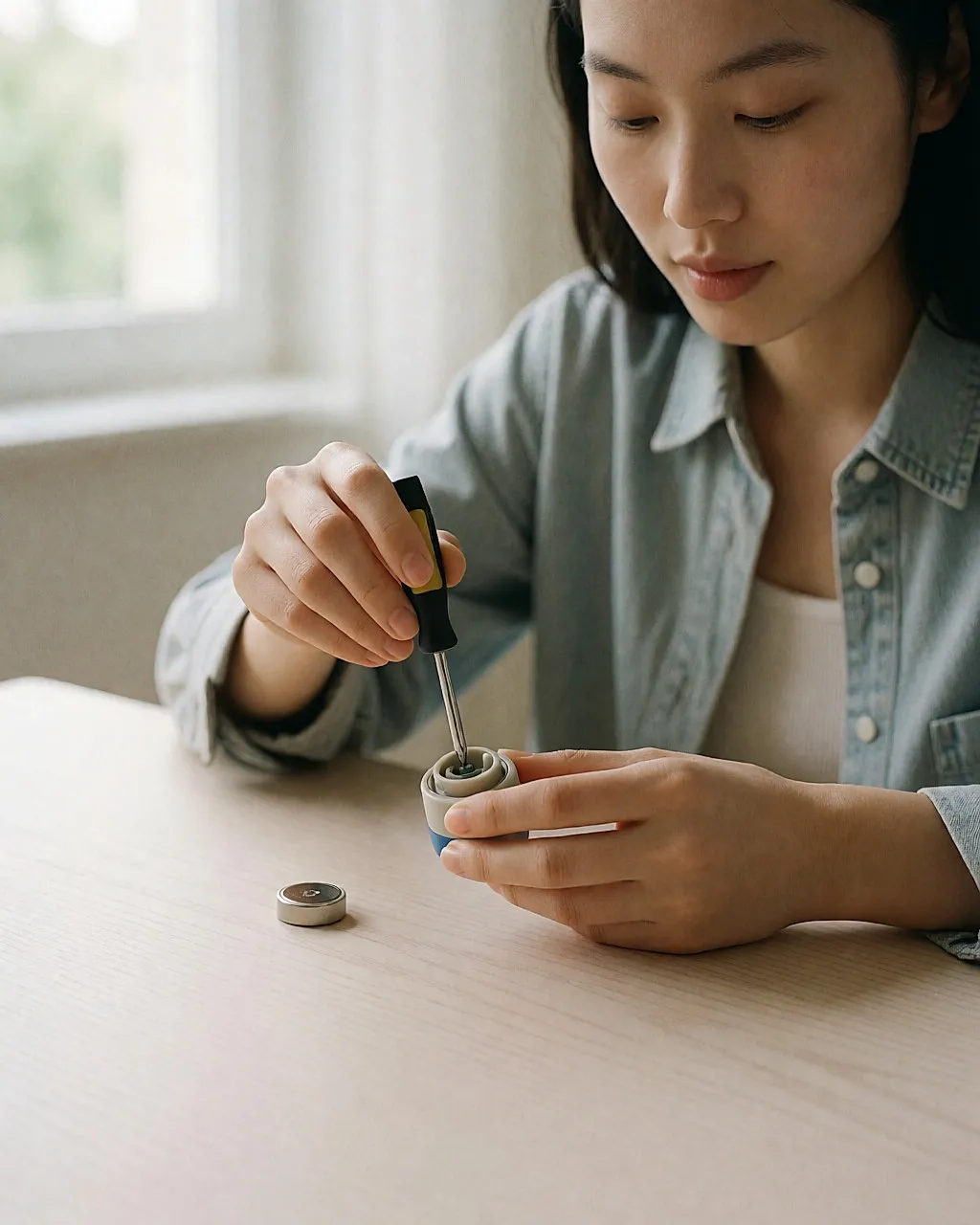
In the UK, look for UKCA marking; CE marking may still appear on some toys. Both show a toy has met the relevant safety requirements, including the Toy Safety Directive 2009/48/EC. The warning 'not suitable for children under 36 months' is not decorative. A broken toy, sharp piece, cord or spring: bin it. Watch out for button batteries, which can burn the oesophagus within hours – a screwed battery compartment is not a detail.
Once they are one, look at the house from their height
Your best exercise is still to get down on all fours in the middle of the living room. From that height you spot plug sockets, table corners, pans sticking out and drawers left ajar.
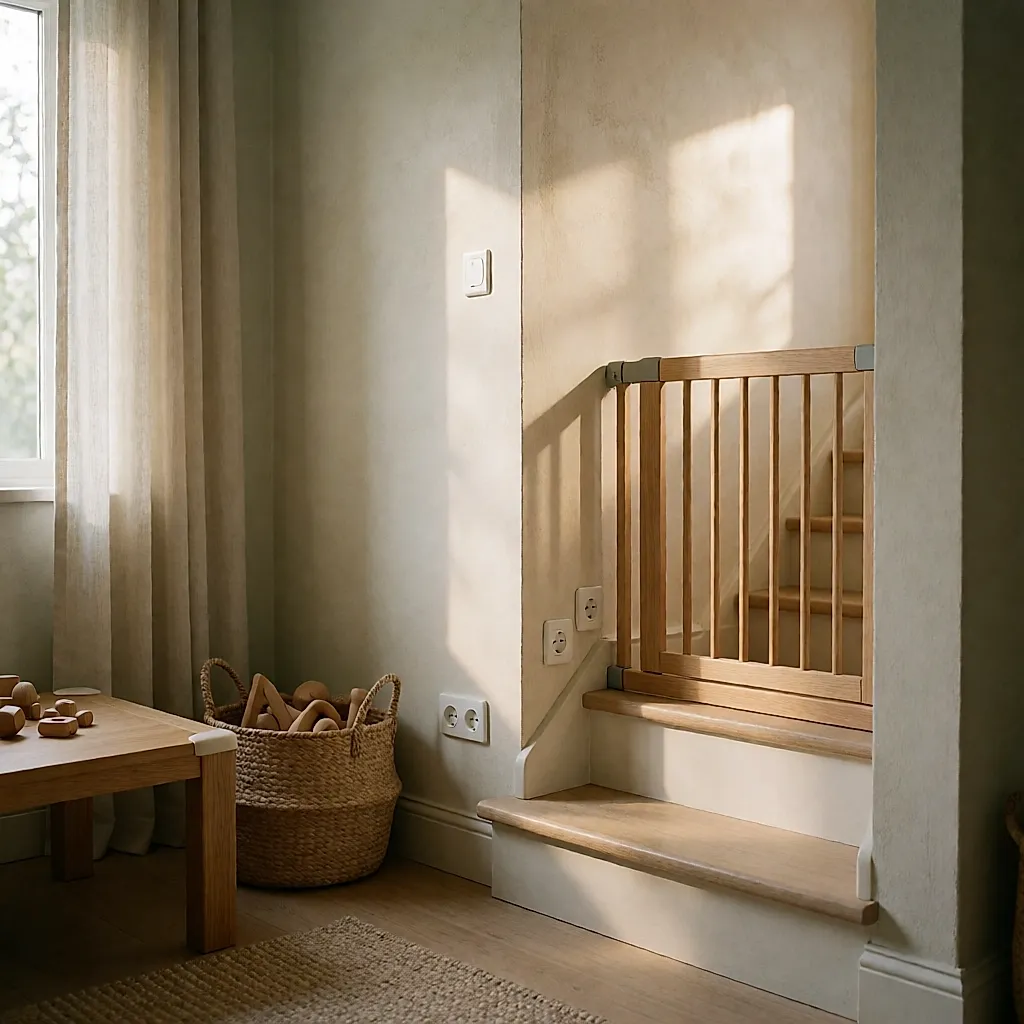
Corner protectors, drawer locks and a stair gate at the top of the stairs meeting BS EN 1930. On plug socket covers, a UK-specific note: standard UK sockets already have built-in safety shutters, and safety bodies generally do not recommend adding covers; some warn they can make sockets less safe. If your sockets are older or you are unsure, ask a qualified electrician.
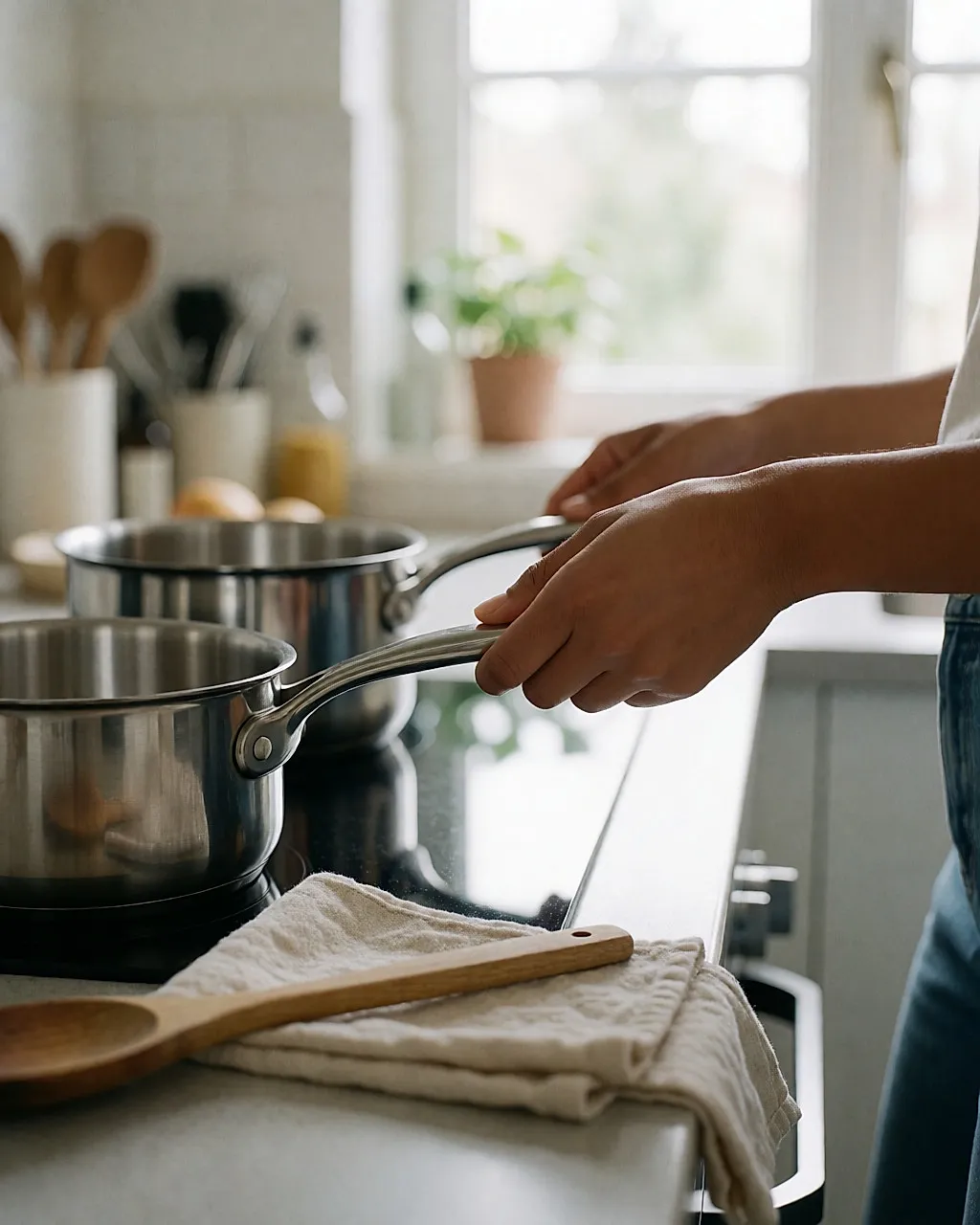
In the kitchen, never leave a child alone; turn pan handles towards the wall; store knives and cleaning products high up in their original packaging – never decanted into a water bottle. The garden and garage follow the same logic: tools, garden chemicals, the barbecue and the pool are areas to secure in the same way as the kitchen.
If there is an accident – a burn, swallowing a cleaning product, choking – call 999 in an emergency. For suspected poisoning, call NHS 111, which can advise 24 hours a day. Do not make your child vomit and do not give them anything to drink without medical advice.
Bottles and bath temperatures
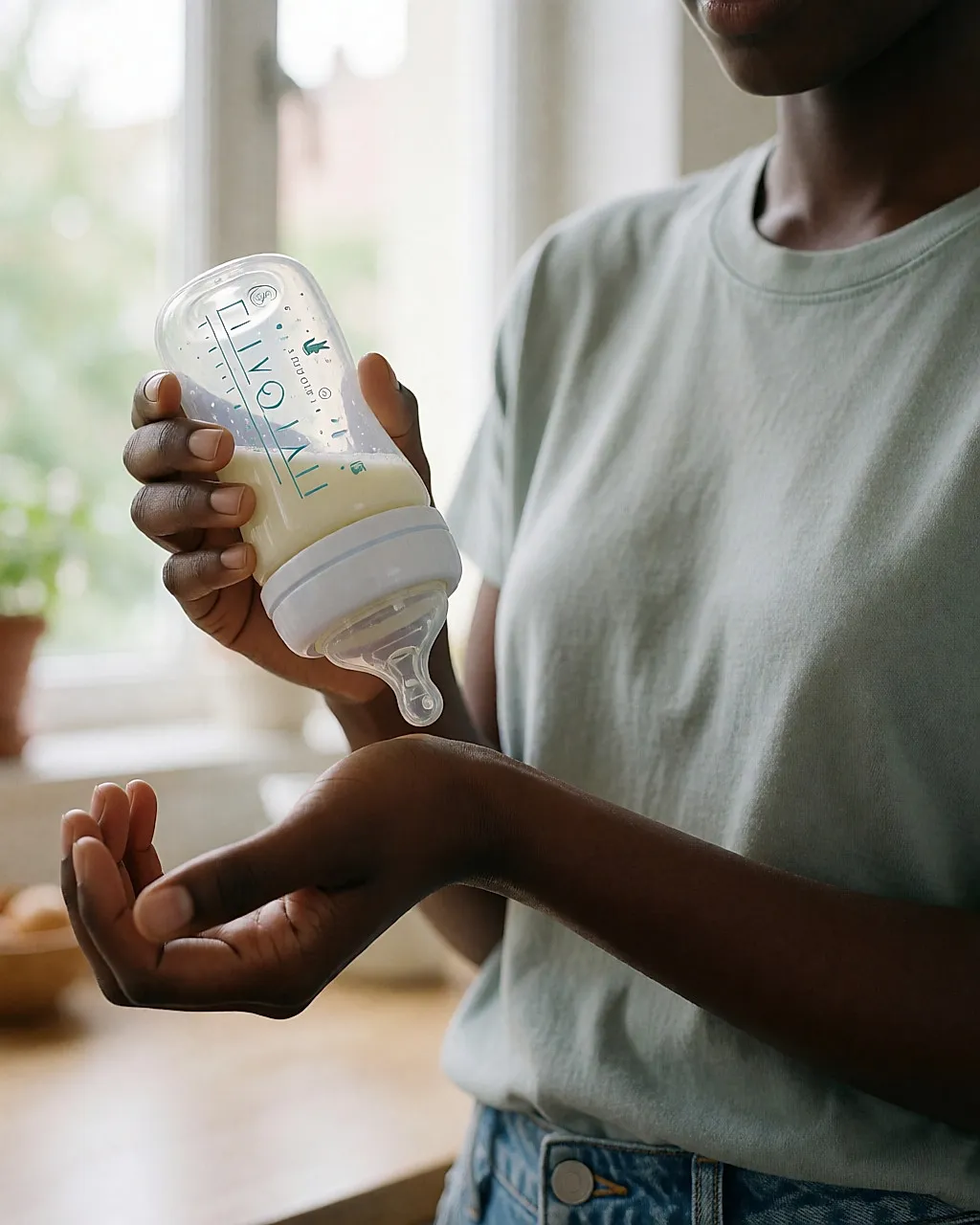
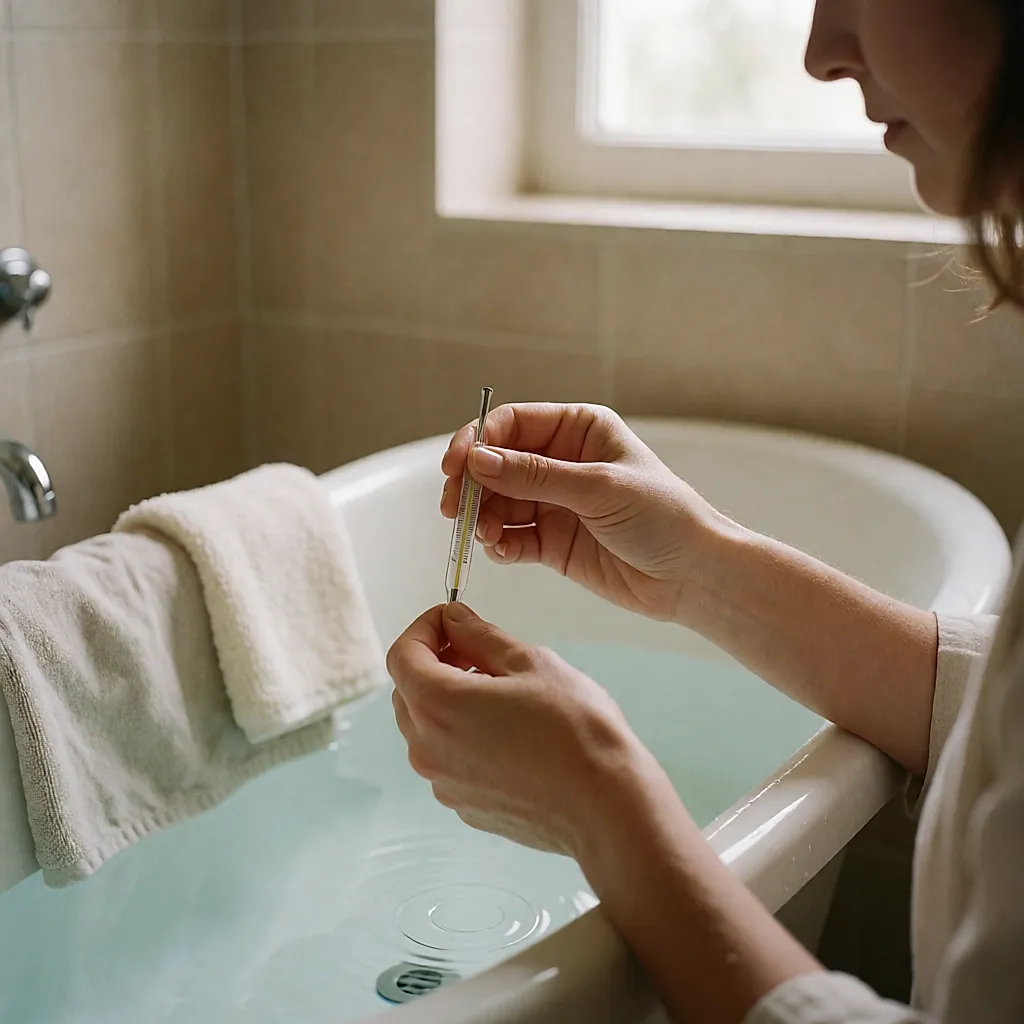
A bottle warmed in the microwave can feel lukewarm to the touch while the milk itself is hot: a few drops on the inside of your wrist give a more reliable idea. For the bath, aim for 37°C, using a thermometer rather than your hand. And never leave a baby alone in the water: a few centimetres is enough.
What it costs
Good news: making a home safer often costs less than you might imagine, provided you do it in stages.
- Stair gate: expect to pay around £15–£40 for a pressure-fit model, £30–£80 for a screw-fit one, and sometimes over £100 for a retractable or extra-wide gate.
- Corner protectors and drawer locks: £10–£30 for a basic set. Socket covers are widely sold, but see the note above; they are not generally recommended for UK sockets.
- Cot meeting BS EN 716: £80–£300 new, and £40–£150 for a firm mattress in the right size.
- Bath thermometer: £5–£20.
Price varies with the fixing, adjustable width, height and opening system. Where to find it all? Supermarket baby aisles, specialist nursery shops, hardware stores for stair gates, and online. Second-hand is much cheaper: check that fixings are solid and that the product has not been recalled.
One simple rule remains: if you are unsure, speak to your GP or health visitor. The first months' check-ups are there for this too.
Sources
- Public Health France, 'Everyday accidents' and the EPAC survey (French data).
- Assurance Maladie (ameli.fr), 'Preventing domestic accidents in children' (French guidance).
- Public Health France, recommendations on infant sleep and preventing sudden unexpected infant death.
- DGCCRF and European Commission, toy safety, Directive 2009/48/EC.
- AFNOR: NF EN 716-1 (fixed and folding cots) and NF EN 1930 (safety barriers).
- For UK readers: NHS advice on safer sleep and reducing the risk of SIDS; Child Accident Prevention Trust; Office for Product Safety and Standards; British Standards BS EN 716 and BS EN 1930.

Comments
Your opinion matters: rate the article, react and reply to comments.
Comments are moderated; AI-assisted comments are flagged. Text emoticons (8-), :-), <3…) are automatically shown as images.